What Should I Do If I Suffered A Broken Bone In A Truck Accident In North Carolina?

Key Highlights:
- If you are wondering what should I do if I suffered a broken bone in a truck accident in North Carolina, you must seek immediate medical attention. Moreover, stick to your treatment plan, and speak with an attorney before talking to the insurance companies.
- The size of tractor-trailers is such that they typically cause individuals to suffer very serious orthopedic injuries, such as pelvic, femur, or rib fractures, rather than sustained small soft-tissue injuries.
- Missing physical therapy or doctor appointments may allow the claims adjuster to claim that the injuries are not serious and adjust the value of your claim.
- Serious fractures can take up to 1 year to heal and may create chronic pain or stiffness, which must be factored into your claim.
Typically, people involved in accidents with tractor-trailers and other types of commercial vehicles do not sustain just a few minor bruises; most people sustain extensive injuries. Because of the size and weight difference between an 18-wheeler and a typical passenger vehicle, any time a crash occurs, the human body suffers forces beyond the structural limits designed to be sustained by the human body.
At Tatum & Atkinson Law Firm, our truck accident attorneys have helped families across North Carolina answer what should I do if I suffered a broken bone in a truck accident in North Carolina. And the truth is this: the first 72 hours after an injury and the documentation you gather during this timeframe are often critical to establishing a successful injury claim.
This guide outlines the medical and legal realities faced by the victims of a broken bone truck accident North Carolina, from your initial emergency room treatment to pursuing a legal remedy in the NC court. It will provide you with information to assist you in understanding what to expect and how to protect your rights.
For a free case evaluation from our expert truck accident lawyers, contact us at (800) 529-0804.
What Should I Do If I Suffered A Broken Bone In A Truck Accident In North Carolina
Although the time just after a crash is confusing, several actions will clearly show that you want to protect yourself physically and legally.
1. Seek Immediate Medical Care
Even if you feel okay, seek emergency medical care immediately. Many times, a great amount of adrenaline is pumping through your body right after a fractured bone truck accident NC, and this can mask the pain of a fractured bone. What seems to be a sprained ankle at the scene may become a hairline fracture the next morning.
2. Follow the Doctor’s Treatment Plan
It is critical to follow every instruction your treating physician gives you. Failure to keep follow-up appointments or failure to wear a prescribed brace will slow your healing process and will give an insurance adjuster the possibility of questioning if your injury is severe.
Document Everything
Take pictures of the wreckage, your injuries, and the vehicles that were involved in your accident. All paperwork, including discharge papers, imaging reports, prescription receipts, etc., will create the basis for your case.
Get Legal Help
Avoid speaking with the trucking company’s insurer before consulting an attorney. The adjusters from these companies frequently arrive at the scene of an accident within just a couple of hours to minimize payouts, not protect injured North Carolinians. This is when what should I do if I suffered a broken bone in a truck accident in North Carolina shifts from being a medical question to becoming more of a legal question.
Why Broken Bones After Truck Crash North Carolina Common
North Carolina has a vast network of highways carrying significant amounts of commercial traffic through I-95, I-40, and I-85 corridors between major freight routes leading from Virginia to the Southeast. Due to the enormous size of fully loaded tractor-trailer trucks, which weigh 20–30 times more than a passenger car, a moderate-speed collision will transfer a tremendous amount of force to the occupants of the smaller vehicle. According to the Federal Motor Carrier Safety Administration (FMCSA), collisions with other vehicles in transport account for over 70% of all large truck crashes.
This is why serious injury truck collision North Carolina often involve broken bones as opposed to just soft tissue injuries. Ultimately, the extremities, ribs, and pelvis experience the majority of the force of the impact, particularly in the case of side-impact and truck underride crashes. Crumple zones provide very little protection in these types of collisions.
How Emergency Rooms Diagnose and Treat These Injuries
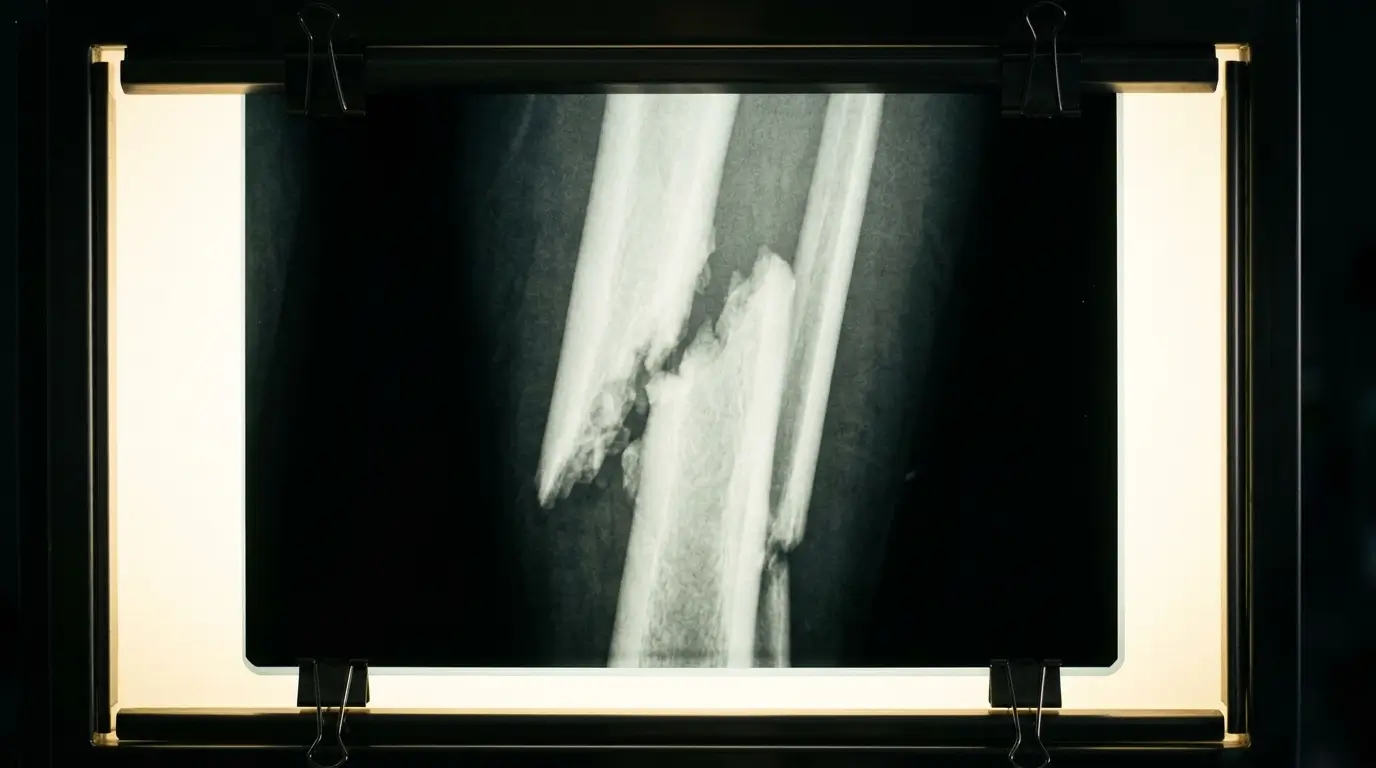
In North Carolina, imaging services such as X-rays, CT scans, or MRIs are used to confirm what type of fracture has occurred and how severe it is. There are 4 different types of fractures: simple, compound, comminuted (broken into many pieces), and hairline (partially broken). To understand why treatment paths vary, the National Institutes of Health (NIH) outlines how the bone remodeling and primary healing stages rely entirely on perfect stabilization and alignment.
Emergency care after truck accident fracture NC is done with splints or casts; however, more complicated fractures are referred to orthopedic specialists immediately upon arrival at the hospital.
Common fractures in truck accidents North Carolina are:
- Fractures of the femur (thigh bone) and tibia (shin bone) due to either dashboard or door intrusion
- Rib fractures due to blunt force trauma that can puncture nearby organs
- Pelvic fractures that often cause internal bleeding
- Wrist and forearm fractures due to a protective brace position against impact
- Clavicle or shoulder fractures in side-impact accidents
These types of truck accident orthopedic injuries NC have different recovery times and complication risks.
Surgery, Treatment Plans, and the Road to Recovery
Not all fractures can heal with just a basic cast. For example, comminuted breaks (shattered bones), compound fractures (bones breaking the skin), or breakage near the joint generally need surgical plating, screwing, or rodding.
While surgery is often essential for stabilizing the bone, it significantly extends recovery times and introduces additional risks:
- Medical Complications: Higher risk of infection, nerve damage, or hardware malfunction.
- Functional Delays: A bone fracture treatment after truck accident NC should include an immediate rehabilitation plan because the management of these injuries early on has a significant impact on long-term mobility.
The Real-World Impact on Daily Life
In addition to physical pain, severe fractures can affect almost every area of your daily life. Fracture survivors often can’t do the following during the time it takes to heal:
- Manually work or return to their employment
- Drive and do other basic chores around their house
- Take care of children and fulfill family obligations
The inability to perform these activities results in both an immediate and long-term loss of household income and financial burden as household income decreases while the medical bills begin to accumulate!
Why Following Your Treatment Plan is Crucial
“Following your physician’s precise treatment plan, attending all scheduled therapy sessions, and reporting any setbacks are not just good practice but critical legal evidence that the victim should collect.” – Robert Tatum
When you file a truck accident injury claim broken bone NC, or a workers’ compensation claim, gaps in treatment are one of the first things insurance companies look for as a basis for arguing that you do not suffer as great a loss as you state you do. By maintaining your health, you will also maintain your legal recovery.
What Long-Term Recovery Looks Like
Recovery from a broken bone can be a long and complicated process after a truck crash, based on your age, the surgery performed, and which bone has suffered the injury.
The Healing Timeline
Typically, a broken bone will heal between six and eight weeks. But recovery from broken bones truck crash NC will require 6 months to 1 year of healing time.
Lasting Physical Limitations
Chronic pain, loss of grip strength, and stiffness at the fracture site may last a lifetime for many truck crash victims. NC physicians will monitor these long-term effects of fracture injuries NC and prescribe treatments that you will take for many years after the initial accident.
The Impact on Your Claim
Your injury’s permanent limitations are extremely important elements to consider when filing for personal injury. To provide fair compensation to a truck accident victim, their future quality of life should reflect all lost future earning potential, all future medical costs, and future loss of ability to enjoy activities of daily living.
How Medical Documentation Strengthens Your Case
The basis for a fracture claim is constructed using all imaging reports, surgical notes, physical therapy notes, and clinical opinions of physicians. Medical records are closely examined by the insurance company to determine consistency. If there is a gap in the records, they will try to argue that the fracture was not as serious as it was claimed to be. A strong case is created through the accumulation of records with strong legal representation, showcasing the true extent of damage and providing justification for fair compensation for healthcare costs, lost wages, and pain and suffering.
How Tatum & Atkinson Law Can Help

Trucking firms have aggressive legal staff who use extensive resources to provide them with the best protection possible. If you are not sure what should I do if I suffered a broken bone in a truck accident in North Carolina, our firm will help you level the playing field by providing you with support from doctors who provide treatment, accident re-creation experts, orthopedic specialists, and more to develop the most effective case regarding the nature and scope of your injuries.
We provide protection for your assets by providing services on a contingency-only basis (“no win, no fee”). We offer complimentary, no-obligation consultations to review your health records, explain to you your legal entitlements under NC law, and develop the best course of action for you going forward.
If you or someone close to you has suffered a fracture in a commercial vehicle accident, contact Tatum & Atkinson Law Firm today at (800) 529-0804 for a free, no-obligation consultation.
Frequently Asked Questions!
Can a fracture go unnoticed immediately after a truck accident?
Adrenaline and shock can block out pain for hours and even days after your accident occurs. You cannot see hairline fractures right away, and that’s why doctors need to conduct full evaluations and tests right after the accident.
Are certain bones more likely to break in truck accidents?
Impact forces and bracing reflexes are responsible for breaking bones in the femur (thigh), ribs, pelvis, wrist, and clavicle most often. More severe fractures are typically caused by side-impact and underride collisions than by rear-end or low-speed crashes.
How long does it typically take a broken bone to heal?
On average, simple fractures typically take approximately 6–8 weeks to heal, and complex surgically repaired fractures can take approximately 6 months to a year; however, different bones heal at different rates based on various factors like type of bone, age, and overall health of the patient.
Can weather changes affect pain from a healed fracture?
Many patients experience greater-than-normal stiffness or discomfort near their previous fracture sites when it’s cold or damp outside. This well-documented event seems to happen because of atmospheric pressure changes and the scar tissue around the injured bone.
Will physical therapy be necessary after a fracture injury?
Yes! Physical therapists provide treatment for a range of motion, strength, and flexibility after a person has had a cast or surgery, and not participating in physical therapy may result in permanent loss of range of motion or function, as well as weakness or stiffness in the affected limbs.
