5 Steps To Take After a Truck Wreck in North Carolina
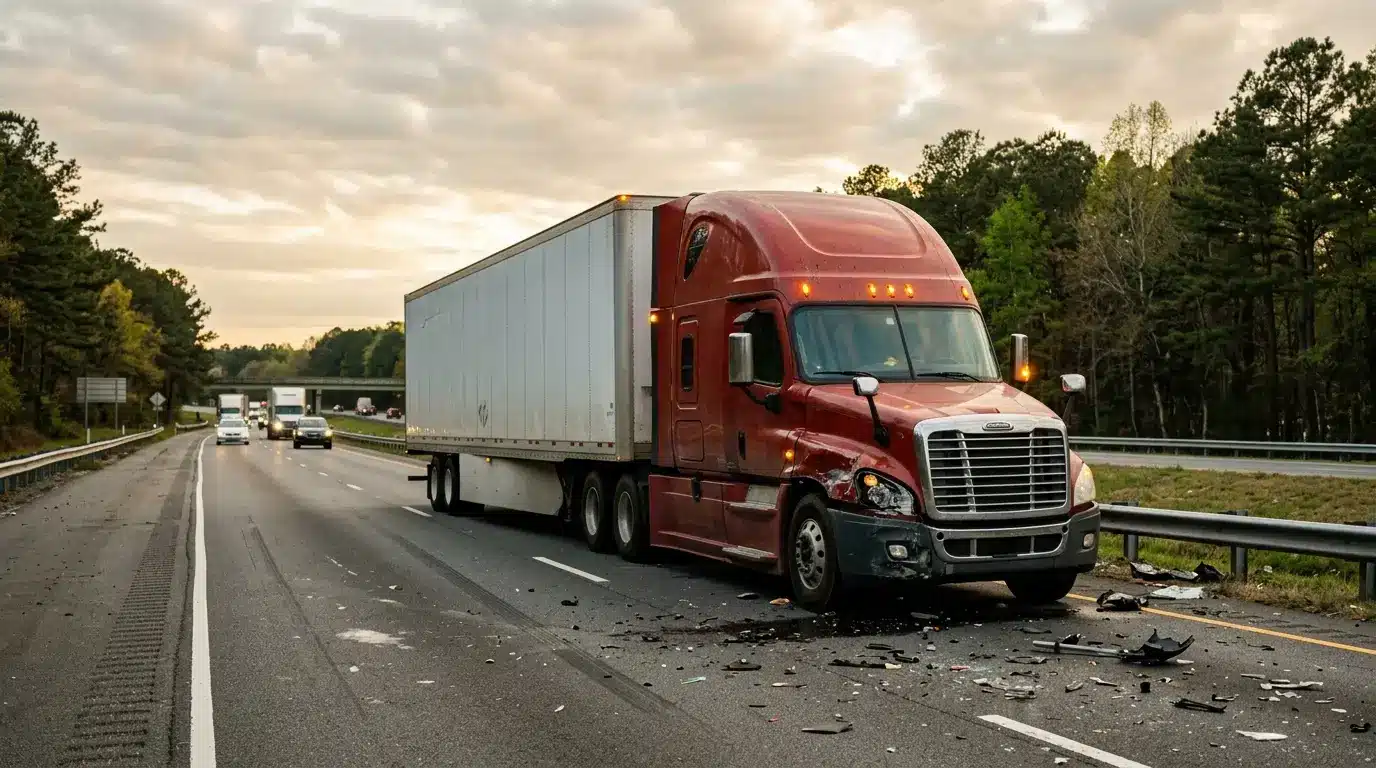
Key Highlights:
- These are the 5 steps to take after a truck wreck in North Carolina to protect your claim: seek medical attention right away; obtain a copy of the police report; document the scene and any related evidence; refuse to give the insurance company a recorded statement; and hire an attorney.
- The trucking company data (like black box speeds and log books) is routinely overwritten or destroyed within weeks. An attorney must step in with a legal hold to be able to preserve this evidence for you.
- North Carolina law holds strictly to “pure contributory negligence,” meaning if you are even 1% found at fault in an accident, you are completely barred from recovering anything from the other driver.
- Investigators are typically on site within hours after the crash; if you wait too long to hire an attorney, they will have a huge initial advantage over you.
When someone is involved in a collision with a commercial vehicle or large truck in a collision, it can be one of the most traumatic events a person will have to endure on the roadways of North Carolina. The injuries suffered are often catastrophic, the fault for the accident is often difficult to determine, and the other side’s insurance company and the legal system typically begin preparing to defend themselves within hours of an accident occurring. Understanding the 5 steps to take after a truck wreck in North Carolina will greatly improve your chances of receiving full compensation for the injury and loss you have endured.
At Tatum & Atkinson Law Firm, our truck accident lawyers have dedicated their careers to representing injured individuals (and their families) throughout North Carolina who are facing truck accidents such as this. Below is the practical and legally based information that we provide to our clients from the moment they speak to us by phone.
If you have been injured in a truck accident, contact Tatum & Atkinson Law Firm for a free consultation. Please call (800) 529-0804. No attorney fees will be charged unless we win your case.
Why Truck Accident Cases Require a Different Approach
A commercial truck accident injury is not just an accident with a truck that’s bigger than your car. The Federal Motor Carrier Safety Administration (FMCSA) has established detailed regulations for every aspect of commercial trucking, including driver qualifications (hours worked, rest breaks), vehicle maintenance, cargo securing standards, etc. Because the FMCSA regulations control all aspects of the operation, violations can result in liability not only for the driver but also for the trucking company liability North Carolina, as well as for the cargo loader, and possibly even the vehicle manufacturer as well.
Knowing what to do after a truck wreck and creating a successful North Carolina truck accident claim requires knowledge of federal law and North Carolina law at the same time. Preserving electronic evidence is time-sensitive and needs immediate action before it disappears from existence, while also having to compete with a large corporation that is spending significant amounts of money to protect its interests using investigators. Because of this complexity, it is important to follow these steps thoroughly.
5 Steps to Take After a Truck Wreck in North Carolina

Here are the five immediate steps to take after a truck accident in North Carolina.
Step 1: Get Medical Attention Immediately
The first thing to do when someone is injured as a result of a truck accident is to call 911 and obtain medical assistance, regardless of whether or not you feel injured. Adrenaline can mask pain for several hours or days after a high-speed impact, and no symptoms can be visible in the case of traumatic brain injuries, internal bleeding, or spinal injuries.
Your truck accident medical treatment obtained on the same day as your accident can create a continuous medical record linking your injuries to that specific accident. This is important because insurance adjusters will look for any inconsistency in the date of treatment if you do not receive medical treatment on the date of the accident.
Step 2: Contact Law Enforcement and Get the Accident Report
Under North Carolina law, police must respond to traffic accidents that cause injuries or significant property damage. While fully cooperating, do so cautiously, sticking to the facts without admitting to any wrongdoing or making conclusions. Be sure to ask for the officer’s name, badge number, and report number.
The police report contains important information about who is involved in the accident, what the conditions were at the time of the crash, and whether or not an officer issued a ticket or made any notable observations. As soon as the report is filed, contact the North Carolina Division of Motor Vehicles to obtain a copy of the report.
Step 3: Preserve Evidence Before It Disappears
The most critical part of this entire process is the timing. Commercial vehicles create a variety of digital records (especially black box speed reports and driver logs), which are routinely overwritten on a rolling basis, some as early as 30 days.
What to Document at the Scene:
- Truck: DOT number, company name, license plate number, photograph of the cab door, and the trailer.
- Driver: CDL, insurance information, and contact information.
- Environment: Condition of the roadway, any skid marks, visible traffic signs, and location of vehicles involved in the crash.
- Witness: Contact information for all witnesses to the accident.
- Video evidence: Any dashcam footage from your vehicle or any of the other vehicles involved, or any road video you may obtain
Why is it important to retain a lawyer as quickly as possible? An attorney will be able to make a formal legal request for preservation of these records. Without prompt legal action, the trucking company may legally dispose of these electronic records as well as dispatch/maintenance records.
Step 4: Protect Yourself With Insurance Companies
After a trucking accident, the insurance company for the trucking company may contact you quickly and may even tell you they just want to “get some information.” Here are some tips to protect your truck crash insurance claim:
- Refuse Recorded Statements: Do not give a recorded statement to the insurance company or their adjuster without your attorney being present. The adjuster can use these recorded statements to look for inconsistencies and possibly reduce the amount you will receive.
- Reject Early Settlement Offers: If the insurance company makes you an early settlement offer, you should consider it to be a red flag. The insurance company typically makes these offers before you have received a complete diagnosis of all of your injuries. Also, early settlement offers are usually only a small percentage of the total amount of money you owe.
- Go Dark on Social Media: Stay off social media during your claim. Insurance investigators monitor various forms of social media for claims. Even an innocent photo or comment about your injury on social media could be taken out of context and used to attack your case.
Step 5: Understand Your Legal Rights Under North Carolina Law
In North Carolina, the doctrine of pure contributory negligence is one of the toughest standards in the United States when it comes to defining fault for a trucking accident. Because trucking companies will use all means possible to take advantage of this doctrine to avoid paying claims, you must have an experienced North Carolina trucking accident lawyer represent you to protect your rights.
- The 1% Bar to Recovery: If you are found to be even 1% at fault for the accident, you will be completely barred from recovering any damages. Because of this reason, insurance companies will actively look for any way that they can shift the blame to you.
- Available Compensation: Depending on the specific circumstances of a successful North Carolina truck accident claim, you will be able to recover an amount of money for medical expenses, loss of income, loss of future income, pain and suffering, or disability.
- Evidence Dictates Value: The total amount of the final truck accident compensation NC you will receive will depend upon the quality of the evidence that you have against the at-fault party at the time that you file for damages, which is why the decisions that you make in the hours and days immediately after the accident are critical.
What Happens in the Background and Why Your Timeline Is Short

Most people who are injured in a trucking accident are not aware of how fast the trucking company’s insurance adjusters work. They probably sent out an accident reconstruction expert to the scene of the accident while you were still in the hospital and have been working on gathering evidence from the accident scene to protect the trucking company’s interests. Their semi-truck accident investigation is conducted immediately so that they can preserve evidence that is favorable to them, and they do not have any evidence that is favorable to you.
The Threat of Disappearing Evidence
Without intervention from your legal team, the carrier will have access to black box data, dash camera footage, and driver logs as the evidence is pulled almost immediately after an accident. After an accident occurs, any of the above-mentioned evidence that has not been placed on legal hold may be purged or overwritten according to the trucking carrier’s routine record retention policies.
The Myth of the 3-Year Window
- The Law: Personal injury has a statute of limitations of three years in North Carolina.
- The Reality: Waiting to retain counsel in a truck case is a critical mistake.
Evidence must be preserved, and a legal hold must be in place right away. A North Carolina trucking accident lawyer hired within the first week provides a lot more leverage for the case and has a lot more evidence to work with than if the lawyer were retained six months later.
Act Now to Protect Your Claim

A truck crash sets two timelines in motion simultaneously: your physical recovery and the steady erosion of evidence. Therefore, it is critically important to understand the 5 steps to take after a truck wreck in North Carolina to assist you in obtaining the compensation you deserve, provided those five steps are done quickly and correctly.
Tatum & Atkinson Law Firm has an experienced team of attorneys that works on behalf of injured victims and their families who’ve been injured in a truck accident. Our firm is dedicated to ensuring every element of your claim is properly addressed, from preserving evidence to negotiating with the at-fault driver’s insurance company to litigation if required. We work on a contingency fee basis. You do not owe us anything unless we win your case.
Contact us today at (800) 529-0804 for a free consultation with our experienced truck accident lawyers.
FAQs: 5 Steps to Take After a Truck Wreck in North Carolina!
Why is evidence more important in truck accidents than regular car accidents?
Federal law requires truck companies to maintain electronic records through ELDs, black box data files, and driver logs. These records are overwritten automatically. The multiple parties that may be liable for an accident will require documents from all sources that support each party’s liability.
Should I take photos of the truck’s company information?
Yes, photograph the truck’s carrier registration (DOT number), carrier name, license plate, and contact information located on the cab and trailer. These identifiers will identify the truck’s carrier, its insurer, and its regulatory history, which is important when making a North Carolina truck accident claim.
Can trucking companies start investigating the accident before I file a claim?
Yes, carriers almost always dispatch reconstruction experts, keep good data, and start working on building a defense within hours of the accident. The only way to effectively offset this advantage is to hire legal representation quickly.
What if I feel fine after the truck accident?
Seek truck accident medical treatment even if you feel fine. You may not feel pain because of adrenaline, and some TBIs and internal injuries will not show symptoms for days or weeks after an accident. Furthermore, delaying treatment prevents the establishment of a link between the accident and your injuries.
Can important truck accident evidence be lost over time?
ELD data can be overwritten after 30 days. Surveillance footage is destroyed after 30 to 90 days. Repairs are made to physical damage, and witnesses forget what they saw. The best way to preserve truck accident evidence collection is by having a legal hold issued immediately.
