How Social Media Posts Can Hurt Your Personal Injury Case In Virginia
Key Highlights
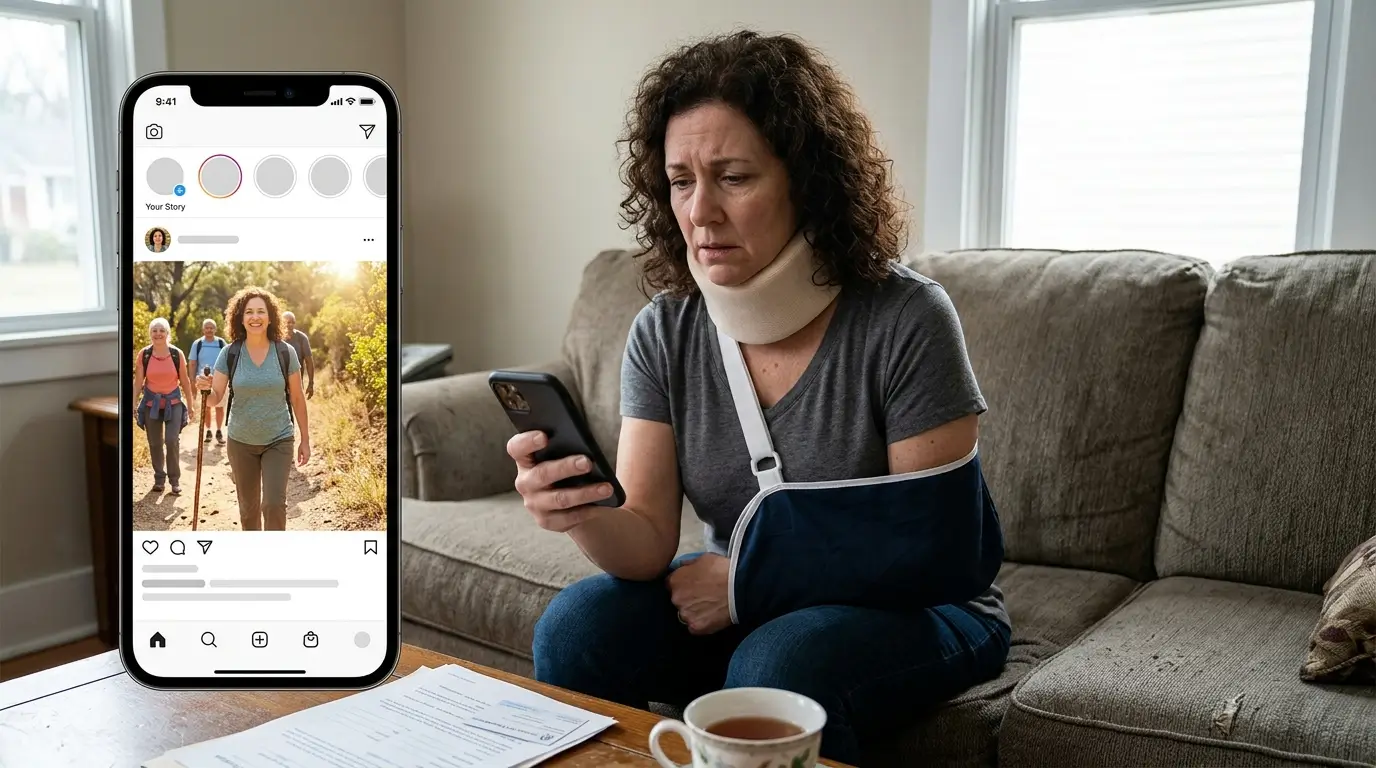
- It’s also crucial to realize how social media posts can hurt your personal injury case in Virginia. Adjusters rely heavily on social media activity, including pictures and check-ins, when making contact with you after an accident; they will try to use this evidence against you at the same time.
- In Virginia, even if you have strict privacy settings on your account, the defense can still discover your online actions. As a result, your digital activity can be subpoenaed under Virginia discovery laws, including information from deleted posts, private messages, and hidden location metadata that no longer exists.
- Having an investigator “friend” as well as deleting social media posts may lead to severe court sanctions, faulting you for “spoliation of evidence,” and may have a severe adverse effect on your ability to recover any damages financially.
- A professional legal team can effectively ensure that your digital activity is managed properly so that there is no evidence available to insurance companies or their representatives to discredit your claim. They will equally employ specialized strategies that counteract the tactics used by insurance companies to discredit your case.
An unexpected accident can seriously disrupt your life, whether on I-95 or while spending a relaxing weekend in Virginia Beach. After being involved in an auto accident or a slip-and-fall, it may be tempting to post about the incident on Facebook or Instagram to let friends and family know what is happening. As an experienced Virginia personal injury attorney, however, I have seen how a photo of your vacation or an inaccurate “check-in” can destroy the validity of your personal injury claim.
The attorneys and staff at Tatum & Atkinson Law Firm understand how important it is for you to recover from your injuries, and we want to help you make that happen! Once you see to it that you have received medical care after being involved in an accident, the next most important thing you should do is to be aware of how social media posts can hurt your personal injury case in Virginia.
For prompt assistance with your particular case, please contact our legal team at (800) 529-0804 for a free consultation. We will only charge you if we win.
The “Digital Trap”: Why Your Privacy Settings Aren’t Enough

People in Virginia have a false sense of security about their “private” profile settings, especially when they think they can hide from people who are looking at their profiles. However, looking at someone’s social media sites (e.g., Facebook, TikTok, etc.) is allowed as part of the discovery process, and there are no limitations on what can be found on those sites under the broad discovery rules that govern social media and personal injury cases in Virginia.
The Power of the Subpoena
In Virginia, the short answer to the question of whether defense attorneys can subpoena social media records is yes. As outlined in the Code of Virginia § 16.1-265, attorneys have the ability to issue subpoenas for any record or document that is relevant to an ongoing case, including:
- Deleted posts (which may be retrievable from server archives)
- Privacy messages that relate to the incident and your physical condition
- Metadata, which includes timestamp and GPS location information
Insurance Companies are Watching
Insurance companies checking social media after accidents is currently standard operating practice. Adjusters have been instructed to investigate instances of social media mistakes after an accident in Virginia and to search for evidence contradicting the medical documentation they have. For example, if you claim you cannot sit for more than twenty minutes due to a back injury, but you posted a picture of yourself at a Washington National baseball game, the insurance provider will utilize this information to reduce the value of your settlement.
How Social Media Posts Can Hurt Your Personal Injury Case In Virginia
If you are wondering how social media posts can hurt your personal injury case in Virginia, the answer is simple: the legal “pyramid” of evidence has your witness and medical records at the top, and social media at the foundation. Therefore, when you post on social media concerning your injury in Virginia, those posts could negatively affect your case. Here’s how online activity can result in social media post to hurt your personal injury case in Virginia:
1. Contradicting Your Physical Limitations
Virginia personal injury social media evidence, such as pictures, is, indeed, relevant to a Virginia personal injury case. Whether you had pain throughout your trip and were only able to stand up for a brief period of time to take a photo, the jury will only recognize a smile. If the jury thinks your vacation photos are “happy,” it will also likely believe that you have not lost out on any enjoyment of life as a result of your injury, according to the personal injury case in Virginia.
2. Location Tags and “Check-ins.”
You may think to yourself, “Can social media hurt a personal injury claim?” The answer is yes! When you “check in” at the gym, park, or restaurant while you were supposedly incapacitated, you have given the defense an incredibly strong tool with which to undermine your credibility.
3. Admissions of Fault
A post such as “I’m alright, but it could be worse!” could likewise be manipulated by the defense. As an example, they may claim your assertion of being alright immediately following an accident contradicts your current assertions of suffering from chronic pain. This is also why we provide Virginia personal injury attorney advice on social media use.
Table of Social Media Do’s and Don’ts
| Action | Why it Matters in Virginia | Recommendation |
| Posting Photos | Can be used to disprove the existence of physical pain or suffering. | Stop posting all photos until the case ends. |
| Location Check-ins | Prove physical activity levels. | Disable GPS and location tagging on all apps. |
| New Friend Requests | It could be a defense investigator “fishing.” | Decline all requests from people you don’t know. |
| Deleting Old Posts | Can be seen as destroying evidence (spoliation). | Never delete without talking to your lawyer first. |
| Commenting on News | Can reveal details about your mental state or the case. | Stay silent on all public forums. |
What Not to Post After a Virginia Accident: A Checklist
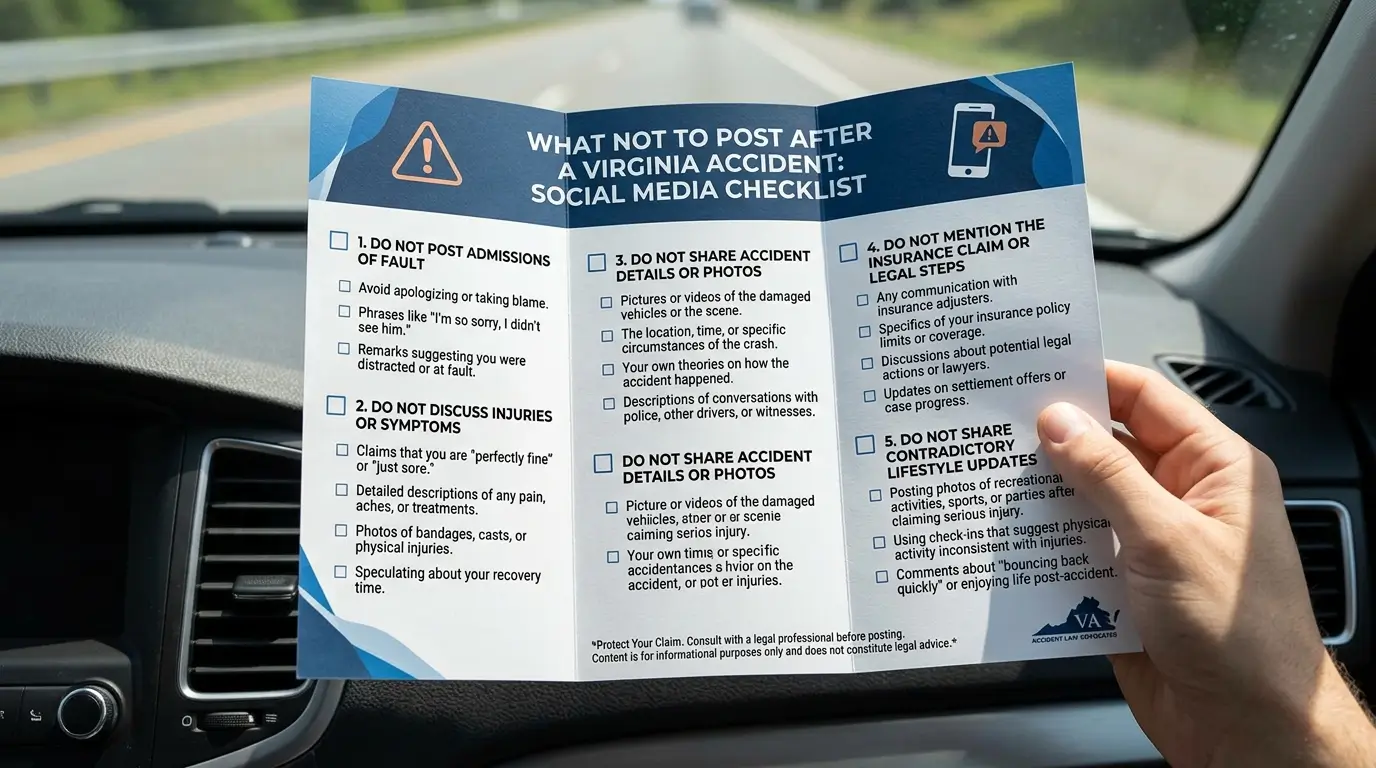
According to Tatum & Atkinson Law Firm, it is important to follow their strict guidelines in order to protect your right to receive compensation. If you have a question about a specific post, please talk to a Virginia personal injury lawyer before posting online.
- Do Not Post About the Accident: You should never make a statement about the accident or who was at fault online. The courts in Virginia have treated statements you make about the accident on social media as if you were admitting fault, and the defendant’s insurance adjusters can use your statements against you in court.
- Do Not Post About Your Injuries: Do not make “progress posts” or “updates on your recovery” on social media. If you post that you are feeling better, the defendant’s insurance adjusters will use those statements to argue that your injuries are not as serious as your Virginia personal injury attorney claims.
- Do Not Vent About the Insurance Company: Publicly complaining could be seen by the unfortunate insurance company and legal forums as biased or “litigious.” This will give the insurer a narrative that you have purely jumped onto the bandwagon of filing a lawsuit without a genuine reason for seeking compensation for your catastrophic injuries.
- Do Not Accept New Friend Requests: The “catfishing” and mutual friends methods are ways an investigator may use to bypass your privacy settings. During a Virginia civil claim, if you are being followed by anyone new, they could be a “digital spy” obtaining evidence to undermine your existing injury civil claim.
- Do Not Delete Anything Without Legal Advice: In Virginia, deleting a post or profile is called “spoliation of evidence.” Spoliation results in a drastic penalty for you, where a judge will tell the jury to presume all your deleted materials were harmful to your case, which would be detrimental to your case.
Specialized Legal Services for Digital Evidence
Tatum & Atkinson Law Firm employs cutting-edge discovery methods to assist our clients in managing their digital footprints as part of our experienced legal practice. We will not only advise you about what materials to avoid using, but we will also continuously monitor the way the opposing side will utilize social media evidence in personal injury matters in the Commonwealth of Virginia.
When appropriate, we will collaborate with digital forensic specialists to guarantee that your social media evidence in Virginia personal injury cases is being presented accurately and in the appropriate context so that the defense cannot select and use only photos that support an inaccurate portrayal of you.
Why Tatum & Atkinson is the Right Choice for Your Case
In today’s world, filing a personal injury claim is no longer as easy as it used to be. There is a need to have a Virginia personal injury attorney who understands using social media in personal injury lawsuits.
At Tatum & Atkinson Law Firm, we provide:
- Professional Experience: We understand how insurance companies use various methods to gather information about claimants.
- Local Knowledge: Our attorneys in Virginia have extensive experience with the laws governing personal injuries and the procedures in local courts.
- Committed to Our Clients: Our attorneys will handle all your legal needs, so you can focus on recovering from your injuries.
“Insurance providers can take advantage of your online presence to help deny an insurance claim. Do not allow a single like or share to impact your future. The landscape of today’s legal system requires great caution in your social media usage.” — Robert Tatum, Lawyer at Tatum & Atkinson Law Firm
Contact Our Virginia Legal Team Today
Today, the intersection of law and technology makes it easier than ever to learn what happens in your everyday life and in your private life as well. If you or someone you care about has been injured in an accident, call Tatum & Atkinson to help you protect your rights and find your way through social media and personal injury cases in Virginia.
We know how social media posts can hurt your personal injury case in Virginia and how the adjusters for the insurance companies use certain tactics to lower the value of your claims, and we are committed to making sure that your digital footprint does not prevent you from obtaining the recovery you deserve.
Contact us at (800) 529-0804 now for your free consultation. Remember, we work on a no-win, no-fee basis, and we are here to assist you with obtaining the justice that you are entitled to.
Frequently Asked Questions About How Social Media Posts Hurt Your Personal Injury Case In Virginia!
Can a Facebook post lower my Virginia injury settlement?
Yes. If your post indicates that your injury is not as severe as you are claiming, then the insurance company will offer less than they would have normally. Many lower settlements are because of Facebook posts hurting injury claims in Virginia.
How long should I stay off social media after an accident in Virginia?
In Virginia, especially in 2026, you should remain dark or inactive on all social media platforms, including Facebook, Instagram, TikTok, etc., until you have settled your case or received a court verdict.
Can private social media posts be used in Virginia courts?
Yes, the Virginia courts have consistently ruled that there is no reasonable expectation of privacy in social media. All content shared, even if restricted in terms of privacy settings, is discoverable if it is relevant to your injuries or the accident.
Should I accept new friend requests during a Virginia lawsuit?
It is best not to add any additional friends until the matter is resolved. One tactic often used by private investigators is to request a friendship to get past your privacy settings. Only add people you actually know and trust.
What types of posts are discoverable in Virginia personal injury lawsuits?
As part of your lawsuit, nearly anything you post online could be considered evidence. This includes your status updates, tagged photos of yourself, check-ins, comments on another user’s page, and even private messages if a judge decides they are relevant to your lawsuit.
