What If The Truck Driver Was Intoxicated When They Cause An Accident In Virginia?
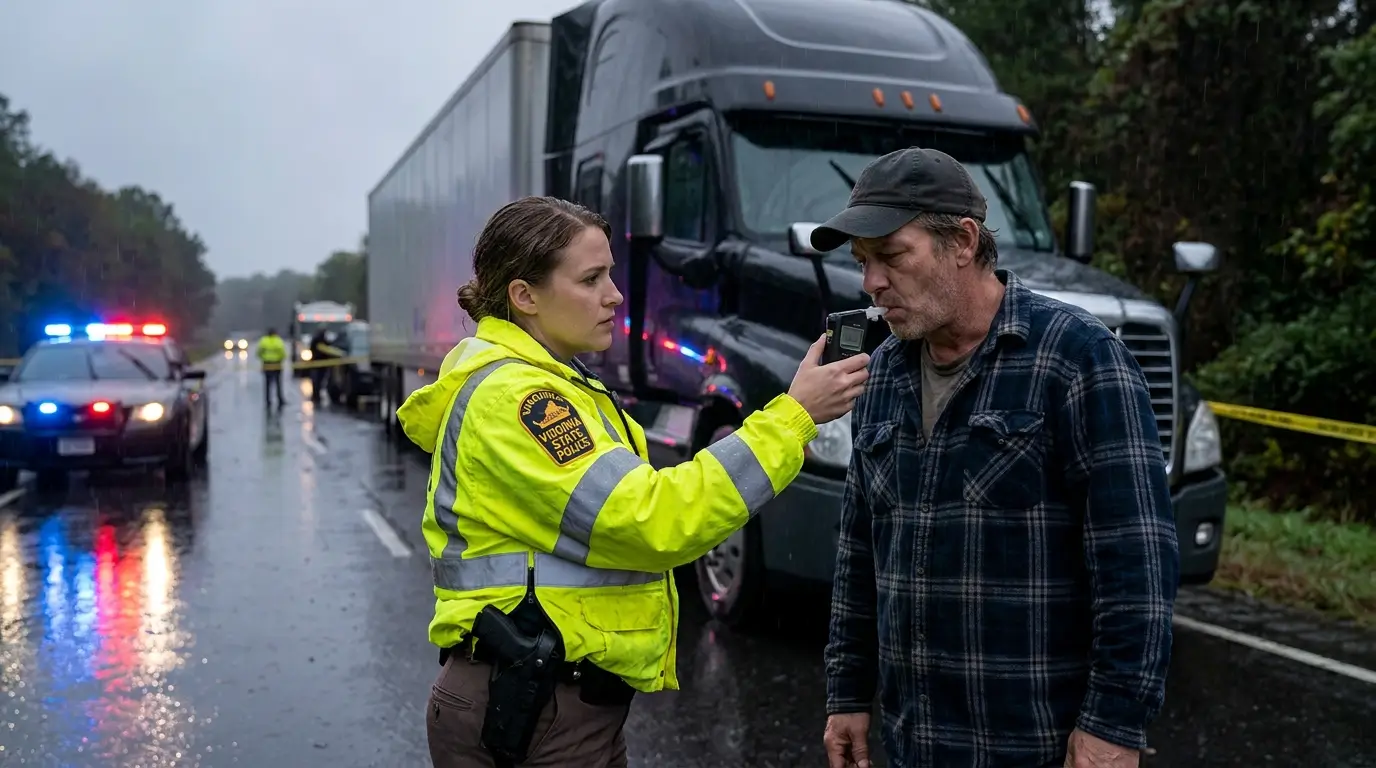
Key Highlights About Intoxicated Truck Driver Accident in Virginia
- A drunk truck driver is at least twice as intoxicated as the average driver.
- A person under the influence of drugs may be intoxicated not only due to consuming illegal substances but also due to certain prescription drugs.
- The trucking company liability can be held liable for employing a driver unqualified to operate a commercial truck.
- Which is not easy to prove; it may take just several days for all the evidence to disappear.
- In most cases, evidence disappears very fast; it needs to be collected immediately.
Intoxicated truck driver accident in Virginia; once the issue of the drunk truck driver accident claim is addressed, both the strength and urgency of the claim increase because the intoxicated truck driver violates one of the most important safety regulations in the state.
My name is Robert Tatum, and I am a lawyer with Tatum & Atkinson Law Firm. We have provided legal services for almost 65 combined years and specialize in drunk truck driver accidents since our establishment as a veteran-owned firm in 2006.
If you need a Virginia truck accident lawyer at any point in time to help you file your truck accident claim after a commercial truck accident, we would like to assure you that we understand all CDL regulations, FMCSA regulations, and trucking company liability issues.
More Strict Regulations for Drivers of Commercial Trucks
Pursuant to the CDL regulations of Virginia, a truck driver is not allowed to operate a vehicle if his or her blood alcohol content is 0.04 BAC commercial limit, a percentage that is considerably lower than that of an ordinary driver operating a car with a permitted blood alcohol of 0.08%, Va. Code § 46.2-341.24.
There are even lower allowances under FMCSA regulations, which prohibit any alcohol consumption for four hours before driving, 49 C.F.R. § 392.5. The impairment leading to incapacity may be induced not only by alcohol but also by drugs, both legal and illegal.
Impairment Causes of Truck Crashes
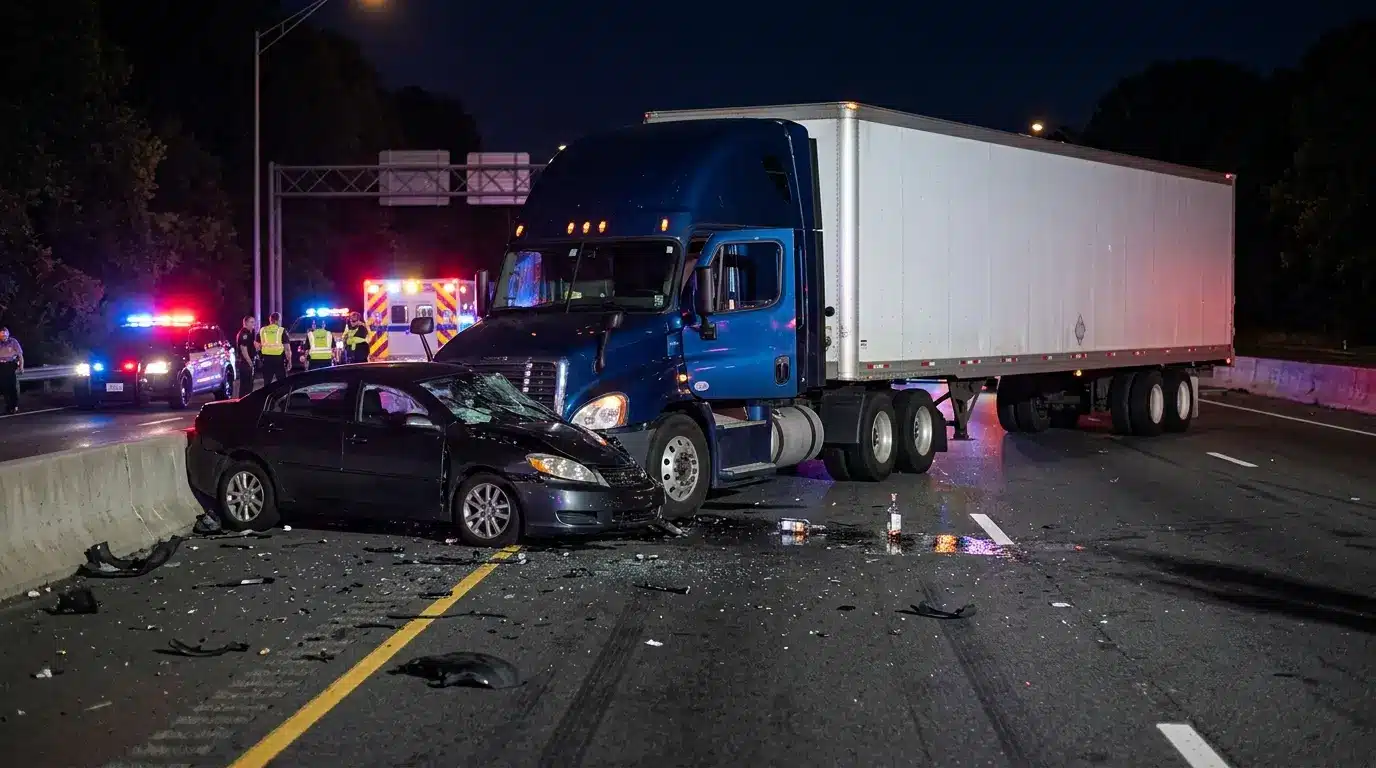
Being drunk, an intoxicated truck driver causes a delayed response times as well as reduced coordination and judgment skills. The types of commercial truck accident include rear-end crashes, head-on collisions, jackknifed trucks, rolled trucks, and lane departures.
Evidence of the Intoxication of the Driver
To prove that the intoxicated truck driver suffers from problems with alcohol or drugs, the process should be done immediately, as some evidence might be lost over time. This evidence includes:
- the police report
- field sobriety test data
- post-accident drug/alcohol testing, breath or blood test results
- toxicology report, dashcam or black box / ECM data video
- electronic logging device (ELD) information
- and eyewitness testimony
Testing must be done in compliance with FMCSA regulations.
Defendants of the Case, Including the Trucking Company
In this case, one of the defendants is the intoxicated truck driver, but the trucking company liability has always been another defendant in this case.
According to the rules of FMCSA regulations, the carrier must conduct a screening of drivers and use the FMCSA Drug & Alcohol Clearinghouse to ensure that its drivers pass the tests; it is illegal to employ a truck driver who fails to pass the necessary screening process. If the carrier did not meet the screening obligations, it will bear responsibility for negligent hiring/supervision/retention, and violation of the law.
Virginia’s 1 Percent Rule and Your Compensation for Pain and Suffering
Regardless of how guilty the driver is for having caused the drunk-driving accident, the laws of pure contributory negligence / 1% rule of Virginia fit very well. Due to the contributory negligence, as soon as the opponent discovers that the plaintiff’s fault in the accident is 1 percent, the case will not even be considered.
Consequently, the truck accident claim will be put together based on the costs of the compensation claimants, including the cost of treatment by the doctor, future medical costs, lost earnings, and loss of property.
Have You Been Hurt by a Drunk Driving Truck Accident in Virginia? Reach Out to Tatum & Atkinson.
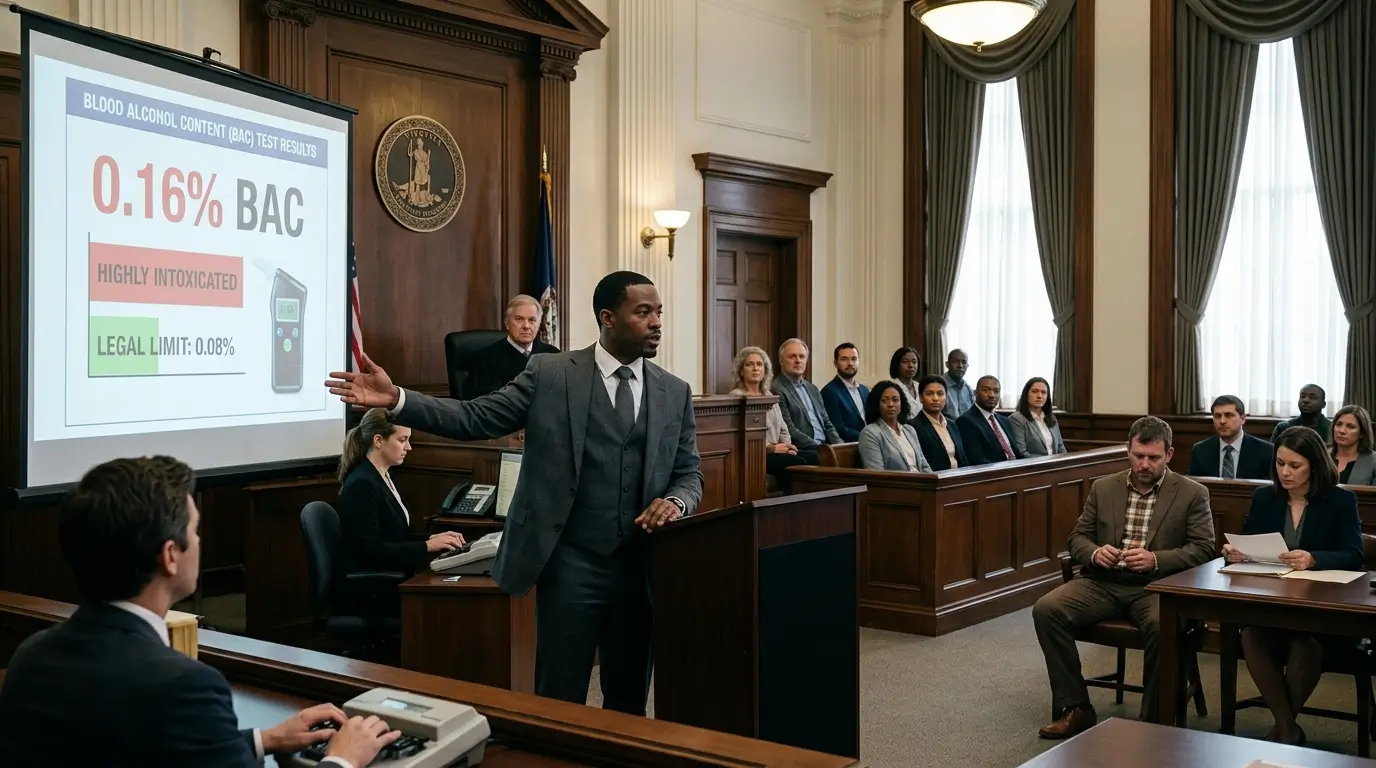
It is not a coincidence; it is an intentional action done by a drunk truck driver under the influence of alcohol. The team members at Tatum & Atkinson, your trusted Virginia truck accident lawyer team is ready to provide you with legal help in case of a commercial truck accident in Cedar Bluff.
The professionals started working on your case by gathering and analyzing materials to find out how the trucking company liability hired a drunk truck driver. Give us a call at (800) 529-0804 to get your free consultation from our Cedar Bluff office. We have a no-win, no-fee approach.
Frequently Asked Questions!
Does the driver have to be convicted of DUI for us to win the injury case?
No way. The situations of proving a DUI charge and proving your injury claim from the truck accident investigation are entirely different. It takes proving guilt in the case of a DUI, and this means that there cannot be any doubt about the guilt of the drunk truck driver. In the accident case, it has to be proved that there is more than a 50% chance that the impairment caused the accident injuries.
What if the truck driver was on prescription medication, not alcohol?
Sure, it can be a case of impairment. According to FMCSA regulations 49 C.F.R. § 392.4, in case a drunk truck driver is intoxicated and not allowed to drive the vehicle due to the use of drugs, he can be treated in the same way as a drunk-driving truck driver. In case a driver consumes any legal prescription medicine that makes him sleepy, an accident case can be made against him.
How do you get the drug and alcohol test results and the truck’s data?
The evidence that the trucking company liability has in connection with the event will definitely be lost in a short time, and indeed, most probably, it will not stay with the trucking company for more than a few months after the event. The law does not require trucking companies to keep evidence unless some legal action is taken against them.
Can we still recover if our driver was partly at fault?
The pure contributory negligence / 1% rule of Virginia states that the contributory negligence system is in force, which means that you may be denied compensation even if the trucking company is responsible for the accident.
What does it cost to hire a Virginia truck accident lawyer?
Consultation is free. In this scenario, all legal actions will take place in accordance with contingent fee contracts so that there are no fees due on your part until there is a victory. Plus, your first consultation with a Virginia truck accident lawyer will be free as well. This is a very crucial aspect of your case, as it means that the law firm is going to do everything for you.
