What Are The Dangers Of Texting And Driving In Virginia?
Key Highlights:
- Using your phone while behind the wheel is a significant contributor to driver distractions that involve sight, manual dexterity, and thinking.
- Virginia has made it illegal for drivers to hold their handheld devices while operating a motor vehicle, and it is now considered a primary offense since 2021.
- Violating the mobile phone law is one of the strongest pieces of evidence of negligence in connection with an injury claim that you will have.
- Your evidence includes call logs, dashboard camera footage, and vehicle data (telematics) if available.
- The use of a mobile device (such as text messaging) could aid in developing an argument proving your case successful in Virginia when it satisfies the 1% rule.
What Are the Dangers of Texting and Driving in Virginia?
When a driver is texting while driving, they become distracted from the road by taking their eyes, hands, and minds off the road, and Virginia has laws that prohibit a driver from using their cell phone while doing something else (in this case, driving) with their vehicle.
The relevant Virginia laws on distracted driving, as well as your rights if you have been injured as a result of someone else’s distraction, come from what makes Virginia distracted driving an extremely danger to both the driver and everyone else in his or her path of travel.
I, Robert Tatum, am an attorney at Tatum & Atkinson Law Firm in Virginia. Since 2006, our firm has been representing clients with distracted driving issues in Virginia. Our firm has over 65 years of experience with Virginia distracted driving cases and Virginia texting while driving accident cases.
If you have ever needed a Virginia car accident lawyer due to an injury caused by a distracted driver, we will assist you with your legal rights and represent you before the courts. We are available to explain all Virginia laws governing the use of cell phone driving laws while driving, as well as to ensure that you receive all the damages to which you may be entitled for damages resulting from your accident.
Why Texting Is the Most Dangerous Distraction
According to safety researchers, distractions are simply categorized into 3 groups:
- visual distractions (removing your sight from driving)
- manual distractions (removing your hands from the steering wheel), and
- cognitive distractions (removing your concentration from what you are doing).
Distractions are generally classified under one of the three categories; however, Texting is an exception because it has the ability to produce all three forms of distraction.
The Crashes Caused by Texting
Here are the main types of crashes caused by distracted driving, mainly texting.
Accidents due to rear-end crashes
A driver looking ahead fails to see the vehicles in front of them, reduces speed, and subsequently crashes into a vehicle ahead of them; a typical rear-end crash caused by Virginia distracted driving.
Accidents at intersections/red lights
A driver only looking at their phone for a couple of seconds while passing a red light or a vehicle that has the right-of-way can lead to a high-speed side-impact crash.
Accidents from Lane Deviation and/or Head-on Collisions
A vehicle will cross over into the opposite lane or leave the roadway if the driver does not see where they’re going, leading to head-on collisions.
Accidents Involving Pedestrians or Bicycles
When drivers do not look at the roadway, they often cannot see pedestrians or bicycles and do not apply their brakes in time to avoid striking them.
What Does Virginia State Law Provide?
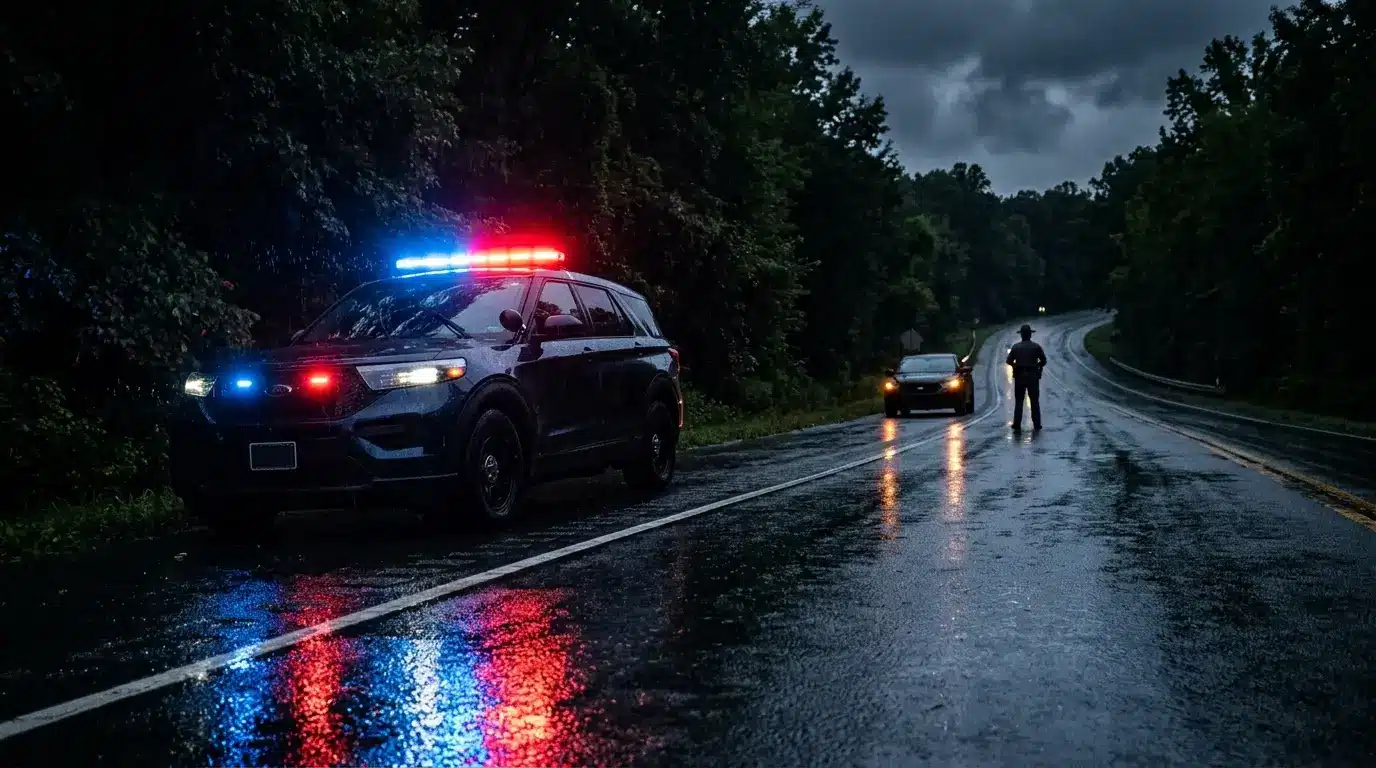
Here’s what the law in VA has to say about texting while driving situations.
Only Hands-Free Cell Phone Use Legal since 2021
In 2021, the Commonwealth of Virginia (Va.) enacted Va Code Ann § 46.2-818.2, which prohibits operating a motor vehicle while using a handheld electronic device for any purpose under its cell phone driving laws.
This law was characterized as a “primary offense,” meaning a law enforcement officer can issue a summons when observed only for the violation of this law, separate from any other traffic laws, pursuant to the cell phone driving laws. A person found guilty of a violation of this law will be assessed a civil penalty of $125 for a first offense and $250 for subsequent offenses.
If a person violates this law while in a construction zone, they will incur a minimum mandatory civil penalty of $250 and will also incur demerit points as assessed by the Virginia Department of Motor Vehicles for each violation. Driving while using hands-free devices, mounting devices (such as suction or other devices), Bluetooth devices, and voice-to-speech devices is permitted under this law.
How This Is Related To Your Case
When a driver violates the statute for mobile device driving laws in such a way that results in injury to another person, there is not only grounds for a ticket to be written based on this conduct, but this also establishes that there was negligence as well; by engaging in the act of operating a motor vehicle, the driver created a duty of care toward others while operating their vehicle.
The driver was violating their duty of care toward the plaintiff by carrying their mobile phone, and the driver breached their duty of care when using the phone.
Injuries Resulting From The Accidents
A driver, driving negligently, failed to be responsive enough or to slow down (by applying brakes) sufficiently to avoid hitting a car completely or to develop sufficient force of acceleration upon impact that would produce bodily injury, such as, but not limited to,
- traumatic brain injury
- spinal cord injury
- fractures
- internal organs and
- a long-term psychological condition (anxiety or post-traumatic stress disorder (PTSD)) that would affect the manner in which (s)he will live.
Proving That The Driver Was Texting
Because a driver will not tell the truth about whether or not they were texting, there usually needs to be some sort of evidence involved to support a distracted driver injury claim.
Digital Footprint
Phone records can prove that they were being used at the time of the accident, along with infotainment and event data recordings.
Human and Video Evidence
The officer who wrote the report will also likely remember whether there were any commercial or dash cam videos showing the driver on their cell phone and witnesses to the accident.
Timing is Everyone’s Friend
Timing is extremely important when it comes to preserving evidence. Once an accident occurs, phone records can be erased after a short period of time. Video footage is also often deleted within a few days or weeks.
A personal injury attorney will understand the urgency to obtain and maintain evidence of an accident and will send preservation letters and subpoenas to all possible locations of evidence before it can be destroyed.
Your Recovery and What Insurance Companies Say
Here’s the most you can recover out of such a situation.
Pure 1% Contributory Negligence in Virginia
Virginia uses a pure contributory negligence law, which states that if a judge decides that you’re 1% at fault, then you will not receive any compensation.
This is why the insurance companies will do everything in their power to show that the injured person is somewhat at fault, and why it is so important for the victim of a texting while driving accident to show that the driver was, in fact, texting when the accident occurred.
Recovering Damages
If you can prove your distracted driver injury claim, you can be compensated for the cost of your medical treatment, lost wages, future medical treatment, rehabilitation, and pain and suffering. As a general rule, the more serious and long-lasting the injury, the more of the damages will be for future medical treatment and lost wages.
The Defense Will Likely Raise These Defenses
Insurance companies commonly use the defenses of contributory negligence (e.g., the injured party used their cell phone) or preexisting injuries suffered before the accident, and there isn’t enough evidence to prove that violations of cell phone driving laws were the reason for the accident.
Speak with Tatum & Atkinson If Injured by a Driver
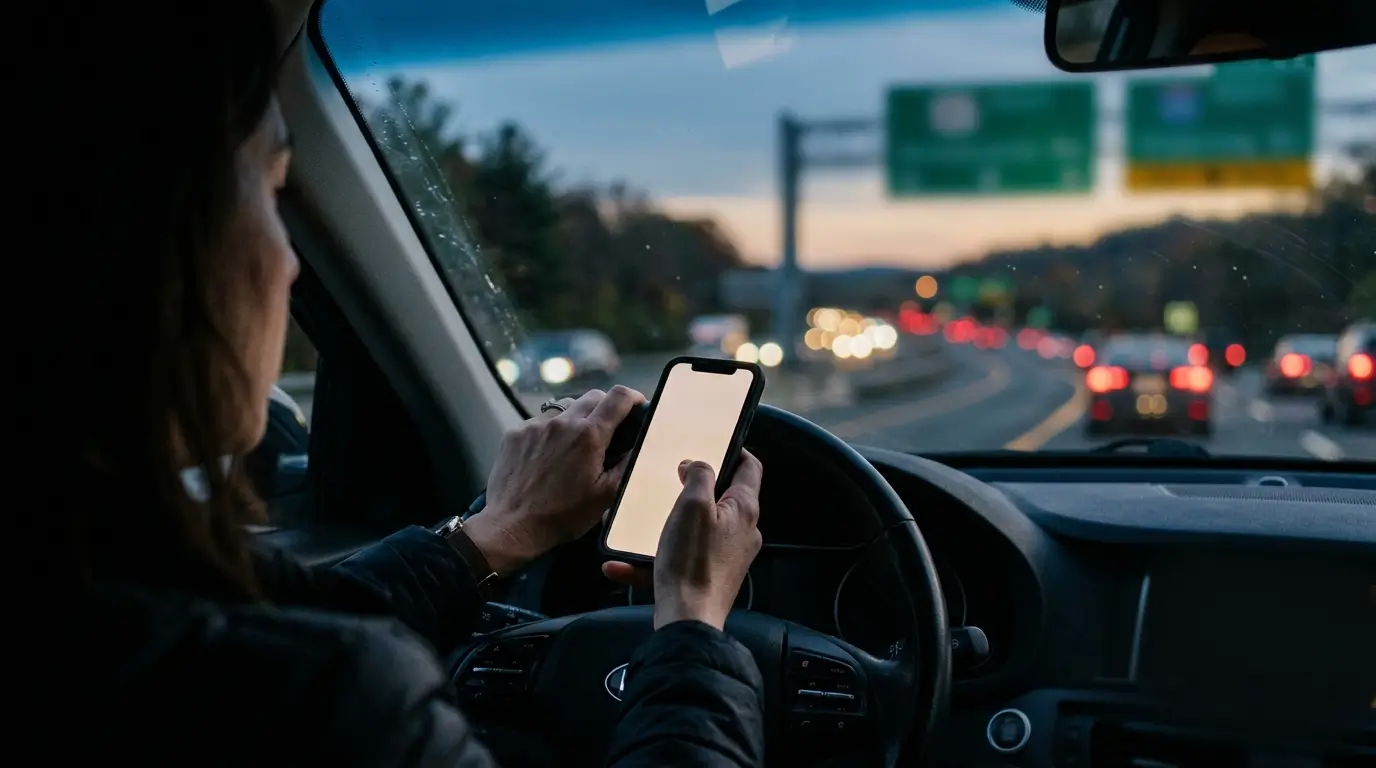
When a person checks their phone while they’re operating a motor vehicle, it can have an immediate effect on their health as well as their finances once they’ve been involved in an accident. You may not have anticipated this happening; however, you’ll deal with any legal matters after you’ve composed yourself and assessed the situation, knowing what to do after an accident is free.
If you’ve been injured in an automobile accident due to someone else’s negligence, we can help! Contact us at (800) 529-0804 for a free consultation. We work on a contingent fee basis, meaning we only charge you when we’re successful; so, contacting us sooner will enable us to collect vital evidence before it’s too late!
Frequently Asked Questions!
Is it illegal to hold my phone at a red light in Virginia?
It covers a moving vehicle; a stopped driver is not actually in violation of the cell phone driving laws. However, when the light turns green, the driver begins his movement, holding a cell phone, the violation takes place, and it is precisely what the police are watching for.
How can we prove the other driver was texting?
This information can be accessed through the process of discovery from the phone records, from the dashcam footage and surveillance video, from witnesses, and from the police report. Such records will disappear fast, so you should contact a Virginia car accident lawyer who will make sure they are preserved.
Can I still recover if I was partly at fault?
In Virginia, being found even just one percent at fault means that a plaintiff is barred from recovering any money as part of their injury claim. As a consequence of the potential denial of the claim, it is critical that you can provide sufficient evidence supporting the other driver’s liability for causing your accident through Virginia’s statute regarding Virginia distracted driving.
The driver only got a small ticket; does that hurt my case?
No way. The fine is small, but the citation, together with phone usage, proves negligence in a distracted driver injury claim, the consequences of which are much more serious than just a traffic violation.
What does hiring a lawyer cost?
Absolutely nothing. We work on a contingency basis; we take no fees until we win the case, and the initial consultation is free of charge.
