What Is The Value In Having A Dashcam In My Car In North Carolina?
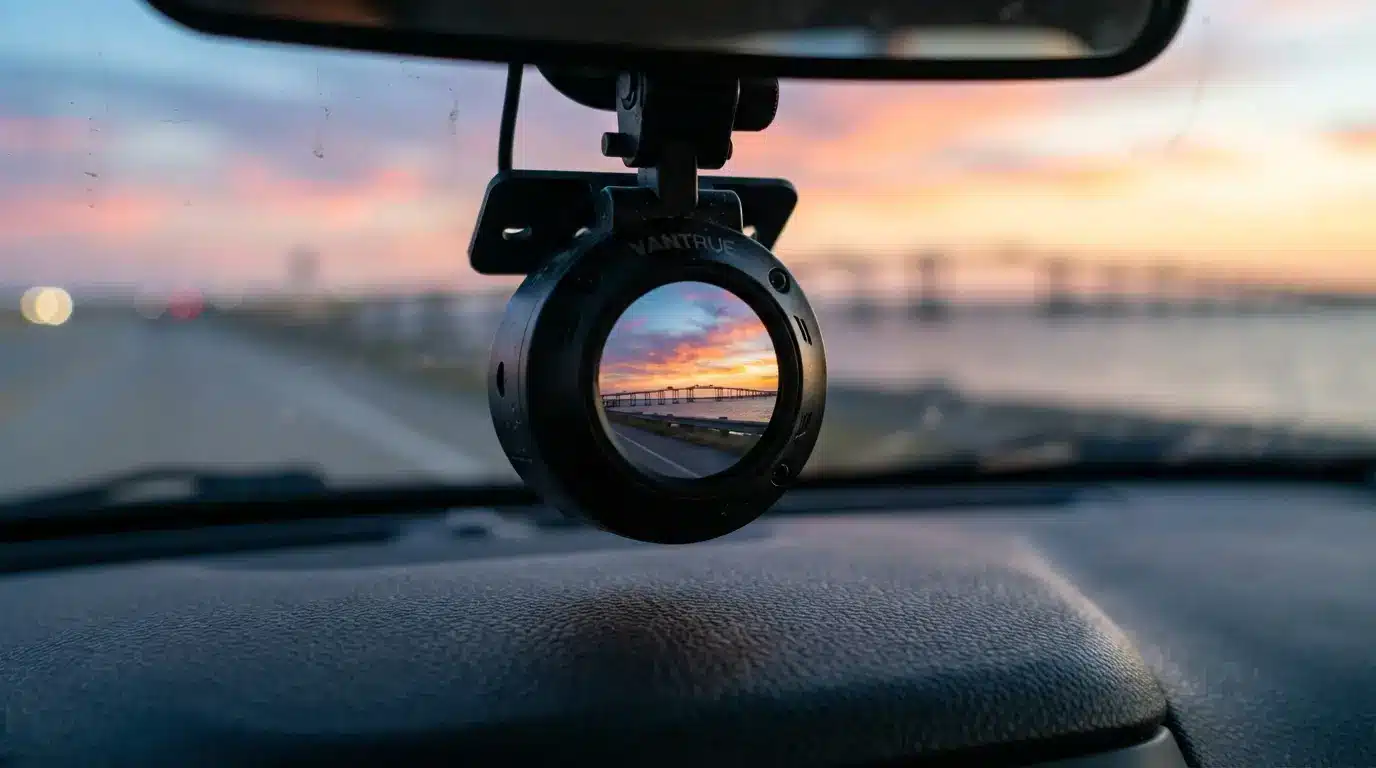
Key Takeaways:
- The dashcam is a continuous video recording device that stores its recordings in a loop format that keeps changing.
- In North Carolina’s tough no-fault system, dashcam proving fault North Carolina that prove that you were not at fault will help you.
- Videos will solve all problems regarding running the red lights and identifying plates of the vehicle that caused a hit-and-run dashcam incident and will even fight false witnesses.
- After a collision, preserving dashcam footage after a crash is crucial because it gets overwritten.
- Is a dashcam legal in NC? Yes, completely; install it without obstructing the view, and be careful with audio policies.
What is The Value in Having a Dashcam in My Car in North Carolina?
If you have an accident in North Carolina, it can take only a minute and a half of video to have your claim resolved. The state of North Carolina has one of the toughest fault laws in the country, and a little bit of fault on your part can lead to your claim being denied by the adjuster.
Dash cameras can provide you with dashcam evidence insurance claim that the adjuster cannot dispute; you will be able to view exactly what happened on the dash camera’s video recording. Therefore, providing support for your claim in this regard, and explaining how a dash camera helps your claim.
My name is Robert Tatum; I’m the attorney for Tatum & Atkinson Law Firm. We are a veteran-owned law firm that has been serving our clients since 2006.
Together, we have accumulated over 65 years of combined experience working with dashcam footage car accident North Carolina claims. If you are ever involved in a car crash in NC, we know what is the value of a dash camera mounted inside of your vehicle in NC, and we can also explain how dashcam video can establish liability in North Carolina, which will greatly help with your claim for damages. We will advocate on your behalf.
Understanding What a Dashcam Is and How It Functions
The dash camera is a small camera attached to the dashboard or windshield of your car and records a video of what is happening on the road while you are driving.
Normally, when you turn on the camera and start to drive, the camera will begin to record what you are doing immediately; recording will continue by the camera until you turn off the switch. In addition, every time you make a recording, the camera also records data assigned to the recorded video.
Data assigned to the recorded video includes:
- time
- date
- location (using GPS), and
- Speed of the vehicle.
Loop Recording and Its Impact
A loop recording is when dash cams continue to create new video when they are full, allowing users to delete old video from their memory card. This eliminates the need for users to constantly check the storage area. However, this means that if all videos are not managed appropriately, the user could lose their accident video very soon after driving.
Other Features Providing Useful Information
Other than just taking pictures, a dash cam might have other features such as the ability to lock and record footage upon detection of an impact, park mode to record a hit-and-run dashcam incident, and even night vision mode for low-light conditions.
Why a Dash Cam Is So Useful in North Carolina
While most states will cut down your payment based on your degree of fault, North Carolina is much tougher, and this one factor alone is why objective video is so helpful here.
The 1% Rule Makes Objective Evidence Invaluable
North Carolina uses the doctrine of pure contributory negligence, which means that if you are found to be even 1% responsible for an accident, you could be prohibited from receiving any recovery. Insurers are well aware of this and try to find any way to make you partially at fault for the accident.
Dashcam proving fault North Carolina removes their strongest negotiating tactic with objective video evidence that you were not at all to blame.
Proof Carries the Case Rather Than Just Your Word Against Theirs
In a North Carolina case, the burden of proof is on the injured party in proving that the other motorist was at fault for the accident. Without proof, a case could become your word versus theirs. Dashcam footage car accident North Carolina provides the objective evidence needed to support your claim.
Videoing a Hit-and-Run Accident
When the driver responsible for causing the accident takes off, be it on I-40 or some street in Raleigh, your hit-and-run dashcam will record the make, model, and license plate of the vehicle. This video might determine whether you know who was at fault or are left to deal with uninsured motorist insurance only.
Recording Reckless Driving
Weaving in traffic, failing to stop, racing, or tailgating before striking your car, a dashcam records this type of driving behavior as well as the accident itself. With such evidence, what may seem to be a typical fault issue turns out to have its perpetrator clearly identified.
Use of Dash Cam Footage after an Accident
Visual evidence plays a vital role in many cases involving accidents. It may help in having a better idea of what really took place.
Demonstration of Liability and Fault
The dashcam footage car accident North Carolina may be used to prove the sequence that determines liability, such as which driver had the right of way, who was driving across the median, or who could have stopped in time. Where there is an “I say-you say” collision, the objective sequence determines liability.
Support for an Insurance Claim
The dashcam evidence insurance claim footage will expedite the insurance claim process by preventing the adjuster from claiming the facts are not clear. Such footage may also prevent an accident from being staged.
Settling Discrepant Witnesses’ Testimonies
Sometimes even the honest witnesses forget, while others give contradictory testimonies. Timestamped footage will act as an independent arbitrator that does not alter its account under duress.
The Use of Video Footage by Lawyers
The lawyer puts all the materials, your video, the police report, pictures from the scene, and any other medical information into one coherent narrative for use in negotiation and in court, if required, after authentication. The lawyer can act quickly to obtain other footage from other cameras near the scene, from traffic cameras, or from the other driver’s dashcam. The Heavy Hitters know how fast evidence gets lost.
Keeping Your Video, And Things Not To Do
Video footage from dashcams can be important evidence in any accident claim. It is important to take care in preserving them.
Save the Video Immediately
Preserving dashcam footage after a crash is the most important thing you will do. Because the recording loops on your dashcam, the recording could be erased relatively quickly, generally within several hours. Therefore, as soon as possible, turn off your cam or remove your memory card (if applicable) and copy to another device.
Never Alter or Delete Any Part
Editing of any kind, even editing the timestamp, makes the video not credible and not admissible in court. So keep the whole video and allow your lawyer to determine when and how to present it.
Popular Mistakes When Using Dashcams
Drivers overlook useful evidence due to not making sure that the dash cam is working, is charged, and has enough space; installing it in such a way that it obstructs the driver’s view; keeping the audio recording on in the presence of third parties; and using only one front dash cam.
Limitations and Legal Issues in North Carolina
There will be times when the use of dash cam videos in crashes can turn out to be useful; however, certain limitations exist which one must be aware of. The above-mentioned information sheds light on these factors.
What a Dash Cam is Not Always Able to Capture
Footage is not always perfect. Nighttime, rainfall, and sun glare can distort the image; a small viewing area may fail to capture some parts of the view; and a malfunction or a full memory can prevent any recording in crucial moments. Always use footage as good evidence, but not a warranty.
The Footage May Go Against You, Too
The very dashcam footage car accident North Carolina that will help you to prove that it was somebody else’s fault may contain information about your speed, missed turn signals, or checking your smartphone. Moreover, police can confiscate your device after an accident. That is the reason for driving carefully and having a lawyer look through your footage.
Legal Status of the Dash Cam in North Carolina
In the state of North Carolina, it’s perfectly legal to use dash cams, and the law doesn’t say how they can be installed, just that they cannot block your view. In addition, while audio recordings are legal in North Carolina due to the one-party consent law (N.C.G.S. § 15A-287), they must be turned off when two other people are talking to each other around the vehicle prior to recording.
Finally, as dashcam evidence insurance claim recordings can be admitted as evidence in the court of law, dash cams should only be recording while you are driving on public streets and not on private property.
Injured In A Car Accident In NC: Do You Need A Dash Cam To Establish Your Claim? Call Tatum & Atkinson Heavy Hitters.
While a video may be beneficial to the case, it is only a small fraction of the evidence supporting your case, and there is no requirement for you to have one. What you will need is evidence to present to the insurance company with the ability to prove that the other driver caused your injury, so you can determine who is liable for your dashcam evidence insurance claim.
Tatum & Atkinson have been representing injured clients in North Carolina since 2006 out of our Raleigh office located at 702 Glenwood Avenue and offices in various parts of the state. As the Heavy Hitters, we know the 1% rule in NC, and we know how to make use of dashcam footage car accident North Carolina, the police report, and the scene in order to prove the other driver’s liability.
Free case evaluation! Call to schedule an appointment (800) 529-0804; we handle contingency fees and have no upfront costs to you unless we receive any compensation/settlements for you.
Frequently Asked Questions!
Are dashcams legal in North Carolina?
Most people asked, “Is a dashcam legal in NC?” Yes. There is no law against them or any particular regulation about placing them in the state of North Carolina. All you need to do is just install your dash cam in such a manner that it does not obstruct your vision, and make sure to follow the audio regulations of the state.
Will a dashcam lower my insurance? Is it worth the cost?
They may provide an estimated discount, but the amount of money you will save is basically the difference between what two separate businesses will offer and when you will actually qualify for either of those savings. To truly understand the value of getting a discount, whether it be $5 or $50, the true value lies not in the discount amount alone but rather in how much more secure the dashcam evidence insurance claim policy with a higher value will be at the time of filing a claim.
What if my footage shows I was partly at fault?
Here comes into action the “1 percent rule” of North Carolina. Even the tiniest amount of liability may prevent you from getting compensation, so never judge the significance of the video yourself when it comes to dashcam proving fault North Carolina; let a lawyer do it for you.
Can dashcam footage be used in court in North Carolina?
Yes, in case it is pertinent and valid, which means it is verified by somebody, you being the usual person to do that, to state that the camera worked and the video was not tampered with. Dashcam footage car accident North Carolina is also used in negotiations with insurance companies, where most cases get settled.
How do I keep my dashcam from erasing the crash?
Preserving dashcam footage after a crash, do it quickly. The reason for this is the fact that the camera captures footage in a loop, meaning the video gets replaced very quickly after the car is driven. After the accident happens, turn the camera off or take the memory card out.
