How Does My Lung Get Punctured In A Car Accident In North Carolina?
Key Highlights:
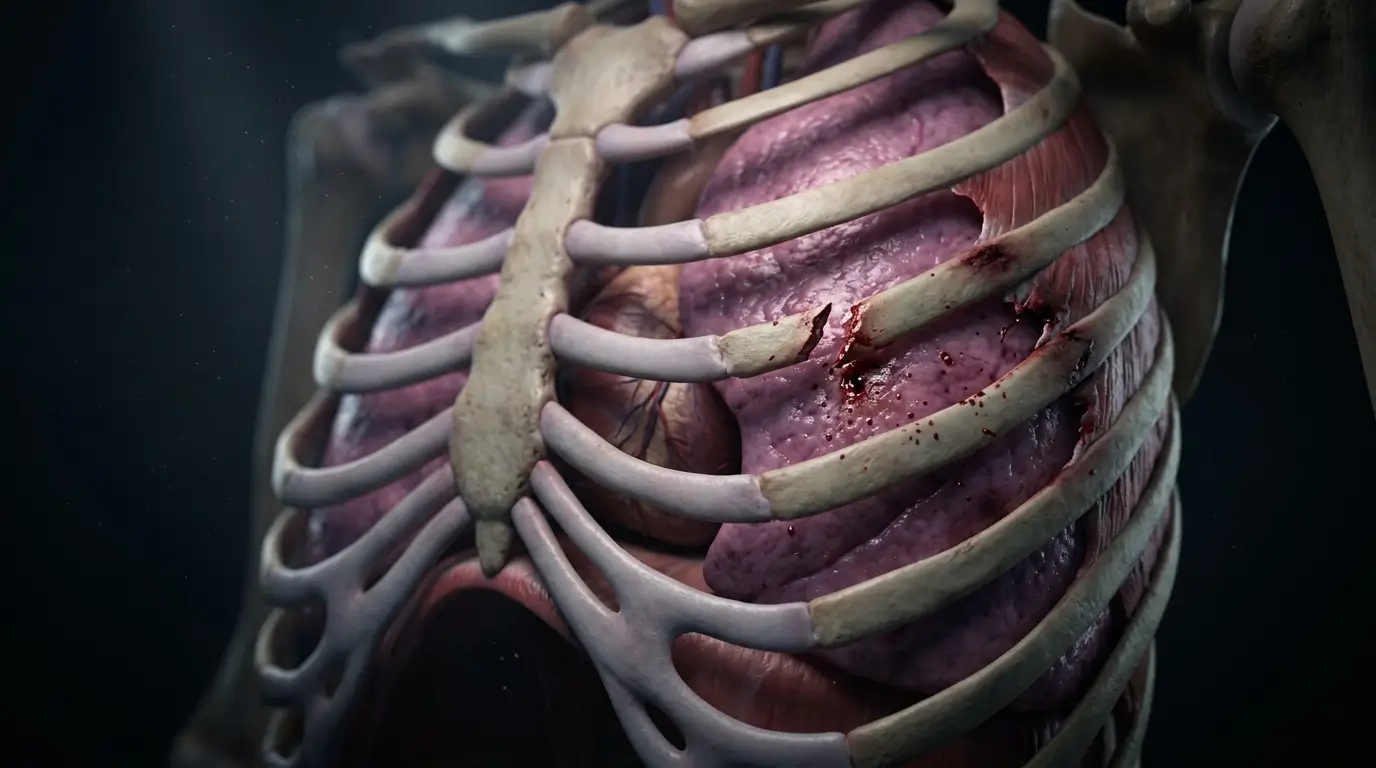
- Understanding how does my lung get punctured in a car accident in North Carolina is vital. A car crash in North Carolina has two ways a lung can get punctured; The first is a broken rib from a high-speed impact that punctures the lung. The second way is that your chest is compressed by the impact, which causes the damaged internal tissues to tear.
- The initial symptoms of a lung puncture include intense chest pain, increased heart rate, dizziness, and a sensation of tightness in your chest, making it difficult to breathe. As time goes by, you notice the tightness gets progressively worse.
- Adrenaline will mask the immediate pain of a lung collapse, which is why it is critically important to get to a trauma center in North Carolina for prompt emergency evaluation.
- If you are injured in a car accident in North Carolina and if an insurance adjuster can show you were even at 1% at fault, then North Carolina’s Pure Contributory Negligence Rule will prevent you from receiving compensation.
A car accident can drastically alter your life in only a few seconds. One minute, you are driving on I-40 or waiting for a light in Charlotte, and the next, you are being pulled out of an automobile that is no longer recognizable to you, struggling to breathe. If you are reading this because you have been involved in a car accident and have sustained a chest injury such as a punctured lung, you may be asking yourself, How does my lung get punctured in a car accident in North Carolina?” and “What will this mean for my health and legal rights?”
At the Tatum & Atkinson Law Firm, our lawyers have been representing victims of auto accidents across North Carolina for many years and work closely with those who sustained punctured lungs. A punctured lung is one of the most severe yet least understood auto accident injuries. Below are some examples of how a punctured lung might occur, how to recognize and treat them, and what your legal rights might be.
Contact us today at (800) 529-0804 to book your free consultation with our experienced car accident lawyers.
How Does My Lung Get Punctured in a Car Accident in North Carolina?
When lung function is interrupted by an injury from a sudden force or a sharp object, tearing lung tissue, it is called a pneumothorax. An example of this type of lung injury car accident North Carolina survivors experience this happening in high-speed crashes, where a near-instantaneous stop forces the body to absorb a violent amount of impact.
How the injury happens:
- Fractured Ribs: When a car’s seatbelt or steering wheel presses against the passengers’ chest, the ribs bend inwards and, if enough force is applied, will fracture. break. A rib fracture lung puncture car accident happens when the broken end of the rib pushes into the lung, damaging it.
- Blunt Force: Not every case of punctured lung car accident North Carolina will involve broken bones or ribs. The force of the chest being compressed quickly can cause a tear to the lung tissue without an object piercing the tissue. As a result, physicians frequently refer to these injuries as a blunt force chest injury car crash, which implies that they are not penetrating but can cause considerable internal injury.
Crashes that result in chest trauma from vehicle accident are often found on North Carolina’s busy interstate highways, such as I-85 and I-95; these injuries also commonly occur in T-bone or rear-end collisions at busy intersections in Charlotte, Raleigh, and Greensboro. The passengers in these vehicle accidents receive a significant amount of force when their chests are struck by another vehicle.
A crash may leave minimal external damage to a vehicle, but the crash is still capable of transmitting enough energy to inflict the kind of force that can cause internal injuries and also damage the lungs of the passengers.
Warning Signs of a Punctured Lung After a North Carolina Car Accident

While some symptoms may present quickly, others may develop progressively as air continues to leak into the chest cavity.
Key symptoms to watch for:
- Pain in the chest that is sharp and stabbing, worsening when taking a breath.
- Tachycardia (rapid heartbeat) or dizziness.
- A bluing discoloration of the lips or skin.
- A description from patients of difficulty breathing after car accident NC, which generally includes a tight “no way to get a full breath” feeling.
- All of the other clearly recognizable collapsed lung symptoms after accident that the victim reports.
Do Not Wait: If you experience even one of these symptoms, it is a safer bet to pursue an immediate trip to the ER than to be a wait-and-see case, since serious injuries may take hours after a crash to present themselves due to the adrenaline masking a lot of serious trauma and/or injury.
Emergency and Trauma Care for Lung Injuries in North Carolina
Upon arrival at the emergency room, the goal is to stabilize the patient’s breathing and relieve any pressure from the chest area. Emergency chest injury treatment NC physicians will typically perform an X-ray or CT scan to confirm the presence of a pneumothorax (collapsed lung) before treating it.
Treatments for a pneumothorax can vary from just monitoring oxygen levels to inserting a chest tube to allow air to escape and allow the lung to expand. Fortunately, North Carolina has several Level I and II trauma centers capable of providing care for patients with pneumothorax after car crash NC and if paramedics suspect significant chest trauma, the patient will likely be transported directly to one of these facilities.
Patients often have many questions regarding how does my lung get punctured in a car accident in North Carolina before they even give consent for treatment, because understanding what’s going on helps them make sense of the frightening situation. The speed at which an injury is detected will greatly affect the hospital care for lung injury North Carolina; therefore, all chest pain resulting from blunt trauma to the chest should be treated as though it could result in a serious injury.
Recovery and When to Seek Help

An uncomplicated pneumothorax may take anywhere from one week to two weeks for resolution through monitoring and rest. Conversely, individuals requiring either chest tube placement or surgical intervention can expect a stay in the hospital for several days to weeks of limited or restricted activities, including heavy lifting.
Internal injuries after car crash North Carolina may also cause extensive residual chest pain or shortness of breath upon exertion, as well as decreased lung capacity during the recovery period. Resuming normal activity will often require subsequent imaging to ascertain if the lung has completely re-expanded before resuming normal activities.
All chest pain or shortness of breath occurring after a car wreck should be considered a medical emergency and treated as such, regardless of whether the individual feels able to walk away from the scene of the accident. If you have any doubts about your medical status, see a physician.
Why North Carolina Crash Victims Trust Tatum & Atkinson Law Firm
A serious chest injury will not typically end with the hospital bill. There are many other additional costs involved with treatment, such as lost wages, physical therapy, follow-up imaging, and a long recovery process. These factors can add up very quickly, and insurance companies are fully aware of this. At Tatum & Atkinson Law Firm, our experienced team of personal injury attorneys ensures all of your rights are protected.
- Navigating Strict Negligence Laws: The pure contributory negligence rule in North Carolina allows an insurer to deny a claim if they can demonstrate that the victim was as little as 1% at fault.
- Preventing Denied Injury Claims: The pure contributory negligence rule is the reason why a substantial number of genuine crash victims sustaining injuries will not receive any compensation for their injury claims if they proceed without legal guidance with their claims.
- Gathering Key Medical Evidence: Our skilled team collects and organizes hospital records, imaging studies, and physician reports, which all link the crash to the lung injury and identify all potentially liable parties.
- Fighting Aggressive Claims Adjusters: We advocate on behalf of our clients with insurance adjusters whose primary focus is on denying or minimizing claims while the client is recovering both physically and emotionally from their injuries.
- Meeting Strict Legal Deadlines: The statute of limitations for personal injury claims in North Carolina is three years. We ensure that all evidence is gathered before that deadline and while you are concentrating on your recovery.
- Providing Risk-Free Legal Representation: Tatum & Atkinson Law Firm works with clients on a contingency fee basis. You will not have to pay any legal fees unless we obtain a recovery for you.
- Offering Free Case Evaluations: If you or someone close to you sustained a chest injury as a result of a crash in North Carolina, please call (800) 529-0804 today for a free case evaluation.
Get the Legal Help You Need With Us!

The injury of a punctured lung is one of the invisible injuries that can occur during an accident. Exploring the cause of how does my lung get punctured in a car accident in North Carolina is just the first step to diagnosing and finding appropriate treatment. The next step is making sure that you have adequate medical treatment and legal representation working in your favor.
With Tatum & Atkinson Law Firm, you should be able to focus on regaining your health while a professional legal team fights to recover the money you are entitled to from the insurance companies. Our personal injury attorneys are here to help you through this process.
Contact us today at (800) 529-0804 and set up a free consultation so we can discuss your situation and answer any questions you may have.
Frequently Asked Questions!
Can a seatbelt cause a punctured lung in a car accident?
Although seatbelts prevent death, at times a sudden stop can cause the ribs to break on impact with the seatbelt. A fractured rib may also puncture the lung of its holder on impact. While this is uncommon, it occurs in some high-impact North Carolina crashes.
How soon after a car accident do pneumothorax symptoms appear?
Symptoms may develop right away, but a slow leak could develop over several hours. Any severe chest pain, shortness of breath or fast heart rate following an accident should always be checked out by a physician as soon as possible.
Is a punctured lung always life-threatening?
Not all the time; however, when left untreated, it may rapidly develop into something that is fatal (not normally). A small pneumothorax will resolve by itself with close observation, whereas a larger pneumothorax can collapse your whole lung, requiring immediate medical attention.
Can you have a punctured lung without visible injuries?
In most cases, internal chest injuries don’t have blood or bruises. The only signs and symptoms may be pain, fast breathing, or tiredness. Therefore, if you have any sort of feeling in your chest after an accident, it should be evaluated by a doctor promptly.
What hospitals in North Carolina treat car accident lung injuries?
Severe chest injuries due to trauma are treated at several hospitals throughout North Carolina, including those in Charlotte, Raleigh, Greensboro, and Durham. Most communities also have a level I or level II trauma center prepared to assist with emergencies caused by pneumothorax (i.e., collapse of the lung).
Disclaimer: This information is provided for educational purposes only and should not be construed as medical or legal advice. If you have chest pain or difficulty breathing after a car accident, please seek immediate medical assistance.
