What Is a Side-Swipe Accident in North Carolina?
Key Highlights:
- Typically, a side swipe accident North Carolina occurs when two vehicles that are driving close together make contact side-by-side.
- The most common causes of side-swipe collisions are lane changes, merging mistakes, blind spots, being distracted by something, and drifting out of a lane.
- Under North Carolina law, a driver cannot change lanes unless the driver can do so safely.
- The determination of fault in a side-swipe accident is often based on the evidence of the damage patterns to each vehicle, the lane position of each vehicle, witness statements, dash cam video, police reports, and road markings.
- North Carolina’s contributory negligence rule allows a sideswipe collision injury claim to have an effect on the amount of fault that is assigned to each driver in the accident.
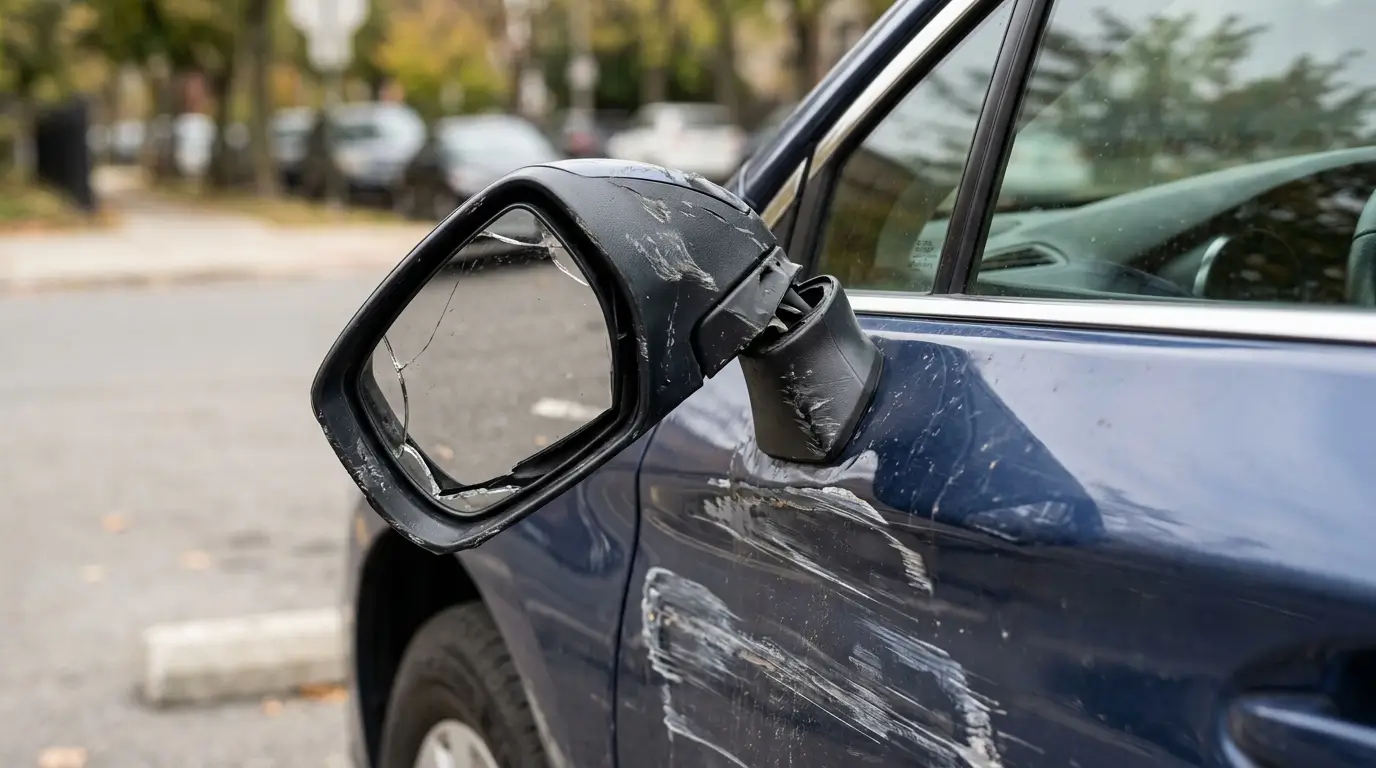
What Is a Side-Swipe Accident in North Carolina? In North Carolina, a side-swipe accident occurs when one car sideswipes, scrapes, or otherwise collides with the side of another vehicle. A side-swipe accident occurs when a vehicle changes lanes, merges into traffic, passes another vehicle, or drifts out of its lane. Although they may seem minor at first (scraped doors, broken mirrors, etc.), accidents on interstates like I-40, I-85, I-95, and I-77 or busy highways in cities such as Raleigh, Charlotte, Greensboro, Durham, Wilmington, or Asheville could cause a vehicle to move into another lane, collide with the sides of guardrails, or crash into other moving vehicles. Small scratches could result in serious accidents.
I’m Robert Tatum, an attorney at Tatum & Atkinson Law Firm, and I specialize in side-swipe collision claims. My law office is veteran-owned and has been in business since 2005. Tatum & Atkinson Law Firm has more than 65 years of collective experience assisting clients who have been injured in side-swipe vehicle collision cases in North Carolina.
What Is a Side-Swipe Accident in North Carolina and How Does It Happen?
Side-swipe accidents, also known as side-impact collisions, occur when two vehicles traveling parallel to one another collide with the sides of each other. In some instances, both vehicles are traveling in the same direction, while other times one vehicle drifts into the path of the other vehicle that is trying to pass. In other situations, a driver merges into a lane that does not allow sufficient space between himself and an adjacent vehicle so that there is a sufficient gap to allow the merged vehicle to complete the merge safely.
A North Carolina car accident side swipe can happen on the highway, in a pick-up line for school, upon exiting the parking lot, in construction areas, or on city streets where lanes are tight. The cause of the accident may seem obvious at the time, and then the claims for damages move through the insurance claim process, at which time each party presents a different reason for the accident having occurred.
Therefore, having physical evidence reaffirms what happened during the accident.
Common ways these crashes happen
Most of the time, there will be an action taken by one driver prior to the other vehicle being involved in the accident that leads to the accident occurring. Some reasons include:
- checking a text message while driving
- another vehicle being located in an area that is not visible to a driver merging into that area
- a truck drifting across the center of its lane while traveling down a narrow roadway or merging into a lane without giving a signal to indicate a lane change.
Under North Carolina law, a driver must first ensure that it is safe to make any movement from a direct line of travel prior to making such a movement and must also give a signal when the movement may affect another vehicle or person. The statute regarding signals provided prior to starting, stopping, turning, or moving from a direct line of travel is useful in resolving lane-change accidents and disputes in many instances.
Who Is Usually At Fault In A Side-Swipe Accident?
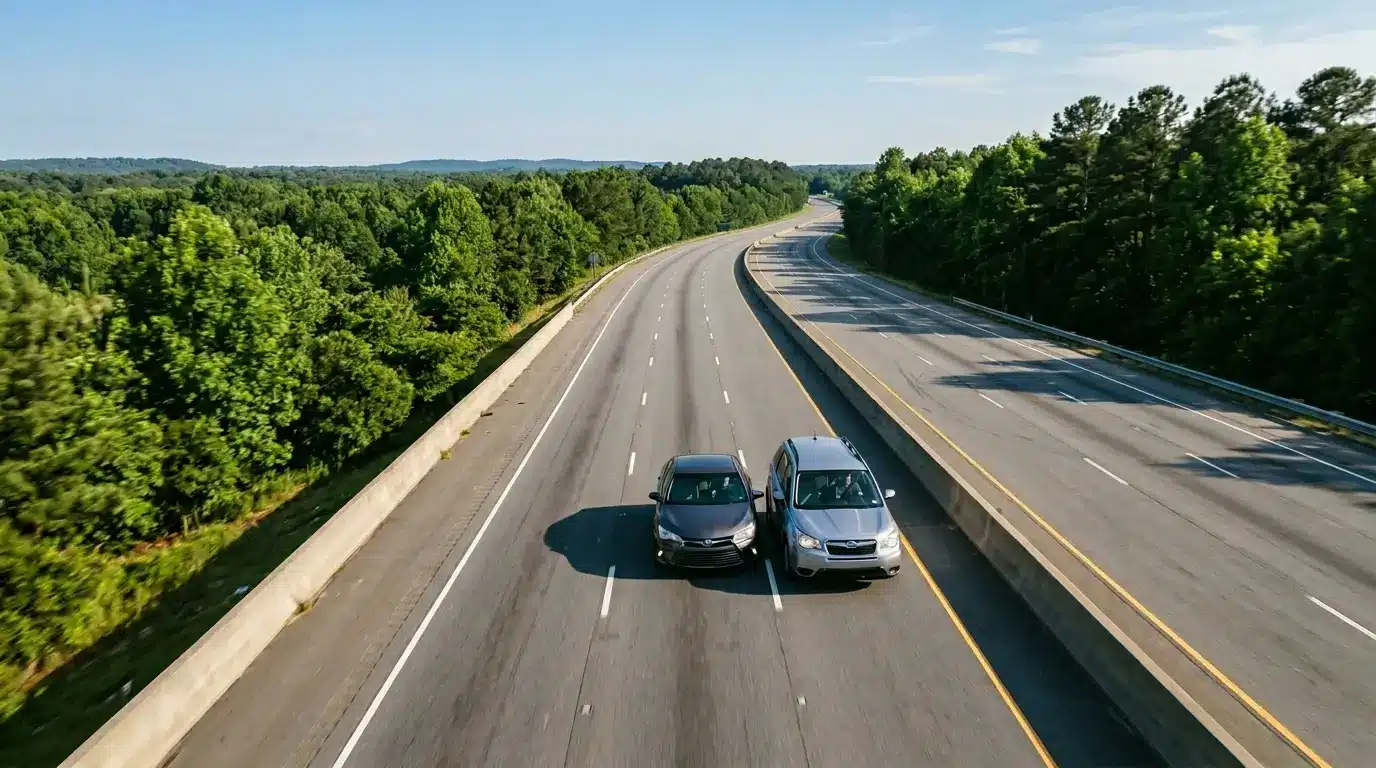
Typically, when a lane change accident liability NC occurs, it’s the driver who left their lane, who merged without enough space, who changed lanes unsafely, or who failed to check for blind spots, who is at fault. But there are times when that may not be the case.
In North Carolina, when determining liability for a lane change accident, the question is simple…
Who moved first in an unsafe manner?
When insurance companies try to deny liability in a lane change accident, they may argue that both drivers moved, that both drivers failed to react, or that one driver was speeding while the other driver was attempting to merge. This could lead to intense disputes.
Another key piece of evidence in determining fault for lane change accidents is the secondary crash report. The pattern left behind on your vehicle can provide critical evidence, such as…
- Paint transfer
- The direction of scrapes
- Mirror damage
- The height of the dent
- And the lane position of each vehicle.
Crash reports are also helpful for North Carolina…
- Drivers
- Attorneys
- Insurers
- And other authorized individuals can obtain a copy of an official North Carolina crash report through the North Carolina Division of Motor Vehicles.
Why Are Highway Merging Accidents So Risky?
Highway merging accident North Carolina pose a unique danger due to their high speed and limited reaction time, along with the potential for very serious crashes caused by improper merging.
Highway-side swipe accidents can involve a variety of vehicle types, and the physical forces involved with higher speeds can be much more damaging than at lower speeds. A light tap at 25 mph is much different than drifting from one lane into another at highway speeds.
How multi-car crashes can start
In addition, a multi-vehicle sideswipe accident can begin with a single car drifting into another lane, causing the second vehicle to swerve, the third vehicle to slam on its brakes, and then vehicles start stacking up behind each other.
Therefore, the fact that a sideswipe accident might seem like a minor “scrape” should be given more consideration; while the first impact may be small, the impact from all of the subsequent accidents caused by the initial impact may be substantially greater.
How Do Blind Spots And Distraction Cause Side-Swipe Crashes?
An accident involving a driver’s blind spot accident car crash occurs when the driver does not see another vehicle close to the lane due to the size of a larger or higher profile vehicle (like a large truck, SUV, bus, van) or because of visibility obstructions behind the vehicle. This type of incident often occurs when the other driver’s presence is not known until after the lane change occurs, which means they were in the driver’s blind spot.
The potential for distracted driving lane change crashes increases when drivers are preoccupied with anything that takes their attention away from the driving task (using their cell phone, adjusting their navigation device, eating their lunch, conversing with others in the vehicle, etc.). A length of time (1-2 seconds) for which a driver momentarily takes their “eyes off the road” is adequate time for any vehicle (particularly motorcycles and smaller vehicles) to completely disappear from the driver’s view.
What Evidence Helps Prove A Side-Swipe Collision Injury Claim?
The strongest basis for injury damages in a sideswipe collision injury claim is with evidence that can establish the following:
- Which driver exited their lane
- The driver who had the right to be driving in which lane
- And the link between the contact made by two vehicles and the development of injury(s).
The evidence that will substantiate a claim may include the following:
- Police report(s) for incident – damage to both cars, lane paint transfer, damaged mirror, lane markings, debris from the roadway, both vehicles’ contact in dashcam video, same business can have a video of the accident, all witnesses, all people involved, and all witnesses not involved have a 911 record of the incident.
- Medical records related to injuries; accident repair estimates; towing records; insurance letters; traffic-cam video; phone records for a distracted driving case; and photos of injuries.
Do not rely on only the testimony of the driver who made contact with you. They will change their testimony. This happens frequently.
What Injuries Can A Side-Swipe Accident Cause?
Injuries associated with a sideswipe car accident include the following:
- neck injury (cervical)
- back pain (dorsolumbar)
- shoulder injury (scapula)
- wrist injury (carpal tunnel, trauma)
- knee injury (patella, ligament)
- concussion
- soft tissue injury
- fracture, and
- mental health (anxiety) associated with driving.
A sudden side impact to the body can cause the body to twist. If an airbag fails to deploy, then due to the force of impact on the vehicle, the neck, spine, shoulders, and knees of an occupant will bear all this impact force from an accident. The effects of some injuries will not occur immediately (i.e., after the adrenaline has dissipated).
All injuries sustained in the accident must be documented in your medical records and must be connected to the automobile accident as part of a North Carolina personal injury claim car accident by getting evaluated, treated, and recording the symptomatology from the moment of the accident forward.
How Do Insurance Companies Evaluate Side-Swipe Claims?
Insurance companies often focus on fault first, and then determine property damage, whether or not there are medical records for treatment gaps, if you had a prior injury, and whether your version of events matches the physical evidence of the accident
Insurance companies may say the amount of damage was too slight, that you went outside your lane, or they could argue that you could have avoided the crash.
How contributory negligence can affect your claim
North Carolina follows a contributory negligence standard, which means even if a person has any fault in causing their injury, they are barred from recovering for damages. The strict Contributory Negligence Law, explained by the UNC School of Government, accounts for this.
So, in a car crash lane change negligence case, even the smallest amount of fault can turn into the largest litigation. This is why you must gather evidence from the beginning of the case rather than relying on speculation.
What Damages May Be Available After A Side-Swipe Collision?
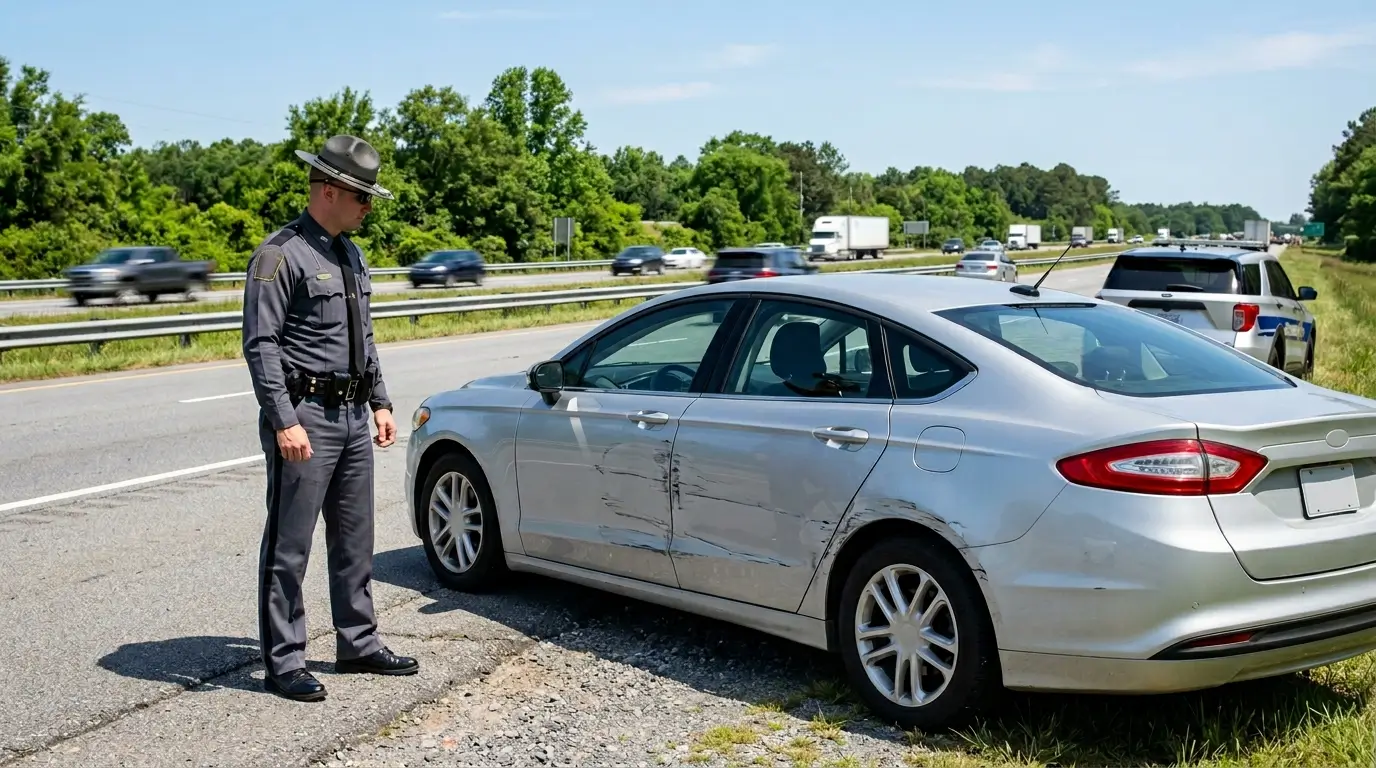
The highway accident compensation NC could depend on the extent of the injuries, medical treatment received, time off work, vehicle damage, and whether long-term effects result from the highway accident.
Loss Type |
What It May Include |
| Medical care | Emergency care, doctor visits, imaging, therapy, and medication |
| Lost income | Missed work, reduced hours, used paid time off |
| Future treatment | Ongoing therapy, injections, surgery, and specialist care |
| Pain and suffering | Physical pain, sleep trouble, stress, driving fear |
| Property damage | Vehicle repair, total loss, towing, and rental car costs |
| Long-term harm | Work limits, chronic pain, and reduced daily activities |
In many North Carolina injury cases, photographs of the vehicles involved in the highway accident, medical records, pay stubs, repair estimates, and witness statements can be used to determine the difference between a minor property-damage case and a more serious injury case.
The claimant should receive payment for their damages based on the full impact of having suffered an injury, and should not only be compensated for the initial repair estimate
What Should You Do Right After A Side-Swipe Accident?
There are some things you need to do right after a side-swap accident:
- First and foremost, ensure your safety and attempt to move off the road if possible.
- If someone is injured or the crash is blocking traffic, call 911 immediately.
- If you experience any symptoms such as pain, dizziness, numbness, stiffness, or confusion, seek medical attention right away.
Next, gather as much information relevant to the accident as you can.
- Take pictures of the scene. Get driver information and witness names.
- Document road signs and lane markings, and take pictures of the damage to both vehicles.
- If a truck, bus, or company vehicle was involved in the crash, collect that company’s information as well.
Don’t argue or guess who’s at fault for the accident on the shoulder of the roadway. Do not say you’re “ok” when you’re uncertain. Remain calm; the shoulder is not a courtroom.
When Should You Contact A North Carolina Car Accident Lawyer?
If you were injured and the fault is uncertain, the other motorist claims they never changed lanes.
There are several vehicles involved.
- The insurance company has blamed you for the accident
- If your injuries have caused work-related problems or everyday issues in your life, it may be best to consult with an attorney.
An attorney can help preserve video evidence, gather reports, investigate vehicle damage, contact witnesses, and negotiate with insurance adjusters to protect the claim from being affected by the other party’s version of the facts.
Side-Swipe Accident Claims Tips for North Carolina Residents.
What Is a Side-Swipe Accident in North Carolina? It is more than just two vehicles brushing up against each other. Typically, it involves cases where there’s some type of lane change, merging, or being in someone’s blind spot, plus possibly being distracted at the time of the accident and having the evidence available to substantiate that.
- Act early!
- Preserve evidence!
- Get medical treatment!
- Be aware of who you are speaking to; do not make careless statements.
- Be cautious of any party shifting the blame for their actions.
By following these tips, you can help protect your case after “What Is a Side-Swipe Accident in North Carolina” has become a search term.
Talk To Tatum & Atkinson Law Firm About a Side-Swipe Accident In North Carolina
If you sustained injuries due to a side-swipe collision accident in North Carolina, contact the professional staff of Tatum & Atkinson Law Firm for guidance as to your rights and assistance in protecting your claim. You will receive a free consultation (no attorney’s fees charged unless you receive compensation), so call (800) 529-0804 today for assistance.
FAQ About Side-Swipe Accidents in North Carolina!
Are side-swipe accidents more common on highways or city streets?
Accidents occur on either type of roadway. Highways tend to have larger lanes and higher speeds, while city streets have narrow lanes that tend to have more lane changes, turns, parking, and distractions (i.e., intersection lights, signs, etc.).
Can both drivers be found partially responsible in a side-swipe accident?
Yes, most insurance companies will say that there was shared liability between drivers in an accident. In North Carolina, whether a driver is at fault in an accident will have a major impact on an injury claim.
What if the other driver denies making a lane change?
Use evidence to help establish how the accident occurred. Evidence can include photographs of physical evidence, patterns of damage on vehicles, eyewitnesses, dash cam video, lane markings, police reports, etc.
Do side-swipe accidents always involve contact between vehicles?
No, a driver can drive another vehicle off the road without making contact with that vehicle. Therefore, evidence is necessary to establish that a no-contact accident actually occurred.
Can a side-swipe accident lead to a multi-car pileup?
The answer is a clear yes. Side swipes are known to most often trigger chain-reaction pileups.
