What Are North Carolina Texting And Driving Laws?
Key Highlights:
- Do you want to know what are North Carolina texting and driving laws? Texting and emailing while driving are illegal in North Carolina; however, there is no law against using any type of handheld phone for adults.
- Drivers who are younger than age 18 are subject to a stricter prohibition than adults: they are prohibited from using a cell phone to make voice calls or send or receive text messages with a few narrow exceptions.
- The penalty for texting while driving in North Carolina is a $100 fine, with no license points attached; there is no insurance premium increase.
- Despite social media claims, North Carolina has not implemented a statewide “hands-free” driving law.
- While the act of using a mobile phone while driving does not automatically demonstrate negligence per se, the injured party must demonstrate that the accident was caused by the driver’s distraction.
- The 1% rule in North Carolina is a strict liability, meaning that if you are even 1% at fault, you cannot recover any damages from the other driver. It is crucial to collect evidence showing that the other driver’s actions were negligent to protect your right to be compensated for your injuries.
Distracted driving is among the top reasons for crashes; however, it is highly preventable. So, what are North Carolina texting and driving laws? The state of North Carolina has implemented laws targeting distracted driving, but the laws are not as broad as many would think. The interaction of the North Carolina texting while driving law with the injured person’s claim may surprise the victim.
The following article will outline what the law says regarding texting while driving, and our car accident lawyers at Tatum & Atkinson Law Firm will explain the dangers related to distracted driving and how a driver’s use of a mobile phone while driving will impact a personal injury matter.
For further information on texting laws or to receive a free case evaluation, reach out to our experienced lawyers at (800) 529-0804.
Distracted Driving in North Carolina
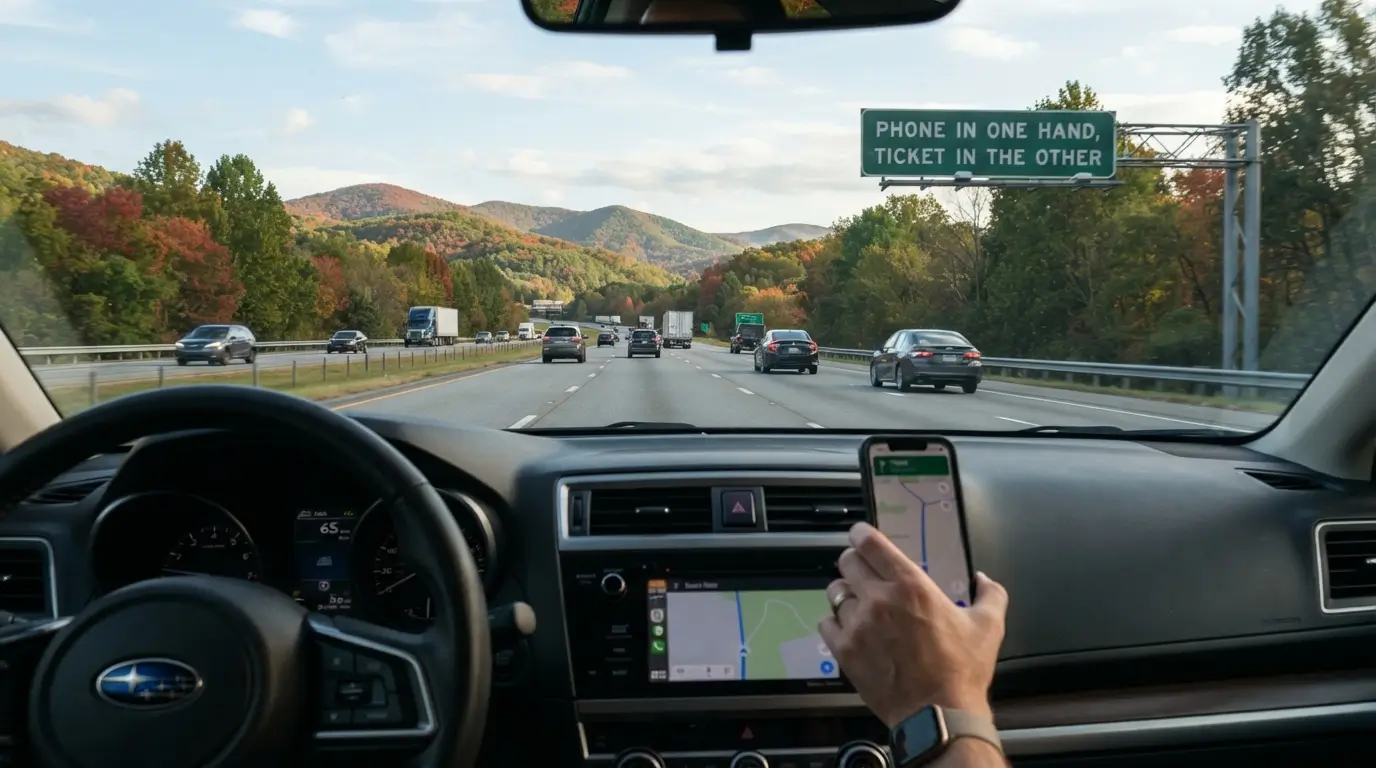
Distracted driving is anything that diverts a driver’s attention from the road. It is one of the major contributors to crashes across the nation and a leading cause of deaths. According to NHTSA, in 2024, distracted driving killed 3,208 people across the country. North Carolina sees hundreds of thousands of crashes yearly, with distraction consistently among the top contributors (NCDOT).
The Three Kinds of Distraction
Safety experts divide distraction into three categories: visual (taking one’s eyes from the road), manual (taking one’s hands from the wheel), and cognitive (taking one’s mind off driving). Texting combines all three variations of distraction, making it dangerously unique. A text causes a driver to take his or her eyes away from the road for 5 seconds or so, and according to NHTSA, a car can drive the length of a football field during that time at highway speeds.
Common Forms of NC Distracted Driving Accidents
Phones capture the headlines, but distraction also includes eating, setting a GPS, grooming oneself, reaching for items, and turning to talk with passengers. Most of these things are completely legal in North Carolina, but that does not in any way confer safety.
What Are North Carolina Texting and Driving Laws
The rules for texting while driving vary by driver and activity in North Carolina.
The Texting Ban for All Drivers
N.C.G.S. § 20-137.4A prohibits all drivers from sending, receiving, and typing text messages or email while driving. Adult drivers can still use music players, phones (to make calls), use a GPS device, use caller ID, and use voice commands; they are not prohibited from using a handheld device. Also, texting is considered a primary offense, so once the officer has seen you text, they can stop you solely based on that violation.
Stricter Rules for Teen and Novice Drivers
N.C.G.S. § 20-137.3 imposes more restrictions on drivers less than 18 years of age than on adult drivers. Minors cannot use a mobile device or phone (handheld or hands-free) while operating a motor vehicle, except in an emergency or to contact a parent, guardian, or spouse. Studies indicate that new drivers are involved in a higher percentage of motor vehicle accidents than experienced drivers, and this law reflects that fact.
School Bus and Commercial Drivers
Drivers of school buses cannot use mobile devices while driving, except for emergencies; violating this restriction is a Class 2 misdemeanor. Commercial drivers cannot use handheld mobile devices according to the Federal Motor Carrier Safety Administration.
Penalties and Fines
Text messaging while driving will result in a $100 fine (plus court costs), no driving points, and no impact on your auto insurance. A motorist under 18 years of age will receive a $25 texting and driving fine North Carolina for the first violation. When it comes to commercial and school bus drivers, however, violations will have steeper penalties and may jeopardize their ability to hold a commercial driver’s license.
Is There a Hands-Free Law?
There is not currently an NC hands-free law in place; however, there were false reports about a hands-free law being passed. Bills have been introduced at the state legislature but have not yet passed into law. Therefore, the only law currently in place that restricts drivers from using handheld devices while driving is that which prohibits texting while driving.
How Texting and Driving Affects a North Carolina Injury Claim
North Carolina law has the potential to surprise you.
Distraction as Evidence of Negligence
When a person uses their cell phone while driving and causes an accident, they have clearly acted without reasonable care; however, North Carolina General Statute § 20-137.4A specifies that simply violating the texting law does not create per se negligence. In layman’s terms, it is not sufficient to prove negligence simply because there was a violation of the texting ban; therefore, to establish negligence due to distracted driving, we must create a case to prove ordinary negligence.
Proving the Driver Was on the Phone
Establishing that a driver was on the phone at the time of the collision can include cell phone and app records of the driver, police reports, statements from potential witnesses, dashcam video, video from any other surrounding surveillance devices, admissions by the driver, and information maintained by the vehicle’s event data recorder (if the vehicle is equipped with an event data recorder). All of this information can help show that the driver was using his/her cell phone when they struck your vehicle.
The Challenges of Proving Phone Use
It’s almost always complicated. Most carriers require a subpoena or other judicial process before you can obtain telephone records, and many carriers discard data over time. Although adult calls are legal and GPS location services are legal in all states, the mere existence of a call does not establish that the use of the phone was related to the driver’s inattention. This is why it is critical to act swiftly, so the evidence does not disappear.
Compensation You Can Recover
Recoveries can include medical expenses related to injuries sustained (past or expected future), loss of wages, or loss of earning capacity; pain and suffering; and property damage. If the defendant engaged in particularly egregious conduct, punitive damages may also be recoverable.
The 1% Rule and Filing Deadline
North Carolina follows the doctrine of pure contributory negligence. This means that if you are found liable for even one percent of the accident, you are barred from recovering anything for your injuries. Because most insurers rely heavily on this rule of apportionment of fault, proving distracted driving after a crash is vital to your distracted driving injury claim NC. Most personal injury claims must also be filed within three years of the date of the incident because of N.C.G.S. § 1-52(16).
How an Attorney Can Help
There are many different types of evidence available in distracted-driving cases that quickly decay. An attorney can issue preservation letters, subpoena cell phone records, obtain a crash report or associated video, and call in accident reconstruction experts. According to our experience, victims of distracted-driving accidents make their biggest mistakes by delaying, as cell phone evidence loses its value relatively quickly.
Talk With a North Carolina Distracted Driving Accident Lawyer at Tatum & Atkinson
You suffered injuries because of someone driving distractedly, and the days that follow are often extremely stressful, while at the same time, the evidence will start disappearing as well.
Since 2006, Tatum & Atkinson has helped injured North Carolinians understand what are North Carolina texting and driving laws and pursue fair and full compensation. The Heavy Hitters understand all aspects of the texting law in North Carolina, and we quickly preserve the telephone and crash evidence associated with these types of accident claims.
To book your free case evaluation, call (800) 529-0804. Our firm works on a contingency basis and we do not charge a fee unless we recover money on your behalf. Your first phone call does not require you to pay or agree to any terms or conditions.
Frequently Asked Questions!
Can I sue a driver who was texting if the police never ticketed them?
Indeed. The civil suit doesn’t need a citation or conviction; it has a lower standard of proof, so you can rely on something like records/witnesses/evidence to prove that the driver was distracted and caused your injury.
How do you prove the other driver was on their phone?
Evidence from multiple sources, including phone and app records, the crash report, witness statements, video, and sometimes the vehicle’s data recorder, comes together to paint a clearer picture of the incident(s). This is why it is important to preserve these items as early as possible.
What if I was partly at fault too?
Be mindful that an insurance company may try to lay some blame on you (North Carolina has a 1% rule, so this tactic could totally undermine your entire claim). Never admit fault; the presentation of facts by your lawyer will determine if you collect anything at all.
What does it cost to hire a lawyer?
Firms that specialize in personal injury work on a contingency basis. This means there is no charge unless they win your case, so you can pursue your claim without creating any new expenses while you are going through the accident recovery process.
Will my case settle or go to trial?
Most of the claims will settle; however, a firm that is willing to take a case to trial has a better chance of receiving a high offer from an insurance company. If you are prepared, you have leverage.
