What If My Torn Meniscus from a Car Accident Never Heals Properly in North Carolina?
Key Highlights:
What If My Torn Meniscus from a Car Accident Never Heals Properly in North Carolina
- This is because there are parts of the meniscus that do not have any blood supply to them.
- The meniscus can experience injury, which results in pain, instability, and osteoarthritis. A partial meniscectomy arthritis is effective at relieving pain; it also increases the risk of developing an osteoarthritic change.
- The insurance company will definitely use the pre-existing-wear argument when it comes to the knee injuries.
- There is protection of your case under North Carolina law.
- Settlement of your case in advance, without knowing about your future knee disability, will deny you your rights.
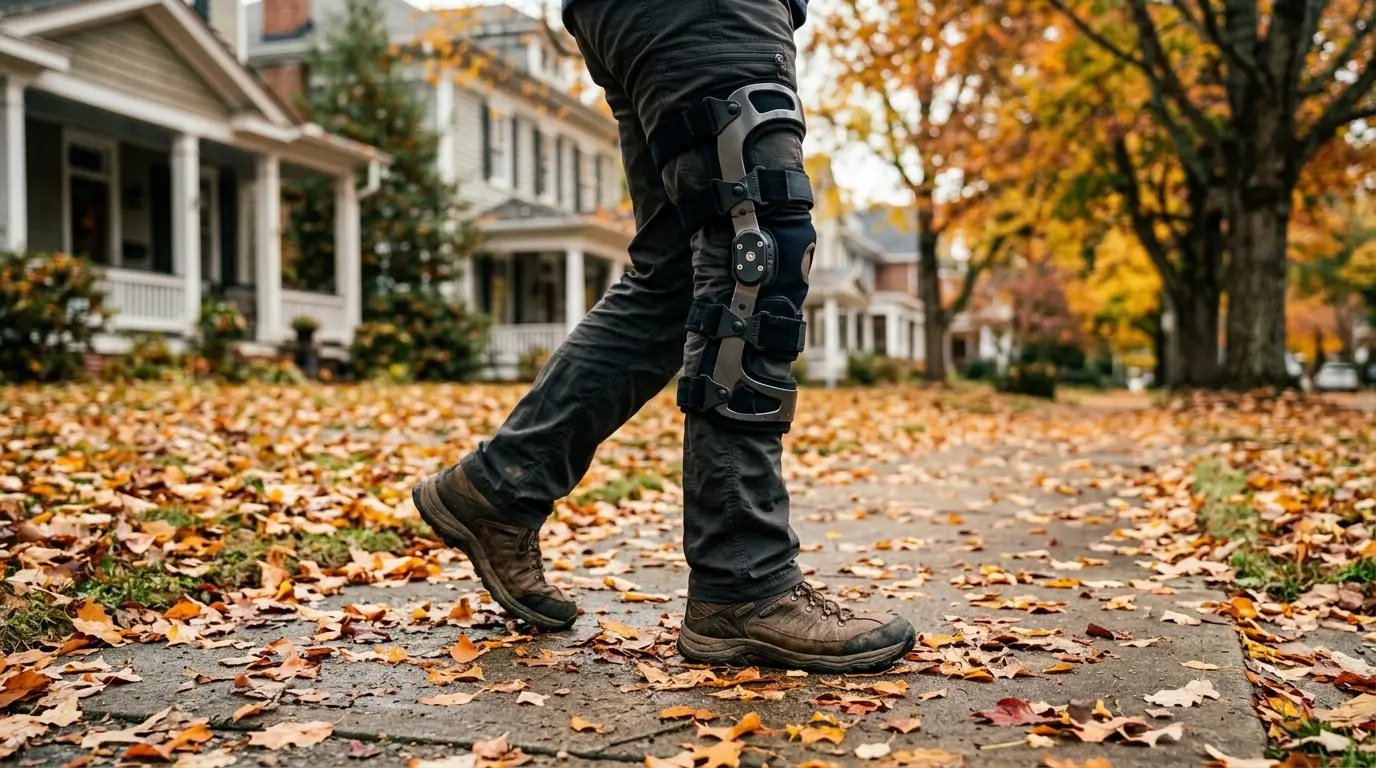
If you have a torn meniscus car accident injury (the cushioning pad on the inside of your knee) after an accident in North Carolina, you may think it will heal on its own over time. Some tears do, indeed, heal on their own with time; however, there is another part of the meniscus that does not get a lot of blood flow, meaning some tears never would completely heal, and you can suffer for many, many years from constant pain and weakness and ultimately develop arthritis due to a lack of healing.
For those who have suffered from meniscal injuries in North Carolina, more than likely, they will relate to some information to help you understand why your injury has occurred and what it could mean for you long-term.
I am Robert Tatum, and I am an attorney at Tatum & Atkinson Law Firm located in North Carolina. Our law firm has been veteran-owned since 2006 and has a total of more than 65 years of combined experience representing clients who have experienced torn meniscus injuries due to car accidents throughout North Carolina.
If you are involved in a car accident and suffer a knee-specific injury (or injury associated with the injury to the knee), Tatum & Atkinson are very familiar with how to assess the compensation that damage to the menisci (the cartilage located between the femur (thigh) bone and tibia (shin) bone) is entitled to as part of the case after an accident where there was no comparable injury before the crash.
How a Car Accident Tore Your Meniscus
Here’s all that you need to know if a car accident has torn your meniscus.
Function of the Meniscus
Inside the knee joint, there are two menisci, which are C-shaped pieces of cartilage located between the thigh bone and shin bone. The role of these is to act as shock absorbers and stabilize the joint, but when one is torn, that shock absorption is lost.
Causes of Tears Through Accidents
During an accident, the knee could hit the dashboard, be twisted while being thrown around the car, or absorb the shock of impact through bracing. There are two types of tears in menisci, and accidents cause traumatic ones, as opposed to degenerative ones.
The Reasons Why Some Meniscal Tears Do Not Heal Correctly
It all depends on location and whether there is blood flow in the injured cartilage.
The Blood Flow Issue
The outer one-third of the meniscus (the “red zone”) gets its blood supply from blood vessels. Because this area has a good blood supply, tears in this area can heal on their own, without the need for treatment. The next two-thirds of the meniscus (the “white zone”) has no blood flow; therefore, the meniscus tear not healing will not happen. This is a single example to explain why there are so many cases of meniscus tears that do not heal over time with no additional treatment.
Other things also play a role in how well you will heal
Your age can play a key role in how well or how quickly cartilage heals. Other factors include how big the tear is, how complicated the tear is, your overall health, and how your meniscus is degenerating over time.
When surgery doesn’t work
In some cases, surgery doesn’t work either. If there is excessive scar tissue, tears that result from an injury, or there is incomplete healing, you will have weakened knees and pain. More importantly, if you rush the surgical fix, you may make your future situation worse.
5 Symptoms That Your Knee Is Not Healing Properly
The following are the symptoms you should look for that would suggest whether your knee is healing properly or not.
- The pain does not improve at all and continues to worsen over time.
- No matter how inactive or active you are, swelling occurs.
- While using your knee, popping or catching noises can be heard.
- Your knee feels like it’s going to give out on you (it’s unstable).
- You can’t bend/flex/extend your leg because it’s stiff.
Determining the Correct Diagnosis
A correct diagnosis is as important as the healing process, if not more. Here’s what you need to look out for:
Physical Examination
A specialist in orthopedics will examine your knee by taking a physical history (past medical history). A knee will be evaluated by an Orthopedic Physician through:
- Physical History (PMH) / Medical History
- Physical Examination (Range of Motion, Tenderness to Palpation, etc.)
- Meniscus Stress Loading (loading joint weight/flexing/extending knee) and
- Checking for catching or locking (both indicate knee joint injury).
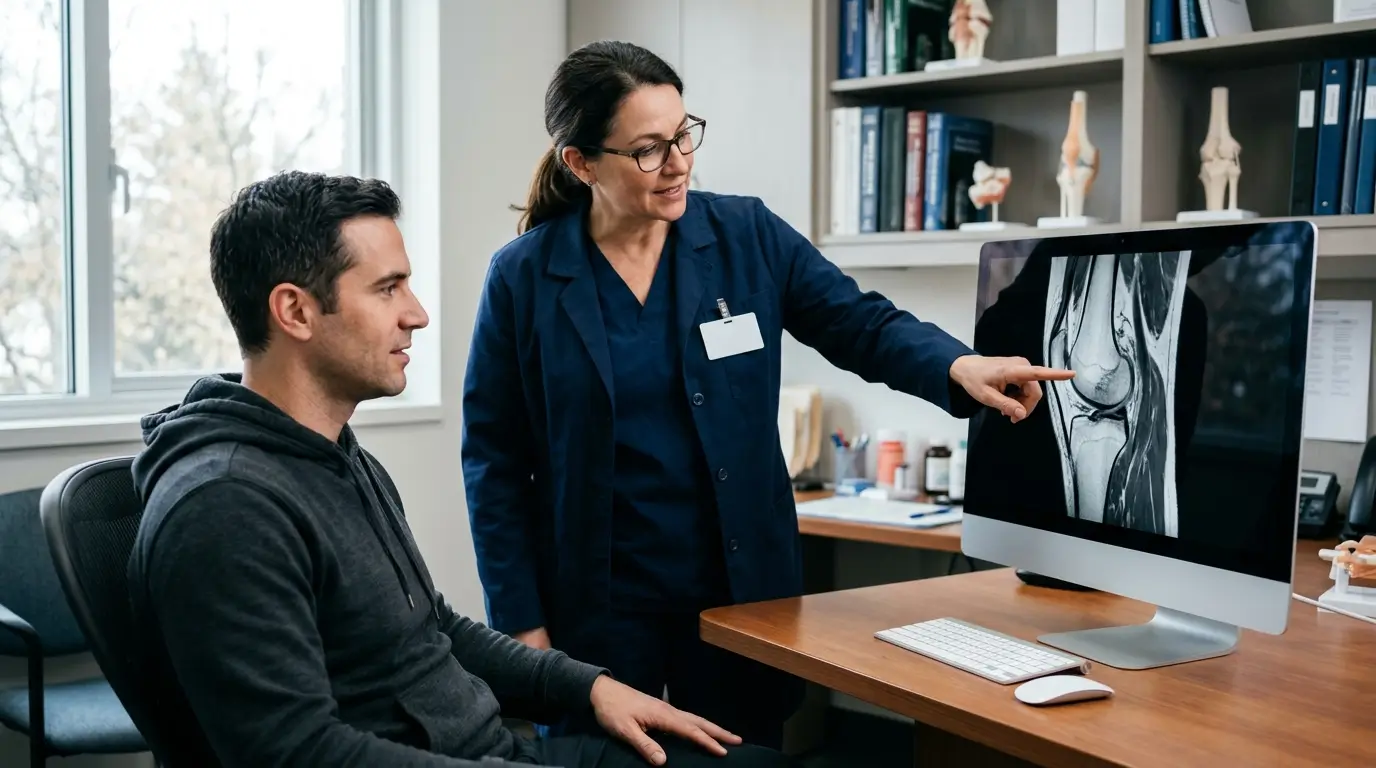
The best way to accurately view the knee soft tissues and determine whether or not there is a tear, and where the tear is located within the knee tissue, is via MRI; however, X-rays will also provide valuable information. X-rays can confirm if there was any break (fracture or break) of bone or if there may be signs of arthritis present in the knee.
Why is a Correct Diagnosis Important to Your Claim?
A correct diagnosis assists in your understanding of the injury that you have sustained; it also serves as proof/evidence of the existence of your injury, the location of your injury, and whether or not your injury will be permanent.
Treatment Choices for When the Tear Does Not Heal
Pain and reduced mobility following a meniscus tear might necessitate additional medical treatment. Various factors can influence the kind of treatment needed, depending on the level of injury and your future aspirations, which include:
Nonsurgical Treatments
The majority of patients begin with physical therapy, strengthening the surrounding muscles and taking anti-inflammatory medications, and, at times, injecting cortisone or platelet-rich plasma.
Meniscus Repair or Meniscectomy
Surgery may consist of repairing the torn tissue with sutures; most beneficial if the tear is in the red zone, takes more time to recover from, but will provide the best outcome. However, if the tear is not repairable, the doctor may choose to remove the torn tissue, called a partial meniscectomy, for arthritis. This is not recommended by the American Academy of Orthopedic Surgeons because trimming a tear that could have been repaired adds additional stress on the joint cartilage, thus hastening the development of arthritis.
When the Joint Is Too Worn
A tissue transplant using donor tissue is one solution if there is not enough meniscus left. If arthritis occurs, a partial or complete knee replacement is needed.
The Long-Term Damage
A poorly repaired meniscus does not remain isolated to the knee but affects many aspects of your job, everyday life, and future.
Stability, Chronic Pain, and Arthritis
If you have no meniscus, the cushioning in your body will go away, and the cartilage and bone will wear down much faster. Because you do not have the meniscus, you are at a much higher risk of developing post-traumatic arthritis as well as having an unstable knee, which increases your risk of falling and injuring yourself.
Your daily routine and work
Even if you’re sitting down all day, it might be possible that your job is not at a desk and involves kneeling, standing, climbing stairs, and lifting. Even if you are sitting down all day, if your knee starts to hurt, you probably will not be able to do it anymore.
Implications of This Information For Your North Carolina Case
An effective knee injury claim does not only depend on the extent of the damage to the knee but also on other factors such as legal issues, insurance policies, and documentation, among others, which include the following:
Pure Contributory Negligence, Your Burden
It means that to win, you have to prove the negligence of the other party and that their negligence caused your injuries. The pure contributory negligence law of North Carolina makes your burden more difficult because any level of your fault in the accident will make you ineligible to get compensated.
Possible Failures of Your “Pre-Existing Injury” Claim & Claim Strategy
Insurers use different methods to defend against knee injury claim North Carolina, including arguing that the claimant’s condition was degenerative and therefore not caused by their actions or was pre-existing before their negligence. In North Carolina, the “eggshell” rule allows an injured claimant to obtain damages for aggravating an already existing injury that was caused by another party.
Don’t Settle Until You Are Certain Your Injury Will Remain Permanent
If you are due to have a future surgery on your knee that will ultimately require total replacement within several years, it may be expensive. If you settle your claim too soon, there may be no opportunity to recoup those costs related to future surgeries.
Types of Damages You Can Claim
You can obtain knee injury compensation NC for a variety of damages; medical expenses can be obtained through your claim for things like treatment and surgery, physical therapy, injections, lost income, reduced earning capacity, pain and suffering, and impairment of an individual.
To Build a Solid Knee Injury Legal Case
Documentation will help prove that you have a “permanent” knee injury. This includes:
- Your medical records
- MRI
- The medical doctor’s opinion verifying a permanent knee injury
- All lost time at work due to this injury
- And an expert witness’s opinion regarding the cost of any possible future surgeries resulting from this injury.
By documenting appropriately, you will convert “My knee hurts” to dollars. The most frequently made error is agreeing to the original offer without determining if you will eventually need surgery attributed to your injury.
Got a Knee Injury in North Carolina That Isn’t Healing after an Accident? Discuss Your Case with Tatum & Atkinson

Knee injuries that aren’t healing correctly generate lots of stress, and when you receive your first settlement amount, there’s a good chance you won’t receive future medical evaluation/medical care prescribed by a doctor (see below for more information). When you’re still trying to heal from the initial injury, it is difficult to navigate through the legal system and know your rights without assistance.
The attorneys of Tatum & Atkinson represent injured individuals in North Carolina from our Raleigh office (702 Glenwood Ave.) and throughout North Carolina. We have been experienced in representing injured clients from 2006 to the present. The firm’s “heavy hitters” understand how insurance companies try to use the 1% rule and the “pre-existing” defense for not paying on knee injuries.
We gather the necessary information to represent you for the full value of all of your future losses. Please call now at (800) 529-0804. We offer free case evaluations, and we will never charge you fees unless you’ve been paid.
Frequently Asked Questions!
Can I still recover if I had knee problems before the crash?
In most cases, yes. According to the North Carolina law of eggshell plaintiffs, an injured person is entitled to compensation for the aggravation of any previous injuries resulting from the accident. Even though the insurance company will claim everything is degenerative, the medical records must show the before and after state of the injury.
The insurer says I was partly at fault; does that end my knee claim?
The North Carolina car accident lawyer’s one percent rule indicates that a person will lose their right to recover from an insurer whenever their contribution to fault is determined to be one percent or greater. You mustn’t accept the version of events as represented to you by the insurance company since, in almost all cases, they do not prove their claim.
How long do I have to file, and should I wait until my knee heals?
In most states, including North Carolina, the statute of limitations is 3 years. However, this does not mean that you should wait to be fully recovered before taking action.
What does it cost to hire a lawyer for a knee injury?
No charge at the outset. Contingent cases only, meaning that we work for a percentage of any recovery, and there is no fee if there is no recovery. The law firm will pay for the costs of your expert witnesses and all the documentation.
Will my torn meniscus case go to trial?
Most are settled out-of-court, although with a knee injury claim North Carolina, and future surgery, you may need the pressure of litigation to get full compensation when the insurance company contests the claim.
