Your Rights After a Car Accident: Compensation for Permanent Scarring in North Carolina

Key Highlights:
- According to North Carolina law, if you have a permanent scar from an injury, it may be compensable.
- Scars on your face, neck, or hands can also have a bigger impact on your case.
- Because they are considered more noticeable than an injury that would typically be classified as “cosmetic” by the insurance company.
- This is an issue that can be settled through the appropriate paperwork required during the filing of a claim with the insurance company.
- If you meet the other requirements for compensation, you may still be denied from collecting under the 1% rule.
Your Rights After a Car Accident: Compensation for Permanent Scarring in North Carolina
Cut or burned by a crash? They heal, yet the scar never goes away. It stays with you each time you look in the mirror or meet a new person. The law in North Carolina allows you to get disfigurement compensation NC for such a scar if caused by another motorist. Here is what you need to know about such legal claims.
Robert Tatum is my name, and I am an attorney practicing from the offices of Tatum & Atkinson Law Firm, which is a veteran-run law firm dealing only with car accident scar injuries for more than 10 years now.
Our attorneys have more than 65 years of experience in dealing with car accident scar injuries throughout all parts of North Carolina. If you have been involved in a car accident and have received some scarring injuries, then we understand the kind of disfigurement compensation NC accident victims must receive.
How Crashes Create Lasting Effects
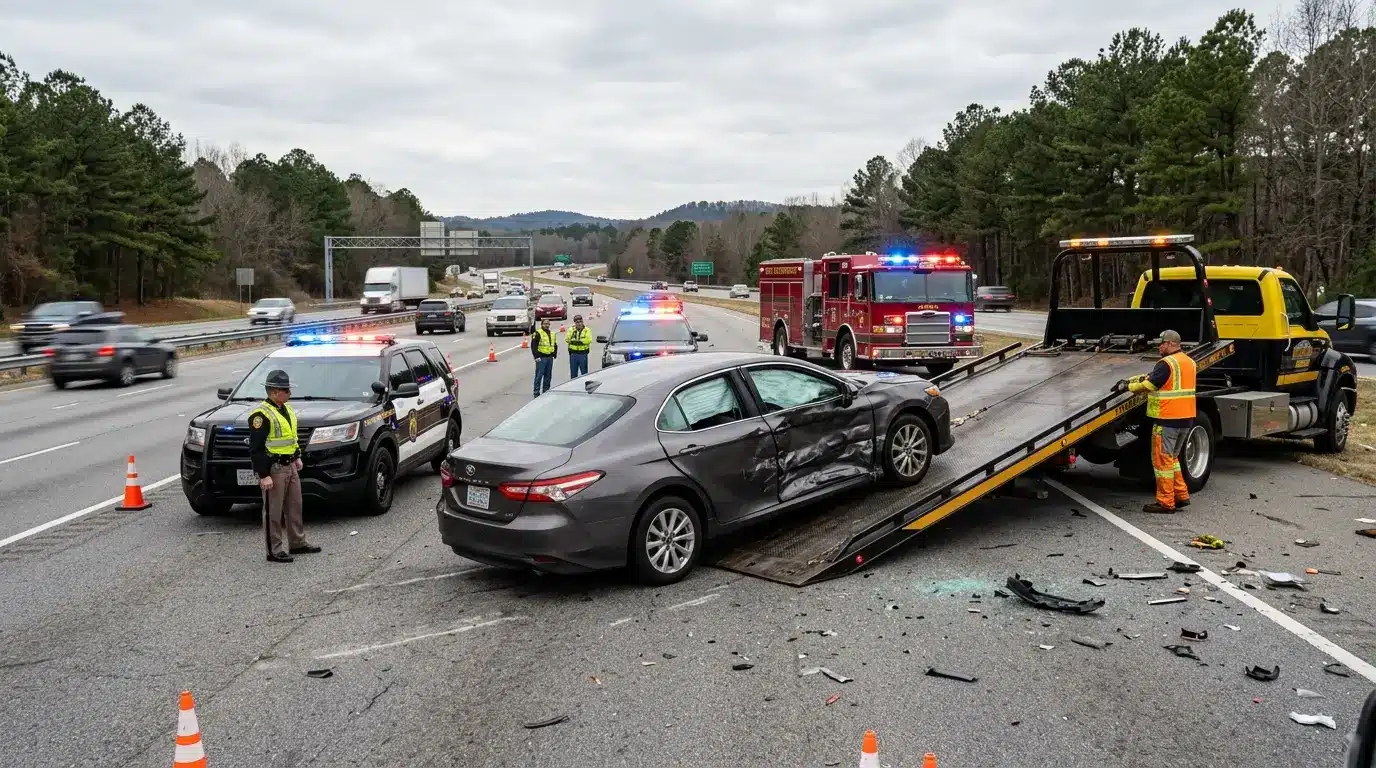
Understanding how crashes happen and the type of scars they cause can help long-term to avoid such scenarios in the first place.
The Source of the Scars Formed in a Crash
During the crash, the body is impacted by glass, metal, and plastic. Typically, the marks have resulted from deep cuts caused by:
- by broken windshields
- burns due to fires or hot liquid
- road rash,
- and cuts made during the process of treating other wounds.
Scars that are More than Markings
Not all scars are simply markings. Tight healing of the tissue affects the range of motion of the joint, and nerve damage below the surface leaves pain or numbness.
Classifying and Assessing Scars for Physicians
Types and Characteristics of Scars: According to Johns Hopkins Medicine, scars can come in many different forms, such as:
- hypertrophic scars (raised scars that stay within the boundaries where they were created)
- keloids (scar tissue that grows outside of its original location and can return after surgery has been performed on it)
- atrophic (depression or pitting) and
- contracture (scars that limit range of motion after a burn injury.)
“Permanent” as the Most Important Criterion
It takes up to a year for a scar to completely heal, and while revision surgery, laser, and injectables might improve its appearance, they do not eliminate it. Therefore, the evaluation provided by the treating physician as to its permanence is the most important factor in a scar injury claim.
Factors That Determine the Value of a Scarring Case
Here are the factors that can help determine the value of your scarring case.
Location and Visibility
The location holds a very important place in the case. A facial scarring settlement case has more value if it is on the face, neck, or hands because it is more visible, while a scar that can be hidden by a cloth is less valuable.
Impact of Scar on Daily Life and Its Severity
The depth and size of the scar also have an impact on the value, along with visibility, as well as other elements like how much ability it holds to improve, the procedures required on it, and the impact of the scar on daily life.
Establishing the Claim and Getting Around the 1% Rule
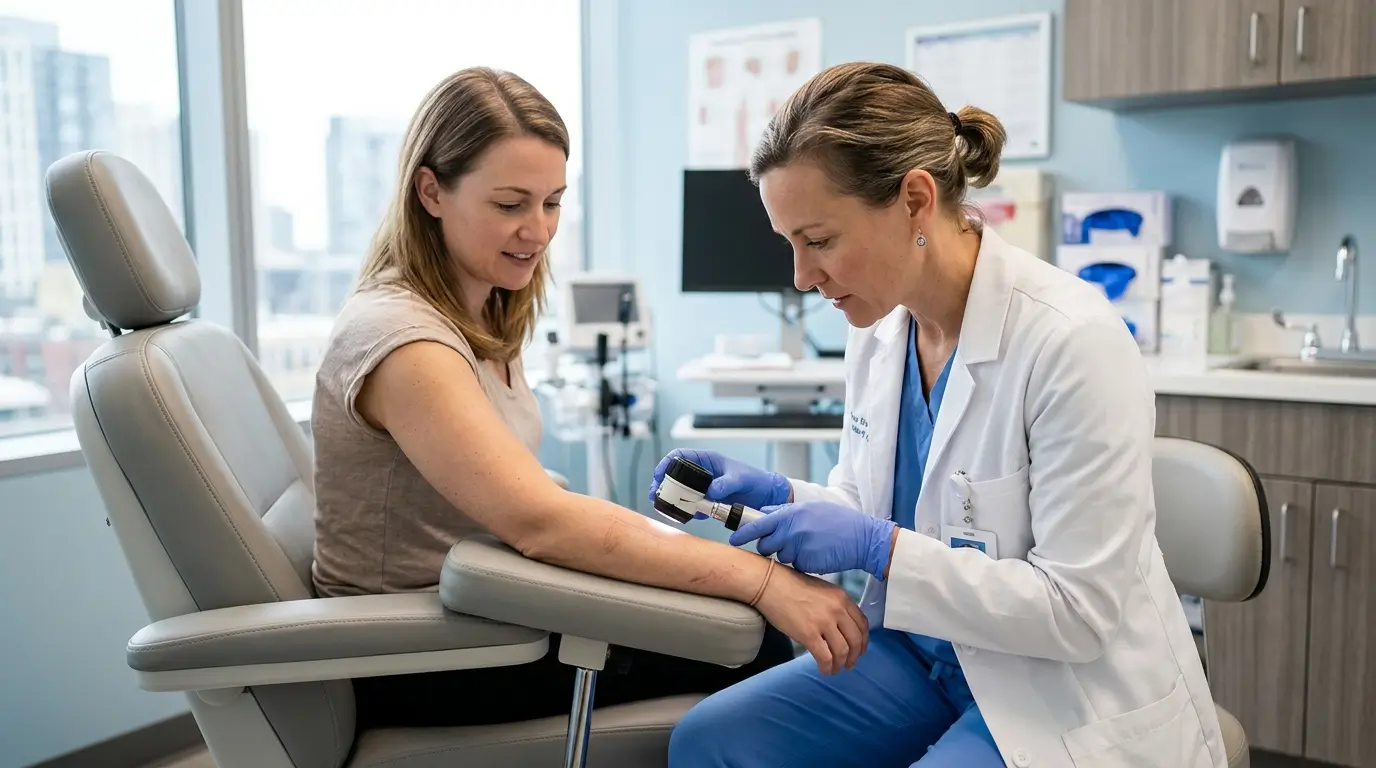
It is very important to establish the claim and work your way around the 1% liability rule.
Chronicle the Scar over Time
The best permanent scarring car accident North Carolina cases rely upon photographs of the injury taken over time, along with all medical and surgical documentation, and an opinion by the surgeon treating you regarding the permanency of the scar and future cost.
North Carolina’s Contributory Negligence Trap
North Carolina is one of only a few jurisdictions where 1% of fault precludes recovery altogether, so insurance companies will fight tooth and nail to find some reason why you are at fault. Establishing the at-fault driver’s responsibility for causing the accident becomes just as important as establishing your injury.
Notice of claims is required within 3 Years under N.C.G.S. § 1-52
The Eggshell Plaintiff Doctrine
Just because your body scars easily doesn’t mean that the at-fault driver gets off the hook. North Carolina law holds the wrongdoer accountable for the way their victims are as individuals, not based upon any generalized assumptions.
Possible Compensation
Damages may be sought for medical expenses both now and in the future, for any reconstructive surgery damages that may be necessary, for any loss of wages and earning capacity, for pain and suffering, emotional distress, disfigurement, and reduced quality of life due to it. Payment would come from the liable driver’s car insurance and possibly your own underinsured motorist coverage.
Methods of Devaluing Scar Damage Claims
Insurers would try to get the adjuster to categorize the scar as…
- “merely cosmetic,” to claim it will fade away,
- to find a pre-existing condition that caused the scar,
- and to make a fast and low offer while the scar is not yet fully developed or the plastic surgery is not completed.
If you accept any kind of settlement, the case gets closed and becomes unattainable. The problem itself is of a permanent nature.
Building a Disfigurement Case Through Your Lawyer
There are basically two ways to build these kinds of lawsuits. One, showing your right to compensation under the strict 1% rule for liability, and two, showing the true value of a visible injury.
You hire an NC car accident lawyer who makes sure you have solid liability evidence, calls on your treating surgeon to talk about how long-lasting this damage is and the expense of future surgery, and won’t let the insurance company cut corners on a healing scar. That’s where the Heavy Hitters come in.
Have You Suffered Permanent Scarring Following an Accident in North Carolina? Speak with Tatum & Atkinson

The scarring that could follow you the rest of your life needs more than just a superficial dismissal from an insurance adjuster. There’s absolutely no cost or obligation in getting to know the real value of your case.
Since 2006, Tatum & Atkinson has been helping those injured in North Carolina from our offices in Raleigh, located at 702 Glenwood Avenue, among other offices throughout the state. The Heavy Hitters are aware of North Carolina’s 1% rule and know how to establish the true value of your injury.
Call (800) 529-0804 for a free consultation. We operate under contingency fees, which means that you owe us nothing unless we win your case.
Questions Asked Frequently!
How is a scar’s value decided?
The value depends all on the location of the scar, the size, whether it’s permanent or not, the future cost for treating it, and whether it has an impact on your routine and job. The value of a scar on the face is way more than that of a scar that can be covered by a cloth.
Should I wait for my scar to heal before settling?
Yes, at least until your physician determines if this is permanent and how much any scar revision surgery will cost. Settling early will often mean that you accept less than what your claim may be worth, and you will not have the ability to bring your claim back after that point.
Can I recover if I scar more easily than most people?
Yes. According to North Carolina’s eggshell-plaintiff doctrine, the other driver gets you in your current state. The fact that you are prone to forming keloids or large scars doesn’t change that.
What does it cost to talk to a lawyer?
Nothing. The consultation for these types of contingency cases, which means there’s no fee until we win the case.
Is there a possibility of receiving payment for a long-lasting mark from an automobile accident in NC?
Definitely! You may have a claim against the at-fault party due to their bad driving if you suffered a long-lasting mark as a result of their actions. Typical damages available include: past and future medical bills; physical pain and suffering; emotional distress; and decreased quality of life.
