Can You Get Compensated for Bruises After a Car Accident in North Carolina?
Key Highlights:
- You can get compensated for bruises in a North Carolina car accident claim, but they are not usually treated as a standalone injury.
- If no official medical documentation can be presented, the insurance adjuster might suggest that the bruising is only minor or cosmetic.
- Extreme or unusual bruising may indicate something more serious, such as internal bleeding or fracture.
- Photographs taken at the time and immediately after can be some of the strongest evidence for the severity of a bruise.
- Bruising, along with missed work time, chronic pain, and reduced mobility, has a far higher claim value.
When you’ve been involved in a car accident, you may think more about broken bones, whiplash, and other serious injuries that you sustained, rather than simple bruises. However, if the bruises are causing pain, if you are missing days from work because of them, or if they don’t seem to be going away, you might be thinking about whether a bruise by itself can warrant a claim.
If you have questions about this or any other legal matter, our experienced car accident lawyers at Tatum & Atkinson, PLLC, will gladly help you.
Call 800-529-0804 today for a free consultation. You don’t have to pay anything unless we win your case.
Are Bruises Considered a Compensable Injury in North Carolina?
Bruises are compensable but not without further information and not necessarily on their own.
How is “Compensable Injury” Defined?
To receive compensation under North Carolina’s statutory rules on damages (N.C. Gen. Stat. Chapter 1D), you don’t necessarily have to sustain major injuries. What’s important is if the injury:
- Was a result of the accident
- Was recorded by a physician or in medical records
- Resulted in actual suffering, restrictions or expenses
If the bruise fits these critical points, then you might be able to present it as part of your claim, even if a fracture or torn ligament did not occur.
Why Bruises Alone Are Treated Differently Than Other Injuries
Bruises are not permanent and they usually heal within days to a few weeks. This restricts the value of a bruises-only claim. Insurance adjusters are aware of this and are likely to value bruising less.
When a Bruise Signals a More Serious Underlying Injury
In some cases, bruising could be the first symptom of a more serious problem. For example:
- If there is extensive bruising around the abdomen, it could indicate severe organ damage or other common internal injuries caused by car accidents.
- A bruised chest from a seatbelt is a sign of possible rib or lung damage
- Bruising around a joint could indicate damage to the soft tissue and/or ligaments underneath
In these cases it is not the bruise that is being compensated for. This can indicate a more serious condition and can greatly enhance the value of a claim.
Why Insurance Companies Often Dispute Bruise-Only Claims
If there are no other injuries but a bruise, there will be pushback. Adjusters are trained on reducing payment for injuries which appear minor.
Adjusters can use the term “minor injury” to minimize your payout by:
- Ignoring the nature of the injury and referring to it as “cosmetic”
- Insisting that the bruise just required rest and ice
- Offering a quick payout with a low settlement prior to knowing the extent of pain or severity of the injury
Why Lack of Medical Treatment Hurts a Bruise-Related Claim
If you didn’t go to a doctor following the crash, then you don’t have an official record of the bruise, its severity or any related pain.
If your insurance company does not have that evidence, there is not much reason to believe that the injury was not superficial, even if it actually rendered you unable to function in your normal day-to-day life.
Learn more about why delayed medical care can cost you your injury claim.
The Role of Photo Evidence in Proving Bruise Severity
Bruises can change and fade quickly and photographs are some of the best evidence you can have.
Take photos of your bruise:
- Immediately following the accident
- A couple days later, when it’s usually at its worst
- While it heals
This provides the insurance adjuster a concrete timeline that’s more difficult to dismiss than simply a written explanation.
How Do I Strengthen a Bruise-Related Injury Claim?
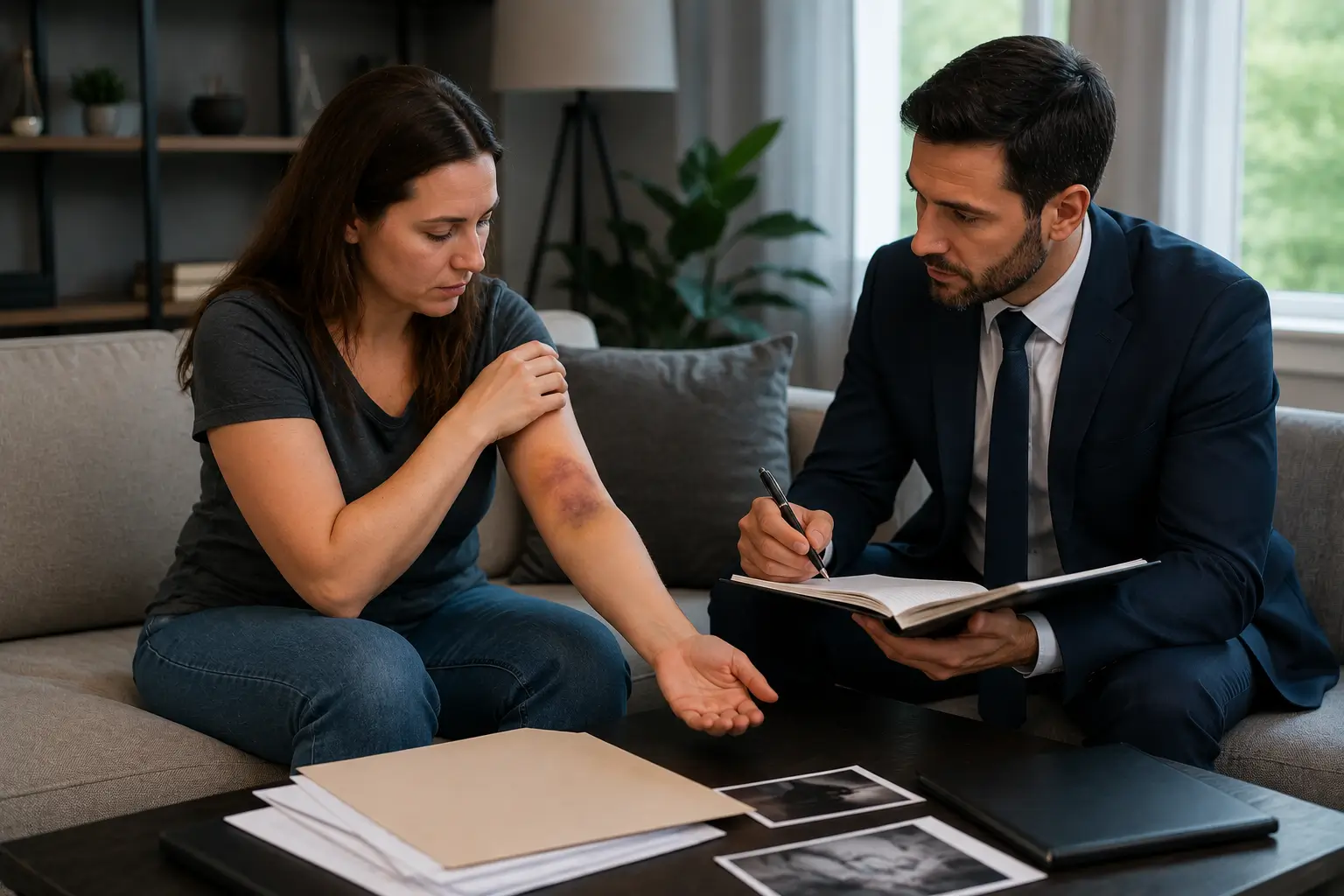
A few simple steps can make the difference between a dismissed claim and a properly compensated one.
Seeing a Doctor Even When the Injury “Seems Minor”
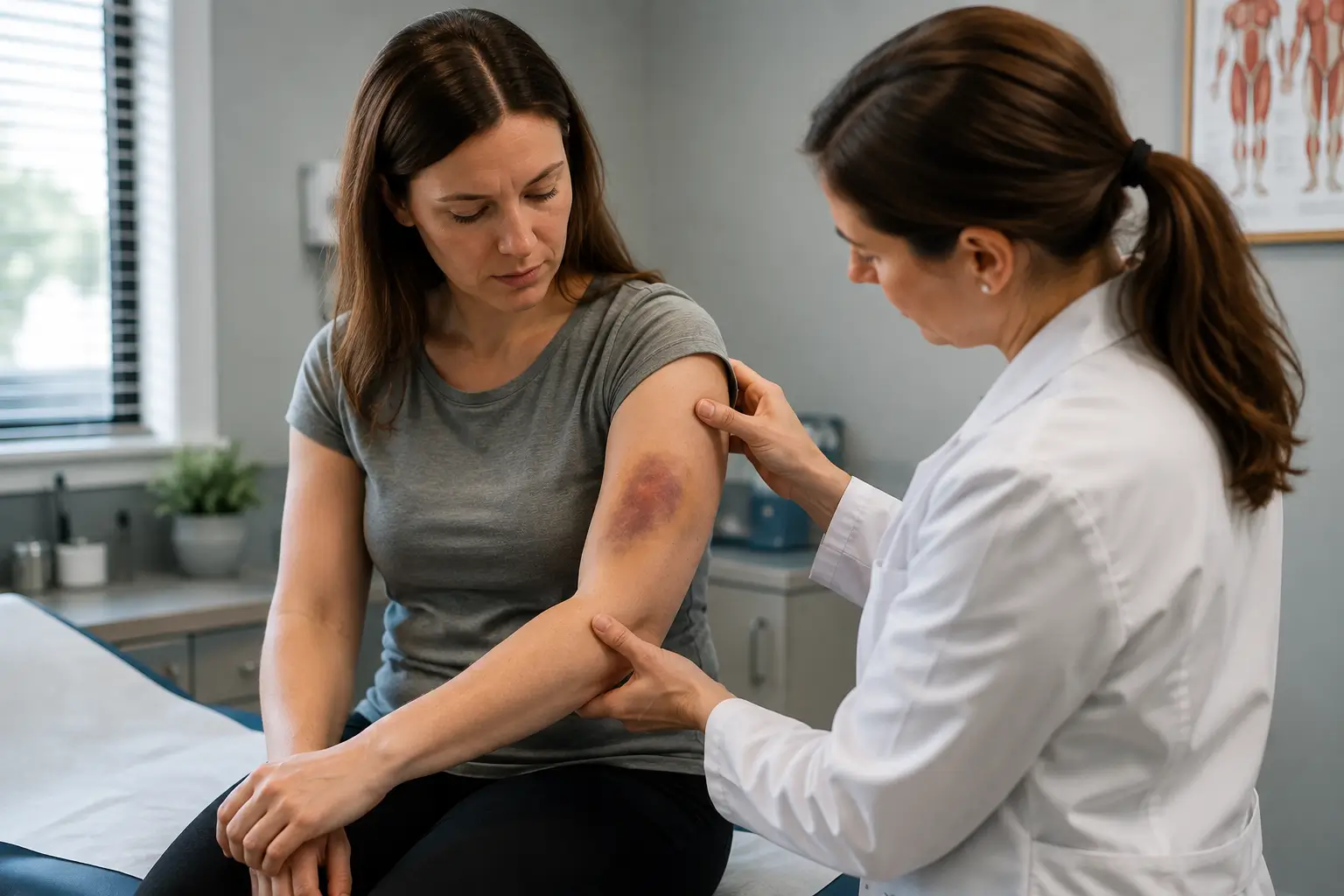
Getting evaluated by a doctor (even if you just went once) creates the medical record insurers look for. It also helps with detecting underlying injuries the bruising may be concealing, such as a fracture or internal problem that may not necessarily be visible immediately.
Documenting Pain, Swelling, and Limited Mobility Over Time
A bruise with actual symptoms is worth a lot more than just a cosmetic bruise. Take note of:
- Your pain on a daily basis
- Any symptoms like swelling or stiffness that affect mobility
- Any absences from work, driving difficulty or inability to perform normal everyday activities
Connecting Seatbelt or Impact Bruising to the Accident Narrative
Bruising patterns can help determine the cause of the crash. Demonstrating proper restraint use under North Carolina’s mandatory seat belt statute (N.C. Gen. Stat. § 20-135.2A) establishes that seatbelt bruising across the chest or shoulder was caused by the force of the collision.
How Much Is a Bruise Worth in a Settlement?
The dollar value of a bruise is not fixed because it varies based on the specific circumstances.
| Situation | Likely claim value |
| Only minor bruising without medical intervention and no lost wages | Low or may not be pursued separately |
| Bruising or pain is reported and medical help is sought | Modest, factored into overall claim |
| Bruising which led to missed work or restricted movement | Moderate, involves lost wages |
| Bruising that indicates a more severe injury (fracture, internal) | Can substantially increase overall settlement |
Here are a few factors that make a bruise-related claim worth more:
- Medical documentation recording that the bruise is linked to symptoms
- Absences from work or reduced ability to perform daily activities
- Photographic evidence that shows progression of severity
- Bruising and further assessment (using X-rays and CT scans), which revealed a more serious injury
Why Bruises Are Rarely Compensated as a Standalone Injury
Most bruising claims will be included in a claim and will not be considered independently. A temporary bruise tends to be a less significant category of damages to insurers and juries than an injury that has more lasting consequences.
When to Talk to an NC Attorney About a Minor-Looking Injury

It’s best to consult a lawyer if:
- Bruising is extensive, severe or slow to heal
- You had pain, swelling or a restricted range of motion
- You don’t know if it could be concealing a more serious injury
- The insurance provider is saying that your claim is “not worth pursuing”
“People often assume bruises aren’t worth mentioning to an insurance company, but that’s a mistake. Bruising can be the first visible sign of a much more serious injury underneath, and even on its own, real pain and lost time from work deserve to be taken seriously.” – Robert Tatum, Tatum & Atkinson, PLLC
Call Tatum & Atkinson, PLLC and Understand Your Legal Rights
Our attorneys at Tatum & Atkinson, PLLC have achieved over $100 million in compensation on behalf of our injured clients and we’re available for a free consultation. When you are not sure whether to hire a lawyer, our attorneys will be able to consider the specifics of your accident, clarify your legal rights and help you seek the compensation you need. In case we accept your case, you would not owe us anything unless we win or otherwise. Call 800-LAW-0804 today to learn more.
Disclaimer: This article is informational and it is not legal advice. Every case is different. Discussion with a lawyer may assist you in knowing your individual legal alternatives.
Frequently Asked Questions!
Is a bruise considered a “serious injury” under the law in North Carolina?
In general, no. Bruises alone don’t qualify as a “serious injury” under the NC law. A serious injury generally requires a more serious lasting damage, not temporary bruising.
Does it matter which part of the body the bruising is on?
Yes. Bruises that are close to important organs like the head or joints are viewed more critically as it may signal a higher risk, compared to bruising on areas which are not as sensitive, like on the arms or legs.
Can I still file a claim if the bruising didn’t appear until a day or two after the accident?
Yes. If the bruise doesn’t show for a few days it is likely normal and will not affect your claim as long as you visit a doctor as soon as it does make its appearance so you can relate it back to the accident date.
What if the other driver’s insurance provides a quick settlement before I’m totally healed?
It’s usually better to avoid any offers until you know the true scope of your injuries, as initial offers frequently underestimate injuries still being sustained.
How many years should I keep documentation of my bruising and other symptoms after the case is resolved?
Maintain records of symptoms and bruising for a minimum of 5-7 years following the resolution of the issue if possible or longer if there could be continuing symptoms. Check with your lawyer as it will depend on the specific jurisdiction.
