Can The Insurance Company Spy On Me If I Was In An Accident In Virginia?
Key Highlights:
- Yes, the insurance company surveillance Virginia team can legally spy on you if you have been involved in a car accident.
- The insurance company has the right to watch you at public places and look at your public social media posts.
- They cannot enter your private property, hack into your social media accounts, or record your private conversations secretly.
- Under Virginia’s one percent fault rule, even a minute error of 1% in causing the accident can bar you from receiving any compensation.
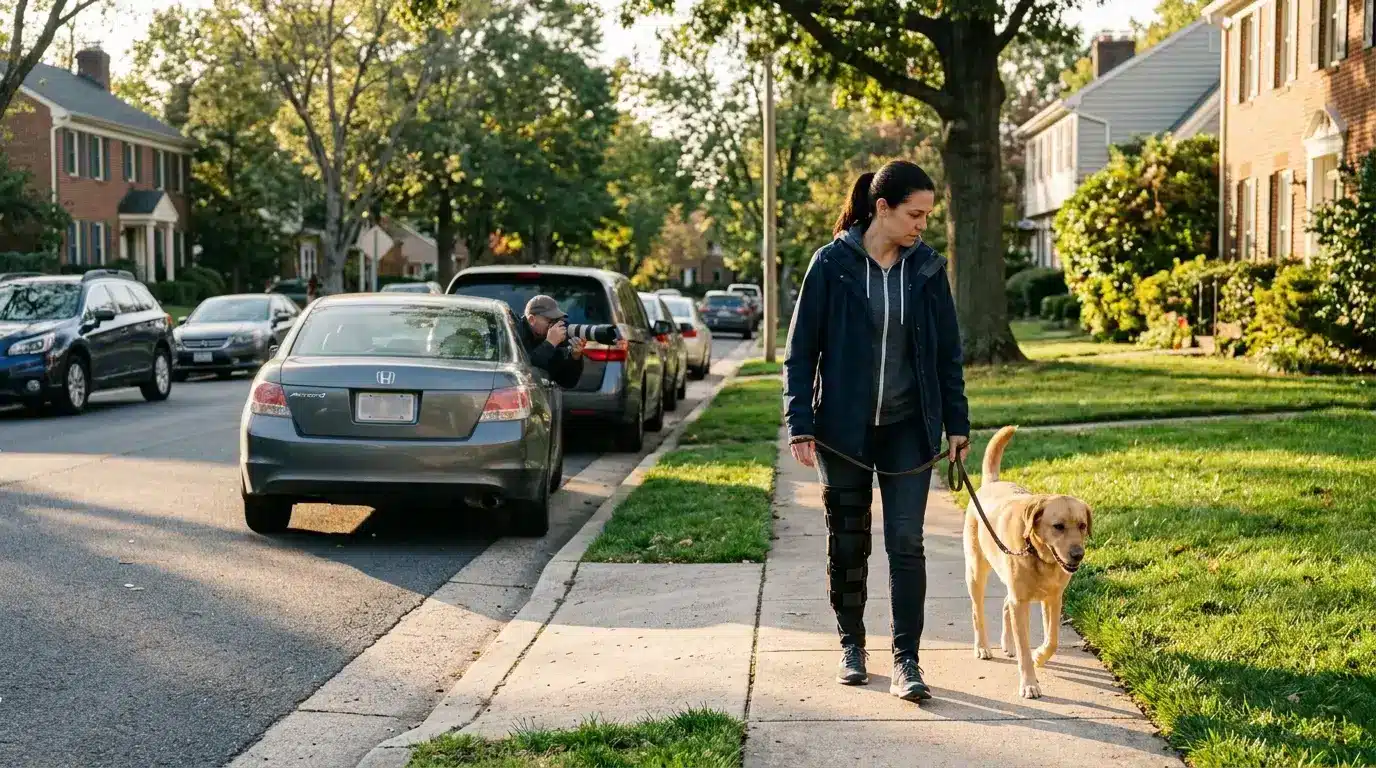
Following a personal injury claim, the Virginia insurance company surveillance Virginia team may observe your activities in public or look into your social media accounts, among others, in their efforts to establish the nature or extent of your injuries
Having knowledge about your rights can only help your case. Should you feel like you are being watched, call Tatum & Atkinson Law Firm and let our Virginia personal injury attorney help you out.
To learn more about your current situation or get a free initial consultation, reach out to us at (800) 529-0804.
The Insurance Company Surveillance Virginia is Legal But It Has Limits
As there is absolutely no expectation of privacy when in public, this means that an insurer or any private investigator it hires (they should be licensed by Virginia’s Department of Criminal Justice Services) can assist in monitoring your public social media.
However, there still exists a limit on how far investigators can go. They cannot go on a person’s property, nor can they hack into their private social media accounts. And they cannot record an individual’s private conversation because, under Virginia’s wiretapping laws, it is illegal for a third-party investigator to intercept or record a private discussion without the consent of at least one person participating in it (Va. Code § 19.2-62).
Why Insurers Watch Injury Claimants
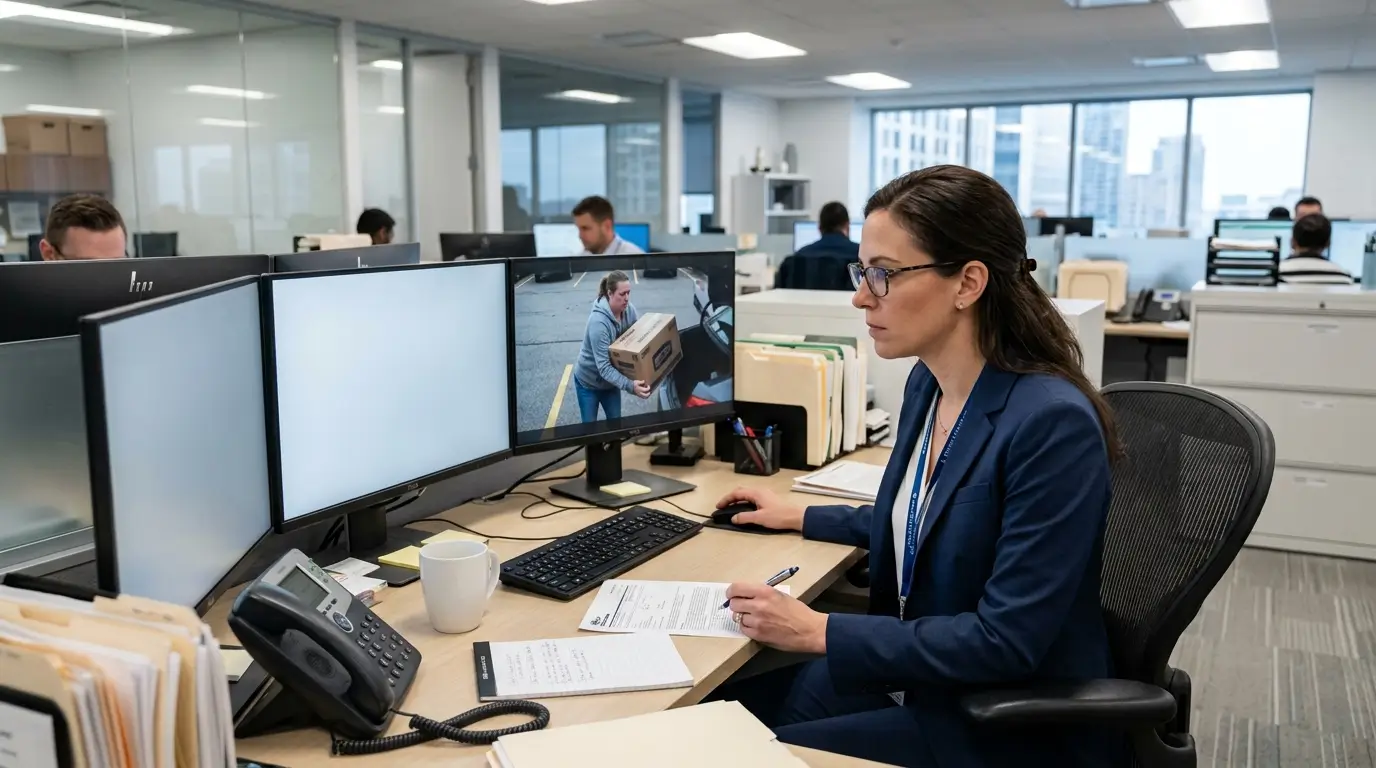
In summary, this is all about money: the higher the value of your claim, the more efforts will be made by the insurer to lower the value of the claim by assigning blame to you.
The objective of the insurer is not to show that the claimant is doing anything wrong, but to create an inconsistency in your claim to show that you are exaggerating your condition.
The Tactics They Actually Use
There are a few basic techniques they use during insurance investigation:
- Video monitoring through a private investigator in public, or on your premises, from the street.
- Monitor social media for public posts and photos, check-ins, and any tags made by friends.
- Researching the public records on lawsuits and property/business records.
- Using private databases that contain information about your past claims.
- Check your recorded statement to find points that may be disadvantageous to you.
How Surveillance Gets Used Against You
The problem in surveillance videos is the absence of context. A video of you carrying a grocery bag can be played without the backstory, even if you were in unbearable pain for several days. In Virginia, where defense arguments can completely ruin your case, such videos can have even worse consequences.
Protecting Yourself: Social Media and Consistency
You cannot stop being surveilled, but you can stop making it easy for them to find dirt on you.
- Always act like someone is watching from the time you file your case.
- Make sure that your social networking sites are private and that you do not make any new friends.
- Do not post anything related to your accident, injuries, activities, or claim.
- Never remove past posts after a case is filed because removing posts looks like you are trying to destroy social media evidence.
The key point is to always be honest. Being consistent is your strongest defense because surveillance will only work if there is inconsistency.
Protect Your Claim From Insurance Surveillance in Virginia

Are you wondering if the insurer is spying on you? That unease is completely normal. Although insurance company surveillance Virginia tactics are real, there is no need to allow them to scare you out of obtaining the compensation that you are entitled to receive. Contact our personal injury lawyer today and receive a free initial consultation.
All matters in Virginia are handled by attorney Jon Ward at Tatum & Atkinson. We represent injured persons throughout the Commonwealth of Virginia, including those in Cedar Bluff. Our Heavy Hitters are ready to combat the false footage and protect your recovery.
To speak with an attorney free of charge, call (800) 529-0804. We work on a contingency basis, which means no win, no fee.
FAQs: Can the Insurance Company Spy on Me If I Was in a Car Accident in Virginia?
Can a private investigator come onto my property to film me?
No. The investigator cannot intrude on your property, come inside your home, and install surveillance equipment where you have a reasonable expectation of privacy. However, they are allowed to film you from public locations like the street, parking lot, or shop because such locations are not considered private, so anything visible from there may be recorded without your knowledge.
Can the insurance company use my private social media posts?
What you post publicly is open season, and people notice. What you share privately will be more difficult for them to see, but some people might trick you into becoming their friend. If your case goes to court, a judge can order you to hand over your private posts, meaning anything you put online can end up being seen by the insurance adjuster.
Should I delete my social media after a car crash?
No, not after a claim begins. Deleting your posts or profiles once the process of your claim has started will be an attempt at evidence tampering that may carry greater consequences than the material itself.
What if the insurer already has video of me?
The footage may not be as bad as an expert claims because the context is what matters. Just a few seconds of footage do not tell us the extent of suffering that has occurred thereafter. A Virginia car accident lawyer can contextualize the video.
Do I have to speak with the insurer’s investigator?
You are typically not obligated to provide a recorded statement or even appear before an investigator for the other side’s insurer early on. This type of conversation is designed to create inconsistencies that they can use against you later. It would not be rude to refuse and pass any contact from them through your lawyer. Cooperating does not mean playing along and answering their questions on their terms.
