How Does My Lung Get Punctured In A Car Accident In Virginia?
Highlights
- How does my lung get punctured in a car accident in Virginia? It happens in most instances due to crash forces leading to a rib puncturing or through pressure of seat belts and airbags, resulting in pneumothorax without any visible injury.
- Adrenaline prevents chest pain sensations. It is critical because it can cause serious problems a few hours later; hence, Virginia trauma standards require prompt evaluation at the ER in cases of pain or trouble breathing.
- A 2026 study found that punctured lungs lead to long-term scarring and reduced breathing capacity. The impairment of pulmonary reserve must be included in your claim for full reimbursement.
- Under Virginia’s House Bill 107 (July 2026), the procedure for getting underinsurance coverage has been made easy. It is through this legislation that Tatum & Atkinson Law Firm contests insurance companies’ claims of severe lung damage as “minimal bruising.”
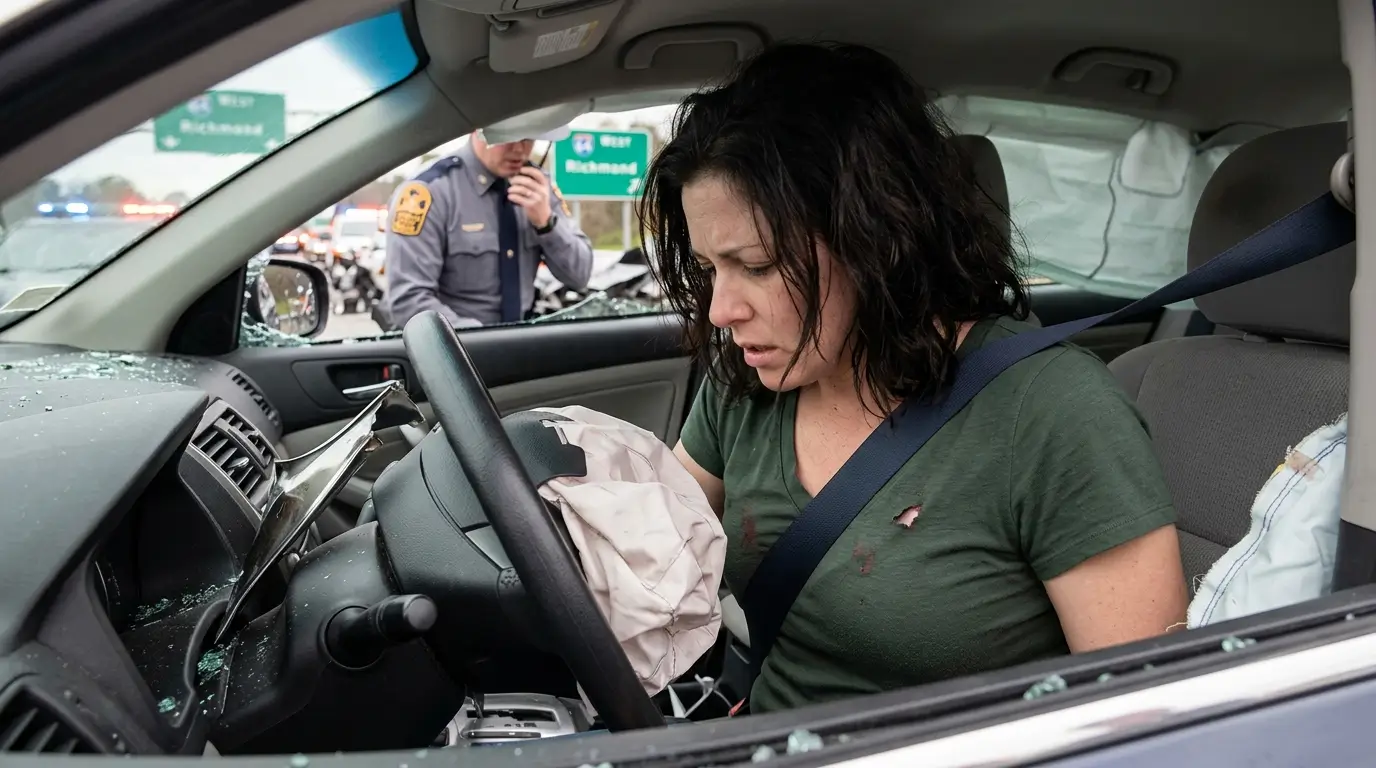
A penetrating chest injury is perhaps one of the worst types of personal injuries after a Virginia car accident, and one that is often disregarded due to a lack of physical signs. Moreover, it takes a while for symptoms to become apparent, and by then the injuries might already be far worse. In Richmond, Northern Virginia, and the Shenandoah Valley, internal injuries after car accident in Virginia, such as a punctured lung, continue to be the primary reason for emergency admittance to hospitals.
Our experienced Virginia lawyers of Tatum & Atkinson Law Firm created this article to provide you with information on how the question “how does my lung get punctured in a car accident in Virginia” can be answered, symptoms to watch out for, and your rights to compensation according to Virginia laws. It is especially important for those who had their lungs damaged in a Virginia car accident because the recent House Bill 107, which was passed, explains updated legal rights.
Injured in a crash and having trouble breathing? Call Tatum & Atkinson Law Firm at (800) 529-0804 today for a free consultation. Don’t wait to protect your health or your claim.
How Does My Lung Get Punctured in a Car Accident in Virginia?
Puncture wound in the lungs, also known as pneumothorax, is one of the most serious yet underdiagnosed injuries sustained in car collisions in Virginia. The reason behind the misdiagnosis in most cases is that many patients tend to think that their only problem is “chest wall bruising.” The reality, however, is much more complicated, since symptoms start developing anywhere between a few hours and several days after a serious collision takes place.
Based on the results provided by a National Institute of Health (NIH) study, car accidents make up 60-70% of all incidents associated with thoracic trauma and therefore, are considered the main cause for any lung and chest trauma in the United States. In order to prevent insurers from undermining your claim, you must show them this exact mechanism with evidence.
How the Lung Gets Punctured: Crash Mechanics
The force of the collision is transferred directly to the chest through several different means:
- Seat Belt Pressure: Seat belts, even when used properly, can create tremendous pressure during a car collision. This can result in rib fractures, lung puncture Virginia car accidents, as well as lung compression, resulting in pneumothorax without any skin puncture.
- Direct Blunt Force Trauma: If the front end of a car sustains damage, there may not be enough protection for the rider’s chest area. In some cases, the chest can hit the steering wheel or the dashboard and lead to chest trauma car accident injuries Virginia, causing a lung puncture.
- Rib Fracture Lacerations: This one is straightforward and clear. A broken rib may cut through the lining of the lungs and cause an air leak into the chest cavity, collapsing the lungs.
- Airbag Blows (Barotrauma): Since airbags inflate at speeds of up to 200 miles per hour, the sudden explosion of air creates a pressure wave, which causes a unique form of pressure-related lung damage, also called barotrauma. It is usually challenging to diagnose in routine diagnostic imaging.
- Lateral Force (T-Bone Accidents & Rollovers): Side impacts in car accidents are notorious for crushing the chest wall. These injuries often combine with rib fractures, lung puncture, and Virginia car accidents, making diagnosis in the first ER visit very hard.
Types of Lung Collapse from Car Accidents
- Not all pneumothorax injuries are created equally. The following are three major classifications of these injuries according to emergency doctors of Virginia:
- Simple pneumothorax: This term is applied to partial lung collapse. It occurs when air can enter the pleural cavity without altering the pressure. While dangerous, it can be treated, but only if addressed immediately.
- Tension pneumothorax: This is considered an emergency situation. There’s continuous air entry into the chest cavity without an exit, pressing on the heart and lungs. This is one of the major causes of death following accidents and needs immediate attention.
- Hemothorax: In this case, it’s blood instead of air that builds up in the pleural space. This happens in severe Virginia accidents where there are rib or vascular injuries. This condition often accompanies pneumothorax.
“Insurance adjusters just love to say that a hole in the lung is a ‘simple’ injury, but it is not a simple matter when your collapsed lung goes undetected at the emergency room. In 2026, we are seeing more and more patients discharged with “chest bruises,” only to present themselves in a condition of life-threatening tension pneumothorax hours after their discharge. We have won these cases through our knowledge of the latest FAST scan examination procedures and the fact that if the accident force is strong enough to warp your vehicle’s metal, it is certainly strong enough to tear your lung lining.” — Robert Tatum, Lead Attorney
Symptoms of a Punctured Lung After a Car Accident
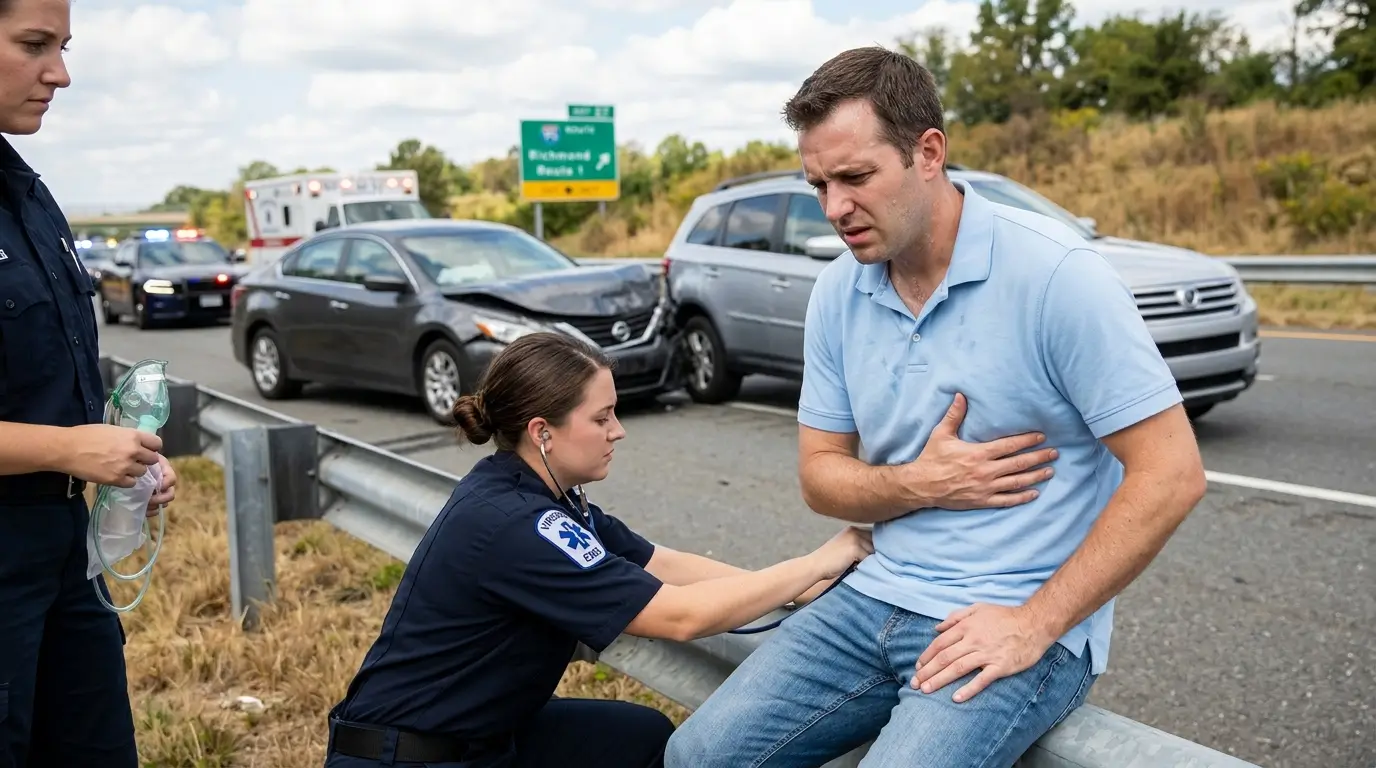
What makes punctured lung symptoms after car accident in Virginia a threat is that the effects can be delayed due to adrenaline and shock responses. Many Virginians involved in auto accidents have thought they were okay when their lives were hanging by a thread. If you feel even the slightest chest pain following an accident, get yourself checked out.
Warning signs to look out for:
- Sharp, Piercing Chest Pain: Any sharp, piercing chest pain that worsens with each breath is a definite sign of ongoing air leaks.
- Air Hunger: The sensation of having an overwhelming desire to breathe deeply is an essential symptom of collapsed lungs.
- Increased Respiratory Rate: An injured person having an unusually high respiratory rate is evidence of faulty lung function.
- Crackling Beneath Your Skin: An abnormal crunching sensation in the skin over your chest or neck (subcutaneous emphysema) means that the air has found its way to your tissue.
- Cyanosis (Bluish Hue): Bluishness of the lips and nails shows an inadequate oxygen supply in the body, and it is a matter of grave concern. In the case of an extensive pneumothorax, cyanosis can set in just minutes after a vehicle accident in Virginia.
- Absence of Lung Sounds: Absence of breath sounds on one side is a vital sign of a pneumothorax for Virginia trauma teams.
Note: In the event you have been involved in a collision and experience any sort of pain in your chest area, regardless of its severity, visit the nearest Virginia emergency room right away. Do not attempt to drive there yourself. Do not wait for the situation to resolve itself.
Can a Punctured Lung Heal, and What’s the Recovery Really Like?
Yes, but the time to heal depends on the extent of damage to your lungs. Acute and mild pneumothoraces detected early can be treated without many complications in Richmond’s and Northern Virginia’s major trauma hospitals. Nonetheless, an undiagnosed tension pneumothorax can take weeks to several months before one fully recovers in Virginia.
Mild Pneumothorax (Small Air Leak, Partial Collapse)
A minor leak may be treated through bed rest and oxygen. Although you may start feeling better within a week or two, hospitalization and imaging tests may be required to monitor lung re-expansion.
Moderate Pneumothorax
If a collapse is more extensive, it may be required to insert a chest tube (thoracostomy) to drain accumulated air from your lungs. In many cases, a pneumothorax from car accident in Virginia requires hospitalization at trauma centers like VCU Medical Center or Sentara Norfolk General. The recovery timeline for these types of injuries can range from 2 to 6 weeks.
Severe or Tension Pneumothorax
It is a life-threatening condition that requires urgent care to stabilize the patient. Although less invasive surgeries, such as Video-assisted Thoracic Surgery (VATS) are available at Virginia’s Level I trauma centers to treat pneumothorax, your full recovery may take months and may involve lasting complications.
Documenting Your Claim
Each step of the process, from getting in the ambulance to the last follow-up visit, provides the necessary medical documentation for your Virginia injury case. If you want to ensure that you get fair compensation, keep all documents related to your treatment.
Long-Term Effects of a Punctured Lung
Many individuals think that once their lungs have been expanded and their chest tube removed, the problem is solved. This is simply not the case with many of the individuals involved in Virginia accidents. Traumatic pneumothorax incidents may cause chronic lung damage, and recent studies conducted in 2025 and 2026 have shown a strong correlation between traumatic pneumothorax and increased risk of chronic lung complications.
When filing a Virginia auto accident personal injury claim, these health concerns will have to play a vital role in your damage calculations.
- Reduced lung capacity: Some people never recover to their full pre-accident lung capacity. Actions that were once easy, like climbing the stairs, playing with their kids, and participating in physical activities, might make them experience shortness of breath after car accident in Virginia, even when it was not there before the accident.
- Pleural scarring (pleural fibrosis): The connective tissue that forms between the lungs and the chest cavity following the piercing does not permit the lungs to fully expand when breathing. Pleural fibrosis is a complication that may be experienced after suffering from a traumatic pneumothorax, causing pain and difficulty breathing.
- Increased risk of recurrent pneumothorax: Once the lungs have collapsed following an injury, they are more prone to collapse again. Recurrent pneumothorax may require additional surgical interventions and cause constant fear during physical activity.
- Chronic chest pain with physical activity: The experience of long-term chest pain when physically active is very typical for people who have had a significant case of a punctured lung before. It should be remembered that it is both neurological and physical pain that prevents people from leading an active lifestyle.
- Psychological effects: anxiety, PTSD, and avoidance. People tend to develop PTSD, become hypervigilant regarding their breathing, and suffer from other psychological issues after severe injuries involving the lungs. It should be noted that, under Virginia law, these issues are compensated as consequences of physical injury.
All complications mentioned above, together with the inability to do things that a person used to enjoy doing before the crash and the scars resulting from a punctured lung, represent losses that could be accounted for by Virginia car accident injury claims for lung injuries.
What Compensation Can You Recover for a Punctured Lung in Virginia?
Lung perforation cases represent some of the highest-value personal injury lawsuits filed in Virginia because of the serious nature of medical consequences associated with these injuries, coupled with the long period of time needed for recovery. Claims often reach five to six figures, contingent upon the nature of the injury and how well the evidence is documented. At the Tatum & Atkinson Law Firm, we take all of these elements into account on an individual basis and figure out “how does my lung get punctured in a car accident in Virginia” because no two lung injury claims are identical.
Here are the types of damages you can receive:
Economic Damages
Some of the quantifiable damages that resulted from your lung injury include:
- The costs incurred during trips to the ER, surgery, and hospitalization in extreme cases of pneumothorax may reach tens of thousands of dollars.
- Follow-up medical treatment after recovery from pulmonology, medical imaging tests like CT scan and chest X-ray, and consultations from medical specialists, among others.
- Rehabilitation treatments after the collapsed lung after crash in Virginia.
- The financial implications of the income that would have been earned if the patient were unable to work during hospitalization and recovery.
- Income loss prospects in the event of complications, making you unable to return to your job.
Non-Economic Damages
Additional non-economic losses recoverable under Virginia law:
- Physical pain and suffering during the healing period, including inserting the chest tube, undergoing surgery, and restricted mobility.
- Mental suffering and PTSD, which result from the lung injury and car accident.
- Loss of the ability to enjoy life because this aspect of compensation is particularly relevant to the victims who are more active, and their work, hobbies, and parental obligations have been affected due to the breathing problems after car accident in Virginia.
- Consortium loss exists under Virginia law if the victim suffers a substantial injury that affects the relationship between the victim and his or her spouse.
Virginia-Specific Factors That Affect Your Claim Value
There are certain aspects of Virginia law that make your case unique and affect your ability to recover. With years of experience overcoming these challenges, Tatum & Atkinson Law Firm fights for your right to receive full car accident lung injury compensation in Virginia.
- Contributory negligence rule: One of only a few states, Virginia follows the pure contributory negligence rule. Under this doctrine, if the insurance company can prove you are at fault in any way, even 1%, you cannot recover any damages. Insurance companies in Virginia aggressively apply the doctrine of contributory negligence, making it the top reason to hire an attorney before contacting the claims adjuster.
- Two-year statute of limitations: In Virginia, you have two years after the accident to file a personal injury lawsuit. Failing to do so results in the expiration of your claim forever, regardless of how serious your injuries may be.
- Medical documentation quality: Virginia courts and insurance adjusters place great value on medical records. Injuries that involve internal trauma but have no visible evidence of injuries, such as pneumothorax, tend to be valued incorrectly without comprehensive imaging, physician reports, and specialty documentation from Virginia emergency rooms and trauma centers.
2026 Legal Update — House Bill 107
Starting July 1, 2026, Virginia’s HB 107 will do away with any procedural hurdles in underinsured motorists (UIM) claims. In the event that the driver responsible for causing damage to your lungs was underinsured, thus unable to pay for your medical expenses, HB 107 makes it much easier for you to seek your UIM insurance policy to cover the remainder of the costs.
Talk to a Virginia Lung Injury Attorney Before You Settle

Punctured lungs are considered very serious injuries, yet they often go underappreciated when it comes to insurance settlements, due to the fact that the damage isn’t visible. Without proper medical documentation, legal guidance, and asking “how does my lung get punctured in a car accident in Virginia,” can affect your settlement, you need to pay for your medical costs and compensate for your lost wages.
On top of that, Virginia follows a contributory negligence principle, meaning that one mistake made when dealing with an insurance company representative can deprive you of your ability to receive a settlement at all. Tatum & Atkinson Law Firm understands the steps necessary to win a case involving a punctured lung. We help clients in I-95 accidents, Northern Virginia intersection collisions, and other locations in the Shenandoah Valley area obtain the maximum possible settlement.
Take these steps now: First, you need a full medical examination of your chest injury. Next, contact us at Tatum & Atkinson Law Firm at (800) 529-0804 for a free case review.
Frequently Asked Questions!
What hospitals in Virginia treat punctured lungs after a car accident?
The major hospitals in Virginia capable of treating a collapsed lung from a car wreck include Level I trauma centers, VCU Medical Center in Richmond, Inova Fairfax in Northern Virginia, Sentara Norfolk General in Hampton Roads, and UVA Health in Charlottesville.
How do Virginia injury laws apply if a car accident causes a collapsed lung?
Virginia’s contributory negligence law, two-year statute of limitations, and the new UIM rights affect victims’ recovery and compensation when they can file a lawsuit. Contact a Virginia car wreck lawyer to get legal help.
Do Virginia insurance companies cover internal lung injuries from car accidents?
Yes, however, the insurer always undercompensates for an injury that cannot be externally observed. It is critical to document your injuries thoroughly through a hospital or trauma center in Virginia with images and other supporting documentation to receive proper payment for a collapsed lung injury.
How do I file a car accident injury claim in Virginia for a punctured lung?
Get medical help immediately and then collect copies of all medical records and invoices. Notify your insurance company about the crash, but don’t give any recorded statements. Speak to a Virginia injury lawyer from Tatum & Atkinson right away to learn more.
What compensation can I recover in Virginia for a serious chest injury after a crash?
A victim who suffers a major chest injury from a car accident in Virginia may be eligible for emergency medical costs, lost income, future medical expenses, pain and suffering, and reduced quality of life.
