What Age Group Causes The Most Car Accidents In Virginia?
Key Highlights:
What Age Group Causes the Most Car Accidents in Virginia?
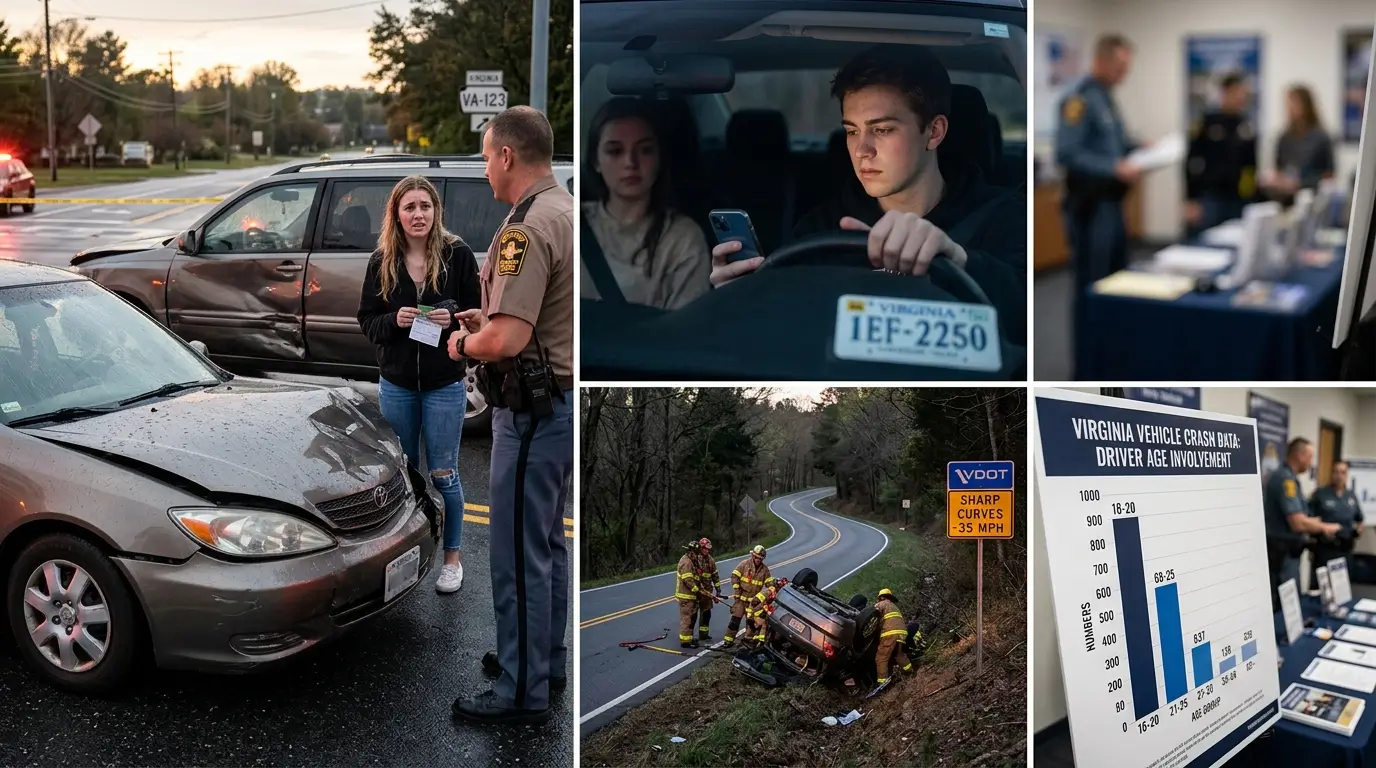
- The Virginia car crash statistics by age indicate that the age group of 16-17 years old is responsible for most per-mile crashes because of their lack of experience and ability to judge hazards on the road.
- The age group between 18 and 24 causes the highest number of fatal car accidents by age Virginia because of the greater exposure to traffic, night driving, speeding, and being under the influence of alcohol.
- The safest group of people to be in Virginia is considered those aged 25 to 64 who are less involved in crashes owing to experience and risk awareness.
- The elderly drivers aged 65 or older are increasingly facing an increased risk of accidents because of aging-related issues and medication use; hence, Tatum & Atkinson specializes in these cases in Virginia.
If you have been hurt in an accident in Virginia, one of the things you will want to know is who was at fault and why it happened. You would be surprised how much age affects that question.
Car accident statistics by age group Virginia indicate that not all motorists have equal chances of getting into an accident. The two age groups most prone to accidents for separate reasons are the youngest and the oldest. It is critical to comprehend the statistics and the underlying factors, as well as the laws in Virginia, to make a successful claim.
The Tatum & Atkinson Guide explains everything regarding this query, “What age group causes the most car accidents in Virginia?” in terms of priority, from the most at risk through to your legal options in case you were hit by someone in any one of these categories.
The Highest-Risk Age Group: Teen Drivers Aged 16–17
The data based on the Virginia teen driver accident rate shows that a clear pattern emerges that 16- and 17-year-olds have more accidents per mile than all other age groups with licenses.
This is not just an exceptional case in Virginia but a trend that exists nationwide, as demonstrated by substantial studies conducted over many years. Nevertheless, the specific figures in Virginia, compiled annually by the Virginia Department of Motor Vehicles (DMV), illustrate how important the problem is:
- Crashes among high risk drivers Virginia roads aged 16–17 occur almost twice as frequently as those by drivers in their mid-20s per mile driven.
- The leading cause of teen fatalities in Virginia is traffic accidents.
- The interval of the first year after receiving a license, known as the “rookie driver window,” holds the largest number of crashes in a young driver’s life.
- The number of accidents occurs most often on weekends from 9 PM to midnight and on weekdays from 3 PM to 6 PM.
Three Basic Reasons Why Teenage Drivers Get into Accidents
- Immature Brain: The prefrontal cortex, the part of the brain responsible for decision-making related to risk and impulse, does not reach maturity until roughly 25 years old. The teenage driver, at 16, makes quick decisions while driving, yet his brain is not mature enough to handle them. It’s not because of a lack of willpower, but it is human biology.
- Lack of Experience: Recognition of road patterns comes through practice on the roads. An inexperienced driver accidents Virginia faces an unforeseen merging lane, abrupt braking, or an unseen pedestrian, making judgments without having enough basis for reference. Driver education classes impart regulations. Experience develops intuition.
- Distraction and Peer Influence: It is illegal for all distracted driving age group Virginia to use their hand-held devices when behind the wheel. This is because the distraction caused by the use of a smartphone affects reaction times in a manner similar to having a blood alcohol content of 0.08, which is the limit at which one is considered intoxicated in Virginia. Secondly, each additional teen passenger increases the risk of an accident.
The Second-Highest Risk Group: Young Adults Aged 18–24

Even though teenagers aged 16 to 17 experience the most crashes per mile, those aged 18 to 24 suffer the most crashes because they drive more miles and face fewer legal prohibitions.
Brain immaturity in the prefrontal cortex extends into one’s mid-20s. Combine that with dramatically increased driving exposure, new jobs, college campuses across Virginia from Charlottesville to Blacksburg, and late-night social activity, and the result is the demographic of most dangerous age group for driving Virginia that is frequently involved in serious fatal car accidents.
Specific risk factors unique to this group:
- Impaired driving: Involvement with drugs and alcohol in accidents involving those aged between 18 and 24 is also high. In light of the legalization of marijuana for adult residents of Virginia since 2021, the issue of drug-impaired driving has grown significantly among this age group. According to Virginia’s DUI laws, both alcohol and drugs result in a DUI, which makes it strong evidence of negligence on the driver’s part.
- Aggressive driving and speeding: Speeding tickets and aggressive driving behavior occur more often among males aged between 18 and 24 years old. In Virginia, reckless driving is a common problem on interstate highways such as I-81, I-66, and I-95.
- Fatigue: College students and shift workers often drive after not getting enough sleep. Drowsy driving has similar effects to drinking and driving, but there is no law against drowsy driving in Virginia.
Middle-Aged Drivers (25–64): Virginia’s Safest Demographic
Young driver crash statistics Virginia based on age, indicate that the safest drivers in the state are those ranging from 25 to 64 years old. The rate of accidents decreases significantly among these drivers after 25 years of age and remains steady until they reach middle age.
These are not immune to traffic accidents; however, their driving behavior serves as a standard against which other age groups are evaluated.
In terms of liability, the negligence alleged against middle-aged drivers found at fault in an accident is often relatively straightforward; for instance, it may be due to distraction, speeding, failing to yield, or even impairment.
Elderly Drivers (65 and Over): Rising Risk With a Growing Population
While the statistics on accidents involving senior drivers in Virginia paint a picture more complicated than those involving teenage drivers, this trend becomes ever more important as Virginia’s population ages.
The key finding: Drivers aged 70 exhibit statistically higher accident rates than those at midlife; the most pronounced effect occurs beyond age 80. Common types of accidents in such groups include intersection and wrong-way accidents, which require complex visual and cognitive skills when making decisions.
Why Are Elderly Drivers More Likely to Have Accidents?
The elderly driver accident risk Virginia is due to physical problems and not behavioral ones:
- Vision impairment: Contrast perception, adaptability between dim light and bright light, and peripheral vision decline, thereby making it harder for drivers to perceive potential dangers.
- Reaction time decreases: It falls considerably after age 65 and declines further, making it difficult on Virginia’s high-speed roads and intersections.
- Limited range of movement: Stiffness of neck and shoulders makes blind-spot checks difficult.
- Changes in cognition: Early-onset dementia and other disorders can affect judgment, orientation, and responses to unexpected events on the road.
- Side effects of medication: Most medications prescribed to elderly patients can cause drowsiness, dizziness, and impaired coordination. There is no requirement in Virginia for doctors to report such patients to the DMV.
Approach for Virginia for Testing Physical Fitness of Older Drivers
The state of Virginia does not have to mandate driver testing for drivers over a certain age. Drivers who have a medical condition in question can be referred to the Virginia Department of Motor Vehicles Medical Advisory Board by their doctor, family member, or police officer.
Importance from a legal perspective: If an aging driver knew about his/her condition before the accident took place, personally, within the driver’s family circle, or even from a doctor, and the driver still drove despite the known danger, the laws in Virginia regarding personal injury may recognize this particular reason for filing a case for negligence.
What Are the Legal Restrictions for Teen Drivers Under Virginia’s GDL System?

The Graduated Driver License (GDL) program in Virginia has been designed to grant driving rights to novice teenage drivers over three levels. Knowledge of the GDL process is essential not only for safety but also for legal purposes, as any violation of GDL laws during an accident can prove negligence in Virginia civil courts.
| Stage | Age | Key Restrictions |
| Learner’s Permit | 15½+ | An adult licensed to be present at all times; a minimum of 45 hours of supervision is needed. |
| Restricted License | 16¼+ | Driving is prohibited between midnight and 4 AM; a maximum one non-relative passenger younger than 21 years old for the first year. |
| Full License | 18+ | All restrictions lifted |
If the teenage driver who caused injury to you was in violation of any GDL rule when the accident occurred, such as driving between midnight and 3 am, having extra passengers in the vehicle, or using a handheld electronic gadget while driving, that can be considered negligence per se. The breach of duty can be shown simply through the violation of the law.
Who Is Legally Responsible When an At-Risk Driver Causes Your Virginia Crash?
What happens if the guilty driver is a teenager?
Liability of parents for their teenage children’s accidents is governed by three separate theories in Virginia, which should be well understood:
Virginia’s Co-Signing Liability Statute
In Virginia, if a parent signs for the application for a driver’s license by a minor under their name, then both parents are jointly liable by statute for any damage resulting from the negligence on the part of such a minor child until he reaches 18 or is emancipated.
Family Purpose Doctrine
It is important to note that the owner of the car used by a family member may be found liable if he or she provided consent, whether explicitly or implicitly.
Negligent Entrustment
In cases where parents should have known that their teenager was an unsafe driver but still permitted them to drive, there is the theory of negligent entrustment under Virginia law.
With these theories, a significant personal injury case against a teenage driver in Virginia can never be restricted to the assets of the teenager alone. All parties who may be considered liable must be discovered at the outset.
How Are Claims Against Elderly At-Fault Drivers Evaluated in Virginia Accident Cases?
Claims against drivers who are elderly and at fault will be judged according to the same negligence principle as any other driver, but with added elements of investigation:
- Is there a known health problem making the person unfit to drive?
- Is the person taking some form of medicine causing impairment?
- Have family members or doctors flagged the fitness to drive?
- Has the type of collision indicated that impairment is present?
Whereas a “yes” response to any of these questions would expand the scope of the negligence inquiry from only the driver to possibly include enabling family members or, in rare cases, health care practitioners.
The Only Rule Every Accident Victim Needs to Know
One of the most rigid liability principles, contributory negligence, is practiced in the state of Virginia. According to this law, all individuals, regardless of age, are treated equally.
According to the contributory negligence principle, an injured party who is responsible for just 1 percent of the accident will have his or her recovery barred under Virginia’s law.
Virginia insurance adjusters are specifically educated on finding any reason, no matter how insignificant, to place some of the blame for the accident on you.
A simple statement such as…
“I didn’t see them coming” or
“I might have been speeding.”
could completely destroy your case.
It is the absolute, primary reason why one needs to retain a car accident injury lawyer Virginia before meeting with any insurance company, no matter how clear-cut their case may seem.
What to Do After a Crash Involving a High-Risk Driver in Virginia
The very first thing someone should do after an accident is get a lawyer on their side. Taking these necessary steps will help ensure that proper documentation and evidence are preserved.
- Call 911 and get a police report. The Virginia police report is what makes up the bedrock of your case. The report includes the circumstances, the people involved, what the police officer observed, and any citations, such as GDL citations.
- Visit the hospital on the day of the accident. Adrenaline suppresses pain. Spinal injuries, brain trauma, and internal injuries often do not exhibit symptoms until later. Delaying medical attention creates documentation gaps for insurance companies to capitalize on. Visit a Virginia emergency room or urgent care clinic by the end of the day.
- Preserve evidence at the scene. Take pictures of the vehicles involved, the road surface, skid marks, the intersection signals, and injuries sustained. Collect contact information from witnesses before they leave the scene.
- Contact Tatum & Atkinson before speaking to any insurer. The state of Virginia’s contributory negligence statute requires that one careless utterance to an insurance adjuster could destroy your claim altogether. The number one thing you need to do is speak to a lawyer.
How Tatum & Atkinson Handles Virginia Car Accident Claims

There was only one basic concept for Tatum & Atkinson: severe injuries demand outstanding attorneys.
Our firm consists of an accomplished, experienced attorney who heads a team of professional lawyers specializing in car accident cases throughout Virginia, including Northern Virginia, Virginia Beach, and surrounding areas.
This is what my team does when we handle car accident injury cases in Virginia:
- Find everyone who may be responsible, starting with the driver, their parents, the insurance company, and anyone else who may have been negligent.
- Secure time-sensitive evidence, such as GDL logs, cell phone data, dashcam footage, and police reports.
- Itemize every possible type of damage that you sustained, from medical expenses to loss of income.
- Communicate with insurance companies in a way that makes Virginia’s contributory negligence statute useless as leverage.
- Prepare every single case for trial from the get-go, because insurance companies settle reasonably once they know that we will take a case to court.
You pay no fees unless we win your case. That’s our contingency-based fee system. You owe us nothing upfront.
Get a free consultation; just call us at (800) 529-0804
Victim of a crash caused by a teenage driver, a senior driver, or any other driver in Virginia? Tatum & Atkinson have your back at all times at no cost until we win.
Frequently Asked Questions!
How long do I have to file a car accident claim in Virginia if the at-fault driver was a minor?
The statute of limitations for Virginia is 2 years from the date of the accident. If the victim is underage, the statute of limitations is tolled until he reaches 18 years old; thus, he can file up to 20 years after reaching 18.
Does a teen driver’s age affect how much compensation I can recover in Virginia?
Age is no limitation for damages for the at-fault party. It depends on the harm suffered. But possible recoveries will consist of insurance coverages and parental responsibilities for minors since the minor has few assets.
What happens if the teen driver who hit me in Virginia was uninsured?
If there is no insurance for the teenage driver, it can be used against your UM/UIM coverage or, if the parents are insured, against their liability coverage. This is because insurance coverage is quite common.
Can I file a claim if I was a passenger in a car driven by a teen and we got into an accident in Virginia?
Yes. Claims from injuries sustained by passengers from teenage drivers can be filed against several insurance policies. The contributory negligence doctrine in Virginia applies very rarely to passengers, hence making claims for medical bills, loss of income, and suffering viable.
Am I personally liable as my elderly parents’ adult child for a car accident in Virginia?
Adult children would not be held accountable for any accident involving their elderly parents, unless ownership of the vehicle, negligent entrustment, or control was involved.
This information is intended for general guidance purposes only and does not constitute legal advice. No two cases are alike. Call Tatum & Atkinson at (800) 529-0804 for a free consultation.
