What Are Virginia Texting And Driving Laws?
Key Highlights:
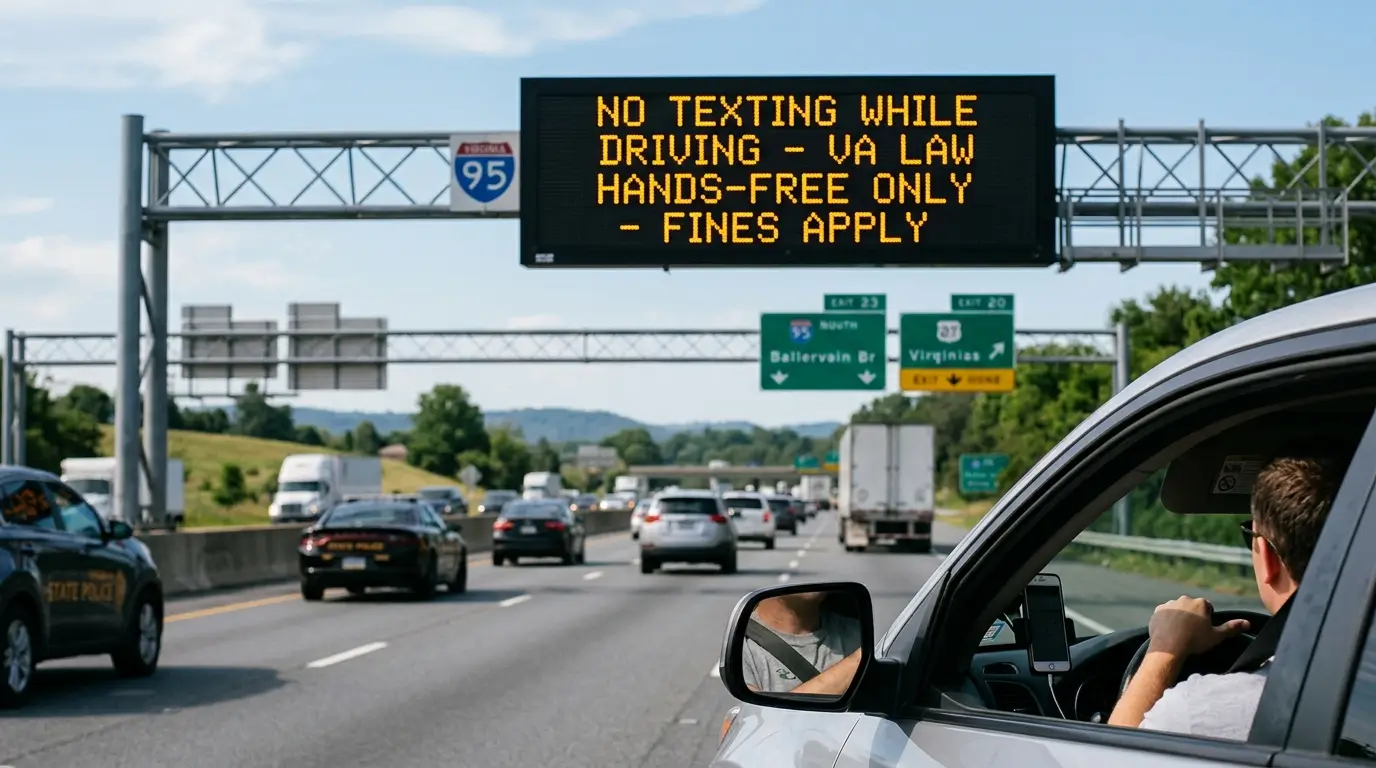
- What are Virginia texting and driving laws? Virginia law states that you cannot hold or have a hand-held personal communication device for any reason while you drive on public roads.
- Drivers must use hands-free systems, i.e., Bluetooth or a dashboard mount. You can be pulled over and cited for holding a phone even if you did not violate any other traffic law.
- Violating these laws establishes negligence per se, which streamlines our tasks, and we are able to hold the driver accountable. Under Virginia’s statute, if you violate this law, it is automatically considered a violation of duty, causing injury to another party.
- In Virginia, if you are 1% at fault for an accident, you cannot recover any damages from that accident. Therefore, you need to have a qualified lawyer to help you establish that the other driver was 100% responsible for the accident and injuries caused by the accident.
Every single day, a person driving along the highways and back roads of Virginia looks down at their phone, and in the blink of an eye, their life is changed for good. The first question you probably have if you or someone you care about was injured in one of these accidents is what are Virginia texting and driving laws, and how do they protect people like me? Knowing this information is critical because the laws of Virginia will dictate whether you can collect compensation from the other driver who caused your injuries.
While Virginia has one of the best frameworks in the southern part of the country for regulating the use of handheld devices, strong laws do not mean that you automatically receive money from the accident; you must also know how to utilize these laws, as well as have the assistance of an experienced legal team like we have at Tatum & Atkinson Law Firm. At Tatum & Atkinson Law Firm, our legal team provides assistance to Virginia residents who have been injured in accidents caused by distracted drivers throughout the state of Virginia.
For a free consultation, please call us today at (800) 529-0804. We work on a contingency fee basis, which means you do NOT owe us any fees unless we obtain a win for you.
Is Texting While Driving Illegal in Virginia?
Yes, Virginia has made it illegal to text while driving. Virginia Code § 46.2-818.2 makes it illegal to use a handheld personal communications device for any purpose whatsoever while operating a motor vehicle on a public roadway, effective January 1, 2021.
Additionally, the cell phone driving law Virginia applies to texting, calling, surfing the internet, and using video; however, the use of a handheld device violates the law as soon as it is physically held (the use of the device is secondary). There is only one exception: if you are contacting 911 or other emergency response professionals. Therefore, once a vehicle is in motion, all of the common ways we use our phones are prohibited, and police may stop a driver for holding a phone without any other traffic violation.
What Are Virginia Texting And Driving Laws?
Communication while driving by using a mobile device must be done completely hands-free as per the hands free driving law Virginia statute’s requirements. Bluetooth earpieces, dashboard-mounted holders, or vent-mounted holders for use with the voice-activated hands-free system are acceptable methods of communicating while driving; also acceptable is the use of integrated systems such as Apple CarPlay or Android Auto.
According to the phone use while driving Virginia law, if you are holding your mobile device with your hand when the vehicle is in motion, then you are violating the statute regardless of your speed, the state of traffic, or the amount of time that you held your mobile device in your hand.
Penalties for Texting and Driving in Virginia
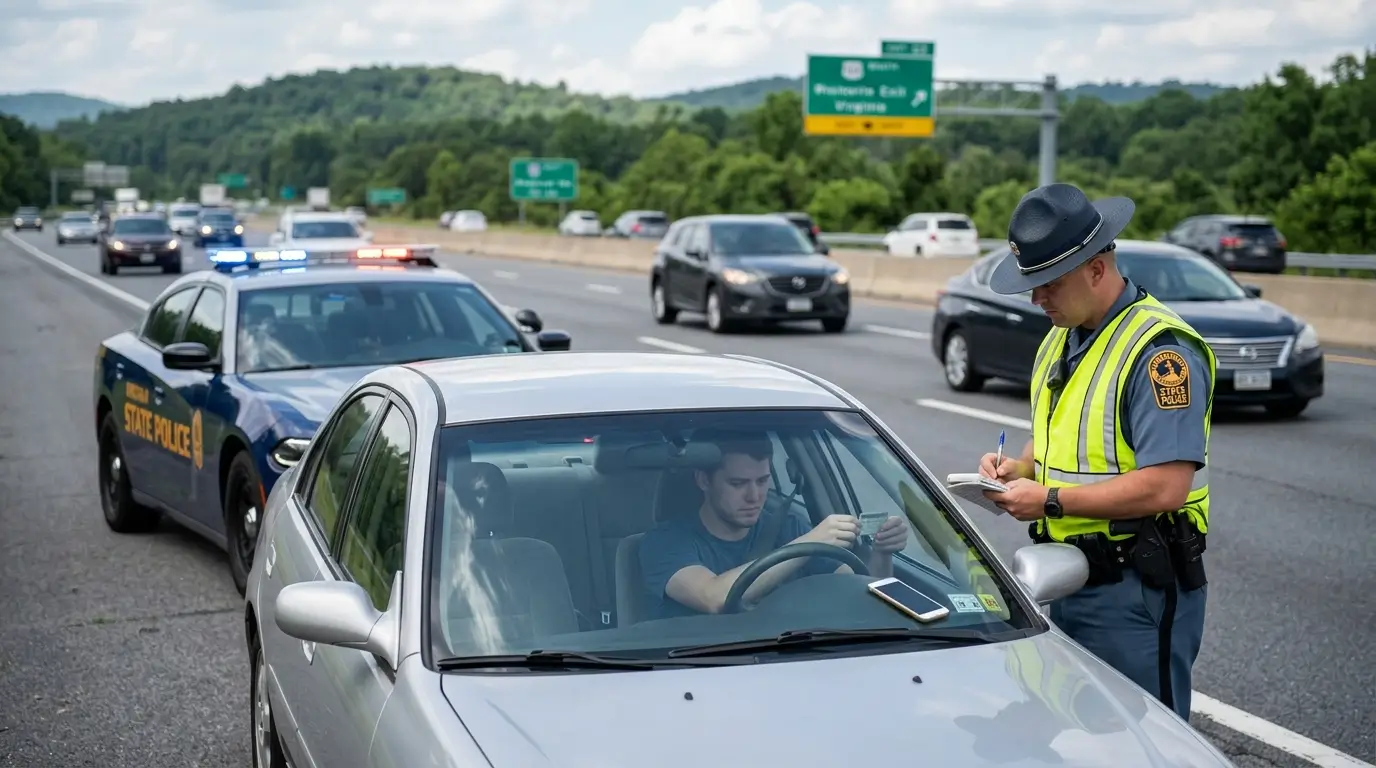
The penalties for texting and driving in Virginia include the following:
- First offense: $125 civil penalty and 3 demerit points from DMV
- Second or subsequent offense: $250 civil penalty and 3 demerit points from DMV
- Violation in a work or school zone: increased fines apply for violations in these zones
- Crash causing serious injury or death: possible criminal charges (e.g., reckless driving, or involuntary manslaughter)
As well as these penalties ordered by a judge, if a negligent driver gets a texting while driving ticket Virginia, their car insurance rates will usually go up. This will be an important consideration for your lawyer in assessing the damages to your case.
Distracted driving laws Virginia texting are very strict, even though it is not a “zero tolerance” state. Virginia’s laws strictly prohibit all handheld phone usage while driving, regardless of age or level of experience.
What Counts as Distracted Driving in Virginia?
Virginia’s statute is centered on handheld devices, but distracted driving as a theory of civil liability is considerably broader. Any behavior that diverts a driver’s attention-visual, manual, or cognitive-can support a negligence claim. A Virginia distracted driving accident lawyer will investigate all forms of inattentiveness, including:
- Eating or drinking while driving-no specific statute, but directly relevant to negligence
- Manually adjusting the GPS or radio controls while in motion
- Reaching for objects in the back seat, floor, or glove compartment
- Grooming, applying makeup, shaving, or fixing hair at the wheel
- Turning to interact with passengers or address children in the back seat
Virginia does not have a law against eating when driving, but the driver who causes a car accident caused by texting driver or some other form of distraction may still be found fully culpable for damages in civil court. A negligent driver is by no means exonerated from civil damages for lack of a specific statute prohibiting that negligent conduct.
How Texting Affects Car Accident Liability in Virginia
In Virginia, violating the Virginia texting and driving laws when driving can have a large impact on liability when getting into an accident. Courts look at this type of violation as an act of negligence per se, which means that there is no need to prove the standard of care because the law provides it for you. Therefore, the law creates an easy way to hold a distracted driver liable for causing damages due to an accident.
In addition, Virginia uses a contributory negligence standard, which is one of the most restrictive in the country. This means that if you are even 1% at fault for the accident, then you will not receive anything for any injuries sustained from the accident. Therefore, your attorney must be able to establish sole fault to prove that the distracted driver was the one responsible for causing the accident; this is why it is important to work with an experienced car accident lawyer Virginia.
Can You Sue a Distracted Driver in Virginia?
Yes. The answer to the question can you sue distracted driver Virginia comes up in almost every case of a distracted driver accident we have handled. A successful Virginia distracted driver accident claim could allow you to recover all types of damages, including:
- Medical bills like ER bills, any surgical bills, the cost of using rehab facilities and any future bills related to your injuries.
- Missed payments or lost wages that you would have received while not working will also be counted in damages, and any loss of earning ability because of permanent injuries you suffered.
- You will also be reimbursed for any property damages, including vehicle repairs and replacements.
- A lawyer will also consider non-economic damages like pain and suffering, and other emotional damage.
- Loss of companionship is another factor that will be taken into account, as it has a profound impact on your family.
- Punitive damages can be awarded in cases of grossly negligent or intentional conduct.
Evidence Used in Distracted Driving Cases
To build a strong Virginia distracted driving accident claim, you must gather solid evidence as quickly as possible. At Tatum & Atkinson Law Firm, we take immediate action to preserve:
- Phone carrier records: Which includes subpoenaed (telephone company) call logs and timestamps of data activity (indicating when the at-fault driver’s phone was used) right around the time period of the crash.
- Camera footage: Traffic cameras, dash cameras, and business surveillance videos are saved for 24 to 72 hours; otherwise, they’re overwritten.
- Police reports and device citations: Citation by a police officer for the use of a handheld device will be significant evidence in civil proceedings.
- Eyewitness statements: Other drivers, pedestrians, and/or bystanders who witnessed that the device was in the at-fault driver’s hands.
- Accident reconstruction: Provided by a certified expert in accident reconstruction, will be able to determine that the inattention of the at-fault driver caused the crash rather than any actions of the victim.
How a Virginia Car Accident Lawyer Can Help

A Virginia distracted driving accident lawyer who specializes in distracted driving cases can help you in many ways beyond just filing paperwork on your behalf. Tatum & Atkinson Law Firm has an experienced legal team that can help you throughout your case from beginning to end, including:
- Free case evaluation: We identify all parties liable and explain your options with no obligation.
- Evidence preservation: To ensure the responsible parties don’t lose or destroy critical evidence, we issue legal holds with carriers and businesses to secure critical records before they eventually disappear.
- Insurance negotiation: Adjusters move quickly to minimize payout for you; however, we will fiercely advocate for you based upon documented evidence and legal authority.
- Trial-ready representation: If the insurance company refuses to offer you a fair settlement for your damages, we take them before a Virginia jury.
- No-fee guarantee: You pay us nothing until we recover money for you (contingency fee basis).
“Virginia’s contributory negligence law encourages the defense to accuse you of being at fault. Having an experienced car accident lawyer Virginia will ensure that you have an advocate who will work hard for your best interest and allow you to recover your damages.” – Robert Tatum, Founding Attorney
Know Your Rights And Use Them
Understanding what are Virginia texting and driving laws places you in a better situation if you’ve been involved in a crash, but this alone cannot win your case. The contributory negligence standard in Virginia, the quick loss of evidence after a car crash, and aggressive tactics from insurance companies mean that you will need skilled legal representation from the start of your case.
The team of attorneys at Tatum & Atkinson Law Firm represents Virginia residents injured in accidents every day. We know the courts, we know how to present your case to the judge, and we know what it takes to convince an insurance company to pay a fair settlement.
Call (800) 529-0804 for a free consultation; there is no upfront cost for our services and you do not have to pay us unless we obtain compensation for you as a result of your Virginia distracted driving accident.
Frequently Asked Questions!
Can you use your phone while driving in Virginia?
No. Cell phone driving law Virginia limits the use of handheld devices while driving. It prohibits any use of a cellphone while operating a motor vehicle on public roadways, unless it is being operated hands-free with either Bluetooth or in a secure mount.
Are hands-free devices legal in Virginia?
Yes. Using Bluetooth earpieces, a speakerphone mounted to your vehicle, or a voice-activated system such as Apple CarPlay is permitted by law in Virginia, as long as the driver does not have their phone physically in their hand at any time during the conversation.
Can you refuse to show ID to police in Virginia?
When you are stopped by law enforcement for a traffic violation, Virginia law mandates that you provide your driver’s license, registration, and evidence of insurance upon lawful request. Failure to identify yourself leads to additional criminal or civil charges.
What is the blue law in Virginia?
Virginia’s historic “blue laws” prohibited almost all commercial activity on Sundays. While they have been mostly undone, the term may still apply to some local alcohol sale ordinances that restrict sales on Sunday.
Can I get compensation after a distracted driving crash?
Yes. You can file a Virginia distracted driving accident claim to recover your damages if you were not responsible for causing your accident. This includes medical costs, lost wages, and compensation for any pain and suffering resulting from the accident itself.
