What Causes a Broken Wrist in an Accident in Virginia?

Key Highlights
What Causes a Broken Wrist in an Accident in Virginia?
- Trends: Most fractures occur from vehicle accidents (car, truck, motorcycle) where the victim instinctively braces for impact using his/her/their arms (the “FOOSH” reflex—Falling on Outstretched Arms).
- Conclusion: The distal radius (the bone at the wrist) will be the most commonly fractured bone in vehicle accidents.
- General Characteristics: Most fractures present symptoms of significant pain, swelling, and deformity, although crush or “scaphoid” fractures may not be easily visualized and may require an MRI or CT scan to confirm.
- Medical Care: Treatment can vary from simply needing a cast (or not even being cast) to an ORIF plate and screw (surgical procedure to put bones back into the correct position) performed at facilities such as VCU Medical Center or OrthoVirginia.
- Long-Term Consequences: Many victims will experience permanent loss of grip strength, decreased range of motion, and a high likelihood of post-traumatic arthritis.
- Legal Considerations in Virginia: If an individual is even 1% at-fault via pure contributory negligence, he/she/they cannot recover anything whatsoever from any source.
- Filing Time Limitations: Virginia has a strict two-year statute of limitations regarding personal injury claims. (including Virginia car accident injury claims for wrist fractures)
A broken wrist is one of the most frequently occurring and most serious injuries sustained by people who have been involved in accidents in Virginia. Accidents may include car accidents on I-95, motorcycle accidents on rural roads, truck accidents on I-81, or pedestrian accidents in either Richmond or Norfolk, but regardless of the type of accident that caused the injury, the violent impact of the accident can fracture the bones in the wrist before the victim is aware that it has happened.
If you are asking what causes a wrist fracture car accident Virginia, and you have suffered a broken wrist due to the actual crash event, you are likely dealing with significant discomfort, expensive medical bills, and uncertainty regarding your legal options.
I am Robert Tatum, a personal injury lawyer at Tatum Atkinson. We represent injured Virginians every day. Our attorneys understand the impact of a wrist fracture on the body, the long recovery process, and the financial burden that follows. This guide will provide you with information about the causes, symptoms, medical realities, and legal rights associated with broken wrists following a motor vehicle accident in Virginia, so that you can make what
What Causes a Broken Wrist in an Accident in Virginia?
Broken wrists are generally caused by sudden impacts or falling suddenly to the ground. When your wrist is bruised, you typically have a direct impact from the force of colliding with someone or your wrist colliding with other objects.
Car Accidents
Car crashes lead to wrist fractures in Virginia because most drivers brace for impact with their hands on the steering wheel or dashboard, forcing them into the radius, scaphoid, and carpal bones, causing fractures.
Truck Accidents
Severe wrist injury from a truck accident is caused by high force and larger amounts of pressure exerted over long distances, impacting smaller vehicles by breaking and collapsing the bones in the wrist, causing the bones in the wrist to be crushed and shattered, requiring surgery and long-term recovery with many physical and medical rehabilitation sessions.
Motorcycle Accidents
Motorcycle riders are often thrown from their motorcycles in a collision and land on their hands. The impact of their bodies hitting the ground can cause wrist fractures (including fractures of the radius) and damage to ligaments of the wrists, and often requires a long time to recover due to extensive rehabilitation.
Pedestrian Accidents
Pedestrians are often hit by vehicles and will instinctively try to brace themselves for the impact with their hands. This leads to a fracture of the wrist from the impact of the pedestrian’s body onto the hands. This, in addition to causing excruciating wrist pain after car crash in Virginia, may also require surgical intervention.
Slip and Fall Accidents
Wrist fractures are often the result of slip and fall accidents. When someone slips or falls while walking or running, they instinctively reach out their hands to try to catch themselves before hitting the ground. The risk of slipping and falling increases due to poor property maintenance.
Bicycle Accidents
Bicyclists also frequently sustain wrist fractures as a result of bicycle accidents. Riders who fall off their bicycles or are involved in a collision with a motor vehicle often have the instinct to reach out their hands to stop their fall, which can lead to additional injuries, such as fractured bones or injured ligaments. Recovery from bicycle-related wrist injuries will be substantially longer than normal and will require additional therapy.
What Is the Most Commonly Broken Bone in a Car Accident?

Broken bone injuries from car accidents in Virginia are not uncommon. When considering car accidents, there are several types of bone injuries. The most frequently sustained injury is an upper extremity (OrthoVirginia), particularly distal radius fractures, which occur near the wrist.
Other commonly injured bones during a motor vehicle collision include the clavicle, rib, femur, and sternum. Fractures of the wrist affect daily living and work ability and can take weeks or months to heal completely and be rehabilitated.
Types of Wrist Fractures Common in Virginia Accidents
There are various types of wrist fractures sustained from Virginia car accidents, and differing levels of injury that occur from these incidents can affect both the length of time it will take to heal and also the value of one’s claim.
The most common wrist fracture types are distal radius, scaphoid, comminuted, open, and intra-articular, as well as soft tissue and wrist damage after a crash. Additionally, certain wrist fractures can be more difficult to diagnose or detect in the beginning; however, failure to correctly identify and manage a fracture can result in severe complications requiring surgical procedures or prolonged medical care.
What Are the Symptoms of a Broken Wrist After Car Accident in Virginia?
According to OrthoVirginia’s clinical guidance, if you have been in a vehicle accident, it is very important to be aware of signs that may indicate other types of injuries than just the obvious ones. Below are the common fractured wrist symptoms after accident.
- Immediate severe pain
- Swelling and bruising
- Tenderness
- Deformity
- Numbness/tingling
- Inability to grip/move wrist
Many symptoms may occur later because of the effects of adrenaline, so it is very important to go to the doctor for evaluation as soon as possible after any vehicle accident.
How Do Virginia Doctors Diagnose Wrist Fractures After an Accident?
Diagnosis is the basis of all recovery, medically as well as legally. A systematic approach to examining an individual injured and getting better as an individual is one aspect of obtaining orthopedic treatment for wrist injuries in Virginia once the clinical evaluation and radiologic imaging take place.
The Hospital for Special Surgery, which is one of the country’s premier orthopedic hospitals, discusses the general recommendations for the evaluation of fractures and broken bones.
In most cases, X-rays are the first type of imaging used to assess a fracture or broken bone; however, when fractures are complex, CT scans offer 3D images of the injury, and MRIs will also detect soft tissue injuries or fractures that may not be visible to the naked eye. On very rare occasions, bone scans are performed after the initial imaging to evaluate for either a stress fracture or a scaphoid fracture if it is not visible on an initial study.
What Are the Long-Term Effects of a Broken Wrist Injury?
A person who has suffered long-term damage to their wrist due to a fracture injury may experience a variety of lasting effects from that injury. Examples of long-term complications resulting from a wrist fracture include post-traumatic arthritis, decreased grip strength, limited motion range, chronic pain, or malunion/nonunion complications.
In addition to these types of complications, long-term damage may result in other conditions such as CRPS and/or permanent disability. All of these long-term impacts can affect the injured party’s daily living and/or work. Therefore, it is important to accurately document the damages related to a wrist fracture for the purpose of pursuing compensation in a Virginia injury claim.
What Is the Average Settlement for a Broken Wrist in Virginia?

In Virginia, broken wrist settlements vary a lot depending on the details of your particular case. Broken wrist settlements usually fall within the range of $38,000-$92,000; however, in some situations, especially serious hand and wrist injuries Virginia accidents cases, or those with certain unique circumstances, a jury could award a large amount of money (e.g., 1 million dollars).
The type of fracture, whether you require surgery, whether you will have a permanent disability from your injury, the ability to prove you lost earnings due to your injury, whether it is easy to prove who was responsible for your injury, how much insurance coverage is available (for each party), and how good your lawyer is will all affect the amount of car accident wrist injury compensation Virginia you finally receive.
What Is the VA Disability Rating for a Broken Wrist?
According to the U.S. Department of Veterans Affairs, the VA disability ratings for a fractured wrist will typically be between 0% and 20%, depending on the extent of motion limitation or the presence of ankylosis or functional impairment.
In general, there are mild motion restrictions, which would entitle the veteran to a 10% rating, while substantial motion restrictions will give the veteran a score of 20% or more. A veteran seeking VA benefits and personal injury benefits should contact a Virginia broken wrist attorney to assist him with the resolution of his VA and personal injury claims.
What Should You Do in Virginia After Breaking Your Wrist in a Car Accident?
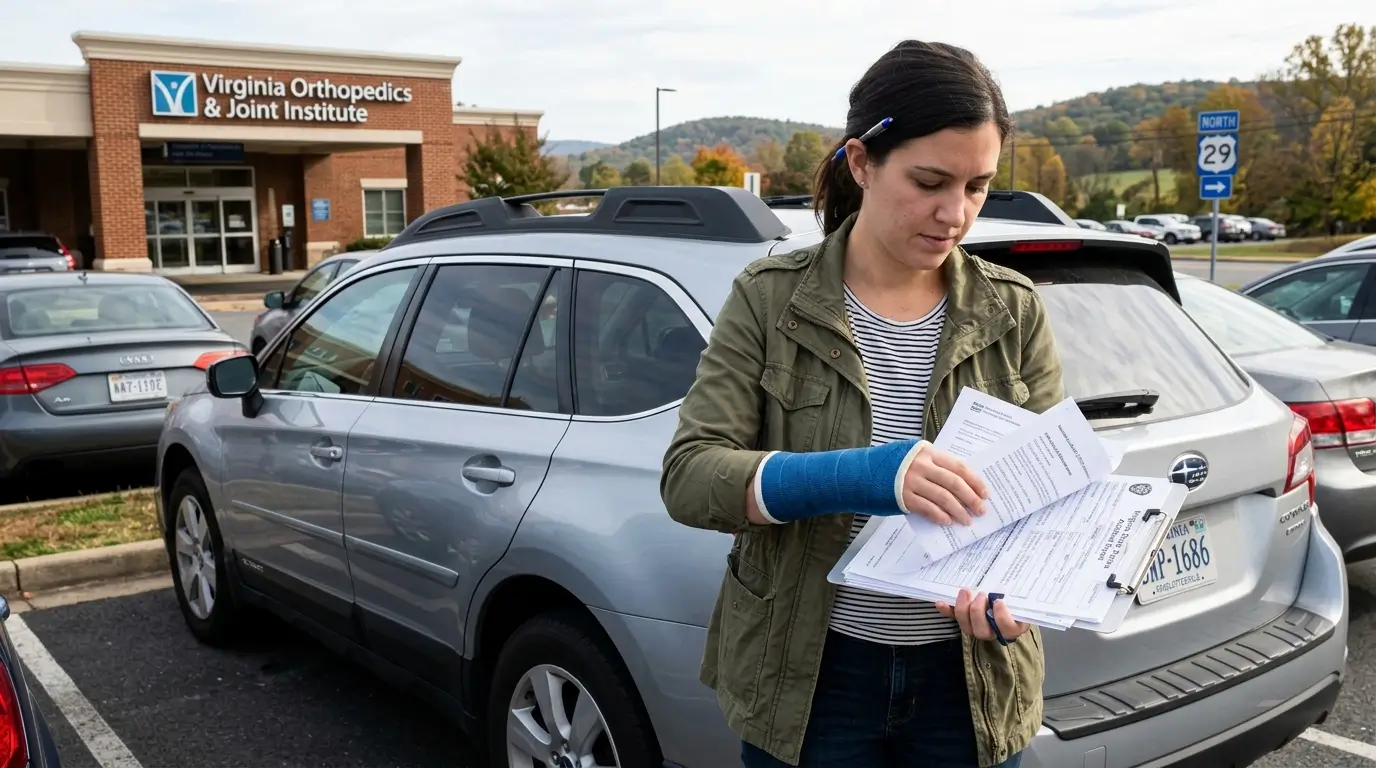
If you have sustained a broken wrist from a Virginia car accident, then you should call 911 and request that the police respond, collect your police report, get assessed by a medical provider, and seek treatment from an orthopedic physician as soon as possible.
Additionally, make sure that you have collected all documentary evidence, do not speak with insurance companies before speaking with an attorney, and contact Tatum and Atkinson, PLLC, for legal assistance.
Why Trust Tatum and Atkinson With Your Virginia Broken Wrist Injury Claim?
Tatum & Atkinson have extensive experience representing clients in Virginia who sustained wrist injuries. With a wealth of legal experience and knowledge of medical issues related to the injury, we can develop compelling cases, negotiate aggressively, and handle all claims on a contingency fee basis, which means there are no upfront costs to the client, but we still work hard to obtain complete compensation for our clients who have been injured.
Case Study: Broken Wrist After a Car Accident in Virginia
Following a rear-ended collision while driving his vehicle, a 35-year-old Virginia driver sustained a fracture to his wrist as he braced against the steering wheel. The medical diagnosis was of a distal radius fracture, meaning that he would need both surgery and therapy for recovery.
We document the driver’s medical treatment, lost wages, and long-term loss of ability to perform his work activities to make a complete and comprehensive demand for compensation for his wrist injury incurred due to another driver’s negligence.
Result
The case was resolved for $2,000,000 to cover the injured party’s medical and rehabilitation expenses and lost income as well as to compensate him for pain and suffering. He received what we believe to be a full and adequate settlement without going to trial.
Warp Up: What Causes A Broken Wrist In An Accident In Virginia
The starting point for understanding the cause of your injury, your treatment, and your legal options after being injured through an accident in Virginia is knowing how to create a broken wrist in Virginia due to an accident. The nature of the accident (a car collision, truck accident, motorcycle accident, or pedestrian accident) determines what your recovery options are: proper medical treatment, evidence preservation, and legal action under Virginia’s strict time limits and fault-based recovery laws.
The law firm of Tatum & Atkinson has the necessary experience, resources, and commitment to assist you with all of these aspects associated with your injury. We take care of all the complex aspects associated with the legal aspect of your case so that you can focus on what is most important to you: your recovery.
Do not hesitate to call Tatum & Atkinson today at (800) 529-0804. We provide a free consultation. You do not pay unless we win for you.
Frequently Asked Questions!
What is my chance of getting a compensation claim if my broken wrist resulted from my own partial fault?
Under the rules of contributory negligence, if even just 1% of the injury was your fault, then the chances of getting compensation are close to none in Virginia. This means that you will not be eligible to receive compensation for any losses suffered.
What medical treatment is available in Virginia for a broken wrist after an accident?
Virginia hospitals offer patients treatment options (like splints, casts, or surgery) with the possibility of needing physical therapy to strengthen the body after the injury. Those with serious injuries may have to go through one or two years of rehabilitation and ongoing follow-up care after the initial injury to their wrist.
What should I do in Virginia after breaking my wrist in a car accident?
Get emergency medical attention, report the accident, gather evidence of your injury, contact a qualified physician specialist, and do not talk to any insurance companies until you speak to a qualified personal injury attorney in Virginia.
How do Virginia personal injury laws apply to broken wrist accident claims?
If you are at fault for the broken wrist, you may be barred from recovering anything because of Virginia’s contributory negligence rule. All claims must be filed within two years after the accident, covering the injured person’s medical expenses, lost wages due to the injury, and pain damages resulting from the injury.
Which hospitals in Virginia treat broken wrist injuries from car accidents?
Top hospitals in Virginia providing advanced orthopedic and trauma services for broken wrist injuries from car accidents are VCU Medical Center, OrthoVirginia, Inova Fairfax, Sentara Norfolk General, and Carilion Roanoke Memorial.
