What Happens If My Nose Was Broken In A Car Or Trucking Accident Case In Virginia?
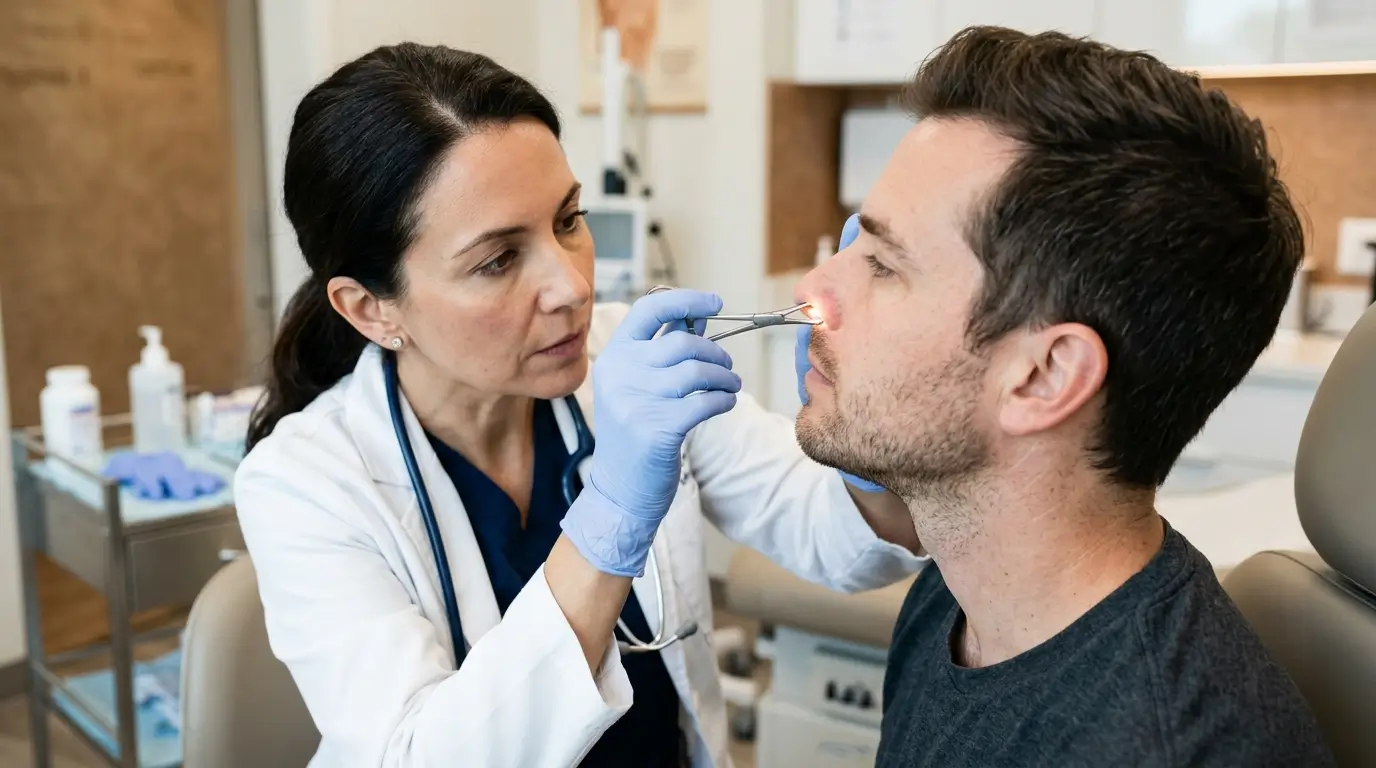
Key Highlights:
What Happens If My Nose Was Broken In A Car Or Trucking Accident Case In Virginia
- A broken nose injury claim Virginia has the potential to receive compensation if an accident has occurred due to the negligent actions of another driver/party.
- Your claim may involve medical bills, future surgery, loss of income, pain and suffering, scarring, breathing problems, and/or visible changes to your face.
- You may not notice a broken nose until after because of the fact that nasal injury symptoms may be masked by swelling, adrenaline, and/or other injuries.
- In truck accident facial fracture, greater force is typically involved in causing facial fractures as compared to other types of accidents; additionally, there can be a greater amount of insurance coverage available due to commercial auto insurance policies; and there may be additional evidence available because of trucking companies maintaining black box data, dash camera footage and documentation (including maintenance records) related to the truck involved in the accident.
- Medical documentation plays an important role in your claim; you should be diligent about obtaining documentation from your local emergency department, CT scan reports, X-ray reports, physician notes, and recommendations for surgery, as well as capturing “before and after” photos of your face following the accident.
- Insurance companies frequently underestimate or minimize facial injuries as “cosmetic” or will attribute the injury to an individual’s pre-existing condition.
- Your claim for a “broken nose” should address how the injury has affected the breathing ability of the victim, their ability to sleep, their confidence, their ability to work, and/or the appearance of the victim’s face, and how the injury has restricted or limited the person’s daily activities.
You may have a personal injury claim for a broken nose if you were in a Virginia car or truck accident that was caused by someone else and you need medical care for your nose, surgery in the future, lost wages, pain and suffering, scarring, difficulty breathing, visible facial changes that will affect your daily living, etc.
A broken nose car accident Virginia claim may not sound serious to you until you experience swelling, crusted blood all over your face, an uneven face when you look in the mirror, and the realization that the nasal passage that was previously functioning properly now does not function at all. Once you realize that the impact of a nasal fracture will affect you for the rest of your life, it won’t sound minor anymore.
In Virginia, there are approximately 3,000 truck crashes that happen each year, with an estimated one-third of these crashes resulting in injury or death, according to the Virginia Department of Transportation. One of the most common patterns of injury in car accidents is the impact from the airbag, steering wheel, dashboard, side windows, or loose objects, for facial injuries.
When it comes to truck accidents, it is much worse due to the physics involved. A fully loaded tractor-trailer can weigh as much as 80,000 pounds, compared to the typical passenger vehicle (which weighs from 2,500 pounds to 4,500 pounds); thus, the impact from an accident will be many times worse than that between a passenger car and another passenger car.
My name is Robert Tatum, and I am a lawyer with Tatum & Atkinson Law Firm. Our firm, which has been in operation since 2005, is veteran-owned and has more than 65 years of experience combined in representing people with broken noses and facial injuries due to accidents throughout Virginia, including Richmond, Northern Virginia, Hampton Roads, Virginia Beach, Fredericksburg, Southwest Virginia, and beyond. Facial trauma is something we take personally. It’s personal to each individual involved. We will do everything possible to help you get justice!
How Does a Car or Truck Crash Actually Break the Nose?
A broken nose is generally the result of a blunt trauma strike to the center of your face. When you’re in a vehicle accident, the blunt force to your nose can result from striking one of many items in the car, such as an airbag, steering wheel, instrument panel, window, or door pillar, right when you hit the object. The nose is a small structure, but it performs several essential functions. The three different types of tissues (bone, cartilage, and skin) that make up the nose also serve different purposes for sustaining your facial structure by providing an airway to support your respiratory system and transferring blood from your heart to the other parts of your body.
The truck accident facial fracture collisions can be much worse. Compared to a passenger vehicle, a truck can crush, spin, or hit another object. As a person strikes various points in a single crash event from within a vehicle or truck, the types of facial injuries you sustain from motor vehicle accidents can generate concussive damage to your head and/or neck; dental damage; jaw pain; a fracture of the orbital bone; fracture(s) of the zygomatic bone; or lacerations (i.e., “deep cuts”).
While facial injury car accident may seem straightforward in an emergency room visit, the full extent of the injury is often not evident until after you leave the emergency room. In particular, the nose may appear to be crooked; one side of the nose may be blocked (preventing passage of air through the nasal cavity); trouble sleeping; and you may not look as you used to in photographs.
This is why doctors should conduct a complete examination of your entire face rather than just the area where you are experiencing the most pain.
Why a Broken Nose Is More Serious Than It Looks
Your face is something you look at every day.
It’s not a minor or small object.
A fracture to your nose can also disrupt your nasal septum (the cartilage that separates your two nasal cavities) by shifting it out of its correct position (the natural alignment). When this occurs, it can affect your ability to breathe through your nose normally and cause problems such as nasal obstruction, chronic nasal congestion, pressure in the sinuses, nasal bleeding, headaches, snoring, and a decrease in the quality of sleep.
If you happen to be in a profession where you work in prolonged periods of time, such as construction, health care, transportation, warehouse activity, or the service industry, the impact of this change can be compounded because you experience the problem more regularly than individuals in non-elevation areas (e.g., non-construction jobs).
Additionally, there is a visible change; your nose may heal improperly (crooked, flattened, broadened, or asymmetrical). You may begin to see yourself differently when looking in different mirrors or in different photographs (when you see yourself with others) or when you talk to someone. And that type of psychological harm can be proven.
A facial disfigurement injury claim should not be viewed as an issue of vanity. The way the world sees you is based on how you look, your face. When a vehicle accident results in damage to your face, the legal system should address that injury properly.
What Signs Indicate a Nasal Fracture After a Crash?

Nasal swelling can obscure the normal appearance of your nose, while adrenaline can conceal any pain you may have felt; however, after your adrenaline rush has subsided (and after you have calmed down), you may be surprised to find out that you were injured. Therefore, by the time you can calm down, you may find it very difficult to breathe and be surprised by how the injury really appears.
Other signs warrant a medical evaluation:
- pain or tenderness
- Swelling
- bruising underneath the eyes
- recurrent heavy nosebleeds
- trouble breathing out of either nostril
- crookedness
- a grinding or popping sensation
- headache
- facial tension or discomfort, and
- cuts across the bridge of the nose
Regardless of whether or not you are injured while involved in an automobile accident, do not ignore these symptoms because you were not injured when you walked away; it can be more difficult and expensive to repair a fracture that heals incorrectly than it would have been if it had healed properly the first time.
How Doctors Diagnose and Treat a Broken Nose After an Accident
The process used to document medical care begins at the time of an injury at the Emergency Department or Urgent Care and is the basis of all insurance claims filed for broken nose injury claim Virginia. The record of the injury, what imaging studies are performed, and which physicians participate in your medical care can all impact how an insurance company will evaluate your insurance claim.
Medical Step |
Why It Matters in the Claim |
| ER or urgent care evaluation | Creates the first link between the crash and the nasal injury |
| X-ray or CT scan | Confirms fracture, displacement, septum injury, or related facial trauma |
| Ear, nose, and throat specialist | Documents breathing problems, septum deviation, and airway loss |
| Plastic or reconstructive surgeon | Explains visible deformity and whether surgery is medically needed |
| Follow-up visits | Shows the injury continued, and treatment was consistent |
| Before-and-after photos | Helps prove visible change and disfigurement |
The treatment for your injury may include the need for rest, ice, pain control, and follow-up visits. Some cases require closed reduction, where your nasal bones are repositioned by a physician; others may require septoplasty, rhinoplasty, scar revision, or some type of reconstructive surgery.
When Does a Broken Nose Require Surgery?
When your nose is crooked after healing, breathing is blocked, the septum is damaged, the fracture won’t heal properly, or if the deformity is visible, you may need to have a surgical procedure done.
Nose amputation or nose reconstruction after accident can be done if your nose is broken and damaged, if you have trouble breathing due to an obstructed airway, if your nose is disfigured due to an accident, or if you need to improve both the function and appearance of your nose.
In addition, many insurance companies contest paying for future surgeries by stating the future surgery is speculative in nature or is deemed elective in nature; therefore, any procedure must be done based upon recommendation from a qualified physician with a written report attached stating the type of surgery, its relation to the accident, and how much it will cost to have done. A statement of ‘maybe at a later date’ is too vague to use as a basis for an application. A written report from a physician is a much stronger basis for an application than an oral statement from a physician.
How Virginia Law Evaluates Facial Disfigurement Damages
A facial disfigurement injury claim may include emotional and physical injuries. Virginia injury-related claims generally consist of four core parts: fault, cause, damages, and evidence. In most cases, to support a claim for facial injury, there will be evidence such as photographs, medical records, letters from specialists, or testimonials about how the injury has impacted day-to-day living.
Examples of how to provide evidence for facial injury include evaluating the injury for these key attributes:
- permanency
- visibility
- pain
- breathing limitations
- emotional reaction and
- The possibility of additional treatment in the future.
Additionally, the value of a visible change to the center of the face will be far more than that of an inconspicuous scar and will impact how the injured person interacts with everyone they meet, since the injury is visible to all.
Individuals employed in occupations where facial trauma is present (e.g., sales, hospitality, healthcare, law enforcement, education, and service) can face reduced self-confidence when dealing with others due to a prior injury. This effect may occur even after a person continues to work following the injury. An injury may impair a person’s ability to work and engage with the world and thus impair that person’s capacity to communicate verbally, sleep successfully, and enjoy social interactions.
It is important to avoid embellishing your claim. It is essential to keep the injury from being reduced in value.
Why Truck Cases Are Legally Different
Unlike car accidents, truck accident facial fractures have unique characteristics and requirements due to the larger number of parties and the amount of evidence available.
A truck driver can share responsibility as well as the trucking company, which could share in the liability if…
- Unsafe hiring practices
- Inadequate training
- Lack of supervision
- Driver fatigue
- Pressure to meet delivery dates
- Or the failure to maintain the truck was a factor.
Depending on the particulars of the case, there could also be additional parties to the case, such as the trucking company’s maintenance contractor, cargo loader, or vehicle owner.
Truck accident cases may have documentation available to assist a plaintiff’s ability to prove what caused the accident.
Examples of useful documents
Examples of documents that could prove useful include:
- The black box (event data recorder)
- The dashcam video recording(s)
- Electronic logging device records
- Driver qualification files
- Inspection records
- Maintenance records
- Dispatch messages
- Company safety policies
Any of the above documents could help a plaintiff establish the events leading up to the crash. However, these documents and evidence can be lost quickly after the crash has occurred.
For that reason, evidence must be preserved as soon as possible after the crash, especially for a commercial vehicle-related facial fracture lawsuit Virginia.
What Compensation May Be Available for a Broken Nose in Virginia?

There is no specific chart showing how much compensation you should get for a nasal fracture compensation Virginia. Compensation is based on evidence, like your medical records, photographs, specialists’ opinions, wage loss records, recommendations for surgery, and what you’ve done every day since your injury.
Damage Category |
What It May Include |
| Emergency care | ER visit, imaging, medication, wound care |
| Specialist care | Ear, nose, and throat evaluation, plastic surgeon consultation |
| Future surgery | Septoplasty, rhinoplasty, reconstruction, scar revision |
| Lost income | Missed work, reduced hours, job impact |
| Pain and suffering | Physical pain, headaches, sleep disruption, discomfort |
| Disfigurement | Visible change, scarring, crooked healing, facial asymmetry |
| Emotional distress | Anxiety, embarrassment, loss of confidence, counseling |
| Daily-life loss | Trouble sleeping, breathing, exercising, speaking, or socializing |
Your broken nose settlement value will depend on all of these details put together. For example, did the accident cause you to break your nose? Did your nose heal correctly? Are you able to breathe freely? Do you need surgery? Is the change to your nose noticeable? Is your injury properly documented?
If those answers to those questions are well articulated, it will probably be tough for an insurance company to say that your injury is not worthy.
How Insurance Companies Handle Facial Injury Claims
Insurers will evaluate fault, prior treatment (including your medical records); photographs, medical bills, missed work, permanence of injury (if the injury is permanent), and whether the injuries or damages appear to be visible. Once they have evaluated all of the above, they will frequently search for ways to minimize your claim.
Some examples would be to claim that
- The fracture was minor
- Surgery was for cosmetic purposes
- Any lung/breathing problems are the result of allergies or
- A prior Deviated Septum, and
- Any emotional problems are exaggerated.
This should not surprise you. This is their playbook.
The effects of Virginia’s faulty laws take hold as well; an insurance company can use the argument that you contributed to the cause of the collision, even to the least degree. This is another reason to be careful when giving recorded statements, making posts through social media, and making general comments to your adjuster.
What Evidence Builds a Strong Virginia Broken Nose Claim?
To receive Virginia accident injury compensation, you must have documented proof that ties the accident, your facial fracture, and the impact on your life together.
Some good examples of strong evidence are
- Police reports from the accident scene
- Crash scene/video photographs of your vehicle showing damage from the accident
- Medical emergency room reports
- CT/X-ray images showing your injury
- The medical expert notes connecting your fracture to the accident
- Before/after photographs of your face showing the fracture
- Documentation of lost wages from not working due to the injury
- Prescriptions related to treating the injury
- Eyewitness statements
- Dashcam video of the accident, and
- Correspondence from all insurance companies involving the accident.
In the case of a truck accident, other evidence that will help prove your claim is the truck’s black box information, the truck’s electronic logging device records, driver logs, dispatch records, maintenance records, vehicle inspection records, trucking company accident history reports, etc.
We have seen minor evidence that has made a large difference in the recovery of compensation for our clients. An emergency room report that indicates ‘visible nasal deviation’ following an accident, along with a photograph of the client following an accident and an expert sural’s report that connected the above nasal deformity to an accident.
Minuscule evidence, but so significant to a client’s recovery.
When Should You Contact a Virginia Accident Lawyer?
If you’re in a truck accident that caused a facial injury, you should reach out to a personal injury attorney if:
- You needed emergency care for your face
- Your nose is healing incorrectly
- Your ability to breathe has changed
- There is a chance you will need surgery
- The insurance company is attributing fault to you
- Or if the insurance company has made you an offer that is too low.
A personal injury attorney will help you preserve evidence related to your accident; deal with the insurance company; obtain medical documentation, and assess the need for future medical treatment; and ensure your injury is not treated as a minor inconvenience.
This is not to make your broken nose seem worse than it is, but to make sure it is treated properly.
A Broken Nose From a Virginia Crash Deserves a Complete Claim
What happens if my nose was broken in a car or trucking accident case in Virginia? There is a possibility that you have a case caused by…
- The negligence of another driver
- A trucking company
- Or another party involved in the accident.
A broken nose can cause…
- Pain
- Breathing problems
- A change in the appearance of the face
- A need for surgery or other types of medical treatment
- Emotional distress
- And require future medical treatment.
Your case for a broken nose car accident Virginia should have supporting evidence. This evidence should include…
- Your medical records
- Pictures of your injuries and how they happened
- Opinions from medical specialists
- And evidence to support who was at fault for causing the accident.
In addition to the above evidence, you need to take into consideration how your car accident facial trauma will impact things like your sleep, confidence, work, and everyday life.
Do not let an insurance company dictate the seriousness of your injury until all of the medical information about your injury has been established.
Talk With Tatum & Atkinson Law Firm About Your Virginia Broken Nose Accident Claim
If you have had a nasal fracture because of a car or truck accident in Virginia, Tatum and Atkinson can investigate the evidence to determine who is responsible; preserve compensation information when appropriate; and support you with filing, with full consideration to your injuries. Call (800) 529-0804 for a free consultation with lawyers specializing in personal injury claims; the entire staff will be available to assist you at no charge until successful recovery.
FAQs: Broken Nose After a Virginia Car or Truck Accident
Can a broken nose go undiagnosed immediately after an accident?
Yes. Adrenaline and swelling can hide symptoms for hours. If you have breathing issues, see deformities, or your pain gets worse, then you should see a doctor quickly.
What if my nose healed incorrectly after the accident?
If you do not heal properly, you may need a septoplasty, rhinoplasty, or reconstruction surgery. A specialist’s opinion can link your crash and poor healing.
Can a broken nose affect more than just appearance?
Yes. You may experience breathing problems, difficulty sleeping at night, sinus issues, lack of confidence, pain, or trouble completing daily tasks.
Will future rhinoplasty or reconstructive procedures be considered in a claim?
Yes. If an appropriate physician documents evidence of the need to have the procedure done as medically necessary, if the procedure is connected to the crash.
Can emotional distress be part of a facial injury claim?
Yes. If you have had facial trauma, it can be documented through medical records, witness testimony, counseling, or you can document the impact on your daily life to support your emotional distress damages.
