What Happens When I Am In A Wreck With An Uber Driver In Virginia
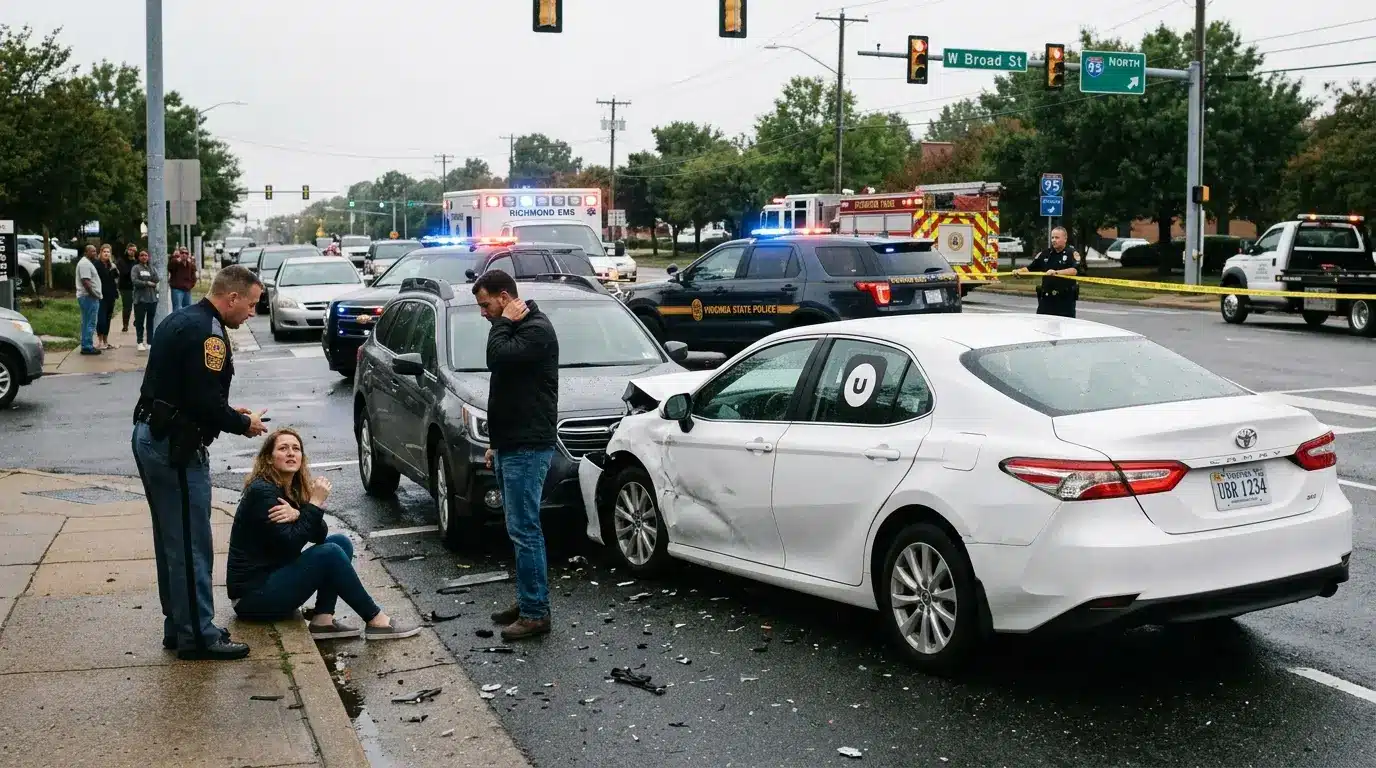
Key Highlights:
- What happens when I am in a wreck with an Uber driver in Virginia, this totally depends on who caused the collision and the status of the Uber driver’s app (off, on, or actively picking somebody up).
- Under Virginia’s harsh contributory negligence statutes, if an insurer can prove you were even 1% at fault for causing the accident, you may be completely barred from recovering any compensation for your damages.
- Uber drivers can carry insurance coverage ranging from $50,000 to $1 million. This amount of insurance changes depending on what status the Uber driver’s app is at when the crash occurs.
- Immediate evidence preservation is critical because the essential digital app information and witnesses’ recollections decline quickly before the two-year statute of limitations for filing a lawsuit in Virginia expires.
If you’ve recently been involved in an accident involving an Uber driver in Virginia, you may be wondering, “What happens when I am in a wreck with an Uber driver in Virginia?” The answer to your question is dependent on the driver’s fault, whether or not they were on an active trip, and which Uber insurance coverage policy is applicable.
While Virginia law treats rideshare accidents (like those involving an Uber or Lyft vehicle) differently from traditional auto accidents, failing to distinguish between the two can result in significant lost value to you. The personal injury attorneys at Tatum & Atkinson Law Firm have assisted clients from Virginia who have sustained passenger injury Uber accident; therefore, we want to provide you with this guidance prior to speaking to any insurance adjusters about your accident.
If you would like to speak to an Uber accident attorney about what to do next, call us today at (800) 529-0804 to request a free consultation.
What Happens When I Am In A Wreck With An Uber Driver In Virginia
In Virginia, there are three factors to consider when determining what happens when I am in a wreck with an Uber driver in Virginia, what type of insurance policy applied at the time of the wreck, who is at fault under Virginia’s strict contributory negligence standard, and how soon you take action to preserve your evidence and protect your legal rights. Depending on the amount of insurance coverage available to you as an injured passenger riding in an Uber during your trip (up to $1 million), you may have options to receive compensation; however, these options will only be available if your claim is handled correctly from day one.
Tatum & Atkinson Law Firm offers free case evaluations regardless of whether the person who was injured was a passenger, pedestrian, or another driver involved in the accident. In addition, our experienced attorneys represent all personal injury rideshare crash Virginia claims on a contingency fee basis; therefore, if we are unable to obtain compensation, there is no charge to you.
Who Is Liable and How Virginia Law Assigns Fault
The determination of liability in an Uber accident claim Virginia could involve many parties, including the Uber driver, another person who owned or controlled the vehicle, a road maintenance authority, or a combination of parties.
The Contributory Negligence Trap
In Virginia, contributory negligence is the law; if an insurer can prove that you were at fault for even 1% of the accident, you may not be able to recover anything from the accident. As a result, it is critical that a complete and thorough investigation into the accident is conducted immediately.
Determining the Right Insurance Policy
Where you file a claim is largely dependent upon who is responsible for the accident.
- When the Uber driver caused the crash: You will contact Uber’s commercial insurance policy for compensation.
- When a third party caused it: You will contact their personal auto insurance first, and if those limits are inadequate, Uber’s underinsured motorist coverage, which is required under Virginia Uber accident laws, can assist with the difference in limits.
Regardless of whether you are pursuing a claim against the Uber driver or a third party, the amount of available insurance coverage that the Uber driver bears under Virginia law is determined by whether they were logged into the app when the accident occurred.
How Uber Insurance Coverage Works in Virginia
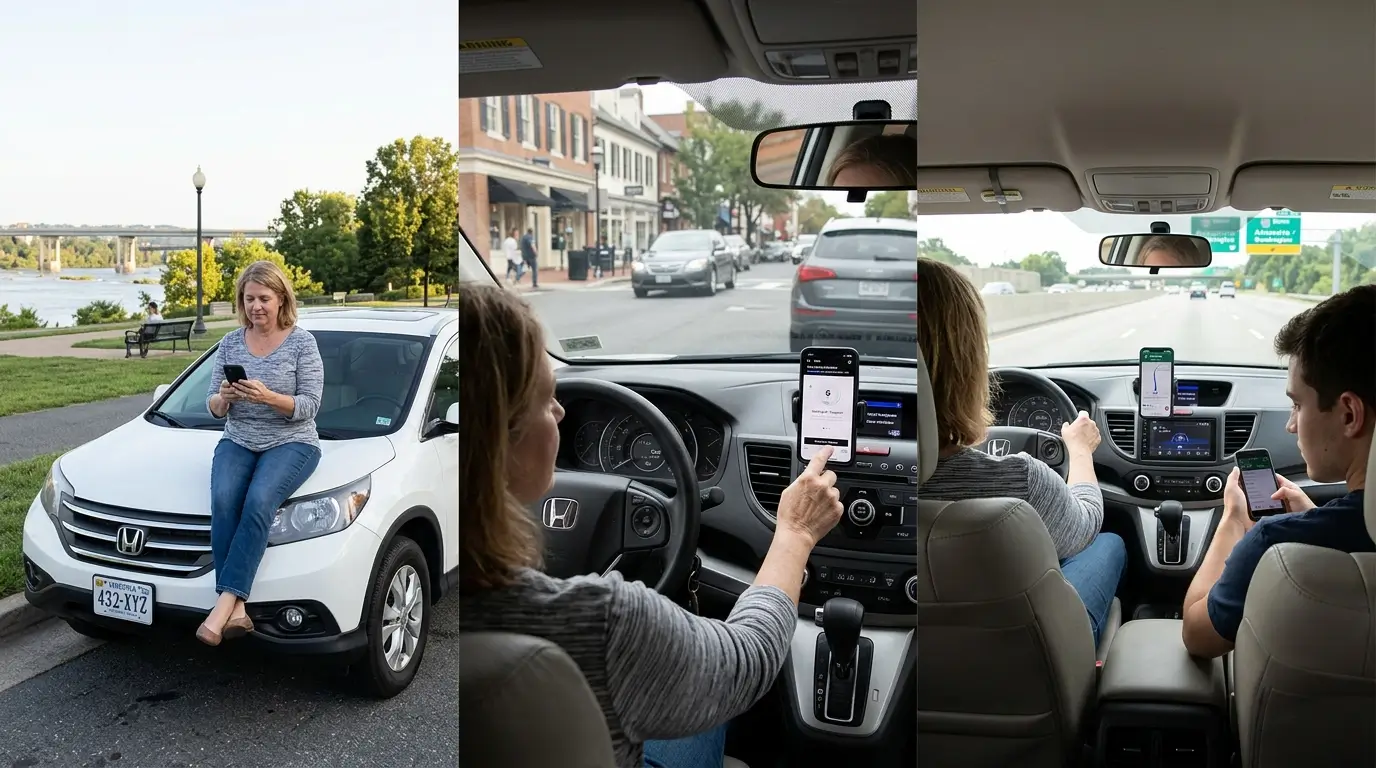
A driver has different types of Uber insurance coverage that are tied to the status of the app. Knowing when these periods happen will determine if you are going to be able to file an insurance claim.
The 3 Coverage Periods
In Virginia, mandatory transportation network company insurance limits are defined by state law (Virginia Code § 46.2-2099.45) and are directly impacted by the operational status of the driver’s app.
| Driver App Status | Available Coverage Limits |
| App is Off Entirely | Uber’s coverage does not apply. You are limited to the driver’s personal policy, which may carry Virginia’s minimum limits of just $50,000 per person. |
| Period 1
(App on, no ride accepted) |
Uber provides contingent liability coverage under Uber driver liability Virginia rules of $50,000 per person and $100,000 per accident, but only if the driver’s personal insurer denies the claim. |
| Periods 2 and 3
(Ride accepted through trip completion) |
Coverage jumps to a $1 million commercial liability policy, which also includes uninsured and underinsured motorist protection. |
“The only way to determine which period applies is to retrieve the driver’s app data from the moment of the crash. Your attorney can preserve and obtain it before it’s deleted.” – Robert Tatum, Founding Attorney
What Compensation Can You Recover After a Virginia Uber Crash?
A claim for a personal injury rideshare crash Virginia could include both economic and non-economic damage recoveries. Some examples of covered losses included:
- Medical bills (for emergency care, surgery, rehab, and future treatment)
- Lost income and diminished ability to earn an income
- Pain and suffering
- Property damage.
If someone died in the crash, surviving relatives may be able to pursue wrongful death damages, which would include funeral costs, lost future support, and lost companionship.
Regarding medical expenses, it should be noted that Uber does not have MedPay coverage under its standard policy, and Virginia does not require this coverage. Typically, initial medical expenses will be borne by your health insurer or by way of a lien with the healthcare provider while your Uber accident claim Virginia is being processed. Once the claim has been resolved, you will use all documented medical expenses (past and future) to support your demand for rideshare accident compensation.
If you need assistance with injured in an Uber crash in Virginia, please call Tatum & Atkinson Law Firm at (800) 529-0804 for a no-obligation consultation. There is also no charge unless we win your case on a contingency fee basis.
What to Do Immediately After an Uber Accident in Virginia
Your actions in the hours after an accident shape your claim’s strength. Insurance adjusters look for reasons to blame you due to Virginia’s contributory negligence rules. Therefore, your best protection is documenting your actions immediately following the accident.
- Call 911: Having a police report creates an official record and locks in the initial observations of fault, even after the accident scene changes.
- Get medical attention immediately: Adrenaline often masks pain, and many injuries may not create symptoms for hours, days, or even weeks after an accident, including internal bleeding and concussion.
- Document everything: Take photos of damage to both vehicles, the road conditions, and your injuries. Also, take a screenshot of the Uber app showing the confirmation of the ride.
- Collect the Uber trip receipt: The Uber trip receipt can provide a timestamp of the ride and confirm that the Uber driver is on duty when the accident occurs.
- Do not give recorded statements: The adjuster will use your statement against you to minimize your claim. Speak to an attorney before talking to the adjuster.
- Contact a Virginia attorney immediately: Most surveillance video is lost or overwritten within 48 to 72 hours; therefore, time is of the essence so that the attorney can preserve evidence.
Filing an Uber Accident Claim and the Settlement Process in Virginia
The Uber accident settlement process involves negotiating with each insurance company separately, taking steps to protect your right to seek money from all of the insurers involved in an Uber accident. In Virginia, you may often be able to pursue a third-party rideshare claim against both the driver who caused the accident and Uber’s commercial coverage policy simultaneously.
Overcoming Adjuster Tactics & Deadlines
Uber’s insurance companies frequently dispute coverage periods, say your injuries are not severe enough to justify payment, or make low-ball offers. Although Virginia law gives you two years to file a lawsuit (Virginia Code § 8.01-243), waiting to file an action may ruin your case. With time, evidence may no longer exist, witnesses will forget key facts about the incident, and Virginia’s harsh contributory negligence defense will be much harder to combat.
How Tatum & Atkinson Law Firm Protects You
Tatum & Atkinson Law Firm handles all communications with the relevant insurance companies on your behalf. We prepare and submit demands for damages based on medical records, expert testimony, and a full accounting of your financial damages to aggressively pursue maximum rideshare accident compensation.
Take Control of Your Recovery. Contact Tatum & Atkinson Law Firm Today.

Ridesharing accidents can be overwhelming and extremely costly. Fortunately, Virginia’s laws provide some significant protections for injured passengers. If you have been asking what happens when I am in a wreck with an Uber driver in Virginia, the first step towards recovery is contacting an attorney who can help you understand the layers of insurance coverage applicable to you and Virginia’s strict legal standards.
At Tatum & Atkinson Law Firm, we accept Uber accident claim Virginia on a contingency fee basis, meaning you do not have to pay us anything unless we successfully recover money for you.
To discuss your case, please contact Tatum & Atkinson Law Firm at (800) 529-0804 to arrange a free consultation with an experienced attorney.
Frequently Asked Questions!
Can I still file a claim if I was injured while getting into or out of an Uber?
Yes. During the boarding and alighting processes, Uber’s commercial insurance will apply as they occur when the passenger is actively traveling with Uber under Virginia law. Thus, Uber’s $1 million policy may provide coverage for injuries while entering or exiting the vehicle.
What if another passenger caused the Uber accident?
If the actions of a co-passenger led to the driver crashing or you were injured directly by the co-passenger’s actions, you may have a negligence claim against the co-passenger. While Uber’s policy protects against driver negligence, it does not protect against passenger misconduct.
Can I sue Uber directly after an accident in Virginia?
Uber categorizes their drivers as independent contractors, thereby limiting any direct legal responsibility of the company. Nevertheless, you may also be able to file a claim against Uber’s commercial insurance policy and have an attorney determine if there is a possibility of liability based on negligent hiring or something similar.
Does Uber provide medical payment coverage for passengers?
Uber has a general policy that excludes MedPay. Accordingly, you must use your own medical insurance to pay your bills right away as you await monetary compensation through your personal injury claim.
Does it matter if the Uber trip had already ended?
Definitely. When the passenger leaves after finishing their trip, Uber’s commercial insurance no longer exists. At this point, the driver’s personal auto insurance becomes the primary insurance once again, which typically has much lower Virginia minimum liability limits.
