What Is A Head-On Collision In Virginia?
Key Highlights:
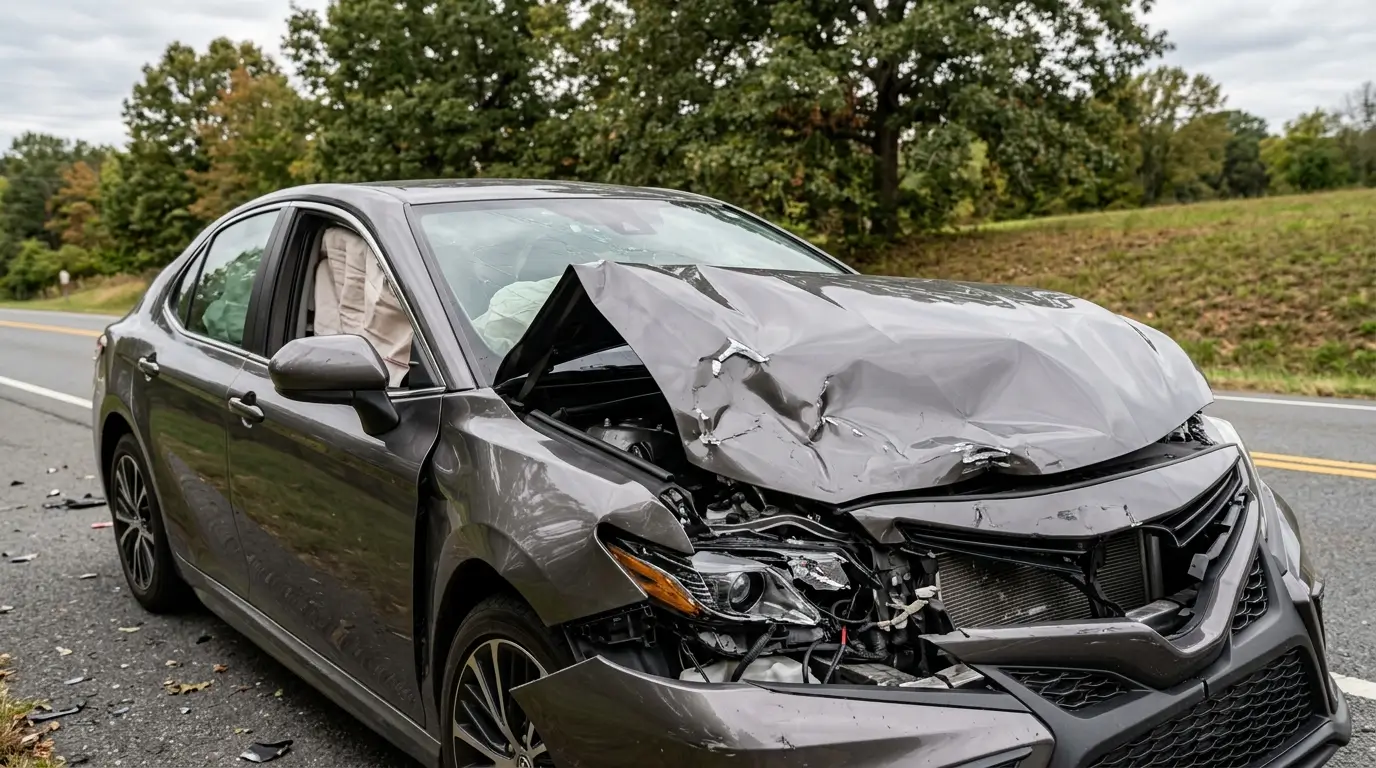
- A head-on collision Virginia, or a head-on crash, is a head-on crash that takes place between two vehicles that move towards each other and collide at the front ends.
- It is the most violent form of car crash since the speeds of both cars are combined during the impact.
- It combines the speed of both vehicles, hence making it very violent compared to other accidents.
- The majority of head-on crash accidents occur when one of the drivers leaves the road.
- A driver crossing the centerline is normally considered at fault; however, the 1% contributory negligence rule in Virginia makes it important to prove that fault.
The head-on collision in Virginia takes place in an instant, and the consequences could affect you for the rest of your life. I am Robert Tatum, attorney and founder of Tatum & Atkinson Law Firm.
For more than a decade since 2006, our veteran-owned law firm has represented many people in the state of Virginia for their head-on crash and catastrophic injury cases. Being your reliable Virginia car accident lawyer, we know the ways in which contributory negligence is applied against the victim.
Why are Head-On Collisions so Violent?
It all comes down to physics; while most accidents are caused by the speed of one car, a head-on collision Virginia involves the combination of the speed of both cars; two cars traveling at a speed of 55 miles an hour will crash with an impact equivalent to 110 miles an hour.
This is why frontal impact is the most deadly type of accident; according to the Insurance Institute for Highway Safety, frontal impacts account for 59 percent of passenger-vehicle occupant deaths in 2024.
When and Where They Occur in Virginia

They take place when there is a possibility that a car might cross over into traffic traveling in the opposite direction, such as on two-lane roads, country highways, turns, construction sites, and sections with limited visibility. Southwest Virginia mountain roads have many of these features to offer. Reasons are few in number:
- Inattentiveness and distracted driving.
- Intoxicated or impaired driving.
- Sleepiness and exhaustion.
- Speeding and reckless overtaking on a two-lane road.
- Inclement weather and malfunctioning of the vehicle.
The link between them all is leaving your lane, where you shouldn’t have done so.
The Injuries Caused by These Collisions
The force causes catastrophic injuries in traffic: traumatic brain injury, spinal cord injury, bone fracture, organ injury, cuts, and permanent injuries. Some of these show up right away, but others, such as brain and organ injuries, may take hours or days to become evident, which is why anyone involved in an accident needs to be checked even if they feel fine.
Fault and Virginia’s 1% Rule
In most instances, the driver who crosses the middle line will be found at fault; the law in Virginia requires all drivers to keep right, and driving in the lane with oncoming traffic does not comply with this requirement. However, you will very seldom be found at fault. This is because Virginia follows pure contributory negligence, and if even 1% of the responsibility for the collision is attributed to you, your case will fall through.
The evidence showing the crossing of the midline includes:
- The police report and scene photos
- Vehicle damage and crush analysis
- Witness accounts and
- any available traffic-camera video
- Cell phone records and
- accident investigation reconstruction
Much of this:
- gets lost in a hurry
- skid marks get washed away
- the video is overwritten,
So capturing all of this evidence early may make all the difference.
Insurance and What a Claim Can Recover
In the wake of a catastrophic head-on crash, the insurance company usually acts promptly: a friendly phone call, an invitation for a recorded statement, and an early settlement offer while still unsure of the true extent of the injuries. Given the ever-present 1% contributory negligence rule, such prompt action is seldom as innocuous as it appears.
A solidly put-together personal injury claim can seek recovery for medical expenses, anticipated medical expenses, lost wages, diminished earning capacity, property damages, and pain and suffering, which in Virginia cannot be capped at all and has two years to file the claim from the incident date under Virginia law.
Head-On Crash Victim in Virginia? Talk To Tatum & Atkinson Law Firm

Your life can be shattered within seconds from a head-on crash, and for the days after, you will spend a lot of time dealing with treatment and anxiety. But you don’t need to be fighting with an insurance company while doing this.
Heavy Hitters from Tatum & Atkinson, your trusted Virginia car accident lawyer and car accident attorney team, handle car accidents and catastrophic injuries in Cedar Bluff from the law firm offices in Cedar Bluff, southwest Virginia, and the Virginia cases for Tatum & Atkinson are handled by Jon Ward in Virginia.
The Heavy Hitters hit hard and get the evidence and experts needed to counter the 1% contributory negligence defense used by the insurance company.
Contact us at (800) 529-0804 for your free consultation. Our fees are based on contingency, meaning we only earn if we win for you.
FAQs: What Is a Head-On Collision in Virginia?
Each one of us claims that the other has crossed the line. How do you solve that issue?
On the basis of the physical evidence, not just word of mouth. The collision leaves its traces, which usually help to clarify where the impact occurred; the positions of the vehicles at rest, the damage, and the gouge or skid marks help. The professional accident investigation reconstruction of the accident helps to understand it; the records of the use of the cell phone can prove that the driver was distracted.
What happens if the driver who hit me is dead or has minimal insurance coverage?
There are chances for you to win a case even in this situation. You can make a claim against the at-fault driver’s estate if he or she passed away, and the liability insurance still covers the liability for the damages. In case the liability insurance is not enough for catastrophic injuries, which often occur in head-on collision Virginia cases, your uninsured and underinsured motorist insurance would fill the gaps.
Do I have a chance if I was also speeding or slightly distracted?
Under the doctrine of 1% contributory negligence, when the insurance company proves that you caused any part of the accident, they may be able to prevent your personal injury claim altogether. One tricky fact about a case won’t ruin everything, but you will have to rebut it with facts.
What’s the time frame for me to act after being in a head-on collision?
As soon as possible, for two reasons. First, there’s the issue of evidence, because the scene and cars don’t last forever, and the evidence is most pristine immediately following an accident. Second, there’s the statute of limitations, which gives people two years to sue after a head-on collision Virginia case.
What do I pay if I have an attorney in a head-on crash?
Zero. Head-on crash cases are done contingency style, so no payment is made unless there is a settlement. The first visit is free. With a serious head-on collision Virginia, expert opinions and research are expensive, which the Virginia car accident lawyer will front rather than bill you while you recover.
