What Is A Side Swipe Accident In Virginia?
Key Highlights:
- What Is A Side Swipe Accident In Virginia? It is defined as a collision between two parallel moving vehicles, typically at high speeds on a roadway.
- An initial collision between two vehicles typically causes a secondary collision by forcing the vehicle into a guardrail or into the path of oncoming traffic or creating a dangerous rollover accident.
- Virginia’s contributory negligence law will prevent you from recovering financially if you are even 1% responsible for any part of the accident.
- Evidence, such as dashcam video or police reports, is critical to establishing lane positioning. This will be very important to support your position if a side swipe car accident Virginia occurs.
In Virginia, if you’ve been impacted on the side of your car while you’re driving, you might ask yourself, “what is a side swipe accident in Virginia?” and “Is the other driver automatically at fault?” These types of crashes occur in seconds and can leave those involved confused about how the crash happened and what they should do after the crash.
At Tatum & Atkinson Law Firm, we help clients throughout Virginia with an attorney and legal team every week, and we see how quickly a normal drive on I-95, I-64, or Route 460 becomes a difficult insurance battle. This guide will explain how and why side-swipe accidents occur, who is usually at fault, what injuries are commonly associated with these types of accidents, and what you should do to preserve your case.
For more information regarding side swipe accident or to get a free case evaluation, please contact our car accident attorneys today at (800) 529-0804.
What Is A Side Swipe Accident In Virginia
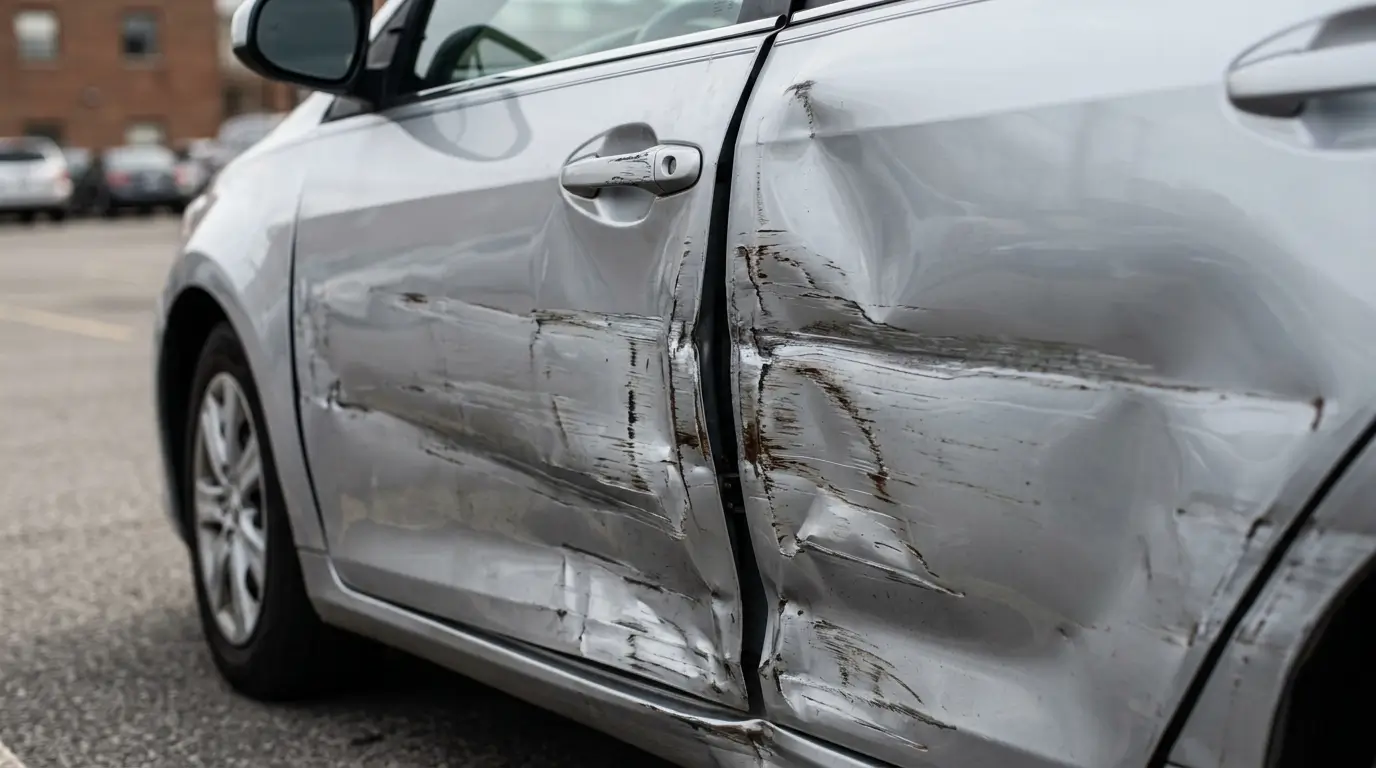
In a sideswipe accident Virginia, two cars collide side by side, rather than front to back, due to the vehicles being either in adjacent lanes or both moving in the same direction. Unlike most Virginia car accidents that occur during lane changes, sideswipe accidents occur while traveling parallel to one another (moving forward on the roadway).
While side impact accident Virginia traffic typically occur from hits to the vehicle’s rear and front areas, when there is a sideswipe collision, most of the damage occurs on the vehicle’s doors, mirrors, or fenders. The force of the crash could cause either of these vehicles to spin out of control, cross over into another lane, or go off the road completely.
How Sideswipe Collisions Happen on Virginia Highways and Interstates
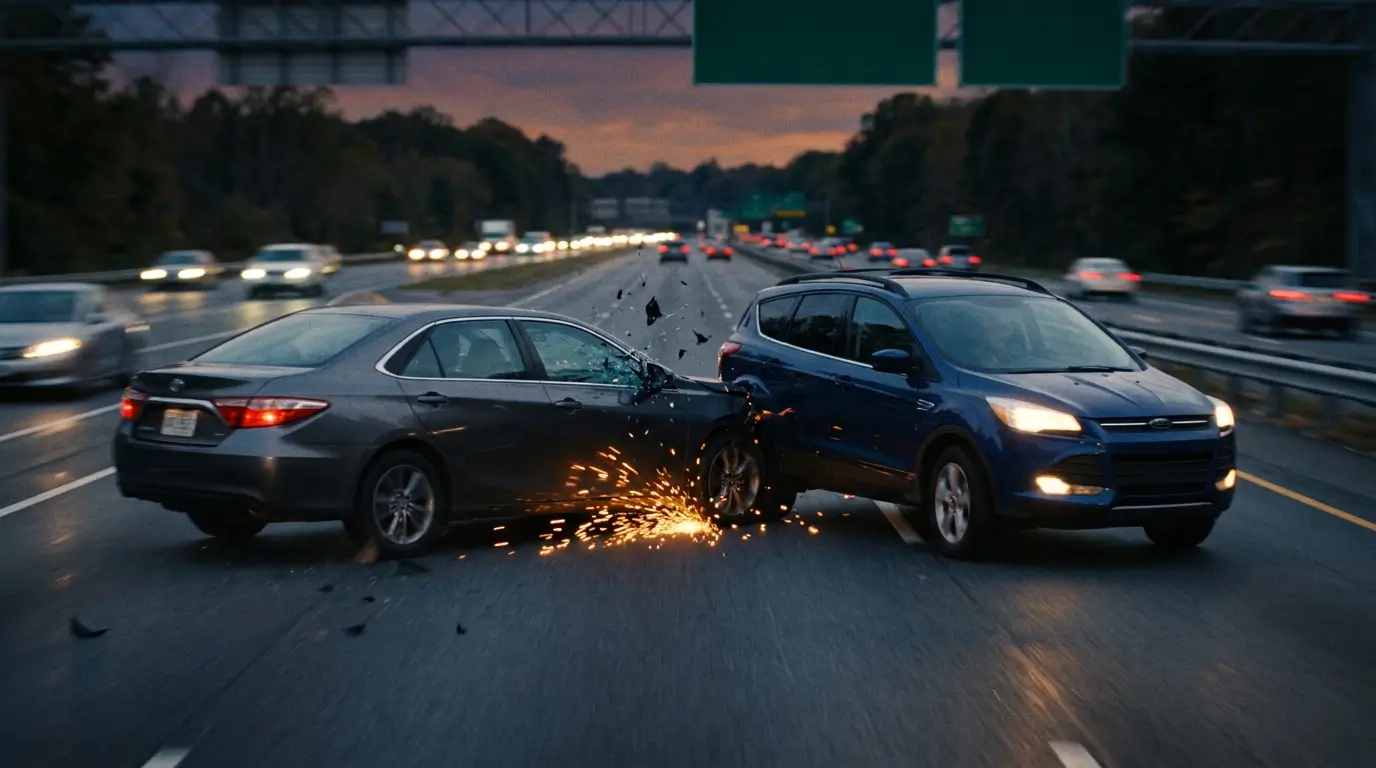
Most of the time, the highway sideswipe crash VA residents experience takes place within seconds. Generally, drivers drift out of their lane by accident, don’t check their blind spot, or don’t realize how fast the car next to them is going on a highway with multiple lanes (like I-81 or the Capital Beltway), which can be dangerous because the speed limit is high and the density of traffic does not allow for any errors.
Most of the time, a car merging accident Virginia roads occurs when cars are exiting or entering a highway without yielding properly and hitting the already established lane occupant with their car.
High-Risk Areas and Factors:
- Shifting Traffic Patterns: Construction zones, lane closures, and merging onto an interstate highway are very common places to find car accidents because drivers have to quickly adapt to the new traffic pattern of narrowed or redirected lanes.
- Heavy Congestion: Dense commuter traffic in the Northern Virginia and Hampton Roads area is another risk factor because drivers constantly “weave” from one lane into another just to gain a few feet of distance.
Common Causes of Side Swipe Accidents in Virginia
Sideswipe collision causes Virginia courts and insurance claimants to frequently refer to the following:
- Changing lanes suddenly without signaling
- Not checking mirrors or checking blind spots
- Accidents due to driver fatigue or lane drift accident Virginia are often caused by sleeping at the wheel
- Leaving insufficient distance between one vehicle and another through aggressive driving, tailgating, or trying to overtake on a single-lane highway
- Limited vision caused by weather conditions (snow, rain, fog, etc.), bright sunlight (glare), or nighttime.
A lane change accident Virginia typically comes down to one simple question: Did the driver who changed lanes check to make sure it was safe before changing lanes? Under Virginia state law, when changing lanes, drivers must ensure that it is safe to do so.
Why Distracted Driving Plays a Major Role
Distracted driving is among the many causes of Virginia sideswipe accidents, as it is one of the leading causes of these types of crashes. A driver looks at a phone, adjusts a GPS, or grabs something from the passenger seat and runs into the side of a vehicle. Since these accidents occur quickly and without prior notice, it is almost impossible for a driver who is distracted to make the necessary corrections before hitting another vehicle.
Typical Injuries Caused by Side Swipe Accidents
Virginia highway accident injuries sideswipe may seem insignificant at first glance; however, they can be severe. The most frequently seen ‘safety’-related car accident injury in sideswipe crashes includes the following:
- Soft tissue injury of the neck and back
- Injury to the shoulder, arm, wrist, as a result of bracing against a door or steering wheel
- Head injury or concussion from the vehicle striking a barrier while in motion.
- Broken bones due to secondary collision (when another vehicle or object strikes your vehicle) after the first impact.
- Spinal cord injury due to a higher-speed highway incident than would occur without a sideswipe.
A sideswipe can influence a vehicle to move into another lane, towards a guardrail, or in front of an oncoming vehicle; therefore, the second collision typically has a more substantial impact than the initial movement.
How Fault Is Determined in a Virginia Sideswipe Crash
To establish fault in sideswipe accident Virginia, a full reconstruction of the positioning and movements of both vehicles at the time of the collision must occur. As a contributory negligence state, if an injured driver has any percentage of fault for causing the accident, that driver cannot recover any damages in Virginia. This critical legal principle makes Virginia different from virtually every other state and emphasizes the need to create a clear picture of what happened during the accident as soon as possible. Therefore, a thorough, evidence-based investigation is essential in every sideswipe accident case our firm handles.
What Evidence Helps Prove a Sideswipe Accident Happened
- Accident investigation report and investigation findings (Police Report)
- Photographs of vehicle damage, paint transfer, and final positions of vehicles after the accident
- Eyewitness statements (statements from persons who witnessed the accident)
- Traffic dashcam footage
- Skid marks, lane markings, and roadway conditions (road conditions at the accident scene)
Our legal team makes every effort to obtain and preserve evidence as soon as possible because physical evidence (e.g., skid marks and debris) can be gone in a matter of days.
Insurance Challenges After a Sideswipe Collision
Insurance claim sideswipe crash VA residents must submit, and are not always as straightforward as they might seem. Due to the frequency of disputed lane positions during a sideswipe accident, insurance adjusters often attempt to hold the injured party partially or fully at fault to minimize or eliminate the amount of money they will pay on a claim.
The Finger-Pointing Trap
Adjusters can use ambiguous evidence, conflicting eyewitness testimony, or a lack of clear documentation to support their claim that two drivers are partially or completely responsible for the accident. They will also use these ambiguities to delay the claims process and create confusion over who caused the accident.
Virginia’s Strict Fault Laws
In Virginia, contributing negligence means that if you have even a slight amount of responsibility for an accident, then your entire claim can be lost. Under this strict standard of law, if you are found to have at least 1% responsibility for the accident, you will not be able to recover any form of compensation.
How Legal Representation Helps
With the proper experience of working with insurance companies, an attorney has the experience to combat the aggressive tactics used against victims by insurance companies and provide solid evidence of how the accident happened. An attorney can reconstruct the accident and provide proof that will not only protect your rights but will also help you receive the compensation that you are entitled to.
Why Legal Guidance Matters After a Virginia Sideswipe Accident
Liability disputes are common in these types of cases; having an experienced lawyer represent you from the very beginning can truly change how successful your case ends up being.
- Skilled Strategic Advocacy: At our firm, the goal of the attorney and support staff is to fully understand how Virginia courts and insurance companies evaluate sideswipe claims and know what it takes to have a strong case.
- Comprehensive Burden Relief: From collecting evidence on-site to negotiating directly with insurance adjusters, we do all of the legal work so that you can concentrate on recovering from your injuries.
- Cross-Border Accident Legal Support: We help clients who have been in a cross-border accident that impacts either Virginia or North Carolina, so that they are confident no matter where their accident happens on the highway.
- Risk-Free Legal Representation: We provide free consultations and represent clients on a contingency fee basis. This means that there are no fees for you to pay us until we have successfully obtained monetary compensation for you.
Talk to Tatum & Atkinson About Your Sideswipe Accident Claim
The first step is understanding “what is a side swipe accident in Virginia”, and the next step is determining how to protect your entitlement to compensation after your accident. Virginia employs a contributory negligence concept that creates an unusual environment for these claims and gives insurance providers the tools to exploit your lack of knowledge of the law.
Tatum & Atkinson Law Firm’s lawyers and seasoned legal experts have everything needed to evaluate your situation, answer your questions, explain all options, and fight for the compensation you rightfully deserve.
For a free consultation, contact them at (800) 529-0804 today. You have nothing to lose! No obligation, and you’ll only owe them if they win your case!
Frequently Asked Questions!
Are sideswipe accidents considered minor or serious in Virginia?
Accidents can involve everything from minor bumper damage to life-altering injuries. Speed and location both have a significant impact on the severity of an accident. As speed increases, the likelihood of secondary impacts, rollover accidents, or losing control of your vehicle also increases.
Who is usually at fault in a sideswipe accident?
In most cases, the driver who crossed out of their lane without confirming safety will be at fault. However, additional factors like signaling, speed limits, and visibility may also contribute to mutual liability based on the circumstances of the accident.
Can a sideswipe accident cause rollover crashes?
It has the potential to create additional hazards by causing a vehicle to leave the roadway, pass over an uneven area, or hit a barrier, thus increasing the potential for a vehicle to roll over after being struck.
Do police always respond to sideswipe accidents?
Generally speaking, police will not respond to every incident; however, calling them is generally a good idea to document the scene and support any future legal claims.
Can I still file an insurance claim if I was partially at fault?
Virginia’s contributory negligence laws can prevent recovery if you are even marginally found to be at fault. Therefore, consulting with a lawyer before accepting any insurer’s findings of fault is critical.
