How Does Blood Alcohol Content Affect Driving In Virginia?

Key Highlights:
- How does blood alcohol content affect driving in Virginia? It impairs reaction times, severely reduces muscular coordination, and damages vital judgment skills before a person even achieves the legal limit.
- BAC determines the volume of alcohol in blood, usually expressed in percentages. Driving performance declines long before hitting the legal limit, which is set at 0.08.
- A civil injury case uses BAC differently and in a less complicated way than a criminal case.
- A BAC of 0.15 and above makes it possible to charge a person with punitive damages in Virginia.
Blood Alcohol Content (BAC) refers to the volume of alcohol in the blood of a person. It is the single figure that determines both the DUI charges and the civil injury claim after the accident. Thus, it becomes important to understand how blood alcohol content affects driving in Virginia because even a small amount of alcohol impairs a driver’s reflexes, judgment, and vehicle control.
At Tatum & Atkinson Law Firm, our DUI accident lawyer Virginia assists in getting justice from the impaired drivers who cause damage on the roads.
Contact Tatum & Atkinson Law Firm for your free consultation. Call us today at (800) 529-0804.
What BAC Is, and How the Body Handles Alcohol
BAC, or blood alcohol content, is the amount of alcohol present in a specified volume of blood expressed in percent. The process of absorption of alcohol, according to the National Highway Traffic Safety Administration, occurs in the stomach and small intestine, where it assimilates into the blood before it gets metabolized by the liver at a normal rate of about one drink per hour. Although two people may drink equal amounts of alcohol, their BAC and effects might differ considerably due to different factors such as:
- Body Weight.
- Biological sex affects the amount of water and enzymes present in the body.
- Food contents in the stomach lead to a slower absorption of alcohol.
- How fast the alcohol was consumed.
- Use of medications that alter the way alcohol functions in the body.
- Individual metabolism rate.
How Does Blood Alcohol Content Affect Driving in Virginia?
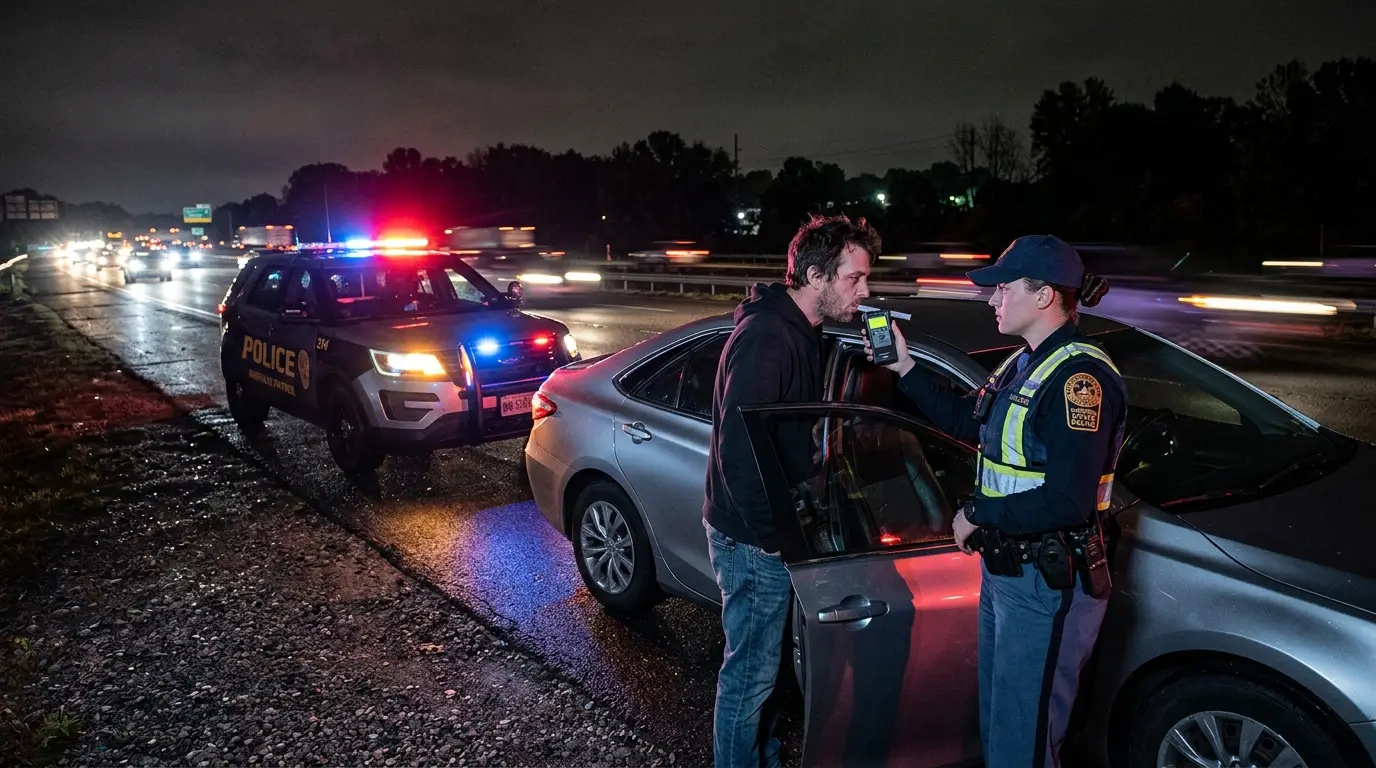
Alcohol starts affecting the very abilities that are required for driving successfully. It has an impact on judgment, vision, coordination, reaction time, and risk perception, and with the increase of BAC, the effect worsens:
- With a blood alcohol concentration of 0.02, visual tracking becomes weaker, and multitasking gets much harder.
- With a BAC of 0.05, coordination becomes lower, steering hardens, and responsiveness decreases.
- With a BAC of 0.08, muscle coordination worsens, judgment and self-discipline are damaged, and detecting dangers and threats becomes difficult.
- With a BAC of 0.10 or higher, the reaction time slows down, and the control over the vehicle worsens.
- At 0.15 BAC, it is possible to lose almost the entire vehicle control.
It can be said that a driver with a BAC of 0.08 is around four times more likely to get involved in a drunk driving accident compared to a sober driver, and with a BAC of 0.15, this number is at least twelve times more likely.
BAC Virginia Limits for Different Drivers
The Commonwealth of Virginia has various levels of alcohol impairment, based on the driver’s age:
- 0.08 percent for drivers aged 21 and older, under Va. Code § 18.2-266.
- A limit of only 0.04 percent applies to commercial drivers (Va. Code § 46.2-341.24), which is half of what is considered normal BAC.
- 0.02 percent for drivers below age 21, pursuant to Va. Code § 18.2-266.1, which is an almost zero tolerance law.
Once these thresholds have been reached or exceeded, the driver’s BAC will cause him or her to be deemed impaired per se; in this instance, no further proof is needed that the driver was driving poorly.
How BAC Evidence Works in a Civil Injury Claim
A civil injury claim operates independently of and with fewer proof requirements than a criminal DUI case. The legal team needs to gather evidence documenting the at-fault driver’s BAC level so that their fault can be proven with hard facts.
The Power of a 0.15% BAC
In Virginia, BAC serves purposes beyond providing evidence of someone’s intoxication if the driver’s BAC level is 0.15% or above, as per Va. Code § 8.01-44.5, punitive damages can be sought.
- What they are: It is an amount given to punish the intoxicated driver for his misconduct and is added to the normal compensation claim provided.
- The limit: There is a limit on the amount of punitive damages that can be awarded in Virginia; specifically, the total amount cannot exceed $350,000.
Defeating Virginia’s “1% Rule”
Virginia laws follow a very strict regulation known as “pure contributory negligence.” The only way you can get compensated by your insurance company is if the defense fails to prove that you were 1% at fault for the accident. Because the blame should rest entirely on the wrongdoer, you need evidence to prove the other driver’s impairment. You will need:
- Reports and field sobriety notes from law enforcement officers
- Eyewitnesses and receipts from local establishments
- Dashcam, bodycam, and other recordings from nearby cameras
- Toxicology and accident reconstruction reports
What Damages Can You Recover?
Compared to punitive damages, there is no cap for other types of compensation in Virginia. Thus, positive results from your case will help you recover money for:
- Medical costs incurred and care for the rest of your life
- Lost wages and diminished earning capacity due to the inability to work
- Pain inflicted
- Property damages are aimed at compensating you for your vehicle.
Hit by an Impaired Driver? Let Tatum & Atkinson Fight for You

Determining how blood alcohol content affects driving in Virginia is usually important in order to hold drunk drivers accountable. Alcohol has a negative impact on reaction time and the ability to make decisions, which makes it important for the lawyer to gather evidence pertaining to BAC before the evidence vanishes.
At Tatum & Atkinson, we take on cases relating to drunk driving injuries throughout Virginia. Our firm’s attorney, Jon Ward, operates out of the Cedar Bluff office and is committed to serving all of Southwest Virginia. Our experienced accident lawyers understand how to secure police videos, toxicology reports, and BAC results in no time and utilize 0.15% BAC levels to pursue maximum allowable punitive damages.
Call us at (800) 529-0804 to book a free no-obligation consultation with Tatum & Atkinson. We work on a contingency basis, so we only earn if you win.
Frequently Asked Questions!
Is a breath test or a blood test more reliable?
Blood alcohol tests tend to be more reliable because they can reliably tell what amount of alcohol is present in the blood. Whereas breath tests only estimate the BAC and can be impacted by the instrument that is used, the procedures used, and the time taken while conducting the test.
Can I still win a civil claim if the driver was not convicted of DUI?
Yes. Civil and criminal cases are different and have different standards of proof. In civil lawsuits, one may win even if DUI accusations are dismissed, dropped, or if no accusations are made at all.
Why does the exact BAC number matter so much in my case?
This is because BAC can result in more than simply intoxication, with BAC levels in Virginia being above the 0.15% mark, which can support punitive damage awards, boosting the value of the claim filed. An individual with a BAC level lower than 0.15% can still make a claim. Punitive damages may still also be available for extremely careless actions.
What if the drunk driver refused the breath or blood test?
Refusal does not end your personal injury claim. Refusing a lawful test has consequences of its own since impairment can be proven through other evidence, such as an officer’s observations, video footage, witness testimony, and conduct of the driver.
What does it cost to hire a drunk driving accident Virginia attorney?
Nothing in advance, as these types of cases work on contingency, meaning you only pay if you win, and the initial consultation is free. Virginia gives you two years to file a claim as per the law, Virginia Code Section 8.01-243, but most of the time, evidence can vanish a lot sooner.
