What If I Was Hit By A Commercial Driver Who Was Drunk In Virginia?
Key Highlights:
- Blood alcohol content of 0.04 percent is applied to commercial drivers, while 0.08 percent of the same is required of others under the FMCSA alcohol regulations regarding alcohol.
- The federal laws require that evidence collection procedures generate some form of evidence for filing the lawsuit.
- Apart from the drunk truck driver accident, even the trucking company may face trouble.
- Further punitive damages will follow in Virginia if the blood alcohol content exceeds 0.15 percent.
- It is easy to lose the evidence collected from the black box and logs; hence, it becomes necessary to move fast. The shared liability by the 1% rule may make the case invalid.
What If I Was Hit by a Commercial Driver Who Was Drunk in Virginia?
It is scary enough being in an accident with a drunk driver. However, being involved in a car crash with a drunk commercial driver Virginia is another thing. These situations carry more risks as federal regulations regarding trucking, company employers, and state laws for drunk driving apply to the case. Here is what your rights mean in the situation and how to approach the lawsuit.
Let me introduce myself to you. I am Robert Tatum, and I am one of the partners at the Tatum & Atkinson law firm who have been providing veteran lawyer services in the Virginia area since 2006. As a team of veteran attorneys with a combined 65 years of experience with drunk commercial drivers (while representing over 100 injured parties), we know how to successfully represent those injured by drunk truck drivers.
Why a Drunk Commercial Driver is so Hazardous
Here are the main reasons that make drunk commercial driving such a dangerous event.
Larger Vehicle, Less Tolerance for Errors
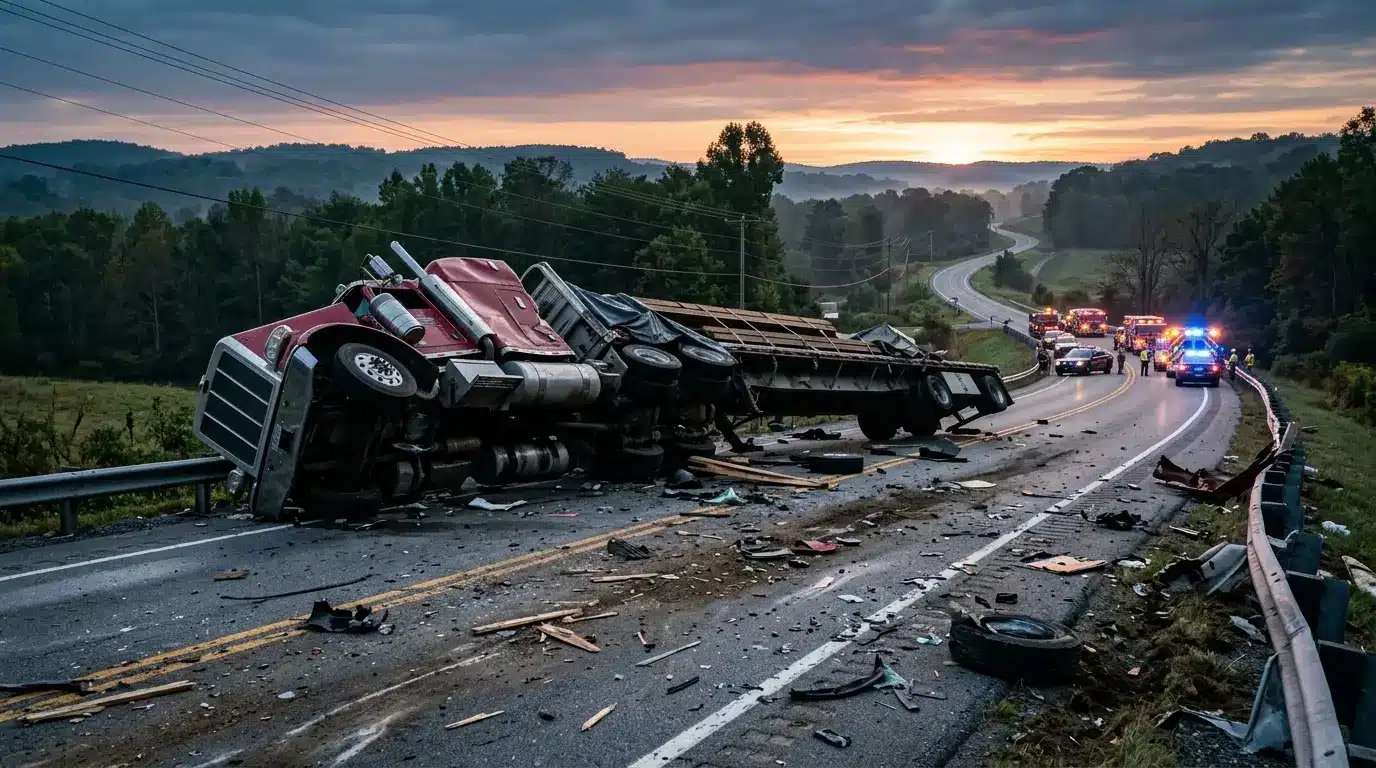
A fully-loaded semi truck weighs about 20 to 30 times what a typical sedan does and requires many yards more space to come to a stop. Mix alcohol, which delays reaction time and impairs judgment, and the result is frequently a deadly high-speed collision that would otherwise be avoided by the alert driver.
Subjected to a Greater Responsibility
Commercial drivers are professionals who have been taught about the hazards of drinking alcohol and are charged with keeping other road users safe in their chosen line of work. For them to drive drunk is no ordinary mistake; it is a flagrant violation of the responsibilities associated with their driving license.
The Rules Governing Commercial Drivers and Alcohol Consumption
These laws that relate to the consumption of alcohol by commercial drivers aim at mitigating hazards on the roads, as well as keeping commercial drivers responsible. Some of the laws relating to commercial drivers include:
Strict Federal Limit
The federal government has made it illegal for a commercial driver to have an alcohol content greater than .04, which is half the legal limit of .08 for all other persons, as defined under FMCSA alcohol regulations. In addition to this, federal law states that a commercial driver cannot operate a vehicle with any amount of alcohol in their body when they are driving.
Federal laws regarding alcohol and commercial drivers are stricter than state laws, and thus, the laws governing alcohol consumption by an operator of a commercial vehicle are governed by stricter regulations than those of state laws governing DUI truck accident Virginia cases and are more restrictive than DUI laws.
Not Drinking on the Job and Required Testing
Commercial drivers are prohibited from drinking even within a few hours before starting their shift, and their carrier has to conduct alcohol and drug testing, including pre-employment testing, random testing, reasonable suspicion testing, and post-accident testing. All test results will be reported to the National Drug and Alcohol Clearinghouse.
Virginia DUI Laws in Addition to the Federal Ones
Besides, Virginia has its own laws on drunk driving. A drunk commercial driver Virginia who exceeds the alcohol limit will be charged criminally, and this can be very helpful in your case in civil proceedings.
The Evidence It Creates and Why It Disappears
The good news is that there is a lot more paper and data than in a routine car wreck. But the bad news is that most of it is controlled by the carrier and won’t last very long.
Federal Paper
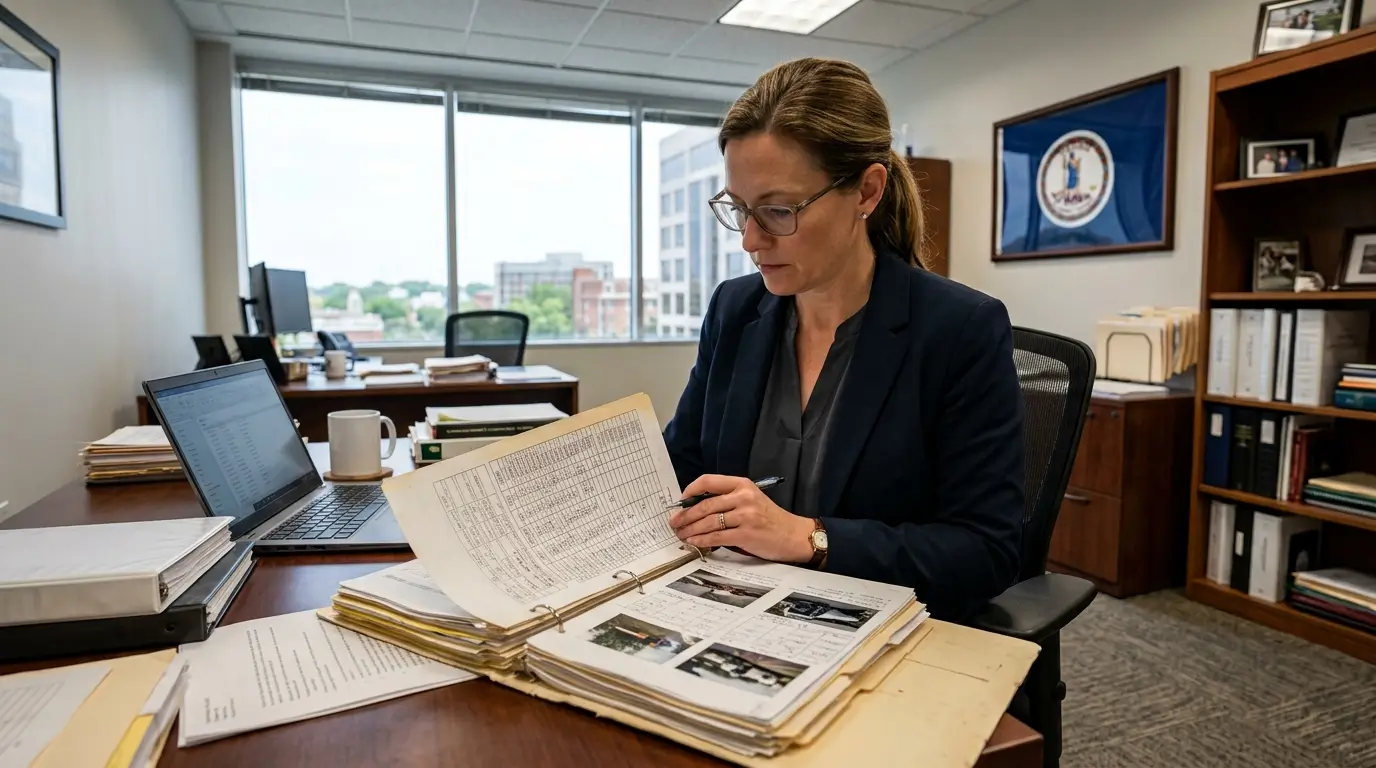
It consists of the driver’s post-accident alcohol and drug test, his driver qualification file, clearinghouse information, and his testing and violation history. These are records that the carrier is required to retain.
Machine Records That Can’t Be Fooled
There are the hours of service from the truck’s electronic logging device, the engine control module or “black box” recording speed and braking, and dash or fleet camera footage of the accident itself.
The Human Witness Record
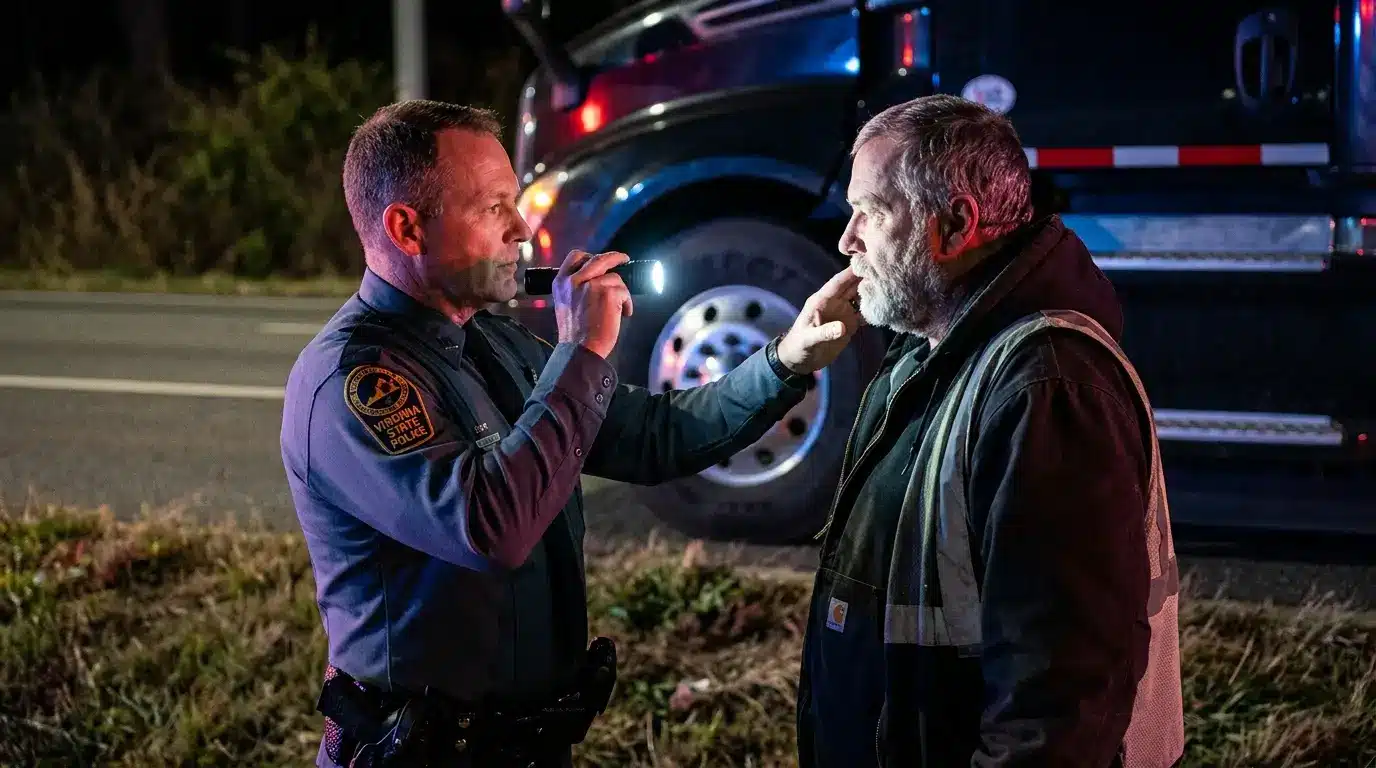
Evidence from the field sobriety and BAC test results, witness accounts of the truck having swerved, and the witness smelling alcohol on the driver’s breath all together support finding fault and impairment.
Why Does Speed Matter? Spoliation
Hours of service and dash cam video disappear within weeks. Once an entity receives notice of a potential claim, the legal document to prevent this is called a spoliation letter.
Liability, Not Just of the Driver
Liability in a drunk commercial driver case spans multiple instances.
The Driver
This is a driver who has decided to drive while impaired and, therefore, will have both criminal charges against him/her as well as civil liability for his/her actions, a key concern in any drunk truck driver accident.
The Trucking Company
Also, the employer may be found liable for their employee. Through trucking company liability, employers become liable for the actions of their employees acting within the scope of employment. Additionally, the company will be directly liable because of hiring a negligent employee, negligently retaining a negligent driver, negligently supervising the driver, and failing to follow the rules of the FMCSA.
Also, the fact of putting an impaired driver behind the wheel is independently actionable.
Bar/Liquor Store or Restaurant Liability
Unlike in some jurisdictions, Virginia law does not have a provision for dram shop liability. That means that there is no civil liability of a party serving alcohol for the driver’s impairment.
Injuries and Possible Recovery of Damages
Here are some of the possible injuries one can contract in such cases.
Catastrophic Injuries
The injuries you may have in a truck accident are catastrophic, and they include head injury, spinal cord injury, paralysis, amputation, internal organ injury, broken bones, and even death.
Compensatory Damages
If you have been injured or have suffered property damage as a result of a truck accident, your claim may be compensated for current and future medical costs related to your injury or damage to your property, lost wages or reduced earning capacity, pain and suffering, and any property damage to you.
Damages Available for DUI in Virginia
Virginia’s law provides for punitive damages against all DUI truck accident Virginia cases. According to Virginia’s Code § 8.01-44.5, you may obtain punitive damages if, at the time of the accident, the driver had a blood alcohol level over 0.15% or above (if the driver refused reasonable testing) and the driver was intoxicated and knew or should have known that their harmful behavior was responsible for causing the accident. Virginia’s punitive damages are capped at $350,000 (Virginia Code § 8.01-38.1), and the jury is not aware of the cap amount.
Impact of the 1% Rule in Virginia on These Cases
As per Virginia law, if the defendant proves you guilty by even 1% of responsibility, then there will be no compensation, even if you were hit by an intoxicated driver. That is why it becomes very important for you to prove the negligence of the driver and the company with foolproof facts. There is usually a time period of two years from the date of the accident within which you have to file your claim under Virginia Code § 8.01-243, and the evidence needed to prove this case is much easier to gather when it is earlier.
Process by Which an Attorney Proves the Claims Against the Driver and the Company
This is not just another case of a car accident. Here, a Virginia truck accident lawyer begins with…
- issuing preservation letters for the data from log books,
- black boxes,
- and cameras, along with the results of post-accident tests and the driver’s clearance records.
It helps in holding both the driver and the company accountable and in negating the claim of the 1% rule. The Heavy Hitters know well how the trucking companies and their insurance firms defend these cases and counter that defense.
Call Tatum & Atkinson If You Got Hit by a Drunk Driver in Virginia
If you were involved in a crash with a commercial vehicle and are accruing bills or have other expenses as a result of the accident, the company that owns the truck and its insurer are trying to minimize the amount they’ll pay you in a settlement. For more than ten years now, Tatum & Atkinson have been helping injured Virginians.
One of our attorneys works in the Cedar Bluff office to represent clients in southwest Virginia and along the Virginia Freight Corridors (Hwy 81 and Hwy 77). Our experienced team at Tatum & Atkinson, your trusted Virginia truck accident lawyer, understands the federal trucking regulations, Virginia’s punitive damages statute, and the “one percent trap,” and we are quick to take action to obtain any evidence that can help or hurt our cases.
Contact us at (800) 529-0804 for a free case evaluation. We work on a contingency fee basis, meaning you only owe if we win, and with only two years from the date of the incident to file your claim, the sooner you contact us, the better.
Frequently Asked Questions!
The company says the driver was an independent contractor. Does that get them off the hook?
This is not always the case. It is not the labels on the contract, but the true nature of the working relationship and the company’s practices that count when it comes to employment, trucking company liability, and FMCSA compliance.
The driver refused a breath or blood test. Can I still get punitive damages?
This could be a possibility. Refusal to comply with the mandatory alcohol and drug tests is regarded as an unreasonable action under state laws, and this may lead to a claim for punitive damages.
What does it cost to hire a lawyer for a truck DUI case?
No upfront payments are required. The cases are handled on a contingency fee basis, which means that the attorneys only get paid if there is a recovery and will cover all the costs associated with the case themselves.
The insurer says I was partly at fault. Does that end my case?
The case might become such because of the 1% statute of Virginia that precludes recovery for any fault.
Will my case go to trial?
The settlement of the cases depends on how much the trucking company fears going through the trial procedure, which includes punitive damages, a common concern in any drunk commercial driver Virginia case.
