What Causes PTSD After A Motorcycle Accident In Virginia?

Key Highlights:
- What causes PTSD after a motorcycle accident in Virginia? Motorcyclists have no protective barrier and are fully aware of the injuries during the accident. This contributes to the level of emotional trauma sustained.
- Many people may have delayed onset of PTSD symptoms (see below) that occur sometime after the accident.
- In order to be diagnosed with PTSD, you must have symptoms for at least one month, and they may disrupt your daily activities.
- In Virginia, when there is a physical injury, a diagnosis of PTSD would be compensable.
- Psychological injury claims must adhere to the 1% rule regarding fault allocation and to the two-year limitations period for bringing claims forward.
A rider’s exposure and the likelihood of being severely injured in a crash, along with their level of consciousness during the event, can result in post-traumatic stress disorder (PTSD) as a possible outcome of their motorcycle accident.
What causes PTSD after a motorcycle accident in Virginia includes the extreme vulnerability the rider has to being crashed, as well as the immediate fear that they will die, which leaves an indelible imprint and has considerable influence on psychological injuries resulting from the crash.
Because PTSD is a serious medical diagnosis, Virginia law permits victims to recover damages for these types of severe emotional injuries, so having an experienced Virginia Personal injury attorney at Tatum & Atkinson Law Firm to help you obtain full recovery is very important.
If you are struggling with the psychological aftermath of a crash, contact our Virginia motorcycle accident attorneys at (800) 529-0804 today for a free consultation.
What Causes PTSD After a Motorcycle Accident in Virginia
The sheer vulnerability of the motorcyclist and the impact of the accident cause PTSD in some individuals, along with anxiety and depression.
No Barrier Between the Rider and the Road
A driver can rely on a steel cage, restraints, and airbags. For the rider, there are no such protective features. When the collision occurs, the rider’s body will absorb the entire force of the impact directly, and the rider’s brain will register every instant, every sound, every impact, every feeling of helplessness. This unfiltered experience serves as the basis for trauma.
The Near-Death Moment and Loss of Control
For many riders, a crash represents their first experience in which they were certain they would die. Just for an instant, experiencing your entire life escape from your control is one of the greatest predictors of long-term psychological injury.
A Memory That Will Not Fade
Significant injury and a long, painful recovery will ensure the rider always remembers his accident. On an ongoing basis, chronic pain and numerous physician visits will serve as a continual reminder of the injury and prevent the emotional trauma motorcycle accident from healing.
How PTSD Shows Up After a Crash
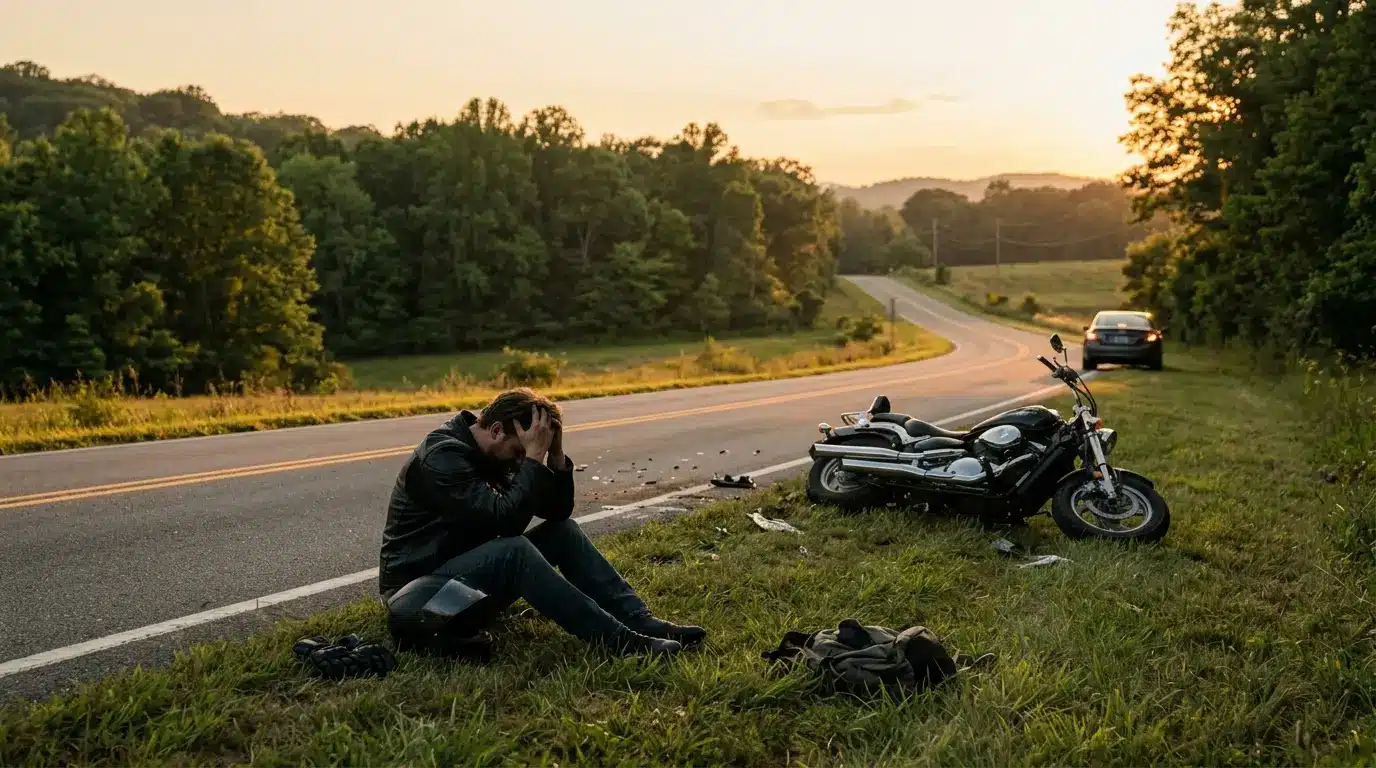
Those affected with post-traumatic stress disorder (PTSD) after an accident will find that it is much more than a mere case of the jitters, but rather a profound change in their mental state, affecting their everyday routines and their health.
Reliving the Wreck
Flashbacks, unwanted thoughts, and nightmares can suddenly bring back the event of the accident or incident to the survivor without any warning. What these memories represent is far beyond a “bad memory.” They take the survivor back to that event or motorcycle wreck; they make them feel like it is happening again. You are a prisoner to that past memory.
Avoiding the Road
Others who have survived a motorcycle accident PTSD Virginia refuse to get back on their bike, drive, or even travel as a passenger in any vehicle. The avoidance of the accident location, certain roads, or talk of the accident is a hallmark sign of post-traumatic stress disorder motorcycle crash. Avoidance decreases the number of people that the survivor socializes with and can limit the survivor’s world to a small size.
Living on High Alert
Hypervigilance may manifest itself as being easily startled, being tense in traffic, or having difficulty sleeping. For an extended time period following the traumatic or shocking event, the survivor’s body may remain in danger mode regardless of the fact that they are no longer in danger.
Changes in Mood and Thinking
Depression and anxiety frequently co-exist with PTSD, impacting work and/or personal life. Common feelings include guilt, detachment, irritability, and flatness or no ability to feel pleasure.
Getting a Diagnosis and Treatment
The first step in treating PTSD involves getting diagnosed by a professional who can prescribe proper therapy, known to be effective in changing how the mind handles recollections.
How Professionals Recognize It
A licensed motorcycle crash mental health professional will diagnose PTSD when an individual exhibits symptoms for at least a month, causing them to have difficulty performing daily tasks. In addition, it is not uncommon for individuals to appear normal after experiencing trauma (such as a motor vehicle accident) and only begin to exhibit symptoms weeks later. According to the National Institute of Mental Health, serious accidents are among the recognized reasons that cause anyone to develop PTSD.
What Treatment Looks Like
The best way to treat trauma is with trauma-focused therapy. The three most effective forms of trauma-focused therapy are cognitive processing therapy, prolonged exposure therapy, and EMDR therapy; they will all typically be provided in conjunction with an SSRI.
While recovering from trauma can be difficult, you can recover from it if you consistently receive the proper treatment over the course of time. Those ongoing treatments will also be recorded within the individual’s psychological injury claim Virginia.
The Link Between Body and Mind
Psychological and physical injury are intertwined and are subject to many of the same influences. For instance, chronic pain can lead to anxiety and/or depression, a disfiguring injury can affect an individual’s sense of self, and lack of sleep due to pain can impede physical recovery.
The mental injury from a significant motorcycle accident can sometimes be just as limiting as the broken bones caused by the accident, and Virginia law recognizes this as long as it is documented in accordance with Virginia law.
PTSD and a Virginia Injury Claim
To settle a psychological injury claim in Virginia, it’s necessary to comply with the rigid “impact rule” that states an individual’s trauma must stem from the physical impact of the accident.
Why PTSD Is Compensable in Virginia
The “impact rule” used in Virginia allows recovery of PTSD personal injury compensation as a component of damages for negligence if there was a physical injury arising from the same accident. As most motorcycle operators sustain physical injuries, compensation for their PTSD is included within the damages for mental anguish and pain and suffering. There is no cap on these types of damages in Virginia personal injury law.
Proving a Psychological Injury
Proof of invisible injuries must be obtained from concrete records. Evidence like therapist/psychiatrist treatment records & mental health experts’ testimony is crucial. Evidence should connect the injury to the crash rather than to any prior stressors, and family and coworkers’ statements also help in describing changes to the person.
The 1% Rule and the Deadline
Virginia follows the pure contributory negligence rule regarding emotional damages as well. If you are found to be even 1% at fault for your crash, you will be barred from recovering for your emotional damages as well. Therefore, the first part of your case will need to focus on proving that the other driver caused the crash. Most claims must also be filed within two years under Va. Code § 8.01-243.
Struggling With Trauma After a Virginia Motorcycle Crash? The Heavy Hitters Can Help
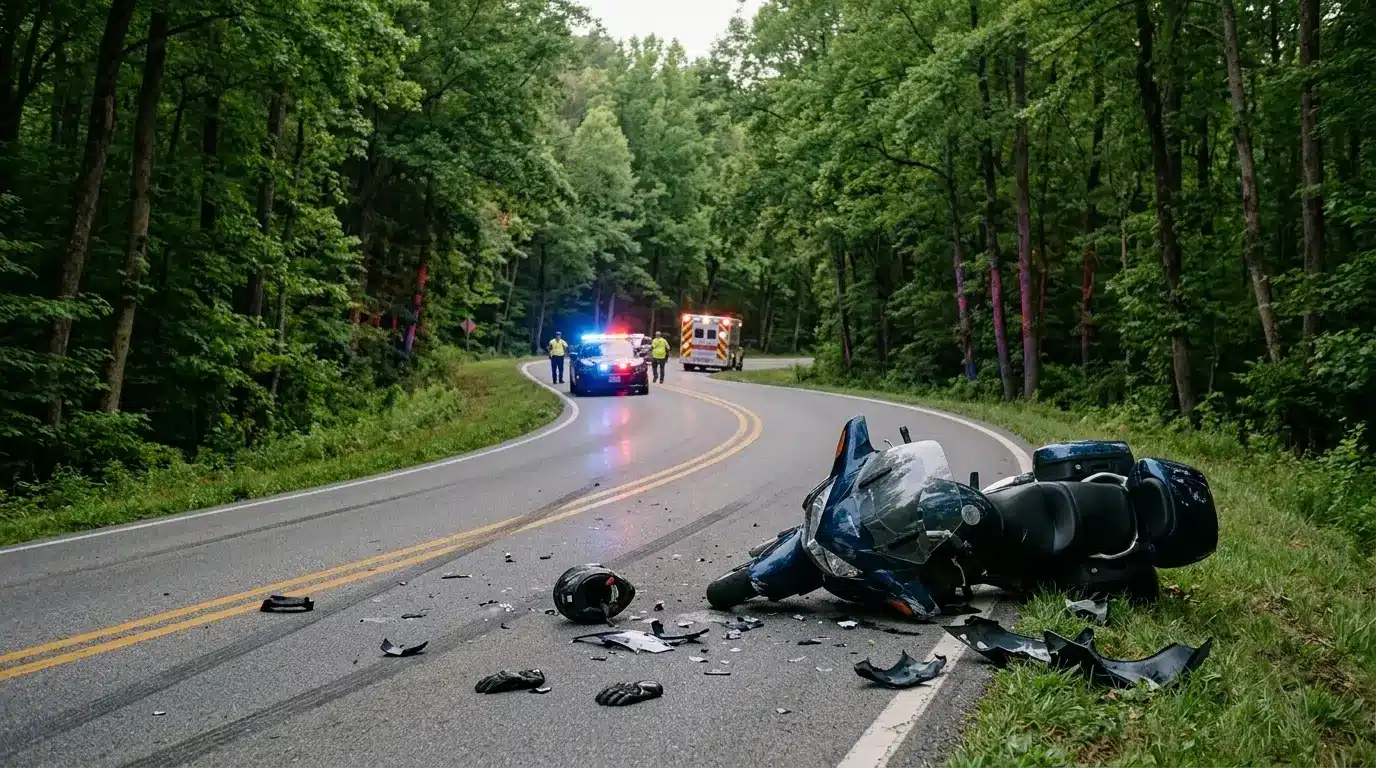
If you have experienced difficulty sleeping or riding since your crash, then it’s a severe injury that deserves to be taken seriously. It’s also worth understanding what causes PTSD after a motorcycle accident in Virginia, as being exposed on a motorcycle creates a sense of vulnerability and can create incredible psychological trauma.
Jon Ward, a Virginia-admitted attorney at Tatum & Atkinson in Cedar Bluff, represents bikers and motorcyclists throughout southwestern Virginia. We, the Heavy Hitters, understand how Virginia’s contributory negligence statute and the 1% fault rule apply to psychological injuries, and we will help you to document your injuries prior to the two-year strict statute of limitations.
Contact (800) 529-0804 to receive a free consultation; we do not charge you any fees until we recover money on your behalf
Frequently Asked Questions
Can I claim PTSD if I have no visible injuries?
Virginia law dictates that a physical injury must be present before someone can pursue a claim for emotional distress in a negligence case. Most people who survive crashes suffer from physical injuries, which would allow them to include PTSD as part of their recovery, but if there is a claim for psychological injury, with no physical injury, the claimant would meet a significant obstacle.
Will the insurance company take my PTSD seriously?
Many adjusters have difficulty agreeing with any injury they cannot see in an X-ray; they believe the claimant is either exaggerating their claim or that the injury had pre-existed. If there is a medical diagnosis or consistent treatment from a medical professional who is licensed, then the injury can be established as legitimate.
Can I recover for PTSD if I was partly to blame?
In Virginia, even 1% fault can completely bar you from recovering any compensation. This is why it is so important to determine fault and to document the defendant driver’s negligence promptly in the accident in the same manner that you document your own emotional injuries.
What does hiring a lawyer cost?
These cases are usually handled on a contingency fee basis. Therefore, the attorney receives no compensation unless the plaintiff is successful in recovering damages for their injuries, either bodily or emotional. The initial consultation with an attorney is provided without charge.
