What Is A Fatal Collision In Virginia?
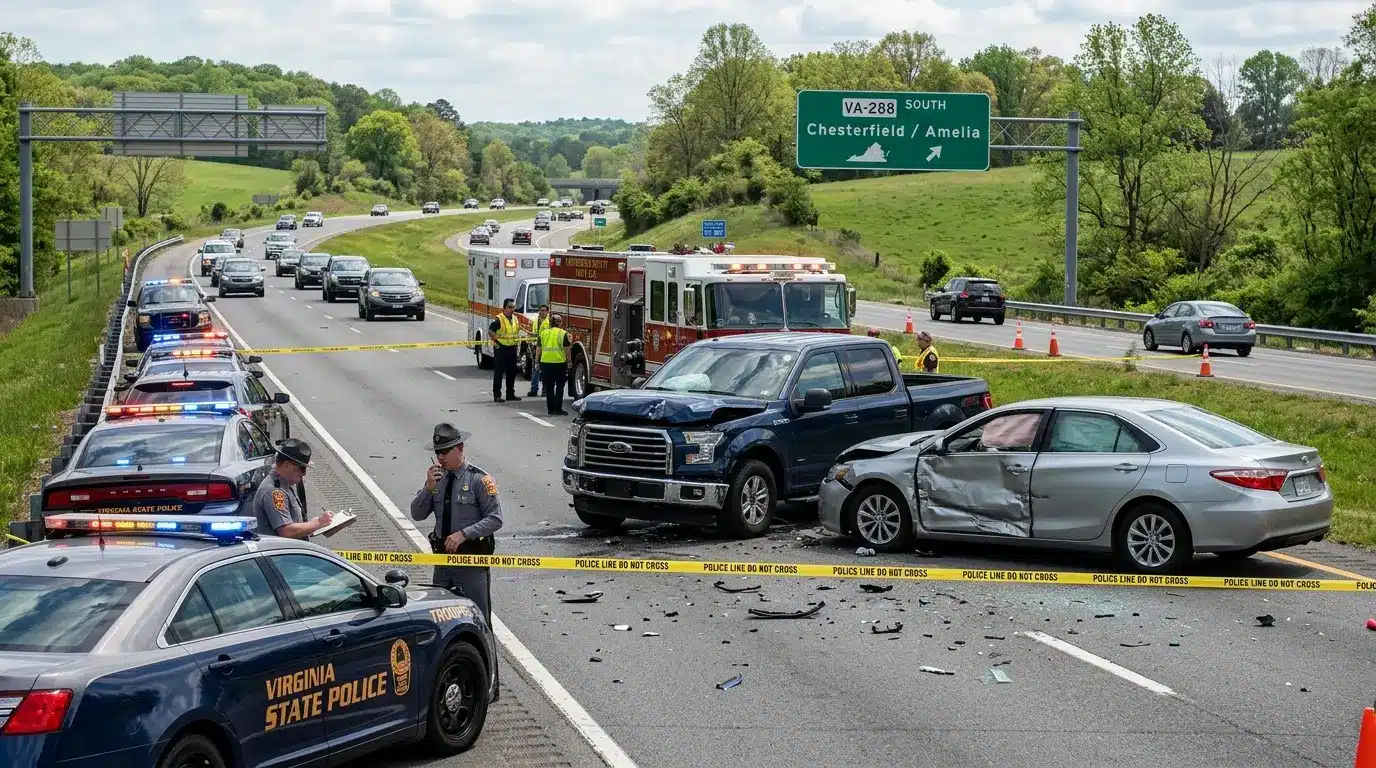
Key Highlights:
- Wondering what is a fatal collision in Virginia? It is defined as any vehicle collision resulting in the death of an individual as a result of the injuries sustained in the vehicle crash. A fatal vehicle collision will trigger an investigation into the accident by law enforcement and create wrongful death actions, which arise as a result of the negligence that contributed to the fatal vehicle collision.
- Virginia strictly follows the contributory negligence rule; therefore, if the deceased had even 1% culpability for the crash, the survivors cannot recover damages.
- Under Virginia Code § 8.01-50, those entitled to pursue damages (i.e., spouse, child & parent) may recover compensation for funeral expenses incurred, medical bills incurred before the death of the deceased, and loss of future earnings, in addition to loss of companionship.
- In Virginia, wrongful death claims are subject to a strict two-year statute of limitations; therefore, families must preserve evidence promptly and obtain their own legal representation to protect their rights and pursue wrongful death actions.
If you lost a loved one in a fatal car accident Virginia, this information can help you understand a bit about how the law works after the accident has occurred. You deserve to have answers to your questions. If you are wondering, “What is a fatal collision in Virginia?” Under Virginia law, a fatal car accident occurs when one or more persons die as a direct result of injuries caused by a traffic accident.
This definition carries a lot of legal weight as it initiates a specific investigative process, creates the possibility of criminal prosecution against the parties responsible for the accident, and gives you an opportunity to pursue a wrongful death claim against the responsible parties. The highly qualified wrongful death attorneys at Tatum & Atkinson Law Firm will work hard to assist you in pursuing your claim if you have lost a loved one in a fatal car accident in Virginia.
For information on how to pursue your wrongful death car accident Virginia claim, contact Tatum & Atkinson by calling (800)529-0804 and take advantage of your complimentary, obligation-free consultation.
What Is A Fatal Collision In Virginia? Legal Definition & Key Distinctions
Fatal collision definition Virginia is a motor vehicle accident that causes at least one person to die from the injury incurred as a result of the crash. A fatal collision raises the level of legal, investigative, and emotional severity compared to a typical traffic accident not involving death and greatly increases the chances of criminal prosecution for those involved in the collision.
Does a Fatal Car Crash Mean Someone Died?
When law enforcement describes a traffic crash as “fatal,” it means that one or more people died in the accident or that the injuries it produced are so catastrophic in nature that the person(s) involved in the crash are expected to die once their injuries have been diagnosed and documented by emergency medical personnel.
What is the Difference Between an Accident and a Fatal Accident?
The primary difference between an “accident” and a “fatal accident” is the outcome of the crash. In non-fatal crashes, no one dies; the passengers and the driver survive, albeit sometimes with serious injuries. In contrast, in a fatal crash, at least one person dies, resulting in an immediate legal investigation and exposure to prosecution for the driver who caused the fatal crash, as well as the right of surviving family members to obtain a wrongful death claim against the driver who caused the crash.
The Physics of a Fatal Crash: Speed, Impact & Survival
By studying the mechanics involved in crashes, we can understand what makes certain types of accidents catastrophic and how certain behaviors heavily influence Virginia’s highway fatality statistics.
What Happens to Your Body in a Fatal Car Crash?
When a high-speed vehicle crash occurs, there are three separate detrimental impacts to your body:
- The car hits another object.
- Your body hits the inside of the car.
- Your internal organs hit your skeletal structure.
All three of these forces (impacting each other at high speeds) create significant injury to the body, including traumatic brain injuries, internal bleeding, fractured spine, and aortic rupture, often resulting in non-survivable injuries.
At What Speed Does a Car Crash Become Fatal?
Studies have continuously shown that crashes at speeds greater than 40 miles per hour have a very high risk of fatality, but some factors could lead to death at even slower speeds. Examples of some of these critical factors include:
- The angle at which vehicles collide (i.e., T-bone vs. head-on)
- The kinds of vehicles that are involved in the collision
- The condition of the road’s surface
- The proper use of occupant restraints
What is the Chance of Survival at 20 mph?
When a collision occurs at 20 miles per hour (e.g., a pedestrian vs. a vehicle), there is a high probability of survival (greater than 95%), but the number of persons who will be seriously injured remains high.
The potential for injury increases significantly with acceleration. Kinetic energy is proportional to the square of velocity, so when you double your speed, the kinetic energy is multiplied by four. This exponential increase in kinetic energy is one of the reasons why speed-related crashes are some of the deadliest crashes on Virginia roads.
Leading Factors in Virginia Highway Fatalities
The Virginia Department of Motor Vehicles (DMV) has data regarding the three driving behaviors that cause most fatalities, and they are:
- Speed
- Impairment
- Distraction
Do Younger People Speed More?
Yes. National Traffic Safety Data has shown that drivers under the age of 25 are significantly overrepresented in fatal speed-related collisions. Due to their age, young drivers are more likely than older drivers to exhibit reckless or irresponsible behavior while driving. This pattern contributes significantly to the statistics of fatal crashes within Virginia, as they continuously demonstrate that younger groups are more frequently the cause of fatal collisions.
Virginia Fatal Crash Statistics and Common Crash Types
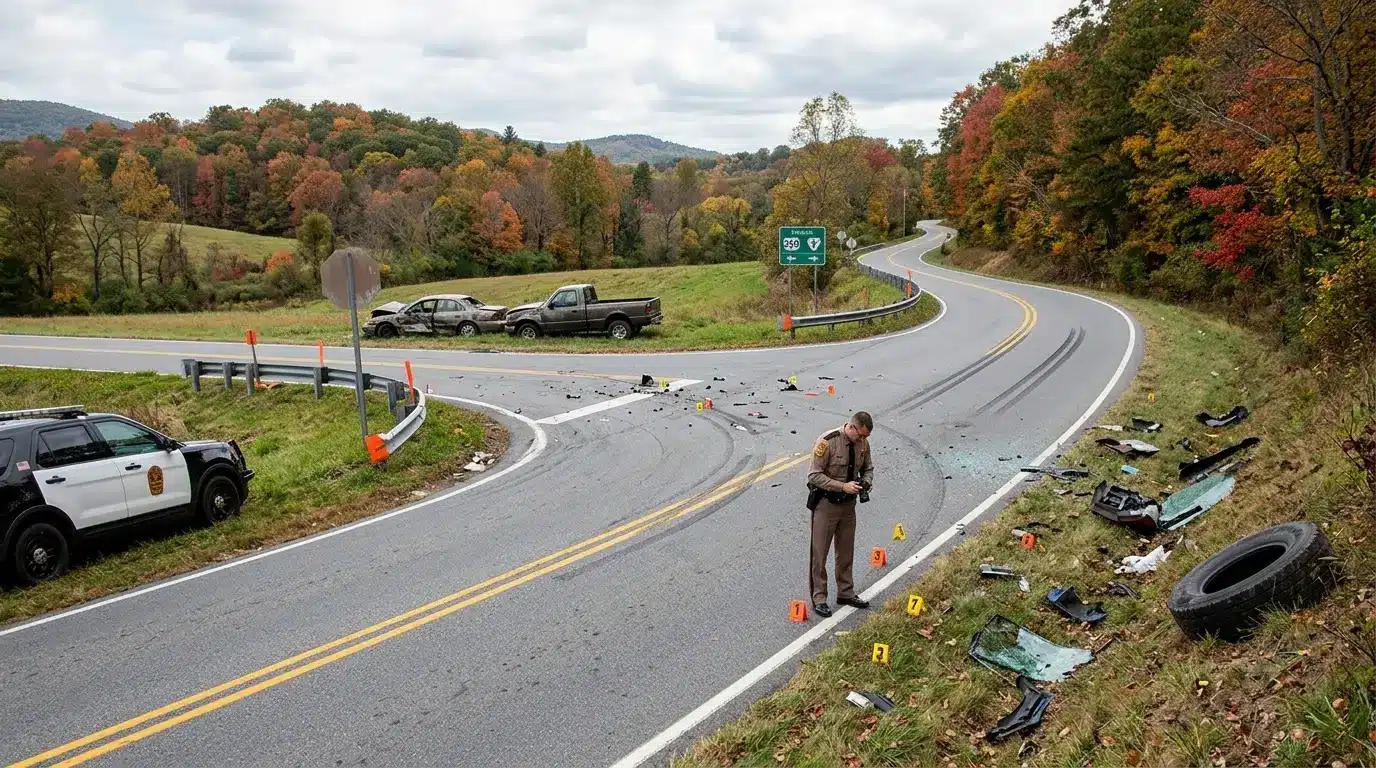
Virginia has a history of high numbers of yearly highway fatalities. According to Virginia DMV statistics, these deaths happen on every type of roadway but are disproportionately common in rural areas, even though there are far fewer vehicles traveling on these roads compared to urban areas.
Types of Accidents
In Virginia, the laws regarding traffic and accident reconstruction are categorized into four primary structural configurations of traffic accidents. Each configuration has its distinct liability patterns and injury profiles.
- Rear-End Collisions: A rear-end collision occurs when a trailing vehicle hits the rear of a leading vehicle. A rear-end accident is often caused by one or all of the following: the trailing driver tailgating, the leading driver stopping suddenly, or the trailing driver being distracted. In Virginia, the rear driver is almost always held responsible for the accident.
- Head-On Collisions: Head-on collisions are among the most dangerous crash types, involving two vehicles travelling in opposite directions colliding front-to-front. The potential for serious injury or death is very high due to the tremendous amount of kinetic energy produced from this type of crash.
- Side-Impact (T-Bone) Crashes: Side-impact or T-bone accidents occur when the front of one vehicle hits the side of another vehicle. Side-impact accidents commonly occur at intersections, and the side of each vehicle provides the occupants with little protection from the impact of the two vehicles colliding.
- Rollover Accidents: Rollover accidents occur when a vehicle rolls over onto its side or its roof, usually due to a high-speed turn or an object or obstacle in the roadway. The high number of fatal accidents caused by rollovers is largely due to the tremendous force generated by the rollover event.
Types of Fatal Crashes
The roads in Virginia have many different high-risk accident scenarios that cause catastrophic car accident Virginia and injuries to drivers, passengers, and pedestrians.
- Fatal Truck Accidents: In the case of fatalities involving commercial motor vehicles, the size of the vehicle (up to 80,000 lb) creates an incredible energy transfer upon impact, making the injuries severe and catastrophic.
- Pedestrian Fatal Accidents: In pedestrian fatal accident Virginia, the cause of the pedestrian death will be based on the driver’s failure to yield, distracted driving, or speeding in residential areas, and the pedestrian has suffered catastrophic injuries due to the lack of any kind of protection.
- DUI Fatal Crash Virginia: When drunk driving causes the death of an individual, the driver faces huge criminal penalties, like DUI manslaughter under Virginia Code § 18.2-36.1, and the beneficiary left behind must seek a separate civil wrongful death claim to recover the losses they suffered.
- Multi-Vehicle Fatal Crashes: Chain-reaction crashes or multi vehicle fatal crash Virginia on interstate highways, result in complicated liability issues involving multiple drivers due to the need for thorough accident reconstruction to comply with Virginia’s tough contributory negligence laws.
Deadly Crash Investigation Virginia And What Happens After a Fatal Wreck
When law enforcement investigates a deadly crash investigation Virginia, they do not just take statements from witnesses and write a report. Fatal crashes cause multi-agency responses in which Virginia State Police or local police may use one of their crash reconstruction units to assist in the investigation.
The scene where the fatal crash occurred will be treated like a crime scene, where they will take measurements, preserve physical evidence, document any tire skid marks, and impound the vehicle for mechanical inspection, and they will download all electronic data (EDR/black box) from all vehicles involved in the crash.
Fatal Wreck Liability Virginia: Negligence, Compensation and Rights
To pursue a car accident death claim Virginia, you must establish that the negligent driver caused the death of the person who was killed on the road. If found to be even slightly at fault, recovery of damages is barred by Virginia’s strict pure contributory negligence rule, so getting experienced legal counsel right away is crucial.
Wrongful Death Claims and Compensation
Virginia Statute § 8.01-50 to § 8.01-56 regulates the law on negligent driving death Virginia cases. Statutory beneficiaries, e.g., spouses, children, and parents, can recover Virginia accident death compensation, including the following:
- Pre-death medical expenses and the expenses of the funeral.
- Lost income of the deceased
- Loss of companionship, care, and comfort because of the death
- Punitive damages in cases of DUI or gross negligence.
What Not to Tell Your Insurance Company
Insurance companies will frequently use the data they obtain from policyholders to minimize payouts. To safeguard your claim, do everything possible to avoid the following common mistakes:
- Never admit fault and never give your opinion on what caused the accident.
- Don’t give a recorded statement unless your attorney is present.
- Don’t downplay your injuries or the circumstances of the death.
“My advice: always go for trial-ready lawyers such as ourselves. Experienced attorneys who will take a case to trial and have properly prepared their evidence. Adjusters know these attorneys will not accept low settlements. Therefore, having legal representation at the inception of your claim is essential.“ – Robert Tatum
Can a Car Accident Cause Sleep Apnea?
Yes. Accident-related TBI, as well as cervical spine injury, can clinically lead to obstructive sleep apnea. Many claims for wrongful deaths or claims for catastrophic personal injuries have this in the diagnoses in the survivor’s medical records as a direct consequence of the crash. Sleep apnea is a fully compensable injury for survivors in catastrophic injury and wrongful death claims.
Contact Tatum & Atkinson Law Firm For A Fatal Accident Attorney in Virginia

In Virginia, the legal process begins immediately after a person has died in a Virginia highway fatality accident. Virginia’s wrongful death law has a statute of limitations of two years, so witnesses may disappear shortly thereafter, and physical evidence may disappear just as rapidly. Fatal accident attorney Virginia at Tatum & Atkinson Law Firm represents wrongful death victims and their families after being injured or killed in an accident with passion, dedication, and the skills you deserve.
Knowing what is a fatal collision in Virginia is crucial to protecting your family’s rights; obtaining legal assistance to protect your family is of equal importance. We will provide a free consultation with you and your family regarding how we can assist you in resolving your wrongful death claims.
To schedule an appointment with a fatal truck accident Virginia lawyer, please call us at Tatum & Atkinson at 800-529-0804.
Frequently Asked Questions About Fatal Accidents in Virginia!
What should I do immediately after witnessing or being involved in a fatal car accident in Virginia?
Stop your vehicle and call 911 for assistance. You should not move an injured person unless there is immediate danger to that person. Document the scene, do not take responsibility for the accident, and consult a wrongful death lawyer.
Can police hold me at the scene after a fatal accident in Virginia?
Yes. Virginia law states that every driver involved in an automobile accident must remain on the scene and cooperate with law enforcement. If you do not comply with the police or leave without lawful cause, you’ll be charged with felony hit-and-run.
What happens if a driver leaves the scene of a fatal accident in Virginia?
According to Virginia Code § 46.2-894, if you leave the scene of a fatal accident, you may face a Class 5 felony and up to ten years in jail, and your license will be revoked. Leaving the scene of a crash will increase your civil exposure.
Can families request to see accident investigation reports after a fatal crash in Virginia?
According to the Freedom of Information Act, families and their attorneys are entitled to obtain investigative reports on incidents that occur within the State of Virginia; however, in some instances, certain parts of the report may be withheld from public view.
How long does a fatal accident investigation take in Virginia?
The time frame for an accident investigation varies but generally falls within a few weeks to months. DUI incidents can take longer; however, a good lawyer will follow up with your case until it is resolved and keep you updated.
Disclaimer: This blog is for general informational purposes only and not to be used as legal advice. If you need specific advice for your case, you should contact Tatum & Atkinson Law Firm directly at 800-529-0804.
