How Do You Prove Lost Wages In Virginia?
Key Highlights:
- How do you prove lost wages in Virginia? You will need to provide documents like pay stubs, W-2 forms, income tax returns, or a letter from your employer.
- You may not know that lost earnings include much more than just your regular salary; they will also include things such as overtime, tip income, bonuses, or commission income.
- If you are self-employed, then your tax returns, 1099 forms, and profit and loss statements will also be acceptable as evidence.
- Future earning capacity needs proof from experts to be included in your lost income personal injury claim.
- The collateral source rule in Virginia says that paid sick leave or disability benefits cannot reduce your lost wages.
- Shared fault under the 1% rule could bar you from recovering any damages.
When an injury prevents you from working, you may be missing paychecks quickly, and proving that will be another job altogether. When bringing a personal injury claim in Virginia, you won’t automatically be compensated for lost wages because you have mentioned missing work; you must prove that the missed time was actually productive time and provide wage loss documentation to support that.
In this blog, our experienced team at Tatum & Atkinson Law Firm will explain exactly what constitutes lost wages in Virginia, how do you prove lost wages in Virginia, how to handle lost wages claims for self-employed individuals and permanently injured workers, and the regulations that govern these types of claims in Virginia.
Don’t let lost income derail your financial future. Contact our experienced Virginia personal injury lawyer at (800) 529-0804 today for a free consultation to ensure you recover every dollar you deserve.
What is Lost Wages in a Virginia Injury Claim and How To Recover Them
When an individual gets injured, they suffer from lost wages due to a loss of potential earnings during recovery. People think only about the direct loss of wages from missed paychecks; that’s not correct. The law considers more than just direct losses.
Lost Wages vs. Lost Income vs. Loss of Earning Capacity Virginia
These three terms are often misused, but actually refer to distinctly different concepts.
- Lost Wages: Lost wages represent only the actual base earnings or hourly pay you missed out on.
- Lost Income: Lost income is a broader perspective and includes base pay, overtime, etc.
- Lost Earning Capacity: Lost earning capacity looks forward into the years and assumes the injured person will not have as much earning potential going forward as they did before they were hurt, because a permanent injury will keep them from working.
When You Can Recover Lost Wages
To be compensated for lost wages, you must prove a direct link between the negligence of another party and your injury that prevented you from working. You must prove that the length of time you were unable to work is directly related to the reason you were unable to work and not because you simply chose to stay home.
How Do You Prove Lost Wages in Virginia: Evidence Required

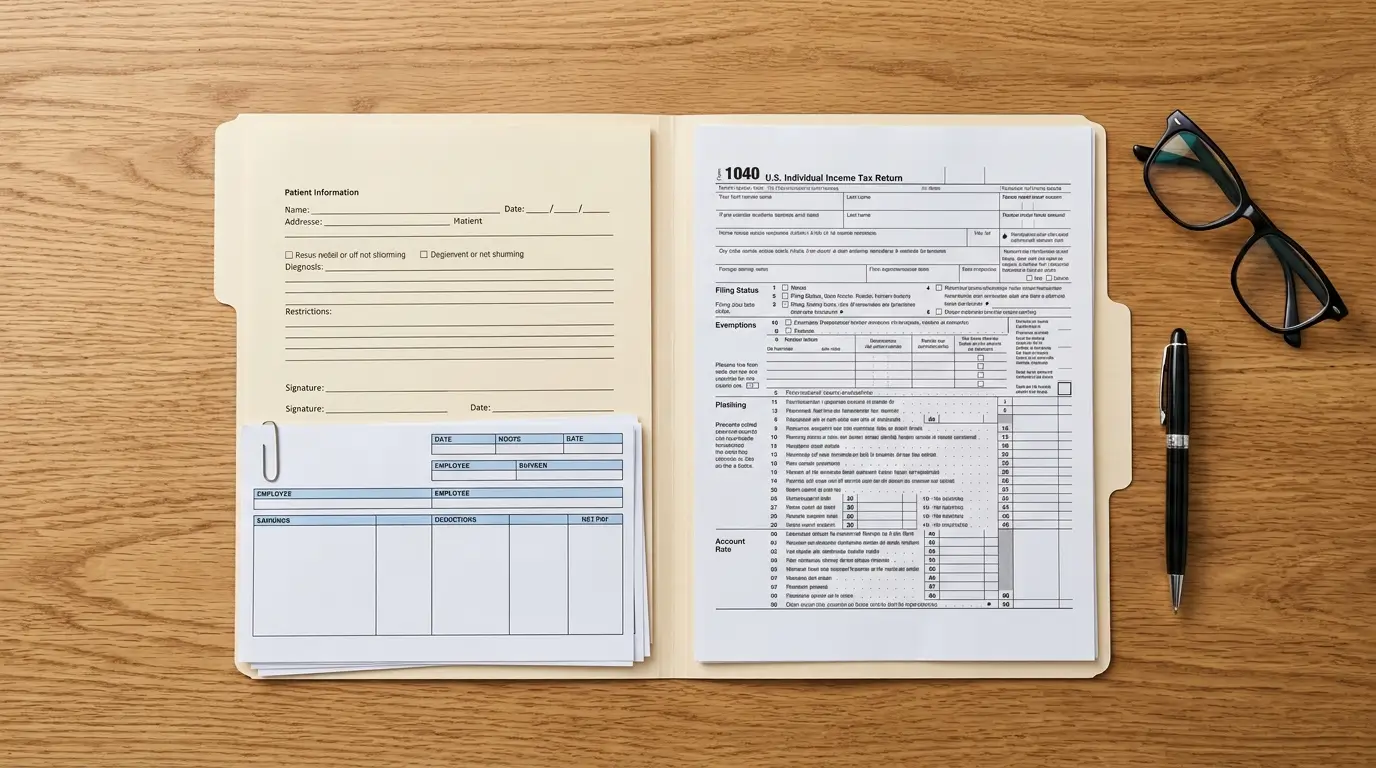
Proof of earnings prior to your accident forms the basis for your claim. You will need recent pay stubs, W-2 forms, and tax returns, along with a letter from your employer that provides your position, pay rate, normal schedule, and actual dates missed due to disability.
Medical Documentation Linking the Injury to the Time Off
While employment records will show what you lost in earnings, medical records will show why. Medical notes from your physician that support a diagnosis and outline your work restrictions/limitations will directly connect the loss of pay to your car accident. If the insurer does not have this documentation, they can argue that your time off was not justifiable.
Proof of Overtime, Bonuses, and Commissions
Variable compensation is often overlooked when filing the claim. The individual will need to provide their normal work schedule along with W-2’s from the last tax year, statement of commission earnings, and sales records in order to verify their entitlement to overtime, bonuses, or commissions.
Proving Lost Income When You’re Self-Employed
It is much more difficult for self-employed individuals and contractors to prove lost wages Virginia because there is no check from an employer that provides verification. However, that does not mean that the income is not valid.
The Internal Revenue Service has information on your previous tax returns, Schedule C forms, 1099s, and profit/loss statements to determine what your income is. You can also provide invoices for completed work, signed contracts for future work, evidence of work you turned down, and a list of jobs that you missed to help support your claim.
When you fluctuate in income from month to month, having all of these past records along with your past taxes and possibly using a forensic accountant, will provide the most accurate average for providing self-employed lost income proof of your income.
Proving Future Losses and Diminished Earning Capacity
If you have an injury that does not completely heal and you cannot return to your previous level of employment (whether it be the same job title or work hours), you can make a claim for future loss of earnings in Virginia. Loss of earning potential is the primary component of any serious personal injury claim.
The Experts Who Prove It
It is no different when calculating for future loss of income than it would be for any other item on a claim. The determination of lost future earnings will include testimony of your treating physician as to how the injury has created permanent limitations; that vocational experts evaluate what type of work you can still perform; and that economists evaluate and indicate the dollar difference between what you would have earned and what you will now be able to earn during your expected working life.
Why Gross, Not Net
One area that surprises many clients is that Virginia bases lost-income calculations on the plaintiff’s gross income (before taxes) rather than net income (after taxes). This significant difference in how lost income is calculated can greatly affect the amount of any claim.
Virginia Laws That Shape a Lost-Wage Claim
To regain lost income in Virginia, you need to navigate tough laws, including provisions safeguarding your alternative benefits, tough liability rules, and strict chronological constraints.
The Collateral Source Rule
The Collateral Source Rule is something the insurance company wishes you were unaware of. Under Virginia Code § 8.01-35, your lost earnings will not be diminished because you received benefits from another source, whether it was sick days, PTO, short-term disability, or your own insurance. Also, the party responsible for your injuries is prohibited from telling the jury that you received those benefits; you have earned those benefits, and the person who injured you receives no credit for them.
The 1% Contributory Negligence Rule
Virginia is one of the few pure contributory negligence states in the country. Therefore, if you are found to be even 1% negligent for the accident, you will not be able to recover anything, including lost wages. Therefore, the defense will try to find any evidence to prove that you were negligent, regardless of how strong your evidence is to prove that your wages have been lost.
The Two-Year Deadline
In Virginia, you will typically have two years from the date of your injury to file a lawsuit under Virginia Code § 8.01-243. This time limit of two years is shorter than some states are nearby. Additionally, filing suit quickly will greatly improve the chances of having wage and medical evidence collected.
How Insurers Dispute Lost-Wage Claims
Insurers will try to use various strategies against you; they will claim your absence from work was not due to a medical reason, that you could have returned part-time, or that your prior medical condition caused your inability to work (not the accident).
How an Attorney Documents the Loss
The way to counter each of these defenses/arguments is through documentation.
- An attorney will gather documents detailing your earnings and tax history
- They will compile multiple expert medical opinions supporting your inability to work due to the injury or disability
- They will gather reports from vocational or economic experts regarding future wage loss
- They will present your past income on a gross basis (before taxes)
They will do so in a way to minimize the chance of being successful at the 1% defense/argument, which could lead to the denial of your claim. The Heavy Hitters attorneys know precisely where the insurers attack a wage loss claim.
Other Financial Losses You May Recover
In most instances, the damages caused by lost wages are only one part of the total damages resulting from an injury in Virginia.
There are other damages, such as lost medical and retirement benefits, out-of-pocket expenses related to travel to your doctor or buying supplies used for your recovery, the cost of paying someone to do the work you can no longer do, and non-economic damages such as pain and suffering and inconvenience.
Recover Every Dollar You’ve Lost: Let Tatum & Atkinson Fight for Your Wages

While you are recovering, missed paychecks because of an injury can add up quickly. On top of that, insurance companies love to be picky about wage loss claims. You don’t have to worry about “How do you prove lost wages in Virginia” by yourself. With us, figuring out where you stand is free.
Tatum & Atkinson has been helping injured people throughout Virginia since 2006. Jon Ward is an attorney who can help you understand how to overcome difficult defense strategies, with documentation of every dollar you are entitled to receive.
Call (800) 529-0804 for a no-obligation free consultation today; we work on a contingency basis, which means you will not owe us anything if we do not win your claim.
Frequently Asked Questions!
Can I claim lost wages if I used sick days or PTO to cover the time off?
Yes. Under Virginia’s collateral source rule, the fact that you received sick leave, PTO, or disability payments does not reduce the amount that the party at fault owes you, nor do they get to mention it to the jury. Since those were benefits you earned. The wrongdoer does not get credit for these payments.
What if I’m self-employed and my income changes month to month?
The good news is that recovery is possible. You have at least a couple of years of tax returns, 1099s, and profit-and-loss statements to establish your average income. A forensic accountant can help when your income has a lot of swings. Contracts and invoices for work you lost will help fill in the gaps.
The insurer says I was partly at fault. Does that affect my lost wages?
The bad news is that Virginia’s 1% rule prevents you from recovering anything if you are found to be even 1% at fault, including wages. Fortunately, a well-documented wage claim should be vetted by an attorney to prepare for the blame game.
What does it cost to hire a lawyer for a lost-wage claim?
There is no requirement to pay any upfront amount. The cases are done entirely on contingency, which means the only way to pay an attorney is if there is a recovery. Also, our initial consultation will be at no charge.
Will I have to go to court to recover lost wages?
Often, not. Many claims settle after gathering sufficient documentation. However, if the insurance company contests the claim or the amount of injuries claimed, being prepared to go to trial is often the catalyst for resolution.
