What Is Insurance Bad Faith In Virginia?
Key Highlights:
- If you are interested in learning more about what is insurance bad faith in Virginia , this involves an insurance company breaching the law through unreasonable delay, denial, or underpayment of a valid claim, intentionally, to the detriment of someone that they insure.
- Virginia Code § 38.2-510 states that insurers shall not refuse to respond to any communication, fail to investigate the claim, or slash an adjuster’s loss estimate by $3,000 or more without providing a written explanation of the itemization of the reduced amount of loss to the insured.
- You may recover damages over and above the limits of your policy under a successful bad faith action, including but not limited to consequential damages, payment of your attorney’s fees, and up to an additional $500,000 for statutory double damages.
- Breaches of a standard written policy are subject to a five-year limitation period in Virginia; statutory bad faith claims can restrict your window to file a lawsuit to just two to three years.
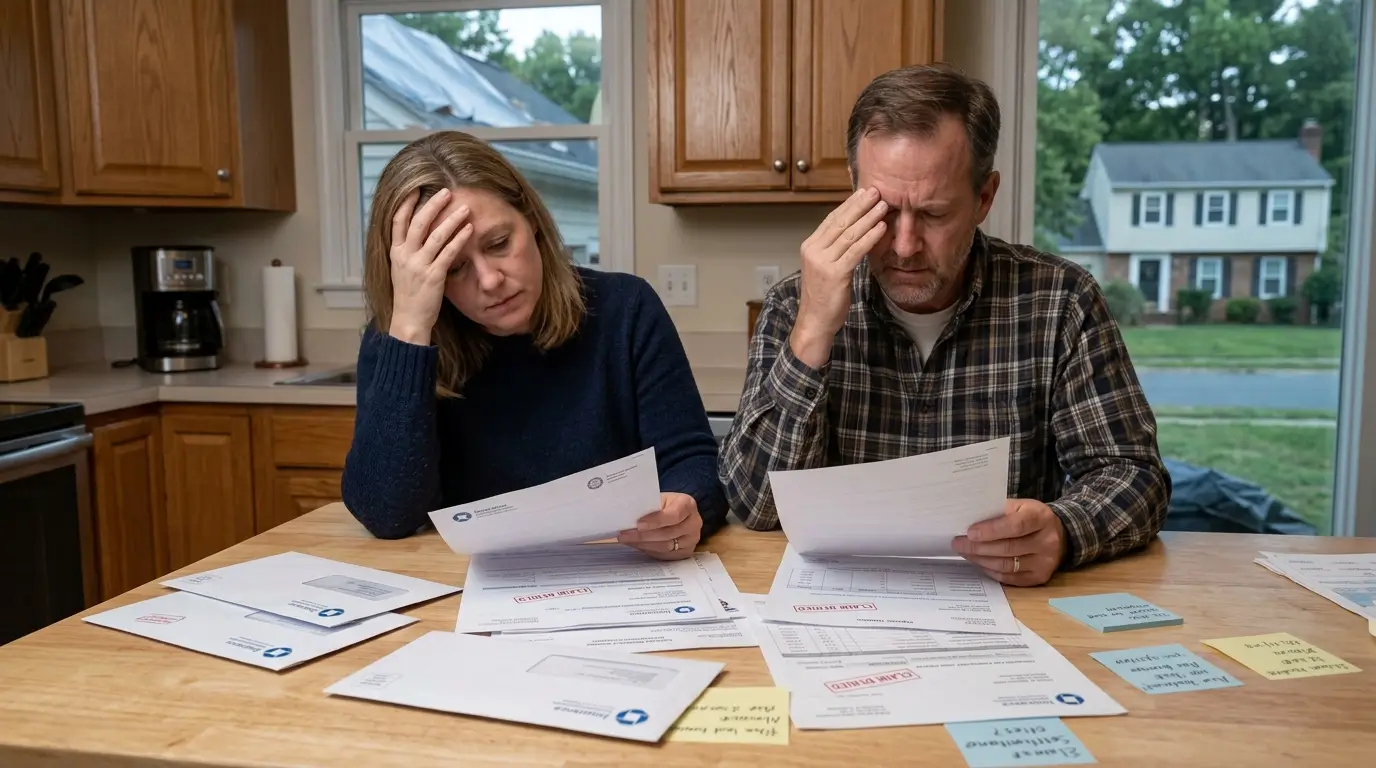
When you’ve been paying your premium, you expect your insurance company to keep its end of the bargain. Unfortunately, many policyholders in Virginia have faced wrongful insurance claim denial they should have received, experienced delays, or have received low-ball offers from the insurance companies that place their profits above your ability to recover. The first thing that you need to understand is what is insurance bad faith in Virginia, so that you can fight back.
At Tatum & Atkinson Law Firm, our lawyers know how to expose these corporate stall tactics. Therefore, if an insurance company delayed payment Virginia families depend upon to rebuild their lives, the team led by a veteran attorney at Tatum & Atkinson Law Firm has the expertise and determination to hold the insurance company to its legal obligations.
If you have not received the protection you deserve in a timely manner, please call Tatum & Atkinson Law Firm at (800) 529-0804 for a free consultation so that we can protect your rights.
What Is Insurance Bad Faith in Virginia
In Virginia, all insurance contracts contain an implied covenant of good faith (also known as an implied promise to deal fairly). This means that, under insurance bad faith Virginia law, insurers must research and evaluate every claim in good faith, investigate thoroughly, and make reasonable, timely payments.
“An act of bad faith occurs when an insurer acts with the intent to deny any obligation under the contract or fails to meet this basic obligation in a non-random, negligent manner.” – Robert Tatum
Certain conduct by insurers is regulated in Virginia by statute; specifically, the Unfair Insurance Practices Act (Virginia Code § 38.2-510). This law expressly distinguishes the conduct of a typical business negotiation from improper business practices and provides a clear line between the two. If your insurer has violated the prohibitions contained in Virginia law, they may be liable for damages in an amount in excess of the amount due under the terms of your contract.
When Can an Insurance Company Be Accused of Bad Faith?
Not every conflict over the value of a claim counts as bad faith. Insurers can enter into a genuine disagreement about coverage limits or damages. However, the conduct of an insurer crosses the line drawn by the courts against unfair insurance practices Virginia when it does not have a reasonable basis or does not act in good faith toward the rights of the policyholder.
The Virginia courts considered whether a reasonable insurance firm facing exactly the same situation would have done the same. If an insurer engages in self-serving, arbitrary interpretations, fails to communicate with the insured, or uses knowingly deceptive evaluation standards, it crosses the threshold of bad faith.
Can an Insurance Company Legally Deny Your Claim?
Yes, insurance companies have the legal right to deny claims for valid, substantiated reasons. Acceptable justifications include a policy that has lapsed due to no payment, a specific policy exclusion, or proof of material fraud.
However, the law prevents an insurer from denying a claim unless it has done a bona fide thorough investigation of the claim and has explained the denial in specific terms according to the language in the insurance policy. If you received a denial along with vague responses or no consideration of your documentation, you may have the basis to file a bad faith insurance claim Virginia lawsuit.
Why Do Insurance Companies Act in Bad Faith?
The modern insurance industry can be frustrating because it makes a lot of money by delaying claims, denying them, and underpaying them. In fact, insurance companies’ primary responsibility is to their shareholders and not to their policyholders. So, they will keep your money in the high interest they earn on their investment accounts for as long as possible and pay out as little as possible so that they can make the largest possible profits.
Insurance companies have hired many people to be corporate adjusters, risk managers and defense attorneys. Their goal is to try to get the lowest amount of money possible paid out for a claim. The insurance companies know that when they identify a policyholder as being unrepresented, under financial stress, and not knowing all of the complicated laws of the Commonwealth, they often take advantage of that weakness. They assume that you will get tired of dealing with all of the red tape that goes along with trying to collect on a claim and will either give up or take an unfair settlement.
Common Tactics: How Insurers Delay, Underpay, and Mislead
Insurance companies can practice bad faith in a variety of ways. There are thousands of adjusters and risk analysts at the disposal of insurance companies who are trained to increase profits for insurance companies, which leads to numerous known methods of unfair claims handling.
What Are Common Examples of Insurance Bad Faith?
Virginia policyholders report the most common violations:
- Not paying legitimate claims without conducting a fair, unbiased assessment of the claim
- Not answering emails/calls/letters within the legal time limit
- Misrepresenting the coverage of the policy or creating false exclusions of coverage to convince the policyholder that they do not have coverage
- Not approving or denying claims within a reasonable time after receiving the proof of loss
How Do Insurance Companies Delay or Underpay Claims?
To avoid paying out claims, insurers are notorious for using strategy and delay tactics. The longer they can keep you from receiving what you are owed, the more likely they will convince you to accept a lower amount than your claim is worth.
When delaying payment on a claim, an insurance company may do any or all of the following: request duplicate documents from you multiple times; assign an overworked adjuster who does not look at your file; or take their time with an internal review that could go on indefinitely while you struggle to meet your financial responsibilities.
If they do pay you for your claim, they will often use outdated software for calculating the cost of repairs; dispute the severity of injuries that a physician documents; or, to make sure they do not pay you for the actual cash value of your loss, use depreciation calculations that are grossly inaccurate and disproportionately high.
Can Bad Faith Apply to Auto, Home, and Health Insurance Claims?
Absolutely. Bad faith rules apply to all standard types of insurance in Virginia.
- Auto Insurance: The car insurance bad faith lawsuit Virginia filed by the drivers arises when the insurer denies a legitimate claim (within policy limits) or rejects a valid Uninsured/underinsured motorist (UM/UIM) coverage claim. Specifically, Virginia Code § 8.01-66.1 prohibits an insurer from rejecting a reasonable offer of settlement if it appears that there is clear and convincing evidence of wrongful conduct on behalf of another party to the accident.
- Property Insurance: Home insurance bad faith claim Virginia often involves the alleged undervaluation of property damage after a fire or storm, or the alleged incorrect assertion that a specific type of water damage is not covered under the homeowners’ policy.
- Health and Disability Insurance: Examples of bad faith claims in this area include an insurance company denying coverage for medically necessary, pre-authorized procedures or terminating benefits under a long-term disability policy without conducting an independent medical review.
Does Virginia Law Protect Policyholders From Unfair Practices?
Yes. Under the Unfair Trade Practices Act (Virginia Code § 38.2-510), consumers are protected from insurers cutting back or eliminating their claims. When a claim is reduced by a minimum of $3,000, under this law, the insurer must issue to the claimant a written itemized document containing the reason(s) for the claim reduction, along with the name of the person who authorized said reduction.
State Corporation Commission’s Bureau of Insurance regulates and enforces the laws against the companies listed above through administrative fines; however, they do not have the authority to require companies to pay your personal damages. If you want to collect the amount you are owed, you need to file a private lawsuit with a Virginia insurance dispute attorney experienced in handling insurance disputes.
Building a Case: Evidence, Litigation, and Compensation
Evidence is critical to making an insurance carrier legally accountable for its bad faith conduct. The most potent type of evidence is the paper trail of evidence designed to establish the carrier’s bad faith liability.
What Evidence Helps Strengthen a Bad Faith Insurance Case?
The most powerful types of evidence usually fall into the following types:
- The Certified Claims File: Internal notes, adjuster entry logs, and reserve information found in the certified claims file provide essential insight into when the insurance company fully understood that it was liable for its insured’s loss.
- All Written Correspondence: Sending emails, letters, and log notes that are clearly time-stamped is critical to creating a strong paper trail. Detailed notes of your calls to the insurance company are also essential forms of written documentation. .
- Independent Valuations: Documenting the extent of your financial damages, including independent, third-party repair estimates and medical bills, along with photographic proof to contradict the insurance company’s low settlement offers, can strengthen your evidence against them.
- Proof of Consequential Financial Harm: Showing evidence of the financial harm that the insurance company’s delay caused, including loss of business income due to the time it took the insurer to evaluate your claim, or interest on your personal loans or lines of credit accumulating while the issuer failed to timely investigate and pay your claim.
How Can You Prove Insurance Bad Faith in Virginia?
To establish bad faith, one must show that there was no reasonable basis for the insurer’s actions and that they acted in bad faith by failing to realize the consequences of their actions or their decisions affecting the insured. An experienced Virginia insurance dispute attorney will carefully review the insurer’s actions as compared to accepted industry practices, statutes, and regulations, and their internal claims handling policies in order to establish that the insurer has acted willfully outside the duties appropriately owed by the insurer to the policyholder.
Can You Sue Your Insurance Company in Virginia?
If you are asking yourself, can I sue my insurance company in Virginia, the answer is yes. You are able to commence a lawsuit against an insurance company under Virginia law for either breach of contract or specific statutory violations. Recent legislative changes in Virginia have provided an increased number of means available to Virginia policyholders to pursue punitive damages, attorney’s fees, and additional damages against an insurance company that has acted in bad faith.
What Compensation Can You Recover in a Bad Faith Claim?
If you win your wrongful denial case against your insurance company, the damages you receive are not limited to the value of your original claim under your policy. You could receive the following:
- Original claim amount after resolving any disputes over the claim amount.
- Consequential damages such as lost income from being unable to work due to the fault of your insurance company, e.g., losses incurred from a delay of the insurance contract.
- Reasonable attorney’s fees and all other costs associated with your litigation as provided by Virginia’s Code Section § 38.2-209.
- Statutory double damages (up to $500,000) for any claims for bad faith handling of motor vehicle insurance claims under Section 8-01-66.1 of Virginia’s State Code.
How Long Do You Have to File an Insurance Bad Faith Lawsuit?
The timeframe to file a bad faith claim is an important factor to consider. In the state of Virginia, there is a five-year limitation for breach of contract claims related to written insurance policies; however, bad faith claims or consumer protection claims under Virginia law can sometimes fall under a two- to three-year limitation.
Additionally, your specific insurance policy may contain its own deadlines, which can be shorter than those of Virginia law. If you miss any of these deadlines, you will not be able to pursue compensation. Therefore, obtaining assistance from a Virginia insurance claim denial lawyer early in the process is essential to preserve your claim for recovery.
What Should You Do After an Insurance Claim Denial?
When your insurance company makes an incorrect denial or puts your claim on hold, the steps taken right after the request for payment is crucial to protecting your rights:
- Request a Written Explanation: Insurers must provide detailed written reasons for denying claims, including specific references in their policy documents.
- Keep Records of all Communications: Maintain records of all communication with your insurer, including email, text message, letter, and voicemails. Additionally, maintain a separate notebook with dates, times, and summaries of calls made to the adjuster or insurance carrier.
- Get Independent Valuations: Obtain independent estimates from qualified contractors for repair work or comprehensive medical evaluations from your health care providers by treating physicians to compare against the insurer’s low offer.
- Do not Sign Releases: Never sign a liability release or accept a “final” partial checks unless you have obtained legal advice beforehand.
- Consult Legal Counsel: Contact a qualified Virginia insurance claim denial attorney to review the denial letter and develop a full plan for appealing the denial or pursuing a lawsuit against the insurer.
Frequently Asked Questions About Insurance Bad Faith!
Is it hard to win a bad faith claim?
They can be tricky because of the level of legal resources insurance companies have at their disposal and how policyholders bear the burden of proof. To win, you will need to show that the conduct of your insurer was wholly unreasonable and not just a clerical error.
Can insurance companies delay payment in Virginia?
Virginia law requires that insurance companies acknowledge insurance claims in a timely manner and conduct comprehensive investigations in a reasonable amount of time. Using unreasonable delays to gain a financial benefit is often evidence of actionable bad faith.
What happens if an insurer refuses to investigate my claim?
Insurance companies are in flagrant violation of Virginia Code § 38.2-510 if they refuse to conduct a reasonable investigation before denying a claim. This type of conduct exposes insurance companies to lawsuits alleging bad faith and allows you to collect damages.
What is considered an unfair insurance settlement practice?
Unfair claims practices under Virginia law include misrepresentation of coverage, failure to communicate the status of the claim, refusing fair settlement where liability is clear, and utilizing low-ball offers to force policyholders to file a lawsuit in order to collect the money they are owed.
How long do insurance claims usually take in Virginia?
The industry standard for insurance claims is to respond within 10 days and resolutions within 45 days; complex cases take more time. If a claim has been outstanding without a reasonable explanation longer than these time frames, it may indicate bad faith conduct.
Connect With a Virginia Insurance Bad Faith Lawyer Today
Insurers will benefit from not only refusing to pay claims but also from denying, delaying, or underpaying those claims. However, if you do not challenge this type of behavior, it is easy for an insurer to take advantage of you as a policyholder. If you have attempted to contact your insurance company’s corporate reach adjusters without result or have been denied your claim or not been compensated as initially agreed upon, our experienced insurance bad faith lawyer Virginia can help level the playing field for you.
Understanding what is insurance bad faith in Virginia is gives the policyholder the power to step up and take charge of their circumstances and receive all the money to which they are entitled. Our legal firm, Tatum & Atkinson Law Firm, operates according to a strict contingency basis, so we charge no fees or costs to our clients unless we have been successful in pursuing your case and obtaining compensation on your behalf.
We invite you to call us at (800) 529-0804 to arrange a free no-obligation consultation to discuss your case.
