Do Big Trucks Have Black Boxes And What Does That Mean For My Case In Virginia?
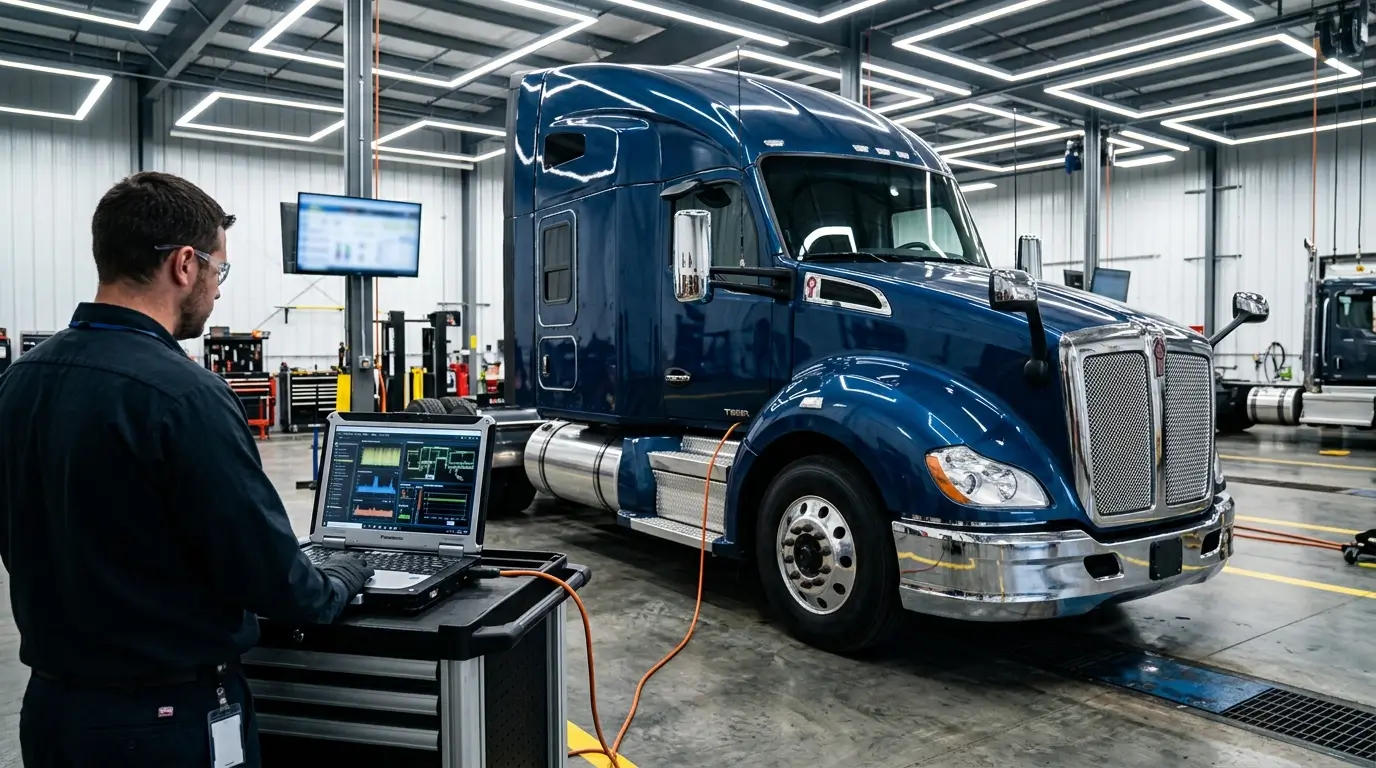
Highlights on Truck Black Box Data in Virginia
- Truck black boxes information stored in commercial vehicles reveals the whole story of what led up to an accident, provided that someone acts quickly enough to preserve it.
- Not a single truck black box; several components on the truck hold this information.
- The most valuable crash information will likely be found in the Engine Control Module.
- This electronic evidence may be erased within days if no one takes steps to preserve it.
- Objective black box data can make a difference under Virginia’s 1 percent rule.
Is the truck black box data in Virginia an important piece of information? Yes. Nearly all big trucks have data recorded electronically, just not in the convenient truck black box that comes to mind. In a Virginia truck accident investigation, this black box data may be your best objective account of what occurred, provided it is preserved.
My name is Robert Tatum, founder and managing partner of the Tatum & Atkinson Law Firm. Since 2006, my veteran-owned law firm has amassed more than 65 years of combined experience dealing with Virginia truck black box data and investigations of truck accidents.
With me as your Virginia truck accident lawyer, you will know precisely how to preserve black box information using a preservation (spoliation) letter, conduct a CDR download, and apply accident reconstruction principles to recover all that our clients deserve.
What an “Automotive ‘Black Box’” on Trucks Is
“Truck black box” refers to three systems rather than one. These three include the following:
- Engine Control Module (ECM): the truck’s engine computer, where most accident-relevant data is kept.
- Event Data Recorder (EDR): the crash-data recording system, usually located inside the ECM / EDR / ECU.
- Electronic Control Unit (ECU): the generic name for the onboard computers controlling the vehicle.
Passenger cars have an Event Data Recorder that complies with the federal standard of 49 CFR Part 563 (light-vehicle EDR standard) for light vehicles. In contrast, trucks do not comply with this standard and are not subject to any requirement for the uniform recording of the data.
What the Data May Provide
In case of a triggering event, usually the sudden decrease in wheel speed, the system will be able to record the following:
- Speed and deceleration of the vehicle.
- Use of brakes, seat belt use/fault codes/throttle.
- Engine RPMs, cruise control use, and seat belt use, where available.
- Seat belt use/fault codes/throttle and driver actions before the accident.
Why the Data Disappears and How It Is Preserved
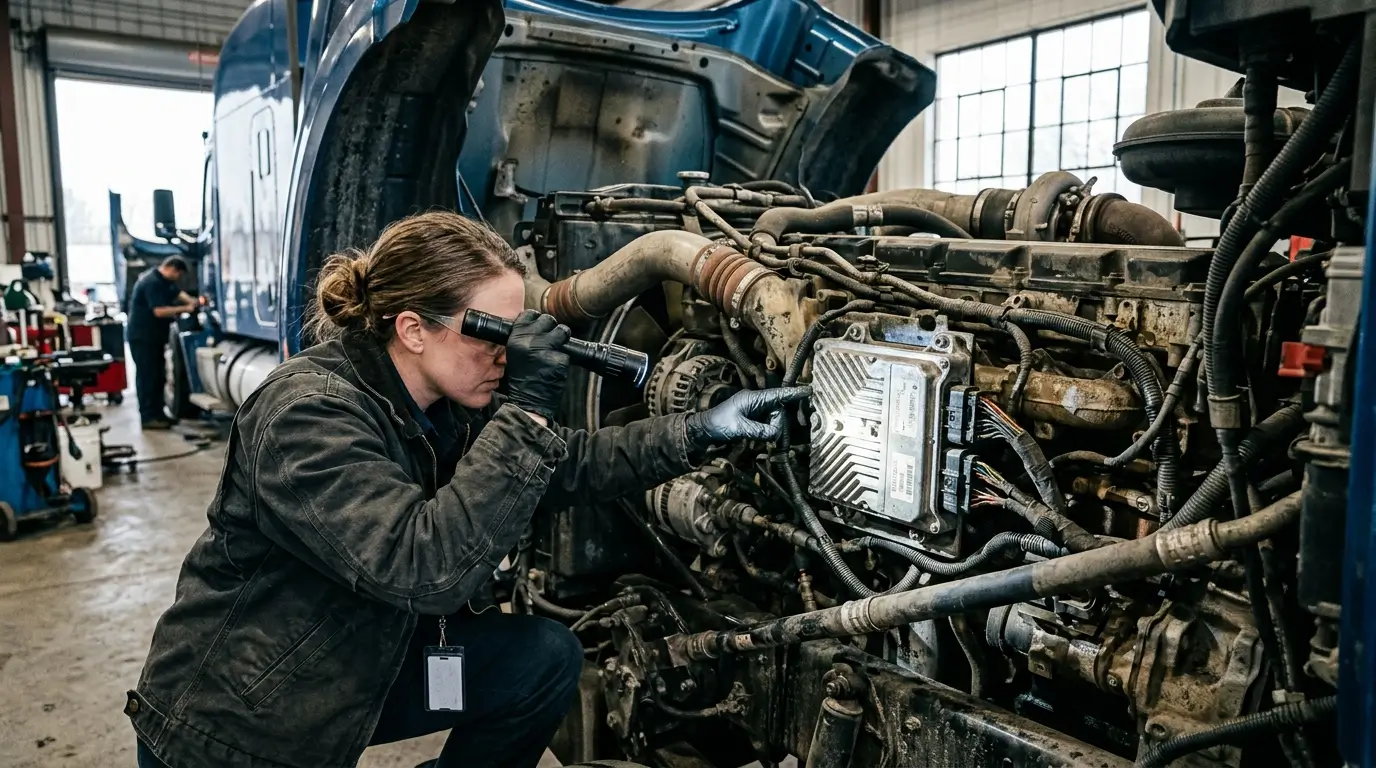
This electronic evidence does not wait for you. Many short records are updated continuously through further driving, a tow, a repair, or another sudden braking incident, and some systems save only the last incident or two through a data overwrite / rolling event log. The crucial record could vanish within a few days.
The first step in dealing with a truck accident is sending a preservation (spoliation) letter to the trucker’s company, its insurer, and the telematics provider, requesting that the truck and its black box data be preserved. And it must be done right, with a properly qualified person pulling it using the manufacturer’s software and documenting the chain of custody; otherwise, the data may be incomplete or open to challenges.
How the Data Turns Into Evidence
When the black box data has been saved, it goes to the forensic / reconstruction expert who will reconstruct it in the proper context. The numbers will carry the most weight when they match with other evidence:
- Police report of the crash.
- Statements from witnesses.
- Dash cam footage or nearby surveillance camera videos.
- ELD, GPS, and dashcam corroboration logs.
The testimony from the speed reading that correlates with the skid marks and the eyewitness is difficult for the defense to dismiss.
For anything in it to be admissible in a trial, there is an essential need for the electronic evidence to be documented, authenticated, and analyzed through a Crash Data Retrieval (CDR) download, and that is precisely where the expert analysis becomes as important as the downloaded material.
What Black Box Data Cannot Do in Virginia?
Black box data is a great tool, but it does not record events as if it were video. It records a limited time period and is subject to technical limitations, where the recording device failed to record when the driver began braking and steering.
Nonetheless, such electronic evidence can play a pivotal role in Virginia since the jurisdiction practices pure contributory negligence / 1% rule, where a plaintiff cannot recover damages if they are found to be even 1 percent responsible for the accident; hence, in a case involving contested liability, the issue comes down to solid statistics.
In a situation where the truck’s engine control module has recorded that it was speeding and had not applied its brakes, such evidence will refute claims of any share of the blame being assigned to you.
Injured in a Commercial Vehicle Accident in Virginia? Contact Tatum & Atkinson!
A computer in a commercial truck may contain the most accurate description of what happened; however, it may also be one of the first things to go. Tatum & Atkinson, your trusted Virginia truck accident lawyer team, has offices in Cedar Bluff, Virginia, which handle truck accident investigation cases in southwest Virginia, with Virginia cases being handled by Robert Tatum, a Virginia-admitted attorney.
The Heavy Hitters act quickly to retrieve all the necessary black box data from the truck’s computer and assemble the facts. Contact (800) 529-0804 for a free consultation. We handle all cases on a contingency basis. If we don’t win, you owe us nothing.
FAQs: Do Big Trucks Have Black Boxes? And How Does This Help My Virginia Truck Case?
Who owns the black box data, and can I just ask for it?
The black box data is owned by the owner of the truck, usually a trucking company, not you; therefore, it could become an issue in the very beginning. It is not something you can just demand; it would be made available through the consent of the company, a court order, or discovery. The owner of the truck has no reason to keep the adverse electronic evidence.
How quickly do I need to act to save the data?
Fast. Some of this black box data may be erased within days through data overwrite / rolling event log, just by driving, towing, or repairing the truck. Therefore, the preservation (spoliation) letter and downloading demand should be made as soon as possible, not later than a week.
Can the trucking company erase or hide the data?
Once the company becomes aware of the significance of the black box data, there is a danger of facing legal consequences for losing it. Deleting adverse electronic evidence after the preservation (spoliation) letter demand may result in severe penalties from the court and the assumption that the lost information was indeed adverse. It is much worse to destroy the evidence than to produce it.
Is black box data enough to win my case on its own?
Rarely on its own. The black box data is just one powerful piece of electronic evidence, not the entire evidence, and it works best when integrated into the entire package along with the police report, eyewitnesses, video, and physical evidence found at the scene.
What does it cost to hire a Virginia truck accident lawyer?
No payment required up front. The contingent fee cases are handled on a pure contingency basis, meaning you don’t owe any money until your case is resolved under the two-year statute of limitations § 8.01-243, and even your consultation with us is at no cost to you. Contact a Virginia truck accident lawyer today. This is especially true concerning truck black box cases because you won’t incur any costs associated with storing the vehicle, analyzing the black box data, and having it reconstructed through accident reconstruction.
