How Much Insurance Is A Trucking Company Required To Have In Virginia?

Key Highlights:
- How much insurance is a trucking company required to have in Virginia depends on vehicle weight and cargo hazard level. The legal federal floor requires $750,000 for standard freight over 10,001 lbs and up to $5,000,000 as a base requirement for hazardous materials.
- Most commercial carriers will carry more than the minimum amount required for insurance, which typically includes primary liability, excess liability, and umbrella policies, for a total of at least $5 million.
- Interstate carriers must have an MCS-90 endorsement that guarantees that an insurer pays an injured party’s judgment against the carrier for the highway accident, as long as the judgment is below the federal minimum and there is a dispute over coverage.
- In Virginia, victims may not recover damages for their injuries if they are more than one percent at fault. Therefore, it is crucial to identify every possible layer of insurance so that the victim may collect maximum damages.
Victims of serious accidents caused by commercial trucks on Virginia highways often ask how much insurance is a trucking company required to have in Virginia. This is not only a financial concern; it is also the key to recovering all damages.
Knowledge of insurance limits for trucking companies in Virginia is necessary to determine whether or not you will be able to recover all damages related to medical bills, lost wages, and long-term care as a result of a serious accident.
The amount of insurance required by law will be determined by federal minimums, as well as by the state where the truck is registered, plus the additional amount of liability coverage that many commercial trucking businesses carry beyond their legal requirements. At Tatum & Atkinson Law Firm, we have decades of combined experience in dealing with such cases.
If you have been injured in a trucking accident, get in touch with our truck accident lawyers at (800) 529-0804 for further guidance.
How Much Insurance Is A Trucking Company Required To Have In Virginia
Virginia trucking company insurance requirements depend on whether a truck is involved in interstate or intrastate commerce. The Federal Motor Carrier Safety Administration (FMCSA) sets mandatory minimum federal trucking insurance requirements for trucks that transport goods across state lines, whereas for trucks that transport goods only within Virginia, the requirements are determined by state law and the Virginia Department of Motor Vehicles.
Federal law requires trucking company liability insurance Virginia to be as follows:
- Non-hazardous cargo carriers (GVWR of 10,001 pounds or more) must have at least $750,000 of liability insurance.
- Hazardous cargo (oil or radioactive) must be covered by at least $1,000,000 of liability insurance.
- Hazardous cargo (explosives and poisons) must be covered by at least $5,000,000 of liability insurance.
- Small cargo carriers (GVWR of less than 10,001 pounds) must carry at least $300,000 of liability insurance.
These limits are the minimum legal requirements for transporting products around the country, not what a typical commercial fleet would actually carry. Many large national carriers carry at least $5 million in total primary and excess insurance protection. The federal minimum requirements for commercial trucks were last revised in the 1980s and do not take into account the current levels of catastrophic injury claims. Therefore, it is critical to have a thorough understanding of commercial truck insurance coverage before accepting any settlement offer.
What Factors Determine How Much Coverage a Trucking Company Must Carry?
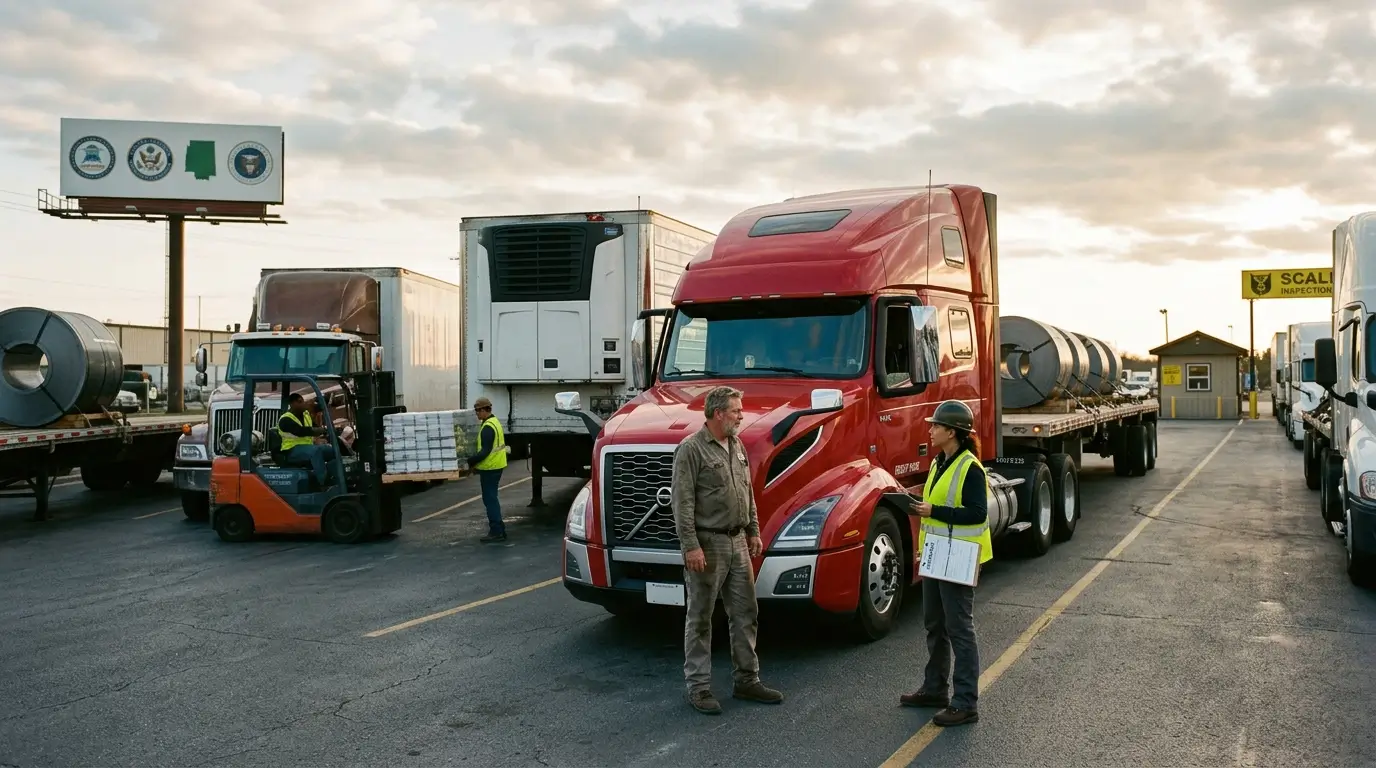
There are several factors that affect minimum insurance for trucking companies under Virginia and federal law:
- A vehicle’s Gross Vehicle Weight Rating (GVWR): The greater the weight of the vehicle, the more insurance is going to be required.
- Type of cargo being transported: Hazardous materials will normally make an insurance policy increase to six times the original amount.
- Interstate / Intrastate: Carriers that cross state lines have to follow the requirements set by the FMCSA, the Federal Motor Carrier Safety Administration. Virginia-only carriers are covered under Virginia’s state regulations, and both are regulated by the state in which they operate.
- Size and structural length of the carrier: A large fleet will be required to have a different plan under the federal regulations from an owner-operated one.
Take the example of an owner-operator hauling building material on a local run in Virginia compared to a tanker hauling flammable liquid(s) from Virginia to Tennessee and back. You can see how these are different risks from an insurance coverage perspective, and the available commercial vehicle liability coverage reflects those differences directly.
What Types of Insurance Policies May Apply After a Truck Accident?
One of the most critical factors regarding truck accident compensation Virginia is that multiple, sometimes many, different insurers may be liable to pay for damages. The visible primary liability insurance policy will often be just one of these many layers.
Examples of Insurance coverage after a truck accident include the following:
- Primary Liability Policy: It covers bodily injury and property damage to third parties. Primary liability policy is typically the first layer of coverage and usually the most significant portion of coverage.
- Excess and Umbrella Coverage: They may provide up to millions of dollars beyond the primary limits once they are exhausted.
- Cargo Insurance: It may include coverage for unsecured or overweight loads that contributed to the accident and, therefore, may involve the cargo insurer in the claim.
- Trailer Interchange Coverage: For any leased or exchanged trailers, the trailer owner’s insurer may carry separate obligations.
- Underinsured Motorist Coverage: Your own UIM policy may provide additional benefits beyond the trucking company’s insurance coverage if needed.
Because of how the commercial trucking industry is structured with respect to the carriers, brokers, shippers, and owner-operators, the ultimate trucking company accident liability will rarely be limited to a single policy or single entity. Therefore, determining each and every potential source of insurance coverage is critically important to the ability to receive full compensation.
How Coverage Levels Directly Affect Injury Compensation in Virginia
The relationship between Virginia truck accident claims and the insurance coverage available is vital. In Virginia, there is a very strict rule that says if an injured person is found to be at fault for their own injury, then they cannot receive compensation at all for their injuries. Therefore, having a strong case to prove that the truck driver was fully liable for the accident has to be the starting point for any claim. The size of the trucking company’s insurance then dictates the litigation strategy from the start of the case.
Insurers and their carriers have a tendency to settle when there is significant policy coverage instead of risking a jury verdict. On the other hand, when there appears to be limited coverage, an experienced attorney may look to see if third-party defendants, excess insurance policies, or other potential liability theories could provide an opportunity for additional recovery.
For victims suffering from spinal cord injuries, traumatic brain injuries, or the wrongful death of a family member, missing one layer of coverage could result in hundreds of thousands, if not millions, of dollars in compensable losses.
What Happens If a Trucking Company Lacks Adequate Insurance?
Many victims fail to anticipate inadequate coverage, especially from smaller carriers or owner-operated vehicles that do not have valid insurance policies. In Virginia, when insurance policies are insufficient to cover damages done to the plaintiff due to accidents, victims can pursue:
- Direct action against the trucking company’s assets if they have enough money to be able to cover costs.
- Claims against freight brokers or shippers who share liability.
- Claims against vehicle manufacturers, if any mechanical defects contributed to the accident.
- Use of their own auto policies for uninsured motorists.
Operating a commercial vehicle without the required insurance is a serious offense in Virginia and can negatively impact any punitive damages determined during court proceedings. At Tatum & Atkinson Law Firm, we will investigate all potential avenues of recovery until we have exhausted every potential source of recovery.
How Insurance Is Investigated After a Serious Virginia Truck Accident
As soon as a crash happens, trucking companies, as well as their insurers, are protecting their interests, resulting in the immediate need for injured victims to act in a similarly fast fashion. A thorough investigation of the insurance company’s criteria for how Virginia truck accident claims will be paid spans a very comprehensive checklist created for the sole purpose of locating every single dollar that can be obtained. This list requires:
- Obtaining public FMCSA filings and necessary MCS-90 endorsements.
- Issuing formal preservation letters so that the carrier and freight brokers will retain logs.
- Reviewing complicated lease and owner-operator contracts.
- Subpoenaing complete, unredacted insurance policy declarations.
- Consulting with accident reconstruction experts to determine liability.
MCS-90 is a mandatory endorsement required by federal law for all interstate trucking insurance policies. It serves as a backstop to ensure that injured victims can collect their damages from a trucking company even if they do not have insurance coverage at the time of the accident or even if the insurance company denies coverage to the truck driver involved in the accident.
A trucking company can later collect funds from an insurance provider or may have to sue the driver for reimbursement of the damages it paid to the injured party. To effectively utilize this tool, the investigator must have in-depth knowledge of the FMCSA’s compliance requirements. Tatum & Atkinson Law Firm immediately begins this investigation to preserve important evidence from being lost.
Talk to a Virginia Truck Accident Attorney To Get a Free Consultation

Truck accidents in Virginia are one of the most complicated areas of personal injury law, and knowing how much insurance is a trucking company required to have in Virginia is never simple. To recover fair compensation, an attorney must understand the intricate legal rules surrounding federal FMCSA minimums and know how to locate multiple overlapping policy limits.
Unfortunately, there are many instances where trucking companies do not have enough insurance to cover all injuries sustained by an injured party if their legal team doesn’t look deeper.
The way Tatum & Atkinson Law Firm approaches pursuing the maximum amount of money for clients is based on every layer of insurance coverage available and is done so in a manner that helps injured clients obtain full compensation for their injuries.
If you live in Virginia and were injured in a trucking accident, please call (800) 529-0804 today for free consultation with our expert lawyers.
Frequently Asked Questions!
Does the type of cargo a truck carries affect how much insurance is required?
Yes, trucks transporting hazardous materials have federally mandated minimum coverage amounts of at least $5 million, compared to the $750,000 minimum for traditional freight. The more hazardous the load, the greater the required amount of coverage under the FMCSA insurance regulations.
Can more than one insurance policy apply to a truck accident claim?
Many different types of insurance may apply in accidents involving truck drivers, including primary liability, excess coverage, cargo insurance, and trailers. When a truck driver leases from a carrier or is an owner-operator, they often have more than one insurance policy covering them.
What happens if damages exceed the trucking company’s insurance limits?
The victim or their family can pursue direct action against the company’s assets, claims against the freight broker, or use of the victim’s own underinsured motorist coverage. An attorney can assist in identifying the best way to recover compensation if insurance coverage is insufficient.
Are owner-operators subject to different insurance requirements than large trucking companies?
Owner-operator carriers generally fall under the coverage of their carrier’s policy per FMCSA requirements. Independent owner-operators will generally not have coverage through a carrier’s policy and, therefore, may have more complicated liability issues after an accident.
How can accident victims determine the amount of insurance available after a truck crash?
Coverage available after a truck accident can be determined by searching for FMCSA filings, MCS-90 endorsements, and declarations via discovery. An experienced truck accident attorney can quickly access appropriate documentation to determine what coverages were applicable at the time of an accident.
