What Should I Do If A Loved One Is In A Coma Because Of A Trucking Accident In Virginia
Key Highlights
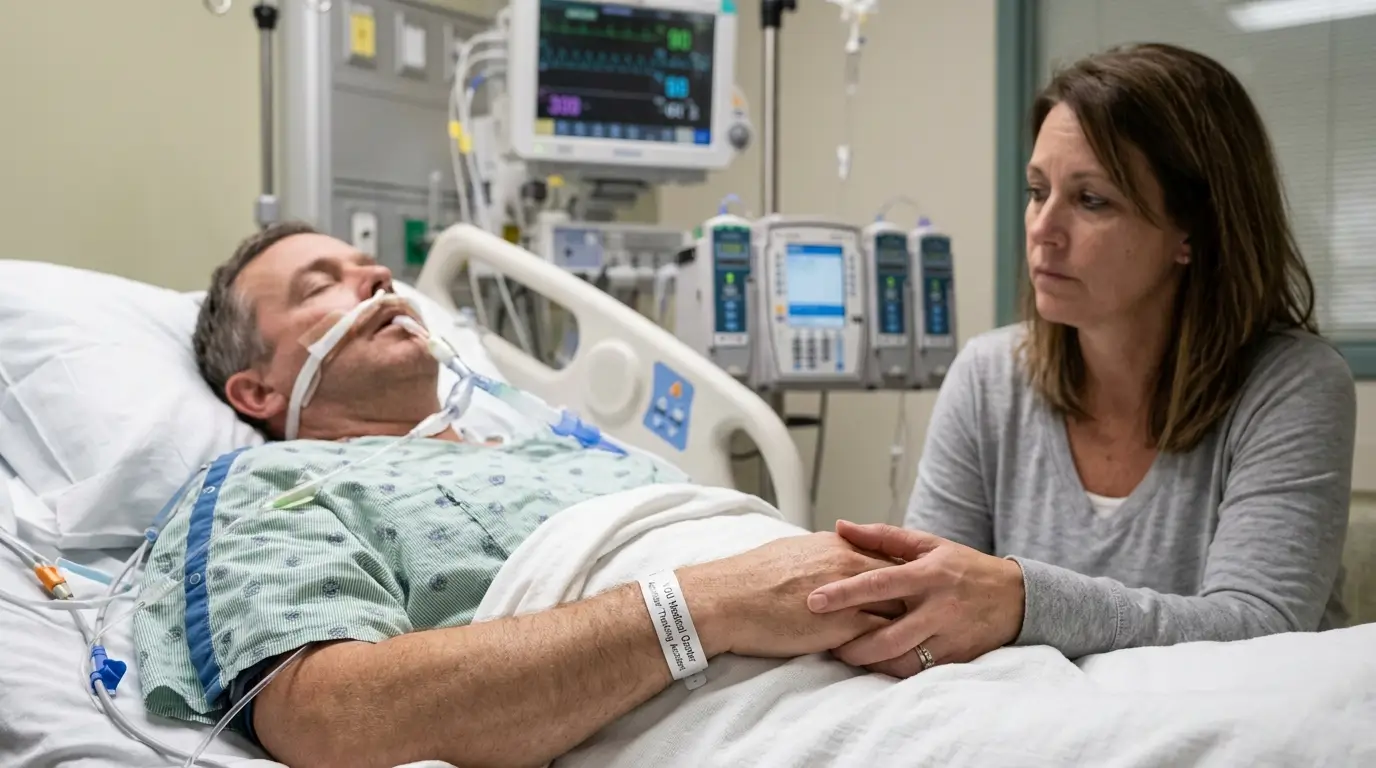
If you have a question “What Should I Do If a Loved One in Coma After Truck Accident in Virginia?” you are in the right place…
- Virginia truck accident victims who are in a comatose state may be eligible for maximum compensation for medical expenses, lost income, and future disability
- Virginia law permits recovery from trucking corporations, truck operators, and other uninsured motor vehicles or motor vehicle operators and third parties liable for truck accident injuries.
- Tatum & Atkinson will accept these claims on a contingency fee basis. You don’t have to pay us if we don’t win your truck accident case.
- You may call us at (800) 529-0804, 24/7/365, to discuss your options for compensation through a free on-site consultation.
Few events in your life will take as much of a toll as learning that a family member was critically hurt in a trucking accident. If their injury left them unresponsive, you may be overwhelmed with fear, sadness, and confusion about what to do. If you’ve asked yourself, What should I do if my loved one is in a coma after a trucking accident in Virginia? The best answer to this question is to know that you have rights, and working with a dedicated coma trucking accident lawyer Virginia will help you to protect each of those rights. Because time is of the essence, you don’t have to go through this alone.
I’m Robert Tatum, and I’m a legal professional with Tatum Atkinson Attorneys at Law. We are a veteran-owned law firm, and we’ve been in business since 2005. With more than 65 years of combined experience helping people whose family members were put in a coma in trucking accident cases, we have assisted hundreds of families throughout Virginia in the most difficult times in their lives. And we will vigorously advocate for you during this dark time. In situations that feel overwhelming and unsure, we offer clarity, strategy, and compassion towards your case.
What Should I Do If A Loved One Is In A Coma Because Of A Trucking Accident In Virginia: Your First Steps
As soon as you can, make sure that the person you love gets the best medical care possible. Virginia has many designated level I trauma centers. The two Level I Trauma Centers are VCU Medical Center in Richmond and Inova Fairfax Hospital, both of which are specially equipped to treat and manage catastrophic head injuries from truck accidents and critical brain injuries from truck accidents. Request all medical records from the time he or she entered the hospital to the present.
Once you know that your loved one is receiving the best quality of care possible, contact an attorney experienced in handling catastrophic trucking accident attorney Virginia cases. Generally, Virginia’s statute of limitations for personal injury claims is two years from the time you were injured, as stated under Virginia Code § 8.01-243. Evidence from the scene of the trucking accident will be lost very quickly after the trucking accident, and generally becomes difficult to obtain after a certain point in time. Competently preserving the truck’s black box data, either the driver’s logs or other types of driver evidence, will typically require you to file a lawsuit shortly after the trucking accident.
Document, in writing, all changes or any observations regarding the progress of your loved one from the time you were in the hospital until the present. Write down everything you see, including daily changes in your loved one’s condition, daily visitors’ notes, and every piece of information you get from the ICU nurse or doctor about his or her medical condition and treatment. Having such documentation in a coma settlement truck accident Virginia claim is very powerful evidence and will have a big impact on the amount of non-economic damages that are calculated for your loved one’s injury (example: the amount of pain and suffering caused by the injury and loss of companionship due to the injury).
Can You Sue Someone When Your Loved One Is in a Coma?

Yes, a family member or a guardian appointed by the court can file suit on behalf of an incapacitated person after suffering serious injury from an accident involving a commercial motor vehicle under Virginia law. A legal guardian or “next of kin” may pursue a Virginia truck accident wrongful injury claim when the injured party cannot do so themselves. This process is sometimes referred to as “filing as a next friend.”
According to some medical sources, the longest someone has survived has been 19 years after having been in a coma, but many coma patients recover from their comas within weeks or months after their injury, and many cases of truck accident injuries to the brain we handle involve people with severe traumatic brain injuries who have been comatose after receiving care in an intensive care unit (ICU) from 1 to 7 days following the accident.
What Causes a Coma After a Trucking Accident in Virginia?
A person in a coma after being involved in a case involving serious injury from the negligence of a Virginia truck driver is often due to a traumatic brain injury (TBI) sustained in the collision between a commercial truck (which can weigh as much as 80,000 pounds) and an automobile. The crash produces forces that can be categorized as catastrophic in nature. As such, the brain hits the inside of the skull (the cranium) and results in bruising, bleeding, and swelling.
Primary Mechanisms of Brain Injury Related to Truck Crashes
There are several types of mechanisms related to TBI that result from the violent nature of the collision, according to information presented by the Brain Injury Association of America. The types of injuries associated with TBIs are the result of two forces: coup-contrecoup injuries are those wherein the brain strikes the front and back of the skull rapidly; diffuse axonal injury, or shearing forces, tears the nerve fibers of the brain throughout; and an intracranial hemorrhage, which is bleeding inside the cranium that creates dangerous pressure on the brain and possibly results in the complete suppression of consciousness.
According to the VCU TBI Model System in Virginia, a medical professional would describe a coma as a state of unconsciousness for an extended period of time during which the patient cannot be aroused and does not respond to any type of appropriate stimulus. In contrast, a vegetative state does return some reflexive responses, but without the presence of any level of conscious awareness. Understanding the difference between a coma and a vegetative state can be important in establishing a claim for a negligent truck driver brain injury Virginia.
What Happens to the Body in a Fatal or Severe Truck Crash?
When a truck auto accident occurs at high speed, the body has to face forces never created for the human body. When the person suddenly decelerates, internal organs will keep moving forward while the rest of the body has stopped. The brain is free-floating in the skull. When this sudden jerk occurs, it twists and crushes down. The spinal column may become either crushed or fractured. Blood vessels may rupture, and in many cases, the truck accident has caused such extreme damage that, to survive, the person is going to need to have immediate surgery.
Once the initial trauma has been addressed, the survivors will have a very difficult and delicate physiology. Medical staff working in ICU injury truck crash Virginia manage everything related to blood pressure and oxygenation, and also assist with secondary brain injuries (caused by swelling, etc.); this level of intensive care is very expensive; the bills associated with the care of your loved one continue to accumulate daily until they are discharged from the hospital after the truck accident in Virginia.
What Is Life Like for a Coma Patient in Virginia’s ICUs?

When families inquire about the experiences of their loved ones in a coma, the currently available knowledge base leads to the conclusion that some patients may have a limited ability to respond to sound or touch stimuli. Therefore, family members should interact verbally with their loved one so that auditory stimulation may be beneficial from a therapeutic perspective.
Patients in a coma need total care for all bodily functions and activities. Patients still need to be given nutrition, receive liquids, use a catheter or some other medical procedure for the bowel and bladder, have their teeth cleaned, and have bedsores prevented through frequent repositioning.
An accident injury attorney in Virginia should advise clients about these high levels of care and long-term expenses associated with maintaining a person on life support accident injury lawyer Virginia.
The coma is relieved through either full emergence of consciousness, a transition into a persistent vegetative state, or brain death. The Guidelines adopted by the American Academy of Neurology are used by Virginia doctors in determining what stage of recovery a comatose person is in. Each of the stages will carry varying levels of financial and legal ramifications for a coma victim’s accident claim in Virginia.
How Long Can a Coma Patient Recover, and What Are Their Chances?
How long it takes someone to come back from a coma varies depending on multiple factors…
How extensive or severe their brain injury is, how old they are, their overall health status…
And how quickly they received quality emergency medical treatment after their accident.
Based on what the NINDS (National Institute of Neurological Disorders and Stroke) states, any person who comes out of a coma within a few weeks will have a much better chance of recovery than one who has been in a coma for an extended period.
Recovering from a coma takes an extended period of time to rehabilitate. There are neurorehabilitation facilities located throughout Virginia that specialize in providing support for individuals recovering from severe or long-term disabilities resulting from their traumatic brain injury truck accident Virginia. In order to know how expensive these programs will be over the course of that individual’s lifetime (potentially millions), you need to discuss that cost with your lawyer so that he or she can make sure it is included in your lawsuit for compensation.
Who Is Liable for a Trucking Accident That Caused a Coma in Virginia?
Injured victims and their families may have several options for filing claims against multiple responsible parties under Virginia law in the event of a trucking company liability brain injury Virginia case. Liability may extend from just the individual truck driver to all the companies involved in the commercial trucking industry.
Potentially Liable Parties in Virginia Truck Accident Cases
The truck driver could be liable for violating hours of service requirements, distracted driving, being impaired, or engaging in reckless conduct. Likewise, the trucking company may be liable for negligent hiring practices, insufficient training of employees, improper maintenance, or pressuring its drivers to violate any legal limits imposed by the relevant state or federal law. Additionally, other third parties may be liable depending on the circumstances related to your specific Virginia coma-related truck accident case. Examples of third parties include cargo loaders, truck manufacturers, and maintenance contractors.
Federal Motor Carrier Safety Administration (FMCSA) enforces commercial trucking at the federal level and has established strict standards for qualifications of commercial truck drivers, the maintenance and operation of commercial trucks, and hours of service regulations. If the truck driver violated these federal regulations and that violation is proven in Virginia court, it may be possible to significantly strengthen your Virginia claim against the negligent truck driver by establishing the truck driver’s negligence per se (i.e., as a matter of law).
Virginia Case Study: Catastrophic TBI from a Truck Accident
The VCU TBI Model System is an example of a research source containing useful information about people in Virginia who have suffered from a traumatic brain injury (TBI). It is one of the federally funded TBI Model Systems that have received funds from the National Institute on Disability, Independent Living, and Rehabilitation Research (NIDILRR). The following shows how using the longitudinal research records from the VCU TBI Model System has been used to examine the long-term effects of TBIs on Virginia residents. The research documents over 100 TBIs that occurred as a result of a commercial vehicle accident, along with the injuries to the victims.
Based on the findings of the longitudinal study conducted at VCU and the TBI Model System, the majority of subjects who sustained a severe TBI due to the impact of a vehicle sustained a severe brain injury from the impact of a vehicle that caused them to enter a comatose state for an average of four to six weeks.
The data from the VCU TBI Model System shows that many victims who sustained a TBI from a serious automobile accident required extensive rehabilitation after experiencing their injury.
Some of the subjects experienced permanent cognitive and physical impairments and were unable to return to work. Based on these findings, the magnitude of damages to be recovered in a coma settlement case for truck accident victims should reflect the costs of lifetime medical care and the inability to earn an income in the future.
What Compensation Can Your Family Recover in Virginia?

In Virginia, when a coma victim is injured as a result of an accident with a truck, a claim for wrongful injury must include both present and future losses. Courts in Virginia recognize that a wide spectrum of damages can be compensated for the catastrophic injury of an unconscious victim truck accident Virginia at the time of their accident.
Economic damages consist of all prior and future medical bills (including the cost of emergency surgery, ICU care, mechanical ventilation, life-support costs, participation in rehabilitation, receiving home health care, and making modifications to one’s home and/or one’s automobile); lost wages (past and future), including the total value of the lost income for the remainder of the victim’s anticipated working career; and non-economic damages (pain and suffering, loss of enjoyment of life, and loss of consortium per VA law) resulting from an injured spouse or family member.
Will Insurance Cover Long-Term Coma Care After a Virginia Truck Accident?
Virginia trucking firms are subject to federal requirements for significant liability insurance, which can be between $750,000 and $5 million, depending on what items are being carried on board the vehicle. These insurance policy limits do not guarantee full payment; rather, the insurance marketplace demands an adjuster and an attorney to minimize your Virginia coma settlement amounts due to a truck accident.
Your first contact with any insurance company should be through a Virginia trucking accident lawyer who will ensure that your family’s interest is protected after you contact them at Tatum & Atkinson (800) 529-0804 by handling all communications with the trucking company’s insurance company and preventing early statements made by you from being used against you in your case.
What Evidence Is Needed to Win a Coma Truck Accident Case in Virginia?
The foundation for a solid truck accident brain injury lawyer Virginia case rests heavily on coherence and speedy collection. A spoliation letter must immediately be sent to the trucking company to preserve the truck’s electronic logging device (ELD) and event data recorder (black box).
Additional important evidence includes the police accident report; all Virginia Department of Transportation crash data; driver’s qualification files and employment records; trucking company’s maintenance logs and inspection reports; eyewitness accounts; traffic and dashcam footage; and expert medical testimony establishing the causal link between the collision and your loved one’s traumatic brain injury, truck accident Virginia diagnosis. The legal team of Tatum & Atkinson will act quickly to secure any evidence that might help further support your family’s claim.
Contact Tatum & Atkinson: Virginia Coma Injury Truck Accident Legal Team
What to do if your loved one has been in a Virginia truck accident and is in a coma due to the accident? The best thing to do is to get legal assistance ASAP! Tatum & Atkinson Law can help! We know that you are going through one of the hardest times in your life right now, and we are able to take on catastrophic truck accident cases on a contingency fee basis, meaning you do not pay a dime unless we win you money for your family.
Call us today at (800) 529-0804 for a completely free consultation. We will listen to your entire story, explain what your legal options are in easy-to-understand language, and do everything we can to get justice and financial security for your loved one and your family. Tatum & Atkinson Law is ready to help you!
FAQs: What Should I Do If A Loved One Is In A Coma Because Of A Trucking Accident In Virginia?
Can I file a lawsuit if my family member is in a coma from a Virginia truck accident?
Absolutely. You can pursue a wrongful injury lawsuit for a Virginia truck accident on behalf of a person who was rendered incapacitated or in a coma if you are the person’s next of kin or if you are the person’s court-appointed guardian.
Who can be held liable for a trucking accident that caused a coma in Virginia?
Depending upon the circumstances of the accident, various parties may be responsible for the accident, including the truck driver, the trucking company, the loaders of the cargo, and/or the manufacturer of the vehicle.
How much compensation can families receive for a coma injury in a Virginia truck accident?
Compensation for these injuries can be in the millions to cover medical care for the rest of your life, lost income, rehabilitation, and non-economic damages for pain and suffering.
Will insurance cover long-term care for a coma patient after a truck accident in Virginia?
Commercial trucking companies must obtain large policy limits but work hard against large payouts, and it is important to find an attorney who knows how to work with them.
What evidence is needed in a coma-related truck accident case in Virginia?
Important pieces of evidence in obtaining compensation include black box data, driver logs, medical records, accident reports, surveillance video footage, and expert testimony (both medical and accident reconstruction).
