Why Is Getting The Necessary Treatment Immediately Important For Your Case In Virginia
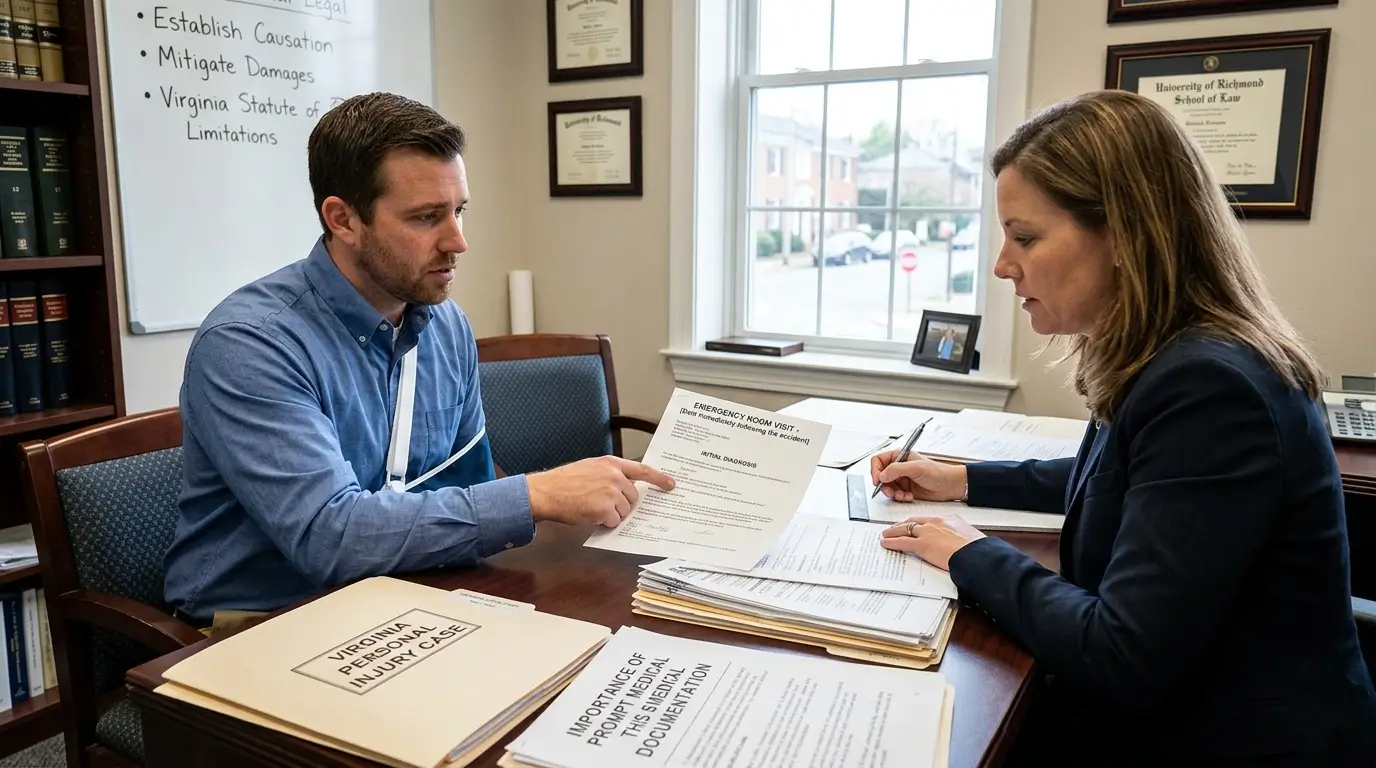
Key Highlights
Why Is Getting The Necessary Treatment Immediately Important For Your Case In Virginia
- Get to a doctor for care within 72 hours after an accident in Virginia to protect your health and your legal right to compensation (or your legal position).
- Medical records are your most important evidence in any personal injury and/or insurance claim you may have in Virginia.
- Insurance adjusters have the clearest and most conclusive argument to deny your claim or reduce your compensation by showing there is a gap in your treatment.
- Because of Virginia’s rule regarding contributory negligence, anything the defense can use against you due to a delay will cost you absolutely everything.
- An attorney can help explain the reasoning behind a gap in treatment, but an attorney cannot undo the damage that has been done by not seeking medical care at all.
If injured in a Virginia accident, it may be tempting to delay seeing a doctor because of mild pain or concerns about cost. However, if you delay treatment, you might aggravate your injuries and undermine your personal injury case and ability to recover damages.
I, Robert Tatum, am an attorney at Tatum & Atkinson Law Firm. Our firm has been in operation since 2005 and is a veteran-owned law firm, with over 65 years of combined experience handling personal injury medical treatment in Virginia.
We know from experience that just one decision regarding your medical treatment can determine the outcome of your personal injury claim. Our firm will fight for you!
What Does Immediate Treatment Mean in a Virginia Personal Injury Context?
About Virginia personal injury claims, the term “immediate” pertains to obtaining a professional evaluation as soon after an accident as possible or within 24-72 hours. Insurers and attorneys place a significant amount of focus on this period because any delay in obtaining a professional evaluation could hurt your personal injury claim.
- Identifying hidden injuries, such as spinal injuries, internal bleeding, or concussions, can be completed with early examination.
- The sooner you receive treatment for these conditions, the less chance you have of worsening the condition and the quicker you recover from it.
- Documentation of your medical records provides a documented link between your injury and accident through a chain of documents.
- This documentation helps to provide evidence that supports your claim and proves the causation of your injuries.
- Insurers may challenge or reduce your personal injury compensation medical bills in Virginia claim when you do not provide prompt treatment records.
Why Your Medical Records Are the Foundation of Your Virginia Injury Claim
Medical documentation is what will support every personal injury claim in the state of Virginia, since insurance adjusters will not accept verbal descriptions of the pain experienced as an accurate representation, and courts expect evidence. The injury claim medical records in Virginia provide a definitive record of how you were injured, the extent of your injuries, and how much you’ve been impacted financially and personally due to your injuries.
According to the Virginia DMV, there are thousands of injury crashes in Virginia every year, with each resulting claim being initiated after medical documentation is obtained; thus, having complete medical records indicating a consistent accident injury treatment timeline in Virginia minimizes the basis for insurers to deny the causation, severity, or continued medical care for an injured party.
How Delayed Treatment Damages Personal Injury Claims in Virginia

The most common mistake for victims of accidents in Virginia is the delay of medical attention. If you give a gap in treatment injury claim in Virginia for any length of time after an accident, including the first week, then you give the at-fault person’s insurance company a significant tool for disputing your claim.
An adjuster believes that:
- Either your injuries were not so serious that you needed to see a doctor within a week of the accident
- Your current symptoms were caused by some activity that occurred after the accident. Insurance adjusters use both arguments to deny claims or reduce the value of a claim.
Virginia is the only state that follows pure contributory negligence, as set out in Section 8.01-34 of the Virginia Code. This means if the defense can argue successfully that you failed to mitigate your own damages by failing to seek timely medical care and the jury agrees, then you will be entirely barred from recovering anything from your accident.
The stakes in Virginia are extremely high, which is why seeking medical treatment after an accident in Virginia is important if you intend to pursue a claim for your injuries.
What Symptoms Require Immediate Care After a Virginia Accident?
Due to the effects of shock or the release of adrenaline, someone’s body may not display signs of an injury until some time after a car accident. Many injuries caused by a car crash, including soft tissue injuries, concussions, and other spinal cord injuries, can take 24–48 hours to present themselves and have been noted in various research studies published by the National Institutes of Health (NIH).
Head and Brain Symptoms
- Headaches or dizziness after the crash
- Difficulty concentrating or confusion
- Any loss of consciousness, even briefly
Neck, Back, and Spine Symptoms
- Neck or back stiffness or pain
- Numbness or tingling in arms or legs
Abdominal and Internal Symptoms
- Tenderness or pain in the abdomen
- Signs that may indicate internal injury
Legal and Medical Importance
- These symptoms should be evaluated by a medical professional immediately
- Proper documentation helps establish evidence for injury claims
- Early records strengthen personal injury compensation cases in Virginia
ER Visit, Urgent Care, or Your Own Doctor After a Virginia Accident?
Instead of worrying about which type of medical facility you should use, ER visit after accident in Virginia claim, and/or why you may not be able to get to one, you need to make sure you go somewhere, and ideally as soon as possible after the accident!
If your injuries require immediate medical attention, then obviously the emergency room would be your best choice. An emergency room visit will help you start your documentation regarding attending physicians, radiological testing, etc., and thus provide the strongest and most difficult basis for the insurance company to contest/inspect your claim later.
But if you can’t make it to an emergency room due to long wait times or if your injuries are clearly non-life-threatening, you’ve just as much right to go to an urgent care after car accident Virginia.
In Virginia, you must not go to a facility that fails to document the car accident as the reason for your visit. Be sure to always explain to everyone involved in treating you (from the triaging nurse through your physician) exactly what happened, when it happened, and any symptoms you are experiencing. The strength of a car accident doctor visit in Virginia is determined by the documentation that they create. Your claim has the same risk of incomplete reporting as a delayed treatment accident claim in Virginia.
The 21-Day Rule and Virginia’s Continuous Treatment Doctrine
The continuous treatment doctrine applied to medical malpractice laws and personal injury timelines in the State of Virginia establishes that any gap or lapse in the treatment history has legally significant implications for the claim. Virginia courts have consistently held that continuous inclusion of care for an injured individual demonstrates a continuing injury during virtually all of the time that the injured individual is receiving treatment for their injuries.
As a practical matter, most personal injury attorneys in the Commonwealth of Virginia will advise their clients not to go longer than twenty-one (21) days without seeing or documenting a medical appointment while they are continuing to receive treatment for injuries sustained in an accident. This rule of thumb provides an informal benchmark that Virginia insurers use to establish consistency of medical treatment for the purpose of evaluating injury settlement medical proof in Virginia.
The failure to justify (other than a provider’s directive not to report for treatment) for a gap in medical treatment of greater than twenty-one (21) days will commence the onset of devaluation arguments by the insurance company in relation to the claim’s validity.
What If You Cannot Afford Treatment After Your Virginia Accident?
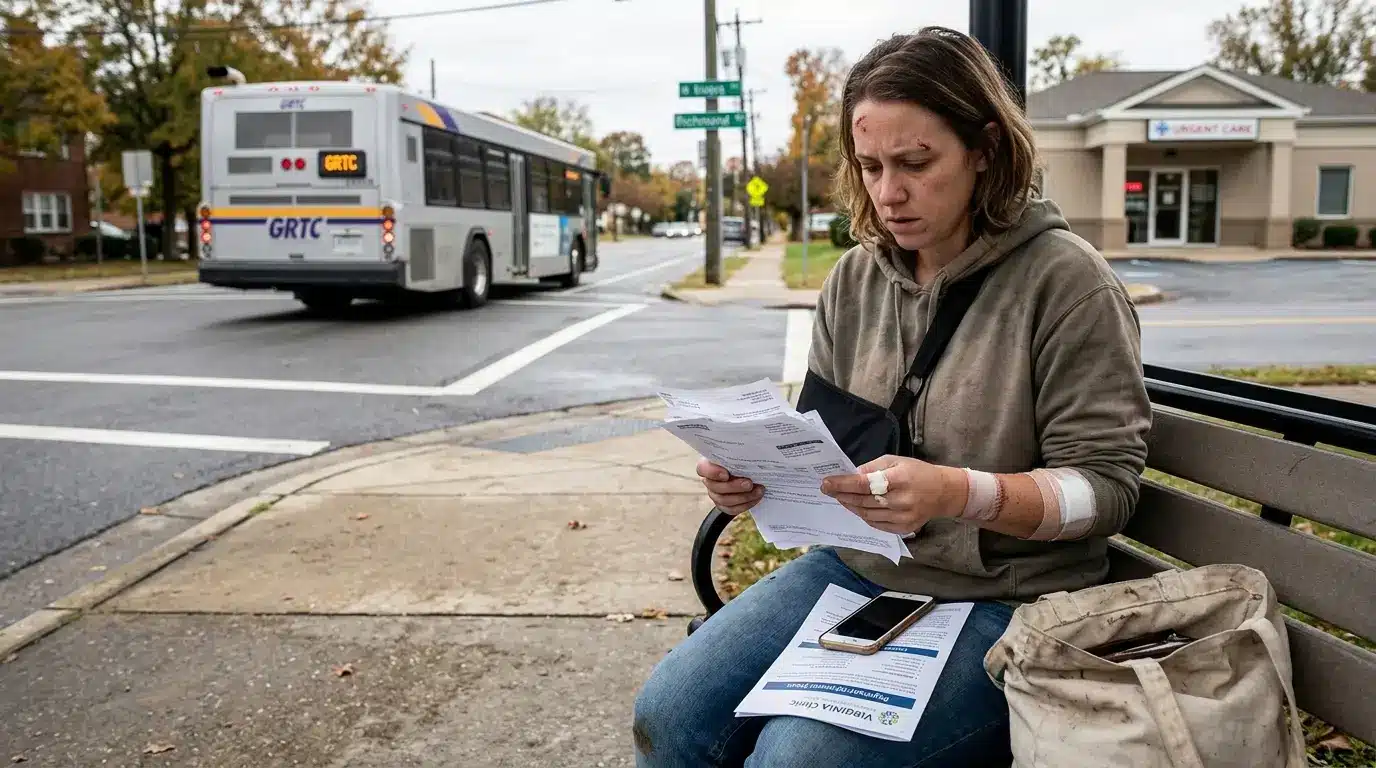
The delay in seeking care for Virginia accident victims is normally due to cost, which the insurance companies know. If you do not have enough insurance or no insurance at all, you have many options still available. Your own auto policy may have Medical Payments Coverage (MedPay) that provides payment for your medical treatment regardless of fault. Many Virginia medical providers will accept accident victims under a medical lien, which means you do not have to pay until your case settles.
It is noted that just because you do not have insurance, it does not mean that you cannot receive immediate medical treatment for your accident injuries. A personal injury lawyer in Virginia and medical evidence attorney at Tatum & Atkinson Law Firm can refer you to an accident victim’s provider and also protect your medical documentation and injury claim in Virginia, regardless of your insurance situation.
Were you injured in an accident in Virginia? Contact Tatum & Atkinson to learn more about your options: (800) 529-0804. Free consultation & no charge unless you receive a favorable outcome from your injury claim.
Treatment Is Not Just Medical, It Is your Legal Right Too!
The main thing is to understand why getting the necessary treatment immediately is important for your case in Virginia, because the documentation of your medical record serves as evidence in your case. Every day that passes before you receive proper documentation of treatment is an opportunity for the at-fault party’s insurance provider to develop its defense against you.
For more than 20 years, Tatum & Atkinson Law Firm has assisted clients in Virginia who were injured in accidents with these types of issues. Contact us at (800) 529-0804 for a free consultation, and you will not pay unless we successfully settle your case.
FAQs: Why Is Getting The Necessary Treatment Immediately Important For Your Case In Virginia?
Can I still get compensation if I didn’t go to the hospital right after the accident in Virginia?
Yes, seeking medical treatment after an accident in Virginia is important because, unless you seek medical treatment immediately after an injury, insurance companies can argue that medical care does not relate to the accident. You should be seeking medical care right away, even now. We recommend contacting an attorney.
What happens if I only go to urgent care instead of the ER after an accident in Virginia?
Urgent care will suffice; however, supporting documents are critical to support that your injuries are related to the accident. You have the provider document that the accident was the cause of the visit to establish the backlink to the accident.
Will insurance companies use gaps in treatment to deny my injury claim in Virginia?
Yes, there are many examples of Insurance denies claim and no treatment in Virginia. Insurance adjusters have been trained to find every error or breakdown in your treatment timeline.
How soon should I see a doctor after a car accident in Virginia for my case to stay valid?
You should be treated within 72 hours at a minimum. Virginia Code Section 8.01-243 grants an individual two (2) years to file a lawsuit; however, if you wait to receive treatment, it will significantly damage your case before that statute of limitations expires.
Can I switch doctors during my personal injury case in Virginia?
Yes, if you choose to change providers, you need to provide a clear explanation before making any changes. Unexplained changes can raise continuity issues. You should notify your attorney of your provider change to preserve your accident injury treatment timeline in Virginia.
