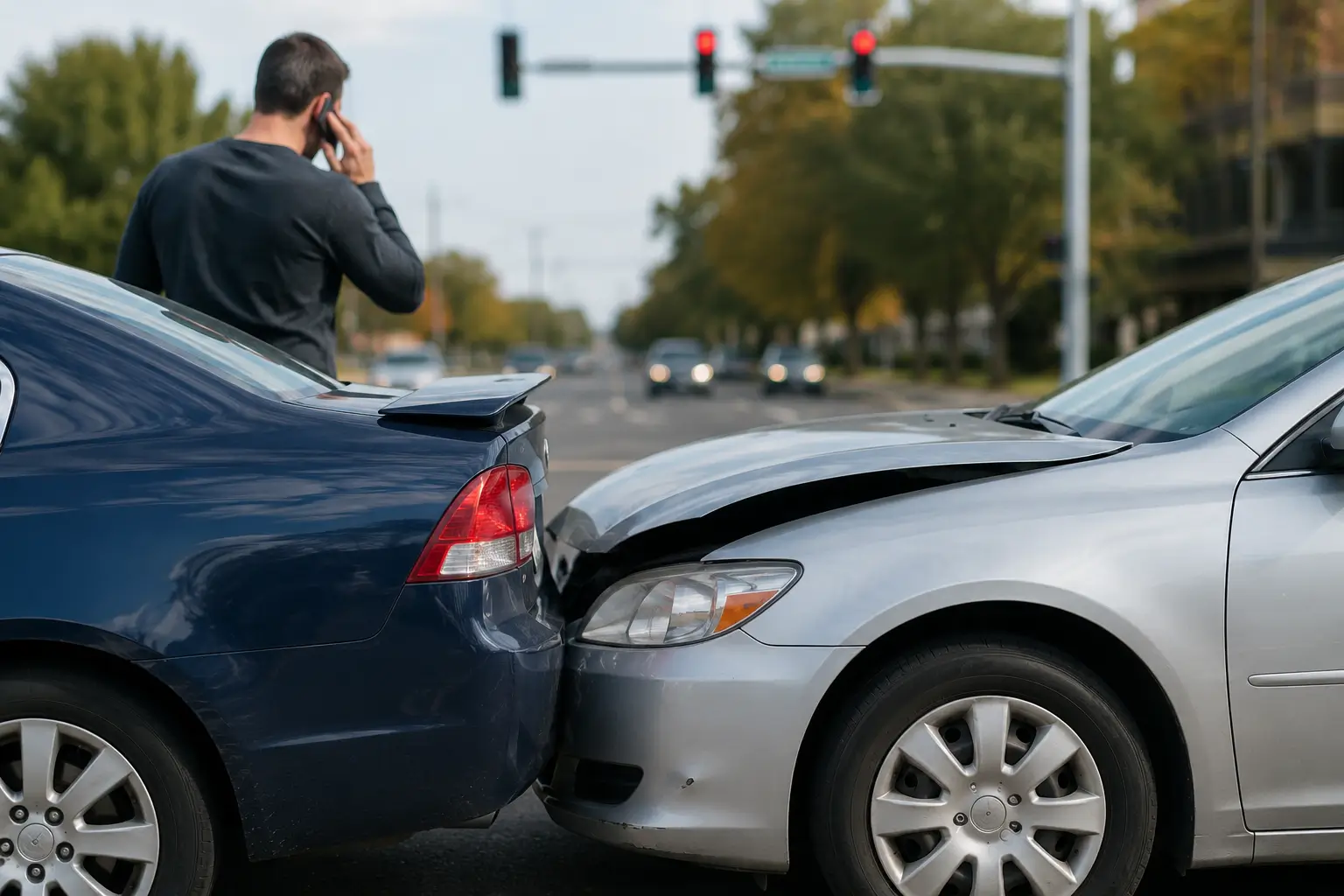
Rear-Ended at a Red Light in North Carolina: Who’s At Fault?
Key Highlights:
- The driver who rear-ended at a red light in North Carolina is presumed at fault for following too closely, but that presumption can be challenged.
- North Carolina follows a harsh contributory negligence rule where if you’re found to be just 1% at fault for the accident, you could be barred from recovering anything at all.
- Insurance companies actively seek out ways to pass even the smallest amount of responsibility onto you because it’s a full defense under NC law.
- Police reports, photos, witness information and prompt medical care are all vital in protecting your claim.
- Don’t say or do anything that may inadvertently support a contributory negligence defense without speaking to a lawyer first.
A rear-end collision while stopped at a red light should be a no-brainer case. You didn’t move or do anything wrong. So why is the insurance company questioning your driving? Fault in the case of a rear-end collision isn’t always easy to determine in North Carolina because one state law could have an impact on whether you’ll be able to get compensation.
If you have questions about this or any other legal matter, our experienced car accident lawyers at Tatum & Atkinson, PLLC will gladly help you.
Call 800-529-0804 today for a free consultation. You don’t have to pay anything unless we win your case.
Who Is Usually at Fault When You’re Rear-Ended at a Red Light
Generally in rear-end crashes, the driver who makes the mistake of following too closely is the one who is liable. If you are at a red light, the person who crashed into you from behind will have to answer the question of why they were not able to stop in time.
The “Following Too Closely” Presumption Under NC Law
North Carolina G.S. § 20-152 mandates drivers to maintain a safe following distance that depends on speed, traffic and conditions of the road. If a car is already stopped at a red light and is still rear-ended, this makes it hard for the trailing driver to claim that they were following safely or paying attention.
“Rear-end collisions look simple on paper. Fault seems obvious; someone hit the car in front of them. But don’t assume the insurance company will just accept that logic. In North Carolina, all it takes is a sliver of alleged fault on your part to jeopardize your entire claim.” – Robert Tatum, Tatum & Atkinson, PLLC
When the Front Driver Can Be Held Partly Responsible
In some instances, the responsibility may lie partially with the driver in front, like if they:
- Reversed suddenly at the light
- Brake-checked the driver behind them
- Had brake lights that weren’t working
- Stopped suddenly for no apparent reason
Common Evidence Used to Prove Fault in Rear-End Crashes
If there is some disagreement as to who is at fault, having evidence is important.
| Type of evidence | Why it matters |
| Police accident report | Creates official documentation of the incident and can document the officer’s assessment of fault |
| Photos of vehicle damage | The damage can reveal where and how the impact occurred |
| Traffic or dash camera footage | Can provide clear time-stamped evidence of what occurred |
| Witness statements | Independent witnesses can verify what they saw and back your side of the story |
| Vehicle “black box” data | May be able to show details like speed, braking and other information leading up to the accident |
| Brake light functionality | Can help indicate if your brake lights worked prior to the accident |
How North Carolina’s Contributory Negligence Law Affects Your Claim
In North Carolina, there is a legal doctrine known as “pure contributory negligence.” If you’re found even 1% at fault, you may be barred from recovering anything. It is because of this stringent law that insurance companies try to claim that you were partly responsible for the accident.
Tactics Insurance Companies Use to Shift Blame to You
An insurance adjuster may seek out information that can be used against you after a rear end accident. They may:
- Question your speed or attention
- Suggest your brake lights weren’t working
- Claim you abruptly stopped or did so without reason
- Question why you were stopped
- Discuss your previous driving record
Even a small statement can become important later. Be careful about guessing, admitting fault or giving answers you are not sure about.
What to Do After the Collision
The actions you take right after the accident may impact your injury claim and health. Even if the accident appears to be minor, it’s best to:
- Call the police to ensure an officer completes a crash report, which can later be requested through the Official North Carolina DMV Crash Report portal.
- Take pictures of the vehicles and damages
- Take pictures of the intersection, traffic signals, traffic conditions and any skid marks
- Ask witnesses for information (like their name and contact details)
- Exchange insurance and contact information with the other driver
The more evidence that you have from the scene, the easier it may be to prove what happened.
What to Say and Not to Say to the Other Driver’s Insurer
The other person’s insurance company will likely contact you within the first few days after the accident. It is not necessary to provide a recorded statement to the other driver’s insurance company. Before making any such statement, however, it may be wise to consult with an attorney.
When speaking with an adjuster:
- Stick to the facts and nothing more
- Don’t guess at your speed or what caused the crash
- Never admit fault, even partially
- Avoid a detailed play-by-play of your injuries
- Don’t speculate about what you could have done differently
Adjusters are trained listeners. Even something that sounds harmless in the moment can be twisted later into evidence that you share the blame.
Why You Should See a Doctor Even If You Feel Fine
The pain may not occur immediately. Symptoms can be masked by adrenaline and some injuries take time to develop.
A medical visit can:
- Identify injuries early
- Help prevent complications
- Create a record of your treatment
- Relate your injuries to the accident
Whiplash, soft-tissue injuries and concussions may not always cause symptoms. Getting checked right away protects your health and can also help document your claim.
When You Should Contact a Rear-end Collisions Lawyer
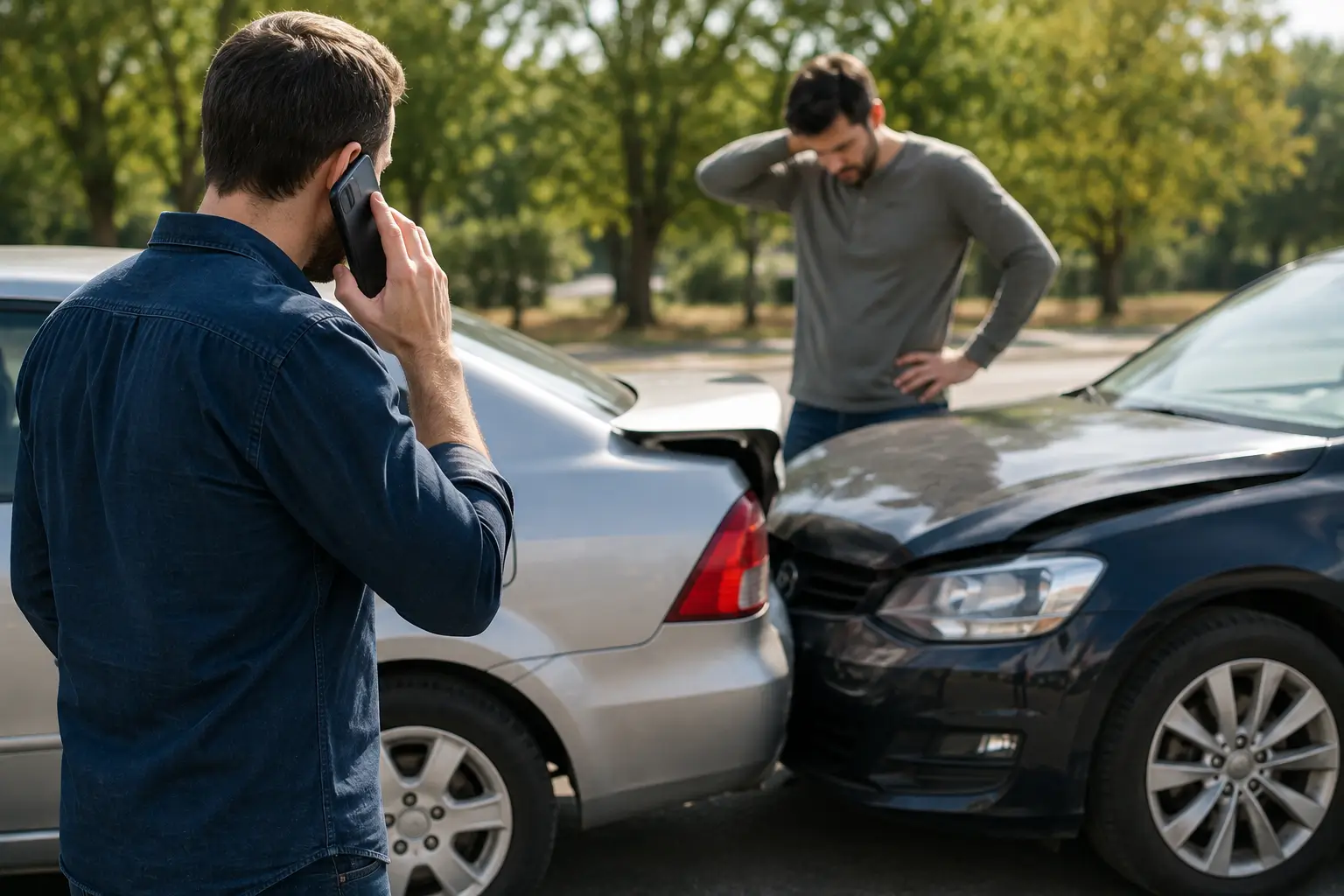
Not all rear-end collisions require a lawyer. But in some instances, legal advice may be needed. If you have suffered severe injuries, there is a question over liability, or you have a large claim for damages, you might want to contact an attorney. If the insurance company is not willing to provide a reasonable settlement, you might also need legal assistance.
Signs the Insurance Company Is Undervaluing Your Claim
Watch for signs the insurer is lowballing you. If they offer a settlement before you’ve even finished your treatment, that may be a red flag. If your injuries are brushed off and the medical costs are downplayed, those might be some other warning signs. If you’re feeling pushed to settle fast or asked to give a recorded statement, be wary. Those are often warning signs in disguise.
Don’t rush into a settlement until you know the full value of your claim.
Call Tatum & Atkinson, PLLC and Understand Your Legal Rights
Our rear-end collision attorneys at Tatum & Atkinson, PLLC have achieved over $100 million in compensation on behalf of our injured clients and we’re available for a free consultation. When you are not sure whether to hire a North Carolina car accident lawyer, our attorneys will be able to consider the specifics of your accident, clarify your legal rights, and help you seek the compensation you need. In case we accept your case, you would not owe us anything unless we win or otherwise. Call 800-LAW-0804 today to learn more.
Disclaimer: This article is informational, and it is not legal advice. Every case is different. Discussion with a North Carolina personal injury lawyer may assist you in knowing your individual legal alternatives.
Frequently Asked Questions!
Can I still file a claim if my car only had minor damage but I was injured?
Yes, you can still file a claim even if your injuries are worse than the damage to your vehicle. However, insurance companies might claim that the property damage is not bad enough to warrant an injury claim, making it more critical to have documentation.
What if the driver that hit me has no insurance?
You can file a claim under your own Uninsured Motorist (UM) coverage if the person who hit you is uninsured. UM coverage is required on all motor vehicle liability policies under the North Carolina Uninsured Motorist mandate (N.C. Gen. Stat. § 20-279.21).
What if the accident happened at a red light but the light had just turned green?
If you were already moving when you were hit, the case may change from a simple stationary rear-end scenario to a more complicated dispute over reaction time and following distance.
Can passengers in my car file their own insurance claims after a rear-end accident?
Yes, the injured passengers are allowed to have their own claim with the at-fault driver’s insurance. In some cases, however, they may also file against the driver of the vehicle in which they were riding.
Does it matter if the accident happened during rush hour or in stop-and-go traffic?
You are in a stronger position if traffic is heavy, since North Carolina law requires vehicles to slow down and maintain a greater distance between each car while traffic is heavy. This will make it more difficult for the following driver to state that the stop was sudden.
