What Is A Serious TBI Caused By A Truck Accident In North Carolina?
Key Highlights:
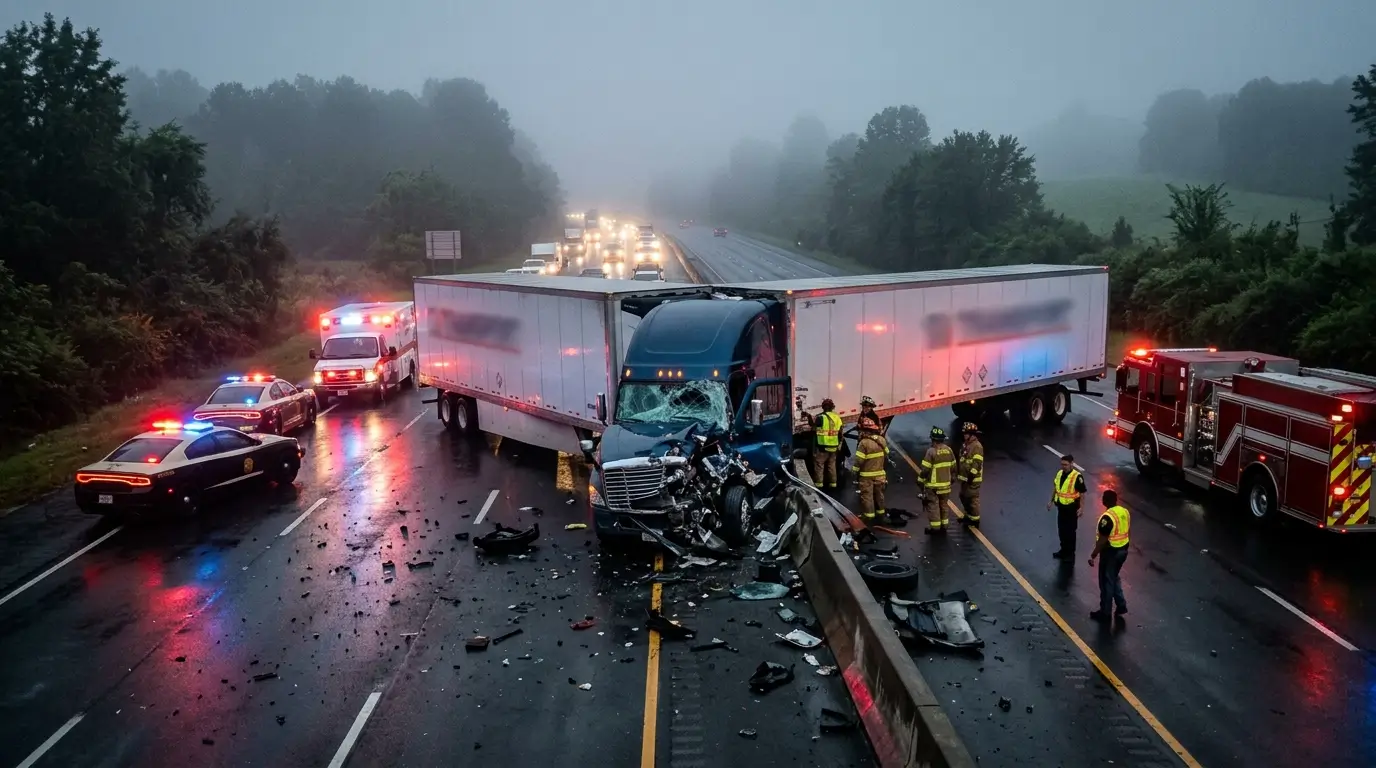
- What is a serious TBI caused by a truck accident in North Carolina? A serious brain injury resulted from a catastrophic truck accident and may have long-term cognitive, emotional, or physical consequences.
- Because of the size and force of trucks, they greatly increase the risk of sustaining severe traumatic brain injuries.
- The worst types of traumatic brain injuries may not be visible on a basic CT scan.
- Symptoms of traumatic brain injuries can take several days or weeks to appear after an accident.
- The value of a traumatic brain injury claim is determined by estimating the future cost of treatment and the income that the victim will lose due to the injury.
A traumatic brain injury (TBI) that is considered to be severe occurs when the brain is damaged due to an external force such as a violent blow, jolt, or rotation. An individual will most likely continue to experience cognitive, emotional, and physical disabilities as a result of their injury. Truck accidents often involve tremendous forces that cause severe TBIs.
If you are asking yourself, “What is a Serious TBI caused by a truck accident in North Carolina?” you are likely to be a victim of a catastrophic injury requiring significant medical treatment, which will affect your legal claim. The experienced North Carolina brain injury lawyers at Tatum & Atkinson Law Firm are knowledgeable about the difficulties associated with these claims and will assist you in your recovery.
Contact Tatum & Atkinson Law Firm at (800) 529-0804 today for a free consultation to fight for the compensation you deserve.
What Is a Serious TBI Caused by a Truck Accident in North Carolina?
Traumatic Brain Injury (TBI) can result from severe trauma to the head. TBIs result from the true violence of collision, with commercial trucks weighing as much as 80,000 pounds, causing extreme trauma in auto collisions.
How Doctors Measure Severity
A physician grades a brain injury using the Glasgow Coma Scale (GCS), measured from 3 to 15; 3-8 is serious, 9-12 is medium, and 13-15 is mild. Typically, serious brain injuries come with a period of long-term unconsciousness; serious brain injuries will have long-term damage and symptoms long after the patient is hospitalized.
Why Truck Crashes Hit the Brain So Hard
A fully loaded tractor-trailer can be 20-30 times heavier than a passenger vehicle, which means the amount of energy transferred when a truck collides with a car produces an extremely violent force. Even if the person’s head does not strike an object, the deceleration will cause the brain to slam back against the inside of the skull, straining the nerve fibers; this is how traumatic brain injuries occur.
The Main Types of Truck-Crash Brain Injuries

Commercial truck accidents can create violent forces resulting in severe blows and quick movements of the head, leading to various traumatic brain injuries (TBIs).
Concussion (Mild TBI)
Concussions are the most common type of TBI; however, “mild” can be misleading because patients will often experience symptoms for months after an accident, affecting their ability to work and have healthy relationships.
Contusion
Contusions are bruises on the brain that cause bleeding where the injury occurred. If large enough, contusions can compress the surrounding brain tissues, which can require surgical intervention.
Diffuse Axonal Injury
DAIs occur from rotational forces that tear apart the axons in the brain. This type of diffuse axonal injury car crash injury is one of the most debilitating types of brain injuries and is often not visible on CT scans until much later.
Hemorrhage and Hematoma
A brain hemorrhage occurs from bleeding within or around the brain, increasing intracranial pressure, and could become fatal within hours if not treated immediately with emergency surgery.
Skull Fracture
A skull fracture can lead to bone fragments pushing into the brain, thus exposing the brain to potential future injury and increasing the chances of infection.
How a Serious TBI Is Found and Treated
The process of diagnosing and treating TBIs requires a coordinated process involving multiple stages of medical treatment, being able to proceed from emergency stabilization to long-term treatment of brain injuries.
The Diagnostic Workup
The Glasgow Coma Scale and CT scans can be used at the beginning of the diagnostic process to check for fractures or bleeding. While CT scans identify damage to the body, an MRI can identify more subtle injuries, such as DAI.
In addition to these imaging studies, neurological examinations and neuropsychological assessments can provide information regarding
memory, attention, and processing abilities, which cannot be determined by imaging studies. TBI is one of the most common causes of death and disability in the United States, and DAI is frequently not detected with initial imaging studies, according to the National Library of Medicine.
From the Emergency Room to Rehabilitation
The patient’s early care is designed to stabilize the patient and relieve any pressure on the brain (possibly via surgery). After stabilization, the focus of care shifts to rehabilitation (physical, occupational, speech therapies, and neuropsychological rehabilitation); rehabilitation can continue for extended periods of time.
The Long-Term Reality
Often, survivors of a serious TBI suffer from long-term effects such as difficulty with memory, attention, and judgment. Families often describe the survivor as someone whose personality, mood, or temper has changed in ways that may be hard to describe.
Many survivors of a severe TBI are unable to return to any job; some are unable to drive, manage their finances, and live independently, causing a large burden of care for their family.
Why TBI Claims Are Hard to Prove and How They Are Valued
Overcoming the issues related to the “hidden” brain injury requires a collection of extensive medical evidence and an understanding of North Carolina’s strict fault laws.
The Invisible-Injury Problem
The greatest aspect of a serious brain injury is that it may be completely invisible. Scans appear flawless, the individual “appears healthy,” and the trucking company’s insurance company will therefore state nothing is wrong with the injured person. As such, proving an injury to be a true injury is often the hardest part of a claim.
The Evidence That Answers It
A strong claim of TBI is built upon neuropsychological test results, the findings of the treating neurologist, advanced imaging, and the plain language of the family and coworker testimony of who the applicant was prior to the traumatic brain injury truck accident NC, and who they are today.
What a TBI Claim Can Recover and the 1% Rule
A claim may also include future medical and attendant care expenses, lost wages or income, a decrease in earning capacity, pain and suffering, and a need for life-long support. It is necessary to develop recovery numbers with a neurologist, a life care planner, and an economist.
A warning, however, is that under the contributory negligence laws of North Carolina, an injured person may not be able to recover if they are just 1% responsible for their injuries. However, the gross negligence of a truck driver may bear an exception to this assertion. All claims must be filed within three years of the accident date per North Carolina General Statutes Section N.C.G.S. § 1-52.
North Carolina Truck Accident Brain Injury? Let Tatum & Atkinson Fight For You
An entire family can be thrown into turmoil when one of its members suffers a serious brain injury. If you have been in an accident and are looking for legal information about “What is a serious TBI caused by a truck accident in North Carolina?”, you need to contact us as soon as possible. You don’t have to go through this alone.
Since 2006, Tatum & Atkinson have successfully represented people from North Carolina who have suffered catastrophic injury truck accidents on I-40, I-85, and I-95 highways. In order to accurately prove your true economic damages from an injury, Tatum & Atkinson hire neurologists and economists. This approach prevents the insurance company from exploiting North Carolina’s strict 1% contributory negligence rule, which completely bars recovery if you are even slightly at fault. By proving the truck driver’s gross negligence, we defeat this defense to secure the full head injury compensation NC you deserve.
Call (800) 529-0804 for a free consultation. Tatum & Atkinson work on a contingency basis, meaning they do not charge legal fees unless they win your case. Because truck accident evidence evaporates quickly, you should contact them immediately.
Frequently Asked Questions!
How soon after a truck crash do TBI symptoms appear?
Headaches, memory problems, irritability, and sensitivity to light or sound can occur days or weeks after a severe TBI truck crash. This is the reason why you must have a doctor evaluate you immediately after a serious accident, even if you feel fine.
Can a brain injury be real if my CT scan came back normal?
Certainly, standard CT scans can identify bleeding or fractures, but these imaging studies cannot always find cases of diffuse axonal injury that involve the tearing of nerve fibers on the microscopic level. MRI studies, along with neuropsychological assessment and evaluation by a specialist, will often detect what is missed on a CT.
Can I still recover if I was partly at fault?
In North Carolina, if you are even 1% at fault, you cannot retrieve compensation; however, if you can prove the truck driver was grossly negligent or reckless in breaking safety regulations, you can recover compensation despite having some fault of your own. It is advisable to consult with an attorney right away to discuss what your options are.
What does hiring a lawyer cost?
There are no upfront costs for an injury claim because attorney fees are contingent upon the outcome of the claim. All clients receive a free consultation, and there are no out-of-pocket costs until you receive a recovery.
