What Are The Long Term Effects Of A TBI In Virginia?
Key Highlights
- What are the long term effects of a TBI in Virginia? In Virginia, TBI is now considered a chronic disease that causes permanent brain function deficiencies, changes in personality, and 4.5 times the risk of developing neurodegenerative diseases such as dementia or CTE.
- The symptoms will often be “silent” for many years, emerging only when the brain’s natural coping mechanisms are no longer sufficient. Since standard ER scans cannot detect microscopic tears, continued monitoring is vital for detecting delayed-onset neurologic decline.
- Virginia’s new legislation, HB 107 (effective July 2026), simplifies the under-insurance claim process, making it easier for TBI sufferers to obtain the high insurance coverage needed for lifelong treatment and rehabilitation.
- Tatum & Atkinson Law Firm shatters the “Normal MRI” fallacy with state-of-the-art neurofunctional evidence from 2026. Our legal team exposes invisible injuries that entitle clients to complete financial compensation for their loss of earning potential.
While traumatic brain injury complications seem like something that happens in one single moment, say, a serious accident or a fall, for many Virginians, this kind of injury can be only the beginning. The Virginia Department of Health estimates that over 6000 patients in the state are hospitalized because of a traumatic brain injury every yearlong cycle.
Do you want to learn more about “what are the long term effects of a TBI in Virginia”? We have good news for you! Our team of lawyers at Tatum & Atkinson Law Firm has compiled a page with all the latest information regarding how a traumatic brain injury affects the body, what its symptoms are, and how Virginia laws, including House Bill 107, can help you get fair compensation for your problems. All of this was done using the latest medical data available as of 2026.
TBIs are a process, not merely a one-time occurrence. Let Tatum & Atkinson Law Firm help you secure the resources you deserve. Contact our Virginia team today.
How TBI Affects the Brain Over Time
TBI is typically thought to have a few basic components: the initial injury, the brain swelling caused by the injury, and hospitalization due to the injury. However, there are many additional components to TBI that people used to overlook. Many neurological conditions resulting from TBI can persist throughout an individual’s lifespan, affecting the brain’s ability to process information due to impaired neurovascular coupling, emotional regulation, and movement control.
In early 2026, the Brain Injury Association of America formally revised its classification of TBI from an acute condition to a chronic one. This revision resulted from continued research proving that TBI patients typically live 7-9 years less than those without TBI due to complications related to cardiovascular and metabolic issues from the TBI itself.
Cognitive Effects of TBI
One of the most common long-term TBI symptoms is memory loss, slower processing of information, and concentration problems. Those who suffer from a TBI may find that tasks such as work, communication, and watching TV now require a level of mental effort that was never previously required. The severity of these impairments can be chronic or change with the individual’s stress level and the degree of neuronal fatigue.
Physical Effects
Individuals with a TBI commonly report the following impairments: headache, fatigue, seizure disorders, and motor dysfunction. The disrupted sleep-wake pattern will worsen most of the physical impairments that a person with a TBI is experiencing. Even mild traumatic brain injury (mTBI) results in lifelong problems for many patients.
Emotional and Behavioral Effects
Depression, anxiety, mood swings, and behavioral problems are the results of a neurological injury and are not personality issues. The regulation of a person’s emotions and behaviors depends upon the proper functioning of the frontal lobe, which is often damaged by TBI, thus making mood problems one of the most common emotional effects of traumatic brain injury.
Neurological Effects
There are many long-term neurological effects of TBI. One study, funded by the National Institutes of Health and published in January 2026, showed that those suffering from Stage IV CTE were 4.5 times more likely to have been diagnosed with dementia. This is one of the strongest links yet found between head trauma and brain damage. Traumatic brain injury can also lead to the early onset of Parkinson’s and Alzheimer’s, especially if the original injury was not detected in the ER.
Can TBI Symptoms Show Up Later in Life? What Are the Long Term Effects of A TBI in Virginia
Yes, and that comes as a surprise to many people. TBI symptoms may be dormant for weeks, months, or even years before coming out into the open.
The human brain has the amazing ability to compensate for its injuries. In the wake of any injury, the brain tends to rewire itself by rerouting cognitive processes through the healthy parts. The problem is that this compensation is limited by a “functional ceiling.”
Why Symptoms Surface Years Later
With aging of the brain or exposure to physical and psychological stressors, such protective mechanisms may break down. What appears to be a new problem may actually be a delayed result of an earlier injury that has been activated by the following:
- Neuroinflammation: An ongoing inflammatory response that can remain for a period of time after the initial damage has resolved.
- Reduced Cognitive Reserve: The protective buffer against stress is reduced as the brain ages.
- Secondary Injury Cascades: These are subtle injuries that develop over many years at the cellular level.
The Timeline of TBI Recovery in Virginia
The severity of the injury and how quickly treatment is started are major factors in determining how long the individual’s symptoms will last.
- Mild TBI/Concussion: Even though the majority of patients will recover normally within several weeks, around 15% to 30% of individuals do suffer from Post-Concussion Syndrome (PCS), which may last from months to years following the original injury.
- Moderate to Severe TBI: The majority of patients who have suffered a moderate-to-severe TBI will have some form of permanent brain injury symptoms for their entire life.
- “Silent” TBI: Newer research is producing more examples of people with very mild TBIs having delayed neurodegenerative effects many years later. It usually takes years before such injuries become evident via advanced neuroimaging (like DTI or PET scans)
A “clean” CT scan result obtained in the emergency room excludes acute risks to one’s health, such as a brain hemorrhage.
TBI and Personality Changes: What Families Need to Know
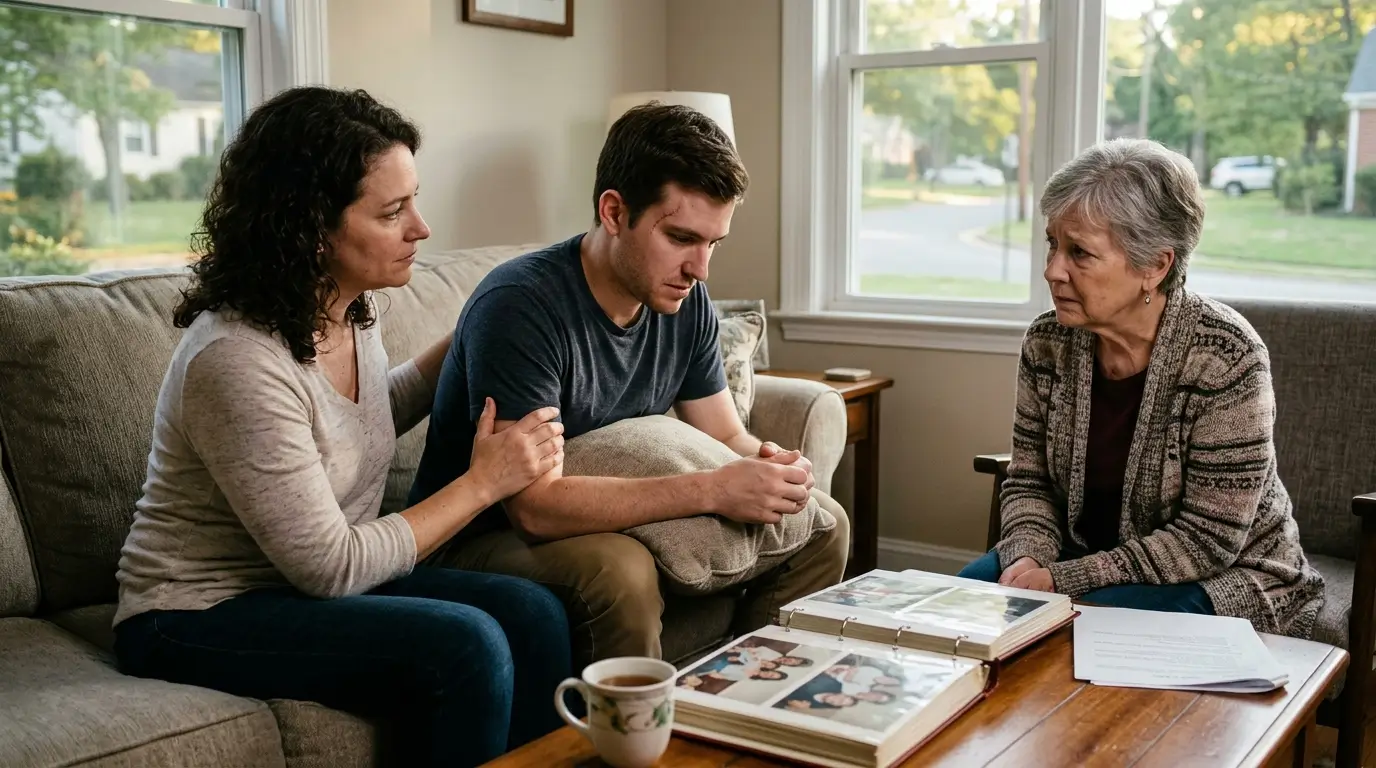
Perhaps one of the most devastating and misunderstood consequences of chronic traumatic brain injury effects on personality and social behavior. Numerous families describe their ordeal as being “in the company of an unknown person,” a term from clinical literature called “organic personality change.” It is no exaggeration; it is a factual biological occurrence that should be understood before taking action.
Why TBI Changes Personality
The prefrontal lobe of the brain controls functions such as executive abilities, empathy, and impulse control. This part of the brain is most vulnerable to shearing during an automobile accident. Scientific research, updated up to 2026, confirms this fact. “Disinhibition” is a term used in science to describe a condition in which the individual loses the ability to control themselves. For family members, this manifests itself as aggression, rudeness, and selfishness.
Common Personality and Behavioral Changes
Such changes have been observed in patients who suffered a TBI and must be openly addressed with a neuropsychologist.
- A sudden outbreak of irritability or anger without any reason
- Irresponsible or rash actions inconsistent with one’s personality
- Lack of emotion characterized by loss of warmth, humor, and empathy
- Detachment from others, social isolation, apathy
- Trouble forming an emotional bond with people
The Hidden Cost of Caregiver Burden
The psychological impact of having a spouse, parent, or child who has suffered from traumatic brain injury is well-documented and understood as one of the secondary consequences of such an injury. Caregivers frequently report feelings of stress, anxiety, and depression; however, these feelings are generally overlooked. There is help available for the survivor and their caregiver through Virginia’s Brain Injury Services Program (BISP) and Department for Aging and Rehabilitative Services (DARS).
Post-Concussion Syndrome and Long-Term Recovery
Post-concussion syndrome refers to a situation where the symptoms of concussion continue for much longer periods than expected and can even last for over three months. It is a much larger problem than most people believe, and both treatment and diagnosis are available. You might be suffering from post-concussion syndrome if someone told you that you should have recovered already.
Symptoms of PCS include:
- Persistent Headache: Headaches are the most commonly occurring symptom of PCS. These headaches may vary from regular daily headaches to migraines, causing severe pain to the extent that one cannot focus on work and other activities.
- Brain Fog and Cognitive Slowness: PCS slows cognitive processing. It is quite difficult to think of words, follow a conversation, and complete tasks that used to be done quite easily. This process is often compared to thinking with wet cement.
- Light and Noise Sensitivity: As a result of PCS, it can be very difficult for PCS-affected individuals to tolerate normal day-to-day environmental noises (traffic, shopping malls, private offices, etc).
- Sleep Disruption: Sleep problems such as insomnia, sleeping too much, and poor sleep quality are often complained of in an individual’s PCS diagnosis. As sleep is when the brain does its most vital work, any disruption of sleep will start a cycle that slows healing and aggravates all other symptoms of PCS.
- Anxiety and Mood Instability: Many times, individuals with PCS will experience depressive and anxious symptoms due to brain chemistry instead of just being injured.
2026 Legal Note for Virginia Residents
Workers’ compensation and personal injury claimants in Virginia are experiencing a rise in post-concussion complications. There is a growing medical consensus regarding post-concussive complications; thus, by 2026, it will be increasingly difficult for insurance providers to refute the claim that post-concussive syndrome is solely a psychological condition.
If you are suffering from PCS due to an accident at work or a car accident, you are eligible to receive traumatic brain injury treatment in Virginia, according to Virginia law.
Virginia-Specific Considerations for TBI Patients in 2026

There are numerous TBI treatment opportunities available to Virginia citizens, although knowing where to find them is important. Indeed, the array of such services has improved dramatically since 2024, now including telehealth services, new state-funded programs, and improved testing equipment throughout the state.
State-Funded Support: Virginia Brain Injury Services Program (BISP)
The Virginia Department for Aging and Rehabilitative Services (DARS) administers the Brain Injury Services Program (BISP), which is one of the best points of entry to Virginia’s TBI treatment services, offering case management, community-based support, and TBI rehabilitation. It is funded by the state and can be accessed anywhere in Virginia.
Medical and Rehabilitation Resources
The major centers specializing in treating TBIs in Virginia include VCU Medical Center, Inova Fairfax Hospital, and UVA Health, all of which provide teams of neuropsychologists and physical and cognitive therapists. Community-based and outpatient neurological clinics are also offered in Northern Virginia, Richmond, Hampton Roads, and the Shenandoah Valley.
Diagnostic Advances: What’s Available in Virginia in 2026
Standard CT and MRI image sequences are the basis for diagnosing the injury; however, Virginia’s premier trauma centers have begun using advanced types of neuroimaging, such as functional magnetic resonance imaging (fMRI) and diffusion tensor imaging (DTI), allowing them to detect brain damage and impaired neuronal connectivity that cannot be seen with traditional imaging. Virginia’s research hospitals will also begin conducting trials of AI-based diagnostic tests in 2026.
Telehealth Expansion for TBI Follow-Up
In 2024, Virginia expanded the types of telehealth services covered in the state by adding coverage for individuals suffering from traumatic brain injury (TBI) in rural areas who previously could not access specialist care due to geographic barriers. Individuals with TBI now have access to remote telehealth services, including neuropsychological consultation, cognitive therapy, and mental health support.
Virginia’s Legal Landscape for TBI Victims
The Virginia House Bill 107, effective July 1, 2026, aims to allow easier access to compensation by streamlining the process for filing or bringing UIM claims. For TBI victims who have been harmed in a car crash, the law will help make it much simpler to obtain the necessary insurance proceeds to cover their neurological care, rehabilitation, and lost wages. If you have suffered a TBI in a vehicle collision, consult with a Virginia personal injury lawyer today about your UIM rights.
How Tatum & Atkinson Law Firm Can Help
Tatum & Atkinson Law Firm, known to its clients as “The Heavy Hitters,” has been in existence since 2005. It is a veteran-owned firm that has helped clients win $100 million. Our firm has more than 65 years of combined experience handling cases involving TBIs.
- Maximizing 2026 Insurance Laws: We leverage emerging Virginia legislation, such as HB 107, to overcome insurance barriers and secure the comprehensive underinsured motorist protection you need for your long-term care.
- Proving Invisible Damage: Working with top medical experts, we document the signs of invisible injuries, such as memory loss and behavior changes, to provide conclusive proof of your injuries that no insurance company can deny or ignore.
- Projecting Lifetime Costs: Our professionals will assess your lifetime costs related to your injuries, including future medical costs and in-house care, so your settlement can provide long-term security rather than only short-term security.
- Recovering Lost Earning Capacity: We fight to recover payment for any loss of earning potential, ensuring that your family’s income is not jeopardized by the impact TBI can have on your future career.
- Direct Attorney Access: Unlike “assembly-line” organizations, you talk directly with your attorney, leaving us to navigate the intricate systems of DARS and BISP.
“Insurance companies continue to fall back on the myth of the ‘normal MRI’ as an excuse for denying claims. It’s assuming that you don’t understand that a normal hospital scan will reveal nothing more than a bleed in your brain and not the actual cause of your personality changes, which is shearing. We win these lawsuits when we focus on the areas the insurance companies have denied.” — Robert Tatum, Lead Attorney
Next Steps If You or a Loved One Has a TBI
Traumatic brain injury is something that happens over time, and because of the research done in 2026, you must realize that TBI will not magically disappear in order to preserve your legal and physical health. As you look into what are the long term effects of a TBI in Virginia are, understand that you’re not only looking to pay off today’s expenses but tomorrow’s expenses.
The state of Virginia mandates that you receive payment for your ongoing health issues, lost wages, and even emotional damages suffered by your family members. This is an “invisible” injury, one that requires the help of experts like those at Tatum & Atkinson Law Firm, who will fight under the new 2026 laws.
Stop waiting for symptoms to clear, start securing your future. Call (800) 529-0804 for a free Virginia case review.
Frequently Asked Questions!
Where can I get traumatic brain injury treatment in Virginia?
There are three top TBI hospitals in Virginia: VCU Medical Center, Inova Fairfax Hospital, and UVA Health. In addition to these hospitals, neurology specialists, rehab centers, and other providers, such as DAS and BISP, offer integrated TBI services in Virginia.
What rehabilitation options are available for TBI patients in Virginia?
Rehabilitation can take the form of physical therapy, occupational therapy, speech therapy, cognitive rehabilitation, neuropsychology, and vocational rehabilitation. Community re-entry programs for brain injuries are managed by Virginia’s DARS and BISP, while inpatient and outpatient rehabilitation programs exist at universities and hospitals in Virginia.
How do Virginia doctors diagnose long-term brain injuries?
Imaging and neuropsychological tests are usually used to diagnose the condition, but by 2026, top Virginia trauma centers will have incorporated more sophisticated technologies, such as fMRI and DTI, to detect problems not visible with standard imaging techniques.
Are there brain injury recovery programs in Virginia?
Yes. Virginia’s Brain Injury Services Program (BISP), provided by DARS, provides statewide case management and community support. Programs for brain injury recovery are offered by VCU, UVA, and Inova.
What legal options are available for TBI victims in Virginia?
The TBI patient can file a claim for personal injury, workers’ compensation, or UIM, all of which are better covered by HB 107 (effective from July 2026). The statute of limitations for Virginia is two years. Consulting an attorney early on ensures that you receive adequate compensation.
