What If I Was A Pedestrian In A Car Accident In Virginia?
Key Highlights:
- If you are wondering “what if I was a pedestrian in a car accident in Virginia,” you may have grounds for bringing a lawsuit against the other driver, provided that their negligence caused the accident.
- Virginia has a very strict contributory negligence rule, meaning that if the insurance company can prove that you were even 1% at fault, you will be barred from obtaining any damages at all.
- To counter the insurance company’s tendency to try to blame you for the accident, it is very important that you move quickly to preserve critical evidence such as eyewitness testimony, medical documentation, and time-sensitive information like dash cam video or metrics from a smartwatch.
- In Virginia, you have 2 years from the date of the accident to file a lawsuit. By contacting an attorney as soon as possible, you will prevent the insurance company adjusters from using your recorded statements from early on or waiting too long since the accident to negatively affect your case.
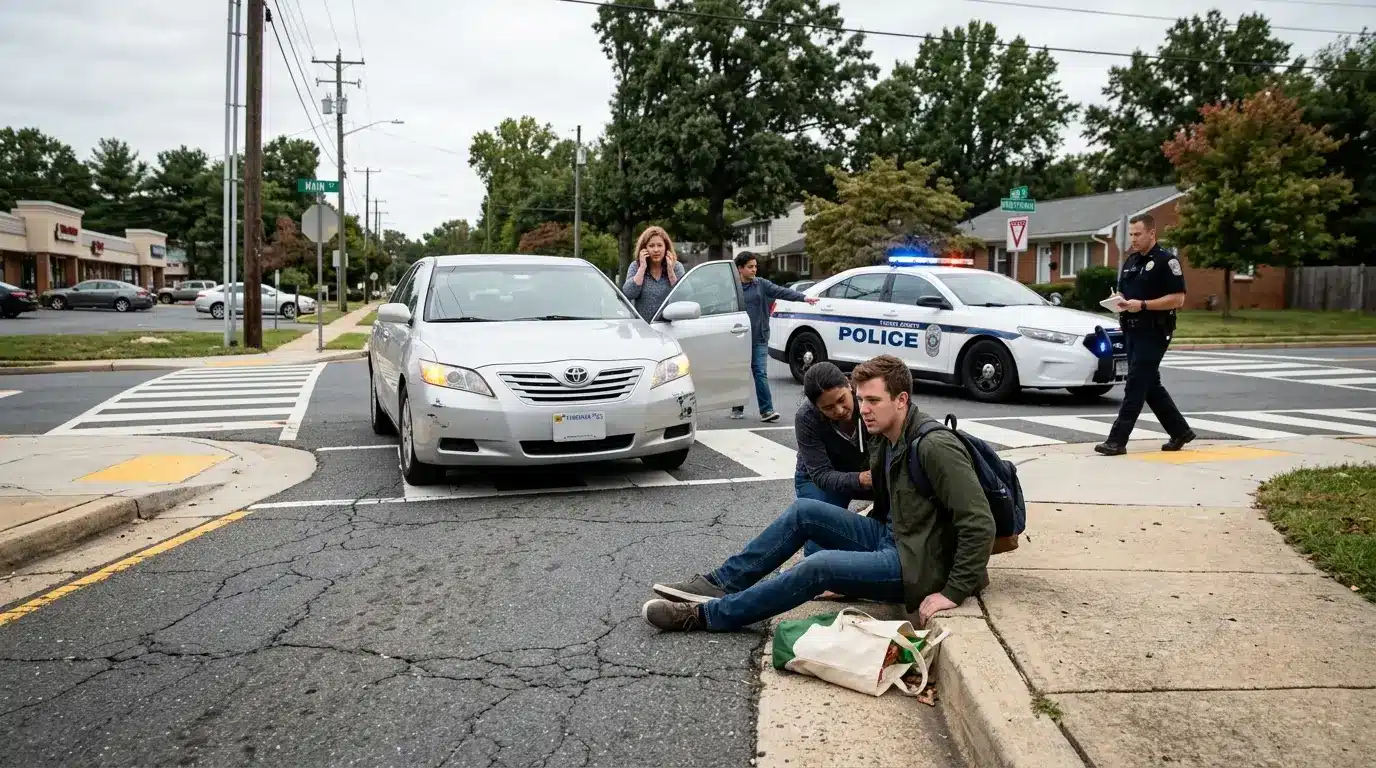
You were simply walking down the street, and then a moment later, everything changed. If you are asking yourself, “what if I was a pedestrian in a car accident in Virginia,” you are not the only one who has experienced such a tragedy. There are many people who have also had terrible outcomes from being struck by a car while walking.
You have the right to pursue just compensation for injuries sustained as a result of another person’s poor driving. However, because of Virginia’s strict contributory negligence law and aggressive insurance practices, it is necessary to seek out legal advice as soon as possible. In addition, because most evidence of the accident can disappear after a few days, it is important to seek an attorney as soon as possible to get the compensation you deserve.
If you have suffered a terrible accident as a pedestrian, our lawyers at Tatum & Atkinson Law Firm will represent you on a contingency fee basis, meaning that you won’t have to pay anything unless we recover money for you.
Call our office today for a free consultation at 800-529-0804.
What If I Was a Pedestrian in a Car Accident in Virginia? Call Tatum & Atkinson Law Firm First
What do you do, “what if I was a pedestrian in a car accident in Virginia?” The answer is that you probably have a potential case; however, due to Virginia’s two-year statute of limitations, it is critical to act quickly. The two-year statute of limitations begins at the time of the accident. As time progresses, evidence will disappear, witnesses will become more difficult to find, and the insurer will have more time to prepare for your case.
Before you talk to an adjuster, sign any paperwork, or accept any settlement from an insurer, even if it seems reasonable, consult with a Virginia pedestrian accident attorney. The professionals at Tatum & Atkinson Law Firm work around your recovery schedule to answer all of your questions, communicate with the insurance companies on your behalf, and pursue every penny of compensation you deserve for your injuries. We do not get paid until you do.
Your Legal Rights and What Virginia Law Says About Pedestrian Safety
Without exception, the Virginia pedestrian right of way laws, as per Virginia Code § 46.2–924, require that all drivers yield to pedestrians at marked crosswalks and at intersections without signals as a legal obligation for which they are responsible. If any of these drivers fail to uphold the law and then cause you harm, you are entitled to file a Virginia pedestrian accident claim for the damages (medical bills, lost income, pain and suffering, etc.) resulting from the accident.
Regardless of whether the accident happens on an interstate, a residential street, or in a parking lot, we represent every type of pedestrian hit by car Virginia cases. Each one of these accidents will provide the opportunity to pursue the proper legal remedies available. It is important to note that Virginia law does not guarantee that an injured party will get compensated for their injuries; the party must actively pursue compensation through appropriate channels that include maintaining sufficient evidence to support their claim and a sound legal approach.
What to Do After a Pedestrian Accident and What Evidence Wins Claims
The first couple of hours after a pedestrian accident in Virginia will greatly impact your ability to successfully pursue a Virginia pedestrian injury lawsuit. By taking appropriate action and properly preserving critical evidence during this time frame, you can affect the outcome of your Virginia pedestrian accident claim.
Critical Immediate Steps
- Call 911 Immediately: Police and paramedics are necessary for filing an official report of the accident.
- Seek Medical Care: Regardless of how you feel, it is important to seek medical attention. Many people do not realize they are seriously injured, as adrenaline will hide any significant injuries. Also, if the insurance company can prove you did not receive medical treatment, they will use it against you later.
- Stay at the Scene: You cannot leave the scene of an accident until the police have permitted you to do so.
- Exchange Information: You should collect the following information from the driver who struck you: name, address, phone number, insurance, driver’s license number, and license plate number.
- Gather Witness Contacts: You should also collect names and phone numbers of all witnesses before they leave the scene.
- Document the Scene: You should take pictures of the following before the evidence disappears, such as the position of vehicles, the license plate, and the damage. Along with that, capture your injuries, ripped clothing, skid marks, debris, and traffic signals/signs.
- Limit Your Comments: Do not say “I’m sorry” or take blame for the accident in front of the other driver or their insurance adjusters, because any comment made can be used against you later.
The Most Valuable Evidence for Your Claim
To succeed in a Virginia pedestrian injury claim, you need to present substantial corroborative evidence. The best evidence includes:
- Video Footage: This includes any available CCTV or surveillance camera footage, as well as any dash cam footage within a few days of the incident.
- Official Documentation: A comprehensive police report and your complete medical records.
- Witness & Expert Testimony: Eyewitness statements; professional accident reconstruction experts can provide valuable insights into your claim.
- Wearable Device Data: Device(s) that provide data regarding GPS location, heart rate, and step count (i.e., smart watches and fitness trackers) to support your version of events and show physical impact as a result of the motor vehicle collision.
Act Quickly: Evidence is lost very quickly. The Tatum & Atkinson Law Firm will make every effort to preserve all relevant data before it is lost.
Virginia’s Contributory Negligence Rule and How Drivers Shift Blame
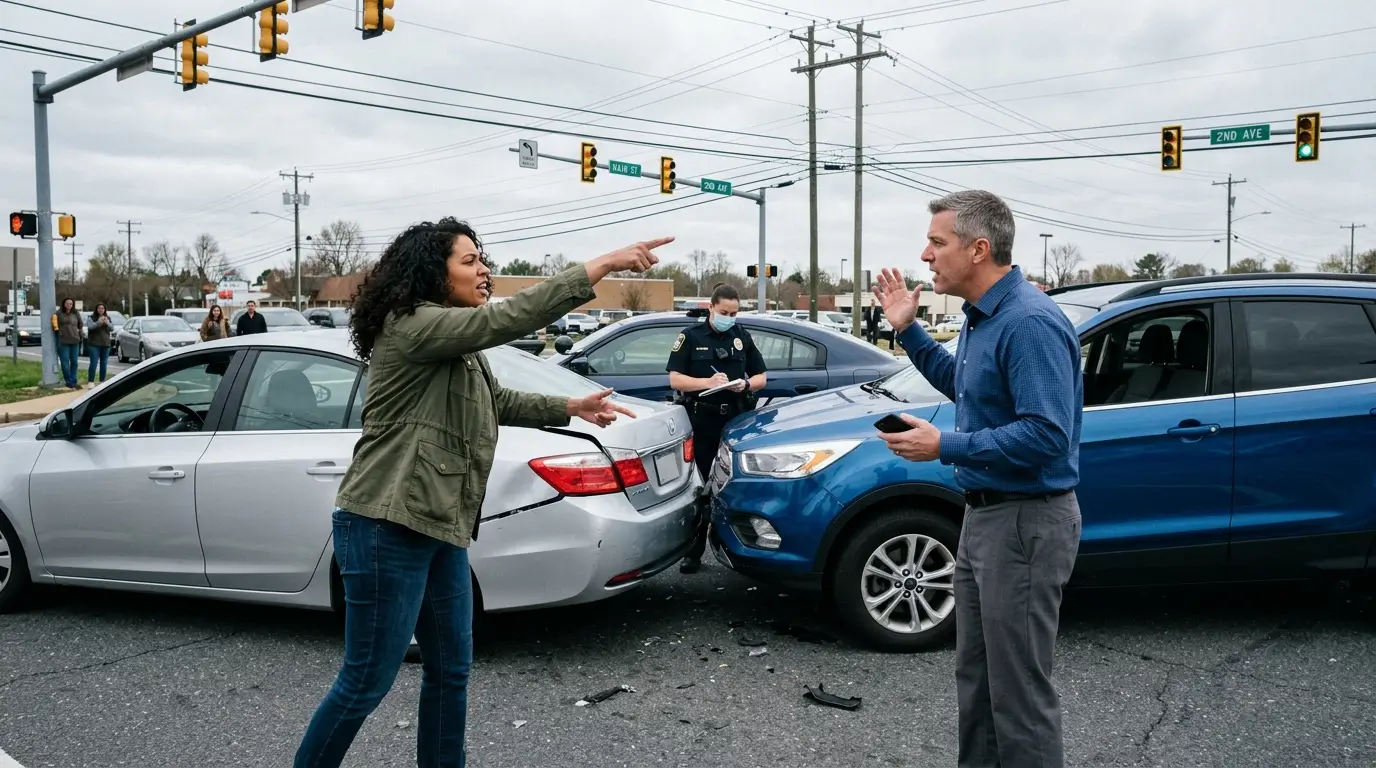
Virginia has a pure contributory negligence rule whereby if you have any amount of fault (even just 1%) for causing an accident, you would be barred from receiving any compensation for the damage caused.
The “1% Rule” Barrier
This means that if you are injured in Virginia and an insurance company can establish that you are at least partially at fault in some way, and the jury finds you even one percent at fault for the accident, then you would have no right to be paid compensation from the responsible party.
Insurers look very aggressively for reasons to blame the victim of an accident, because a 1% determination makes it very easy for them to avoid having to pay any compensation.
Common Blame-Shifting Tactics
Here are some typical blame-shifting arguments used by defense attorneys and insurance companies to deny payment of a crosswalk accident claim.
- Visibility: Insisting that you were wearing dark clothing/colors at the time of the accident.
- Location: Insisting that you had crossed outside of the marked crosswalk area.
- Behavior: Claiming that you stepped into traffic without an adequate warning or were distracted because you were using your phone.
Deconstructing the Driver’s Excuses
Cases of driver negligence can still prevail against any of these arguments; you will only win if your response to the law is precise and you have substantial supporting evidence.
- Clothing vs. Speed: The fact that the pedestrian is wearing black doesn’t absolve the driver from speeding, being distracted by something other than looking at the road ahead, or failing to check the road ahead. The purpose of your attorney representing you is to prove that the driver was negligent because that was the main reason for the accident.
- Crossing Outside a Crosswalk: This makes the claim more difficult, but not impossible. All drivers owe a duty of care to all pedestrians, regardless of whether they are in a designated crosswalk.
- Crosswalk Accidents: There is a strong liability case against the driver if they fail to yield to you while walking in a crosswalk. However, expect the insurance company to continue investigating any indication that you are partially at-fault so they can invoke the contributory negligence rule against you.
Common Injuries, Available Damages, and How Insurers Handle These Claims
The human body has no physical protection from being hit by a vehicle that weighs many tons. Because of the high physical and economic stakes involved, you must know how much should be claimed before you talk to an insurance company about your accident.
Serious Pedestrian Injuries
Pedestrian accidents often cause serious, life-changing injuries. The most common serious pedestrian injuries Virginia are:
- Physical Trauma: This includes traumatic brain injury (TBI), spinal cord injury, internal organ injuries, and severe soft tissue injuries
- Fractures: These include broken hips, legs, pelvis, ribs, and many others.
- Psychological Harm: Claims for psychological injury include PTSD, depression, and anxiety, all of which are compensable by law.
What Pedestrian Accident Damages Virginia Can You Recover?
A full insurance claim pedestrian accident covers both your immediate and long-term losses.
| Compensation Type | What It Covers |
| Economic Damages | Past and future medical bills, lost wages, reduced earning capacity, and property damage. |
| Non-Economic Damages | Pain and suffering, emotional distress, and loss of enjoyment of life. |
| Wrongful Death | (In fatal cases) funeral costs, lost financial support, and loss of companionship. |
“Do not rush to settle. Once you sign the insurance release, you lose your right to seek additional compensation from the insurance company (and therefore from the driver), including for discovery of any new medical problems that may come up in the future.” – Robert Tatum, Founding Attorney
How Insurers Handle Claims and How to Protect Yourself
Keep in mind that the insurance company of the driver at fault is not working for you; their priority is to keep their profits. Insurance adjusters frequently use tactics such as the ones listed below.
- Early Recorded Statements: They will try to get you locked into a statement regarding an event before knowing the outcome of your injuries.
- Medical History Probing: The insurance company will pull up any medical problems from before the accident event and attribute your pain or injury to that medical problem.
- Social Media Monitoring: The insurance company may monitor your public social media profile for any pictures or statuses you may have posted; they can then twist that information and claim that you are not injured.
The Golden Rule: Do not provide them with a recorded statement and do not accept a quick settlement without talking to an attorney first. A pedestrian accident settlement with the assistance of an attorney will always yield you a larger settlement than settling by yourself.
Contact Tatum & Atkinson Law Firm for a Free Consultation

If you or a loved one were hit by a vehicle while walking in Virginia or are wondering “what if I was a pedestrian in a car accident in Virginia,” you need to know your legal options from lawyers who aggressively represent injured pedestrians. We at Tatum & Atkinson Law Firm accept Virginia pedestrian accident claims on a contingency basis. This means that there is no financial risk in contacting us.
We aggressively pursue pedestrian accident compensation Virginia to the maximum extent allowed by Virginia law for both simple crosswalk accident claim and complicated driver negligence pedestrian accident court cases.
Please call us today at (800) 529-0804 for a free, no-obligation consultation.
Frequently Asked Questions!
Can I file a claim if I was hit in a parking lot instead of on a public road?
Drivers have a duty of care for pedestrians even on private property. A parking lot accident involving a pedestrian and a vehicle may form the basis for a valid Virginia pedestrian accident claim, assuming that it can be proven that the vehicle operator acted negligently.
What if the driver who hit me left the scene of the accident?
A hit-and-run will not ruin your chances of filing a claim through uninsured motorist coverage. If a hit-and-run driver is later identified, you may bring a Virginia pedestrian injury lawsuit directly against that driver. Victims of a hit-and-run in Virginia have various rights under the law.
Can wearing dark clothing affect my pedestrian accident claim?
Insurers may utilize a contributory negligence argument. However, clothing alone rarely determines if liability exists; factors like lighting, speed of vehicle, and road controls all create an environmental basis for what the operator should have seen with enough alertness, regardless of how you were dressed.
What if I was crossing outside a marked crosswalk when the accident happened?
While crossing outside of a crosswalk will complicate but not bar your claim, as it is a given that all operators owe a duty of care everywhere. Your attorney will use facts to minimize any fault associated with you.
Can smartwatches or fitness trackers be used as evidence in a pedestrian accident claim?
Yes. GPS location information, increases in heart rate during the impact, variations in step count, and movement history from a wearable device can all support your statement regarding the accident and help to prove the extent of time needed to heal from an injury.
