What Should You Do When Someone Is Tailgating You In Virginia?
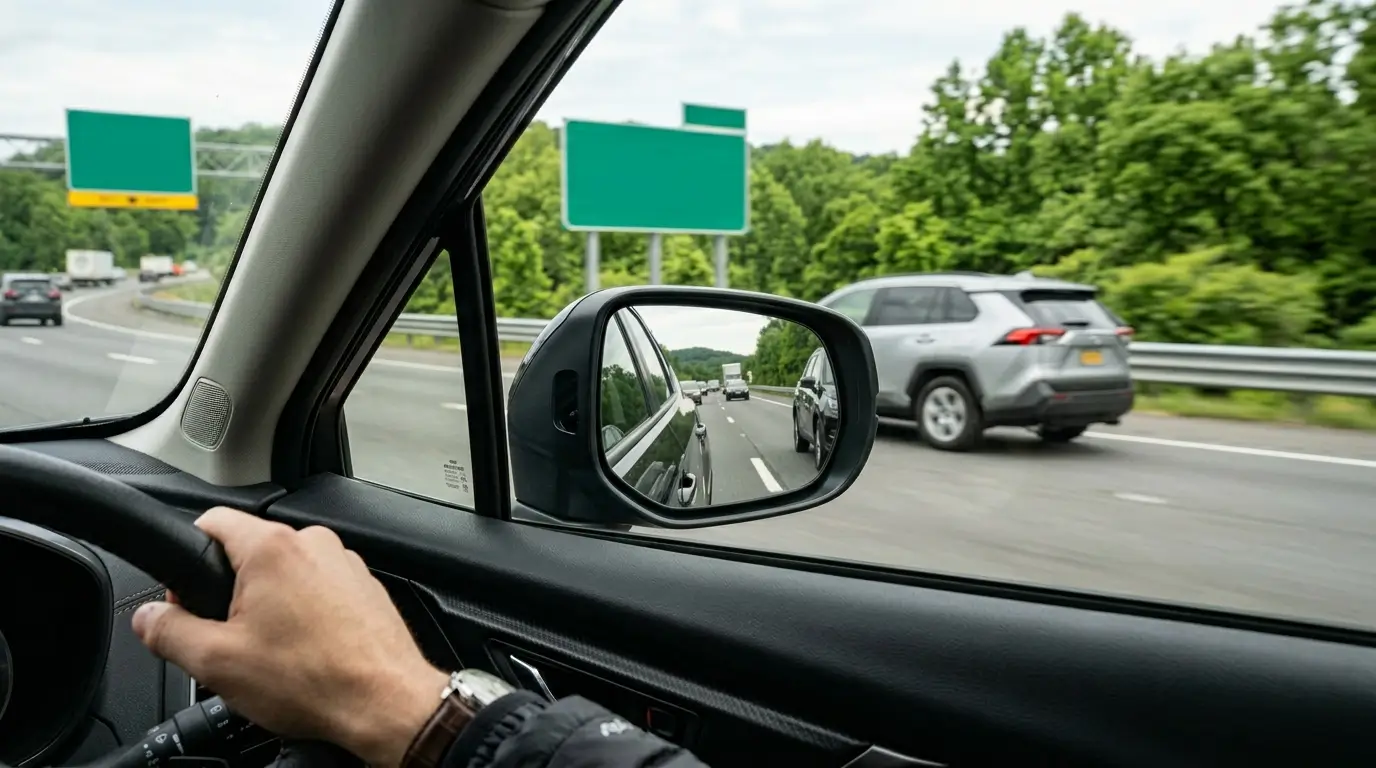
Key Highlights:
- What Should You Do When Someone Is Tailgating You In Virginia? – Stay calm; drive at constant speed; do not attempt to brake-check. Pull to the side when it is safe to do so, and allow the other vehicle to pass.
- A rear-end collision, including an accident in tailgating accident Virginia, could include elements such as non-challenged application of brakes, witness statements, police reports, dash-cam video, and apportioned fault to other parties per the insurance provider.
- Tailgating can also include aggressive driving Virginia behaviors, which can include but are not limited to speeding, improper lane changes, horn blaring, flashing lights, aggressive gestures, and road rage.
- Rear-end collision prevention from someone tailgating: you will take a buffer zone, cognitive control, controlled deceleration (braking), and the ability to maintain your “cool” in the face of a situation created by someone who is tailgating you and pressuring you into making unsafe decisions while driving.
- When you are involved in a car accident caused by tailgating, you may be able to obtain strong evidence against the tailgater if you take the proper precautions to collect the evidence.
What Should You Do When Someone Is Tailgating You In Virginia? In Virginia, if you find that someone is driving too close to your vehicle, you should keep your speed fairly consistent; don’t change your speed quickly by either acceleration or hard braking; and only move over or off the road when it is safe to do so. Do NOT speed up; do not brake-check, and do not try to give the other driver a lesson.
It may feel like an attack on you personally, but nothing will make those moments on I-81, I-95, Route 460, or any two-lane road near Cedar Bluff worth crashing into someone because of their actions. If you have been hit by a tailgater, let the attorneys at Tatum & Atkinson Law Firm evaluate your unique situation and explain your options.
I’m Robert Tatum, an attorney at Tatum & Atkinson Law Firm, as part of our firm’s legacy of excellence since 2005. As a veteran-owned law firm, our firm has over 65 years of experience among our attorneys with cases involving tailgating and rear-end accidents in Virginia. We understand how quickly an aggressive driver can take a safe, normal drive and create a crash, causing injuries or death. We will work hard for your rights!
Why Is Tailgating So Dangerous in Virginia?
A rear-end collision can occur in seconds when there is no space between vehicles if the vehicle in front comes to a sudden stop or slows down. If a deer steps into your lane while you are following closely, you may not have enough time or space to stop before hitting it.
The laws of the Commonwealth of Virginia require that drivers give themselves enough room between themselves and the vehicle ahead of them based on the speeds of both vehicles, traffic conditions, and the conditions of the road. For more information on this law, please see Virginia Code § 46.2-816.
This law is important because a safe distance to follow is not a discrete number; many variables affect what a safe driving distance Virginia would be, based on current weather (rain, fog, darkness), road conditions (curves in the road, construction, heavy traffic), and speed limits. A driver cannot possibly react to potential dangers without some degree of distance from the vehicle ahead of them.
What Should You Avoid When Someone Is Following Too Closely?
Anger-induced reactions are often the most common cause of crashes. Examples of anger-related reactions include brake-checking, accelerating, blocking the passing lane, tapping your brakes, and using hand signals to express how you feel at that moment.
Everyone gets frustrated with people tailgating, especially if they are driving aggressively, but brake-checking a tailgater may have the exact opposite result than what you wanted to accomplish. It may also give the insurance company a reason to assign some degree of responsibility to you at the time of the crash.
Therefore, remaining calm, maintaining your speed, and not braking suddenly when you get tailgated are the best possible ways to achieve accountability. Indicating to the tailgater that you are going to change lanes from and doing so when it is safe is also in your best interest in saving your neck, back, car, and insurance.
How Can a Few Extra Seconds Prevent a Rear-End Crash?
A few more seconds can mean all the difference when driving defensively. Good defensive driving tips Virginia, start with having space in front of you when someone is following too closely behind you.
If there is no cushion between you and the driver behind you, then you should create a cushion between you and the driver in front of you. This will allow you to decelerate gradually rather than slamming on your brakes.
Creating a cushion between you and the car ahead of you is one of the easiest ways to prevent rear-end collision prevention on Virginia’s interstate highways, including I-64 near Richmond, I-95 in northern Virginia, I-81 through southwestern Virginia, and on some of the busiest roads in Virginia, such as those around Norfolk, Roanoke, Hampton Roads, and Tazewell County.
Visualize how space creates a shock absorber between your car and the driver behind you. You cannot control the driver following you, but you can create space in front of you.
What Should Your Car Do When a Tailgater Is Behind You?
Make the way you drive predictable. No sudden stops, sharp lane changes, or any other type of driving that would make it hard to know where you’re going.
- Always use your turn signal well in advance
- Use both hands on the steering wheel
- And use more of your attention watching the roadway ahead than the rearview mirror.
- When you see traffic changing, decelerate smoothly.
If the tailgater is using their headlights, honking the horn, or maneuvering erratically, safely move to a lane where they are not driving behind you or to the side of you. If this is not possible; firmly hold your position until the opportunity arises to safely move over.
If you change lanes and the tailgater follows you into the lane you are in, do not go directly home. Drive to a police department, fire department, or gas station or any well-lit public location.
How Do Weather and Road Conditions Increase Tailgating Risks?
Adverse weather conditions can increase the tailgating driver accident risk because the stopping distance will be compromised by wet pavement as compared to dry pavement.
Numerous environmental factors affect the safety of operating a vehicle behind another vehicle within a safe following distance (less than 0.5 seconds). The following environmental factors contribute to an increased accident risk associated with tailgating:
- Rain
- Fog
- Snow
- Ice
- Darkness
- Curves
- construction zones, etc.
Curves on rural roads in Southwest Virginia can be deceptive and hide stopped vehicles. An individual driving on I-95 may encounter congestion that suddenly occurs. Tunnels, bridges, and merging traffic in Hampton Roads can decrease the amount of time available to react when a tailgating situation arises.
Under Virginia traffic safety laws, a driver must establish a safe following distance based on the actual weather conditions. If a driver is tailgating in rain, fog, or heavy traffic conditions, the driver has a higher likelihood of being found guilty of unsafe driving based on their actions, which resulted from the tailgating activity.
When Does Tailgating Become Aggressive Driving?
When a driver operates their vehicle to exert pressure on another vehicle by tailgating, or it is operated to intimidate or threaten another vehicle through means such as flashing lights, honking the horn of the vehicle, driving at a higher than normal rate of speed, swerving, unsafe passing, or blocking other vehicles, their actions may meet the definition of aggressive driving.
Virginia Code §46.2-868.1 defines aggressive driving under Virginia law. Not every instance of tailgating would necessarily be classified as aggressive driving; some degree of the behavior may still be applicable should a motor vehicle accident occur as a result of the tailgating behavior.
If you feel that you are in danger, call the 911 emergency number when it is safe to do so. Try to make a mental note of the color, make, and model of the vehicle, the license plate number, and the direction the vehicle is traveling.
Do not retaliate, do not participate in attempting to compete against another vehicle, and do not make the situation escalate.
What Are the Safest Ways to Create Distance?
The right move will depend on the road type. On a highway, you should signal and safely merge to the right when there is an opening. On a two-lane road, continue at a consistent rate of speed until you can safely pull off the road.
Do not accelerate to accommodate the driver following you. Increased speed creates more hazardous driving conditions and could potentially harm your case in the event of an accident.
Situation |
Safer Response |
| Tailgater on the highway | Signal, move right when safe, let them pass |
| Tailgater on a two-lane road | Maintain speed, use a safe pull-off if available |
| The driver flashes lights or honks | Avoid eye contact, stay steady, create space |
| The driver follows after the lane change | Do not drive home; call the police if needed |
| A crash happens | Call 911, document evidence, seek medical care |
These steps are not about being passive. They are about staying in control.
How Can Dashcams Help Document Tailgating?
When your car is involved in a car accident caused by tailgating, dash cams can be instrumental. Dash cams can also help prove how long the tailgating driver followed you more closely than was appropriate, if the other driver swerved, if you braked safely, and if the traffic had slowed down in a normal manner.
Photographs of the damage to the vehicles involved in the accident, as well as photographs of the road conditions, skid marks, traffic signs, weather conditions, final positions of the vehicles involved in the collision, and visible injuries to the occupants will also be useful as part of a claim for damages.
For information on how to maintain or request a reportable crash record, the Virginia Department of Motor Vehicles will provide instructions through its crash report function. A police report will provide documentation of the parties involved, the location of the accident, the scene of the accident, and testimony of the individuals involved.
Who Is Liable When Tailgating Causes a Crash?
Usually, the driver who hits the lead vehicle from behind is deemed to have committed an infraction during a rear-end crash because they did not keep a safe distance or a reasonable speed. However, when assessing the totality of the factors relevant to establishing liability, factors that may also be taken into consideration include:
- Road conditions (involving the weather)
- Speed
- Brakes
- And witness statements.
If the rear driver claims you stopped too fast, you may be able to refute that assertion by indicating that the rear driver was following too closely Virginia. In this instance, if you have a dashcam, there may be sufficient evidence to determine who is liable for the crash.
In essence, rear-end crash liability Virginia could be a matter of dispute. Liability is governed by strict tort rules in Virginia; therefore, do not guess when talking to your insurer(s). Guessing about speed, distance, or braking can cause difficulties later down the line.
Why Do Insurance Companies Examine Tailgating Crashes Closely?
If there are damages in tailgating accident Virginia, all of the relevant evidence required by insurance companies to support their claim must include the following:
- Photos
- Damage estimates on both vehicles involved
- Injuries incurred as a result of the accident
- Dashcam video
- Phone records
- And eyewitness accounts.
Insurance companies may ask you whether or not you stopped suddenly over a long distance, whether or not your brake lights worked, and also if you changed lanes just before your collision.
This does not necessarily suggest that your claim is bad; rather, it illustrates that every single detail regarding the accident is essential to establish what happened in the accident.
“In a rear-end collision, distance is the factor that determines liability. The closer the following driver is to the lead driver when the collision occurs, the less distance there is between them, which results in limited options to avoid causing a collision.”
In rear-end collision cases, we do not simply look at the rear bumper of a vehicle that received additional damage. We also analyze the members of the parties involved in the accident, other than the bumper of the impacted vehicle or vehicles, including the following:
- driver’s braking patterns before the collision
- the area of collision
- damages caused to each vehicle
- the condition of the road
- the dashcam footage (if available)
- any eyewitnesses who may have seen the collision and whether the following driver had sufficient time to stop before colliding with the lead driver.
How Can Virginia Drivers Protect Themselves From Aggressive Motorists?
Defensive driving begins before the collision. Give yourself some space behind other vehicles; don’t wait without reason in the extreme left lane for someone to switch into the right; signal your intentions well in advance, brake gradually, pick a proper speed for the flow of traffic, and give way to busy drivers.
Be careful of distracted and aggressive drivers in construction zones, school zones, merging traffic areas, or fast-moving corridors. If you encounter a stupid driver, let them go; your pride isn’t worth the cost of being in a breakdown.
If you notice someone driving dangerously, attempt to procure a description of the other driver’s car: color, possibly make and model, and license plate number. Describe the direction that the driver was moving when you made the observation, but do this only if you can do so safely.
Once you have all of the above information, contact the police.
When Should You Contact a Lawyer After a Tailgating Crash?
If you suffered injuries as a result of the accident,
- If the insurance company has placed any degree of blame on you,
- If the accident involved more than one vehicle, if the crash has been captured on video from a camera attached to a vehicle,
- If the police officer’s report related to the accident seems inaccurate,
- If you were aware of aggressive driving behavior displayed by the other driver before the collision,
- You should consider hiring an attorney.
An attorney can assist in safeguarding evidence, taking care of any calls made to an insurance company, reviewing potential liability issues, collecting medical records, and protecting your claim from unfair damage awards.
Legal assistance is not drama, but rather an opportunity for every incident to be judged based on the facts, rather than knee-jerk assumptions.
What Should You Do When Someone Is Tailgating You In Virginia?
When tailgating in VA, remain calm, remain steady, refrain from brake-checking, safely switch lanes, & call law enforcement should the driver become aggressive.
Tailgating is more than rude driving; tailgating can result in serious rear-end crashes and neck/back injuries, concussions, vehicle damage, and insurance disputes.
An appropriate response to tailgating helps minimize the likelihood of a rear-end collision. Collecting evidence may provide support for your crash claim if it does occur.
Talk With Tatum & Atkinson Law Firm about what Should You Do When Someone is Tailgating you in Virginia
If you were hurt in a Virginia crash caused by a tailgating driver, Tatum & Atkinson Law Firm can review the evidence, explain your rights, and help you deal with the insurance company. Call (800) 529-0804 for your free consultation. Remember that we charge you no fees until the case is finished. Our team of lawyers is available to help you out.
FAQs: What Should You Do When Someone Is Tailgating You In Virginia?
Should I speed up if someone is tailgating me?
Avoid speeding up when tailgated, as higher speeds increase hazard risks and can harm your legal case if a crash occurs. Maintain a steady pace and drive carefully, merging right when safe to allow the vehicle to pass. On two-lane roads, stay consistent until you reach a safe pull-off point.
If a tailgater rear-ends my car, will I be held accountable?
Your negligence history has to have facts or evidence that show the driver was negligent. That is not based on personal perceptions.
What if the tailgating driver is flashing headlights or honking?
Be calm, never engage with the driver at all, move over when it is safe, and call the police if the behavior seems threatening.
Is tailgating considered aggressive driving in Virginia?
Aggressive driving includes behavior such as other unsafe driver actions, including dangerous actions, intimidation, speeding, and/or unsafe lane use.
What should I do if a tailgater follows me after I change lanes?
Do not drive yourself home. Instead, go directly to a public place or a police station, where you will be safe, and call 911 if you feel that you are in danger.
