Why Can I Lose An Eye In A Car Accident In Virginia?
Key Highlights:
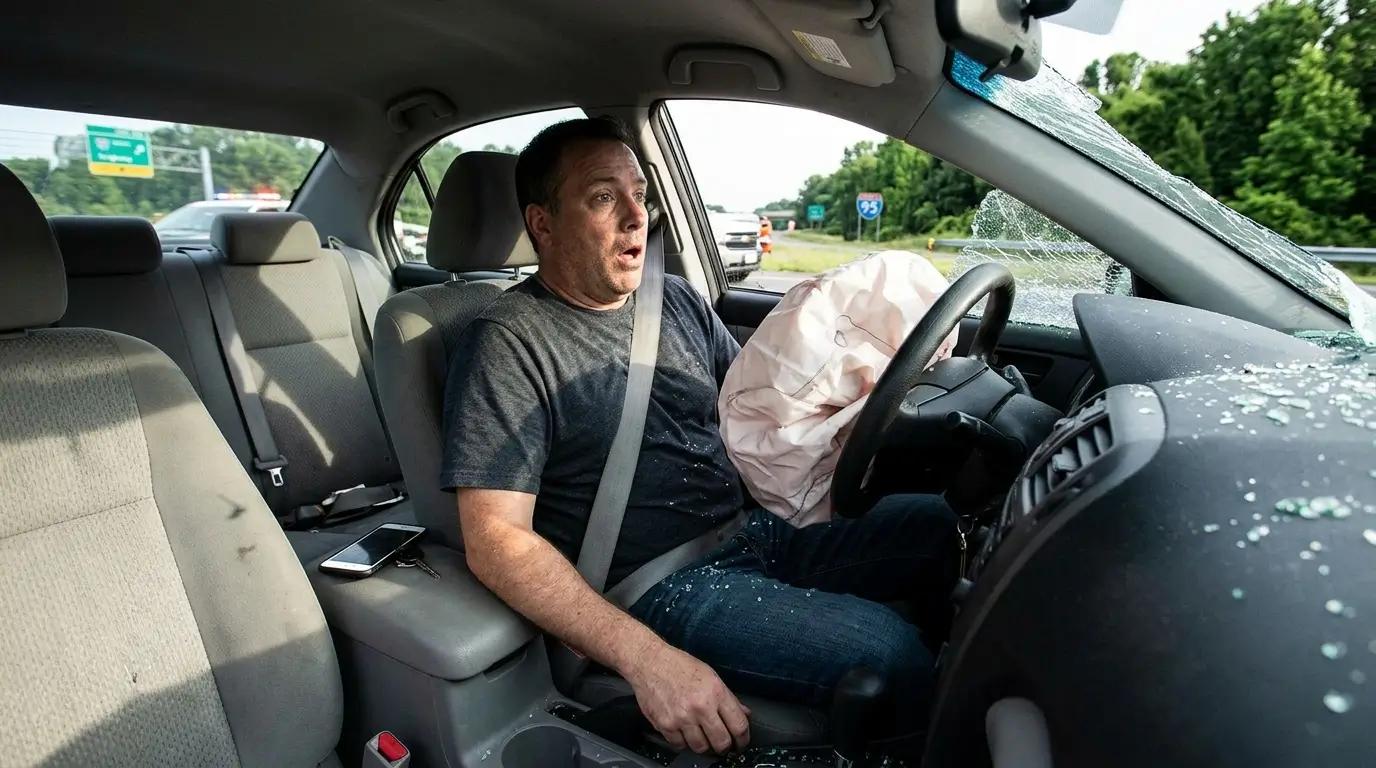
- Why can I lose an eye in a car accident in Virginia? Car accidents in Virginia can cause significant eye injuries due to various factors, including extreme forces acting on the head and face during a high-speed impact, debris flying through the air, glass fragments, and airbag deployment.
- Serious eye injuries can include retinal detachments, orbital fractures, damage to the optic nerve, and corneal lacerations, all of which can lead to total and permanent vision loss.
- Under Virginia’s contributory negligence laws, it is important to document your eye injury promptly and thoroughly in order to protect your rights to recover full compensation for the injury.
- Traumatic eye injury compensation in Virginia may include costs of medical treatment, costs of future medical treatment, lost wages, pain and suffering, and loss of enjoyment of life or quality of life.
- An eye injury lawyer in Virginia will identify all negligent parties, document evidence, and advocate for a settlement that compensates for the full lifetime costs of your injury.
Car accidents may lead to serious injuries, including permanent vision impairment or loss, as well as long-term effects on quality of life. For recovery and protection, it is important for you to understand how these injuries occur, what treatments exist, and what your legal rights are.
I am Robert Tatum, a lawyer at Tatum & Atkinson Law Firm, who can assist you in obtaining full compensation for your loss. With decades of experience representing victims of catastrophic injury cases across Virginia, my firm is able to offer you solid representation and advocate on your behalf for maximum recovery.
5 Common Eye Injuries Caused by Car Accidents in Virginia
Due to impact and debris from an automobile accident, Virginia residents may sustain significant eye injuries. Different types of collisions present risks that could result in permanent vision loss or damage.
Corneal Abrasion
Scratches on the surface of the eye cause discomfort and blurred vision.
Fracture of the Orbital Bone
The fracturing of the bones that create the eye’s orbital cavity as a result of blunt-force trauma.
Detached Retina
The detachment of the retina from the eye may lead to permanent vision loss.
Damage to the Optic Nerve
Damage to the optic nerve may affect the transmission of visual signals between the eye and the brain.
Trauma-induced Hyphema
Internal bleeding within the eye caused by traumatic impact or injury.
Retinal Detachment and Optic Nerve Damage
Of the catastrophic eye injuries listed above, detached retinas can occur as a result of Virginia automobile accidents and can be especially damaging. As explained in the National Eye Institute’s informational page on retinal detachment, “The retina consists of light-sensitive tissue that extends along the back of the eye. If the retina detaches from its back attachment to the eye, a retinal detachment occurs.”
If the retinal detachment is allowed to go untreated, the patient may face permanent vision loss as a result. Further, “Retinal detachment is a medical emergency that requires immediate surgical attention” (National Eye Institute). Similarly, when blunt-force trauma or sudden pressure changes occur during a Virginia vehicle accident, damage to the optic nerve may result in permanent vision loss due to the inability to surgically repair the damaged optic nerve.
How Car Crashes Cause Vision Loss in Virginia?
Car crashes are extremely severe in terms of how they occur. The deceleration forces experienced by every passenger in the vehicle after a car has hit something may happen suddenly and with an intense amount of force. The person’s head or face usually hits the steering wheel, dashboard, side windows, or head restraints.
In addition, any glass that may have been broken during the accident will break inward. All objects become projectiles due to the force of a car crash. All of these occurrences can happen in less than one second, and any of these occurrences can cause incredible amounts of force to be delivered directly to the eye or the bone structure around the eye (orbital bone).
Can Airbags Cause Eye Damage?
Airbags are responsible for creating high-impact forces, which cause significant eye injury to those involved in a car accident. Unfortunately, many Virginia drivers do not know that airbag deployment may result in eye damage. When an airbag is deployed in an accident, it usually deploys at speeds of 100 to 200 miles per hour.
In most instances, airbags work well to prevent serious head injuries; however, the force involved in the deployment may lead to severe trauma to your eyes, such as the following: retinal tears, corneal abrasions, burns from deployment gases (such as chemical burns), and, in more extreme situations, rupture of your globe.
If a facial injury attorney in Virginia handles an airbag-related eye injury case, that attorney must first determine if the airbag functioned properly and if federal safety standards were adhered to regarding the operation of the vehicle’s safety equipment.
Can You Still Drive If You Lose an Eye After a Virginia Accident?
In Virginia, the law does not automatically prohibit someone from driving if they are legally blind in one eye, but the Virginia (VA) DMV has a policy stating the department will require a medical examination to ensure that any person who loses their vision meets the minimum requirements to drive and has sufficient visual acuity and peripheral vision to safely operate a vehicle with their remaining eye before they are allowed to drive again.
Therefore, this is a significant change in a person’s life, and the effects of not being able to legally drive must be considered by vision loss accident claim Virginia attorney, as those effects will affect the practical, professional, and psychological aspects of being unable to legally operate a vehicle on the road.
Symptoms of Eye Trauma to Watch for After a Virginia Car Accident
It can take time for symptoms of ocular trauma to become evident after an injury in a Virginia accident because of the effects of shock or adrenaline. Early identification is vital to stop or slow down the development of serious eye injuries, such as permanent loss of vision.
Vision Changes
The development of floaters and/or flashes of light, along with blurred or double vision, can indicate that the retina has been injured in some way or that the eye has sustained other potentially serious internal injuries. These injuries require immediate attention from a qualified healthcare professional.
Sensitivity and Pain
Increased sensitivity to light, moonlight, or luminescent objects in the environment, or worsening eye pain, can indicate serious undiagnosed injuries that could progressively worsen without prompt diagnosis and treatment
Physical Signs Around the Eye
Swelling, bruises, or visible injuries in the area surrounding the eyes may be indicative of fractures or internal bleeding that require immediate medical attention.
Loss of Vision or Field Changes
A substantial loss of vision or having a portion of the field missing could signal serious problems, such as retinal detachment or damage to the optic nerve, both of which may be permanent if they are not discovered in time.
Importance of Immediate Evaluation
The American Academy of Ophthalmology states that even minor symptoms should be checked immediately because delaying diagnosis can result in permanent loss of vision.
Medical Treatment for Serious Eye Injuries After a Virginia Car Crash
Treatment for eye injury from a car accident in Virginia varies a lot depending on the severity and type of injury. For example, a corneal abrasion may take only a few days to heal with the use of antibiotic drops and protective patches, while a retinal detachment requires surgical repair within 24 hours or else it will not heal properly and could result in loss of vision.
If a person suffers from an orbital fracture, they will usually require reconstructive surgery to repair it, but if there is an optic nerve injury, the only option will be to document the injury with medical documentation early to confirm that the loss will be a permanent injury.
How Doctors Diagnose Eye Trauma After an Accident
Following an automobile accident, a doctor specializing in the eye will utilize the following methods to evaluate the complete nature of the injury incurred by the patient’s eye, which can become the basis of your loss of eye injury lawsuit Virginia:
- A thorough investigation using a slit lamp and a dilated examination using a funduscope.
- Determination of visual acuity
- Measurement of intraocular pressure
- Any necessary imaging tests, such as a CT scan of the eye or orbital MRI.
This diagnostic information will be the basis for the patient’s loss-of-sight claim in Virginia. The attorney will collaborate with the patient’s physician in order to ensure that all aspects of the eye injury have been documented properly so that they can be presented to prove the full extent of the patient’s injury.
Compensation for Vision Loss in Virginia Car Accident Cases
In Virginia, victims of auto accidents who suffer from an eye injury can claim both economic and non-economic damages.
Economic damages include:
- Medical expenses incurred from all medical treatment and surgeries (emergency treatment)
- Prosthetic or artificial eyes
- Assistive devices, etc.
For future treatment, all lost income and any diminished ability to earn money as a result of the eye injury, and the loss of income if the injured person had a job requiring good eyesight.
How Much Does Insurance Pay If You Lose an Eye in Virginia?
Virginia law does not establish a specific dollar amount for loss of vision. The company providing insurance, as well as the jury, will evaluate the following factors when determining the dollar amount awarded for loss of vision:
- The severity and permanency of the injury;
- The victim’s occupation and age;
- How the injury affected the victim’s life daily, and
- The victim’s medical documentation supporting their claim.
Total loss of eyesight or permanent blindness in one eye typically results in awards or settlements in the six-figure to seven-figure range. A catastrophic injury attorney in Virginia will hire an ophthalmology expert to estimate the costs of future care due to the accident-related injury and provide the complete file to the jury or the insurance carrier.
Non-economic damages for permanent vision loss after an accident case cover:
- Suffering and pain;
- Emotional distress;
- Lost enjoyment of life; and
- The profound effect the victim will subsequently live with because of the loss of complete vision.
In Virginia, there is no cap on the amount of compensatory damages that a jury can award in a personal injury case. Therefore, the jury has complete discretion to award the victim suffering and pain damages that truly reflect how the victim has suffered to date, as well as how the victim will continue to suffer the rest of their life.
What are the signs of a good settlement offer for an eye injury in Virginia?
A reasonable settlement for an eye injury in Virginia will take into account all of your losses, such as medical bills, lost wages from being out of work due to the vision loss, and any future impact. You must review an offer closely to make sure you do not accept something less than what you are entitled to.
Full Medical Cost Coverage
An effective settlement will include the cost associated with all prior, current, and future medical care related to the eye injury, including surgical procedures, rehabilitation, and any ongoing treatment related to the loss of vision.
Compensation for Lost Income
Includes both wages that have been lost now and decreases (future) of wage-earning ability due to injury. Include consideration of future earnings impacted by your injury.
Consideration of Long-Term Impact
A fair offer takes into account lifestyle changes, being permanently disabled, and how the totality of this affects your quality of life.
No Pressure for Quick Settlement
A fair offer allows you time to recover before agreeing to settle instead of pushing for an early agreement.
Inclusion of Future Expenses
Long-term care requirements and possible complications must be taken into account; do not focus on only present costs.
Importance of Legal Review
Consulting an attorney gives you the advice you require to evaluate whether or not an offer is reasonable and completely documented, and if an insurance claims adjuster undervalued your claim.
Virginia Eye Injury Case: What the Courts Have Recognized
A personal injury claim resulting from an auto accident with permanent loss of partial vision in one eye as a result of a high-speed collision at an intersection had previously been documented in the Eastern District of Virginia. The defendant’s insurance company first offered a settlement that did not take into consideration what the plaintiff would need for the rest of his/her life regarding ocular (eyesight) care and how monocular vision would affect the plaintiff’s vocational capabilities in skilled manufacturing. Litigation and expert testimony regarding ocular medicine led to a settlement that was well beyond the initial offer.
Virginia civil jury verdicts are tracked via the Virginia Courts Case Information System. This type of result also reflects what Virginia courts recognize about compensation for a traumatic eye injury, i.e., the evaluation of compensation for a traumatic eye injury should be based on more than current and acute medical bills but also on the lifetime adjustment that occurs post-affixation of the vision impairment and the continuing care that is necessary in traumatic eye injury compensation, as well as the lost potential to the injured (plaintiff) that occurs due to the vision impairment being permanent.
Why You Should Contact a Virginia Eye Injury Lawyer Today
Car accidents may result in severe injuries to the eye, such as the complete loss of an eye, in Virginia. These claims have a strict time-frame in which to be filed (i.e., two years), so you must obtain legal assistance as soon as possible to preserve evidence, gather medical records, and seek proper compensation for your injury.
At Tatum & Atkinson law firm, we use a contingency fee basis for our car accident eye trauma lawyer cases. You owe us nothing unless we win your case. Our veteran-owned law firm has successfully obtained compensation for people who have suffered serious injuries in Virginia throughout the state. We are ready to put our experience to work for you.
Call us today for a free consultation at (800) 529-0804. Your vision cannot be replaced. Neither can the right legal team.
FAQs: Why Can I Lose An Eye In A Car Accident In Virginia?
Can I sue for vision loss after an accident?
There is a possibility of filing an eye injury car accident Virginia claim for full compensation if another driver’s negligent actions were the cause of your accident in Virginia, and you have sustained an eye injury as a result of it.
Who pays for long-term vision treatment?
The liable driver’s insurance will pay for your future rehabilitative treatment and other medical expenses related to your long-term injuries. The Virginia vision loss attorney can assist you in ensuring that all future medical bills will be addressed in your claim from the very beginning of your case.
What evidence helps prove an eye injury claim?
All eye-related records and reports from your treating physician (medical records, including procedural evaluations); ocular/X-ray images from your treating physicians, as well as evidence of lost wages, will play a major role in determining how strong your loss-of-eye-injury lawsuit in Virginia will be evaluated.
How long do you have to file a vision loss lawsuit in Virginia?
The statute of limitations for all personal injury claims, including loss of eye injury claims, in Virginia is two years from the date of the accident. Therefore, if you are seeking to pursue a claim for loss of visual function in Virginia, contact a catastrophic injury attorney in Virginia as soon as possible to protect your right to pursue a claim.
How do doctors diagnose eye trauma after an accident?
Ophthalmologists will perform several tests to determine whether or not there was any permanent vision loss after the accident.
