What Happens When A Downed Electrical Line Burns Someone I Love Or Me In Virginia?
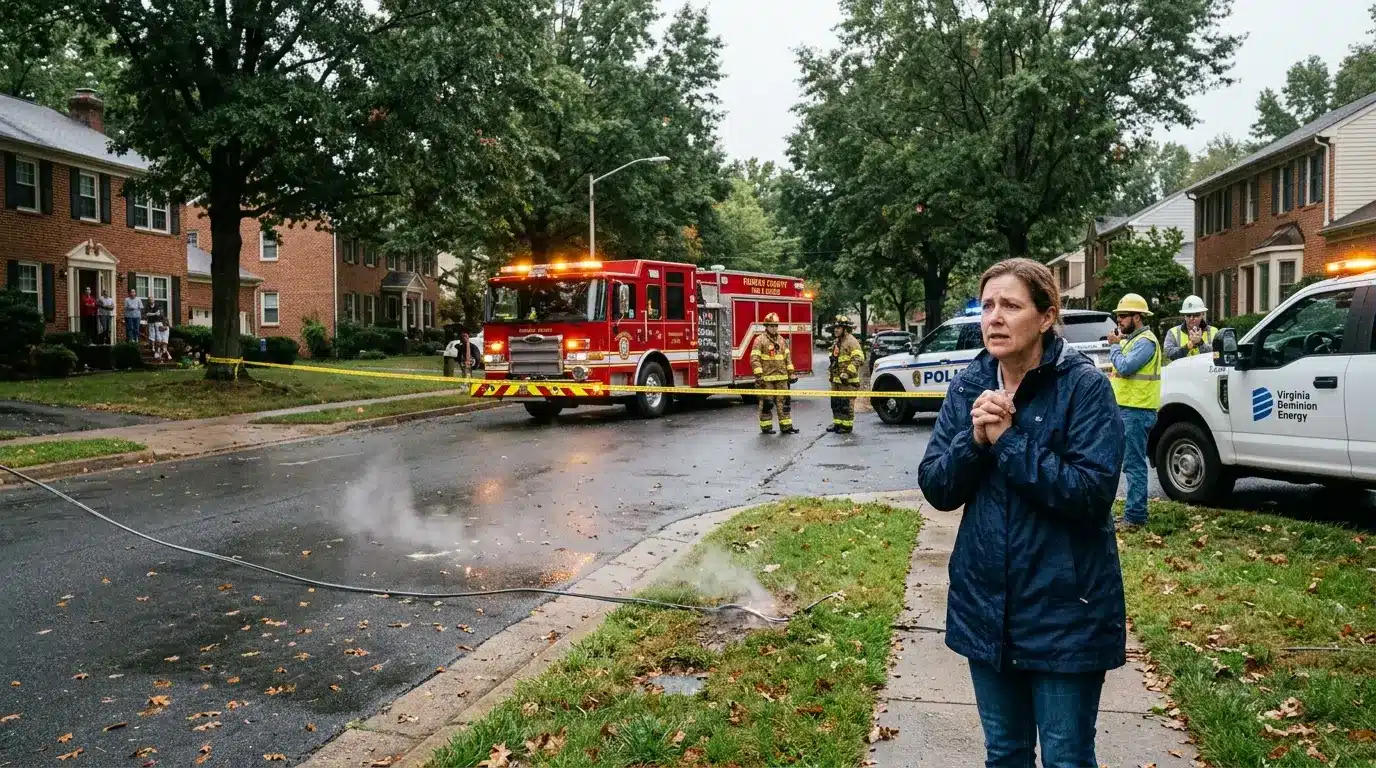
Key Highlights:
What Happens When A Downed Electrical Line Burns Someone I Love Or Me In Virginia
- Danger from a Downed Power Line: If a power line is down, it has the potential for an electrocution accident in Virginia from the ground. You can be electrocuted within 30′ of the downline with no direct contact with the line, needing an electrocution accident lawyer in Virginia
- Leading cause of death from electrical injuries at work: More than 40% of people who die from electrical injuries while working die as a result of contact with overhead lines. (NIOSH).
- Electric Utilities have a Higher Standard of Care: In Virginia, electric companies are held to a higher standard of care because of the $20 million landmark Supreme Court decision involving VEPCO v. Dungee.
- You could be liable for as much as 1% of the fault: Under Virginia’s law regarding contributory negligence, if you are found to have contributed even 1% to your electric injury, you will not receive any Virginia burn injury compensation.
- Settlements for Electric Injury: Settlements for serious burns caused by electric injury range from about $250,000 up to more than $2,000,000, with catastrophic injury or fatal cases yielding more settlement value (there is a strict two-year statute of limitations to file for an electric injury in Virginia – Va. Code Ann., § 8.01-243).
- No Upfront Representation: Tatum & Atkinson Law Firm handles electric injury cases for clients on a contingency basis (you pay no attorney fees unless there is a monetary recovery for you). Call for a free consultation at (800) 529-0804.
I am Robert Tatum; I’m an attorney at Tatum & Atkinson Law Firm. Tatum & Atkinson Law Firm is a veteran-owned law firm and has been in practice since 2005, providing more than 65 years of total experience in representing victims of catastrophic injury caused by downed power lines in Virginia.
To the best of my knowledge, electrical burn cases present some of the most technically complex claims that you will see throughout Virginia’s personal injury law. Our firm understands the medical, engineering, and legal strategies that these cases may require. When representing you, we will advocate for you aggressively.
What Happens When a Power Line Snaps in Virginia?
Electricity is transmitted through power lines in Virginia at different voltages. Typically, electricity on the residential distribution lines travels at around 7200 volts, while electricity on the high-transmission lines can reach as much as 500000 volts. 80% of all electrical fatalities at work (on the job) are a result of an overhead contact with a power line.
When a power line breaks during a storm, from a car accident with a utility pole accident in Virginia, or from an equipment failure, it will stay energized and can cause serious injury or death for some time if the electricity is able to travel through the soil surrounding the broken line. This is known as a step potential. Therefore, if you are standing within 30 feet of a broken power line when it is energized, you can be electrocuted regardless of whether or not you touch the broken power line. Virginia emergency services instructs any bystanders to remain 30-35 feet away from the broken power line until authorities have verified that it is no longer energized/electrified.
What Getting Electrocuted by a Power Line Does to the Human Body
When a person comes into contact with a downed live wire, the high-voltage current may flow through their body, creating a disruption in the electrical signals that control the heart, lungs, and nervous system. The National Library of Medicine that if a person is exposed to 600 volts, this may result in severe destruction of tissue, cardiac arrest, and respiratory failure. The death of a person who has come into contact with 6000 volts or greater is likely to occur immediately after contact.
A survivor of high voltage injury in Virginia can experience cardiac arrhythmias, damage to the spinal cord, acute kidney failure from muscle breakdown, long-term neurological deficits, and catastrophic burn injury in Virginia. Even a minor electric jolt from an electric line that has been damaged can initiate a case of ventricular fibrillation, which is an abnormality in the heart’s rhythm that is life-threatening, without immediately receiving defibrillation.
If you or someone else has received an electrical shock due to the coming down of the electric wire, please call 911 right away and do not attempt to move the victim before the power supply to the wire has been de-energized. Afterward, contact a high voltage injury lawyer in Virginia
How Serious Are Electrical Burns? Understanding the Four Types

According to the American Burn Association, electrical burns are different from conventional thermal burns, and they fall into four categories. Electrical burns are an extremely serious injury in that injuries to the external skin may not indicate the complete extent of internal injuries resulting from an electrical current traveling through your body.
There are four classifications of electrical burns. True electrical burns result from the passage of current through body tissue; arc burns result from electrical arcs, which do not have direct contact with the victim; flash burns occur due to the high-intensity heat released by an electrical arc; and flame burns are due to an electrical fire igniting clothing and/or surrounding materials. Here’s what you need to know about electric burns and their long term impact.
1. Burn Degrees and Severity
Like thermal burns, electrical burns fall into four categories of degree:
- 1st-degree is an outer layer burn, causing reddening of skin and pain
- 2nd-degree is a partial-thickness dermal burn with blistering
- 3rd Degree is an all-tanned skin burn, requiring surgical assistance (usually skin grafts)
- 4th Degree is the most severe with muscle/bone damage.
2. Hidden Internal Damage
One of the most hazardous characteristics of electrical burns is that they often look insignificant on the outside. Small points of entry/exit may mask a significant amount of internal destruction that has been caused by the electrical pathway through your body.
3. Healing and Recovery Time
The degree of recovery from burns is largely dependent on the depth of the burn. Mild first-degree burns heal in about ten days; however, deeper second- and third-degree burns may take weeks or months to heal under treatment involving wound care, surgery, and rehabilitation.
4. Long-Term Impact
Injuries from severe electrical burns can take years to heal, but there are some cases where it might not completely heal, either. Victims of these injuries sometimes have permanent scars and/or nerve damage as well as long-term impairment of their ability to perform normal physical functions.
Key Facts: What Virginia Residents Need to Know About Downed Power Lines
- Do not approach a fallen power line. Stay at least 30 feet away and call 911 and your utility company right away.
- Never drive over a live fallen line. If you come into contact with a downed line while driving, stay in your vehicle and call 911. Your vehicle acts as a temporary insulator.
- Winter storm damage/ice accumulation on power lines of 1/2 inch can begin to create stress, and 1 inch of ice can cause power lines to fall throughout the state of Virginia.
- Duty of Care: The utility company owns the downed power line and owes the public a strong legal duty of care. This duty is established under Virginia law.
- Compensation for Injuries due to Power Lines: In most cases, an at-fault utility company’s liability insurance covers these injuries; however, establishing liability requires skilled legal analysis.
Virginia Electrocution Injury Claim Case Study: Virginia Electric and Power Company v. Dungee (1999)
Virginia Electric and Power Company v. Dungee is a landmark Virginia electrocution case regarding the duty of care owed by utilities to the public that was decided by the Virginia Supreme Court in 1999. In this case, James Dungee, a minor, entered a Virginia Power substation and came into contact with 13,200 volts of electrical current, causing him to sustain permanent and debilitating injuries from severe burn injury in Virginia.
The finding of fact by the jury was that Virginia Power was negligent in its installation, maintenance, and inspection of its fence surrounding the substation. that Virginia Power had actual or constructive knowledge that children accessed the area with regularity; and that the jury awarded the plaintiff $20,000,000 for damages.
The Virginia Supreme Court upheld the court’s core finding that electric utilities owe a heightened duty of care to the public commensurate with the risks associated with high-voltage electricity. Specifically, there is a heightened duty of care owed by electric utilities at locations where it is reasonable to expect that members of the public may be present.
Thus, this case remains controlling precedent for utility company negligence in Virginia and for negligent failure to adequately protect the public against high-voltage hazards and is directly applicable to unattended, downed utility power lines lying on Virginia roads, yards, and other public property.
Who Is Responsible for a Downed Power Line Injury in Virginia?
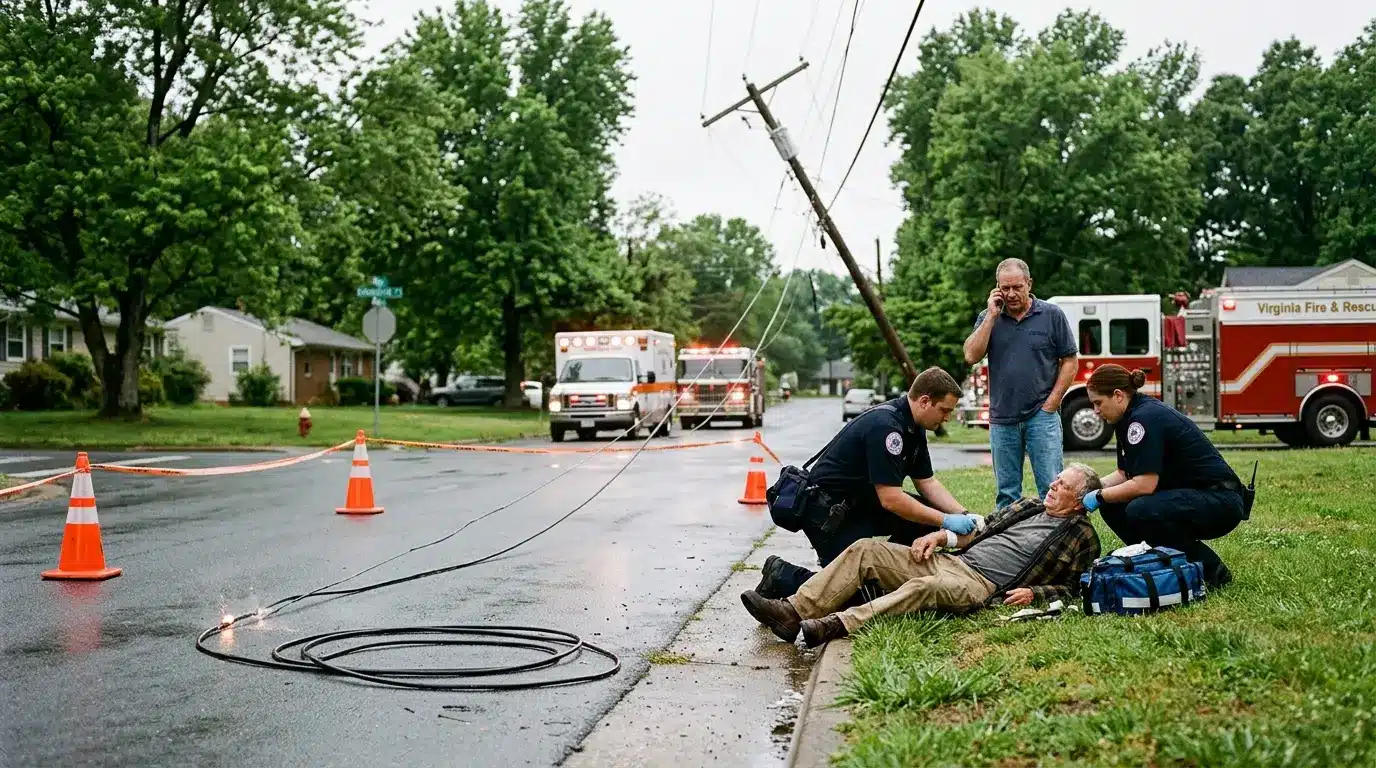
According to the state courts of Virginia, due to the hazards associated with power lines, electric companies are required by law to take a heightened level of caution in their operations. Because of this standard of due care being raised, possible parties that could share liability for an injured victim’s electrocution from a downed power line will vary from case to case.
Utility Companies
Generally, utility companies like Dominion Energy Virginia and Appalachian Power will be held primarily responsible. Utility companies may be deemed responsible if they do not adequately maintain and replace their old infrastructure, do not respond to reports of downed electric lines within a reasonable amount of time, do not properly manage vegetation growth, or do not employ safe utility line designs in their networks.
Drivers
If a motorist collides with a utility pole, causing the power lines to come down, they may have liability for the injuries that result from that accident.
Contractors and Employers
An accident may also occur if a contractor and their employer hit a power line or pole with equipment, and they will be responsible for damages incurred due to that accident.
Contributory Negligence in Virginia
Virginia adheres to a very rigid contributory negligence rule, resulting in an injured party being barred from being compensated for injuries (even at 1% fault). An injury lawyer will be absolutely necessary to help you recover damages in Virginia due to this very strict rule.
What to Do If Power Lines Fall in Your Yard or Near You in Virginia
If you have a fallen powerline in your yard or anywhere near you in Virginia, make sure everyone’s safe and call 911. Once responders arrive to shut off the line (and the surrounding area), there could still be a dangerous electric potential due to the ground being energized from the fall of the line.
Immediately call 911
When a power line goes down, immediately call emergency services. The responders will secure the area and work with the utility company.
Keep a Safe Distance
Always remain at least 30 feet away from a downed power line, including yourself, other people, pets, and vehicles. There can be an electrified zone around the area surrounding a downed line.
Do Not Touch
Do not touch the downed power line or anything that is touching it. Do not try to assist anyone who is in contact with a power line because you could also be shocked by the current transferring to you.
Secure the Area
Once you see a downed power line, warn people around you to keep away from the area until professionals declare it safe.
Record the Scene
Afterward, document the downed wire, damage to homes, and any obvious injuries with photographs. Be sure to write down when the incident occurred, and include any emergency or utility company vehicles that responded as well. This will help support your claim for injuries.
Get Medical Attention Immediately
Even if injuries appear to be minor, electrical shock injury in Virginia can produce hidden damage to the heart or brain. Medical records will be important to your claim.
Consult with an Attorney Before Speaking with the Utility Company
Utility companies often try to limit their liability. Consulting with a severe burn injury attorney in Virginia before making any statements will help preserve your rights.
What Compensation Is Available for Electrical Burn Victims in Virginia?
This state has a high financial value on electrical accident settlement in Virginia cases due to the leading nature of these types of injuries. According to Corey Pollard Law, an electrocution injury law firm located in Virginia, serious electrical injuries usually have a settlement value between $250,000-$2,000,000. Cases involving catastrophic injuries or wrongful death can have a larger verdict than serious electrical injuries.
In serious burn injury cases in Virginia, damages that can be recovered for an injured victim are past and future medical expenses, such as emergency care, surgeries, skin grafting, rehab, and long-term continuum of care. In addition, the injured person can recover for lost wages, loss of future earning capacity, pain and suffering, permanent disfigurement and permanent disability, and psychological damage from the injury, such as PTSD and depression. In the case of wrongful death electrocution Virginia as a result of electrocution, the family that has survived may recover for funeral expenses, loss of income, and loss of companionship.
How Virginia Law Applies to Electrical Burn and Electrocution Claims
According to Virginia code section 8.01, if you have contributed to your injury, whether it’s 1% or more, that makes you responsible and takes away your ability to recover any damages.
Electric utilities have teams of lawyers who will look for any evidence that you were already aware of or ignored warnings regarding the danger from the power line. To avoid an argument against you based on these facts, it’s better to have evidence to support your claim from the beginning.
In Virginia, according to section 8.01-243, you will only have two years to file a personal injury lawsuit, from the date you were injured, and if someone is killed due to the wrongful act of another (8.01-244), the time period is also two years, starting from the date of death. Don’t wait! Evidence such as utility maintenance records and automated outage logs can be destroyed within a couple of days after they are created.
If you suffered a burn trauma, call Tatum & Atkinson, an electrical burn injury lawyer in Virginia, today. You won’t pay any fees unless you WIN.
Protect Your Rights After a Downed Line Injures Someone You Love in Virginia
So, when you get burned by a downed power line in Virginia, it is essential to understand the legal ramifications and the physical damage that could occur from being burned. In Virginia, utility companies are legally liable for any injuries caused by their downed power lines. Losing a loved one to electrical burns will not be your burden alone to bear.
Both legally and emotionally, you will have someone looking out for you, and Tatum and Atkinson are the best choice. Our experienced team will investigate, prepare, and win your case on your behalf, from the time we take the call to when we get you money for the injuries and suffering that you incurred as a result of being burned.
Please call us today at (800) 529-0804 for a free consultation. Our legal services are free unless we are successful in your electrical burn lawsuit in Virginia against the responsible utility company.
FAQs: What Happens When A Downed Electrical Line Burns Someone I Love Or Me In Virginia?
Should I call the police or the electric company first after a downed power line accident in Virginia?
First, contact 911. Emergency services will also contact the utility. The top priority is your safety and filing a police report. Later, move towards getting maximum power line accident compensation in Virginia.
Can I file an insurance claim if I was injured by a power line in Virginia?
You can file a claim with the utility company’s liability insurance. You may have your personal health or disability insurance to protect you. An attorney will have the ability to help you find what other coverage may be available to you.
What evidence should I collect after a downed power line accident in Virginia?
Evidence that could assist your claim would be having a picture of the downed wire, a picture of the damage to your property, a picture of your injuries, a police report, names of witnesses, medical records, any outage reports from the utility, and any prior complaints to the utility.
Can a utility company be sued for delayed response to a downed power line in Virginia?
Yes. Virginia has laws that require the utility company to provide prompt remedial work to any known hazards. You can demonstrate that if they have records showing there was a documented delay before they repaired a reported down power line, that can further assist you with supporting a claim for negligence against the utility.
What if someone dies from a downed power line accident in Virginia? Who can file a claim?
According to Virginia Code Section 8.01-53, the personal representative of the estate files the wrongful death claim. People who may collect damages are the surviving spouse, children, and parents of the deceased.
