What Is the Loss of Companionship in Virginia?

Key Highlights
- The State of Virginia recognizes loss of companionship and solace as recoverable damages in wrongful death or serious personal injury cases pursuant to § 8.01-52 of the Virginia Code. These types of damages are referred to as non-economic damages and primarily constitute loss in emotional and relational intimacy, rather than just financial loss.
- The existence of a claim for loss of consortium under Virginia law typically arises in both a wrongful death lawsuit and/or a serious personal injury lawsuit.
- Numerous elements determine the value of losses associated with loss of consortium, including the closeness of the relationship between parent and child, how long the relationship existed (including whether the couple was married before either of them died or suffered a serious injury), and the supporting documentation demonstrating the adverse effect that the loss of consortium has had on surviving family members.
- An experienced loss of consortium attorney is very important; loss of consortium damages (as defined) are among the most difficult to prove, and they require the use of appropriate strategic arguments and evidence to obtain reasonable compensation from a negligent party.
The emotional toll of losing a loved one due to someone else’s negligence can be overwhelming. In addition to grieving, families in Virginia also have the added burden of navigating an often confusing legal system. One issue that many surviving family members do not understand is what “loss of companionship” means in Virginia, how to prove it, and how much it is worth when pursuing a wrongful death claim for compensation.
My name is Robert Tatum, and I am an attorney with Tatum Atkinson. My experience as an attorney has illustrated to me the deep impact the death of a loved one has on families in Virginia and the toll it takes on their lives financially and non-financially. As a veteran-owned law firm with over 65 years of combined legal experience serving clients since 2005, we are aware of the many ways loss of companionship applies to these types of cases and the emotional toll it can take on a family.
We have seen many cases where the family needs to retain an attorney because of the amount of financial compensation they will need for this type of loss. When we take on a case, we do not view our clients as simply “a case”; we see them as families that deserve justice, and we will fight for them at every turn throughout the entire process.
What Is the Loss of Companionship in Virginia?
The law acknowledges that family members of those killed or severely injured because of the negligence of others are harmed. Virginia emphasizes the loss of companionship when a person is killed or catastrophically injured. In Virginia, loss of companionship relates to the loss of the deceased or injured person’s society, affection, guidance, comfort, and presence in the lives of the persons closest to him/her.
Virginia has formally recognized emotional/relational harm as compensable damages in court. Therefore, these damages are concrete rather than speculative, and they are true injuries that affect everyday life, emotional health, and the well-being of a family.
What Does Loss of Companionship Mean?
Companionship, from a legal perspective, is defined as the totality of the relational benefit an individual receives from another individual. This includes the affection, emotional support, shared experiences, guidance, physical intimacy between spouses and parents, and the general everyday comfort of simply being in the presence of a loved one. When that loved one’s presence is permanently removed from the deceased, the surviving individual will suffer a loss that is recognized by law as a legally recognized injury.
Loss of Companionship By Example
A married couple living in Richmond, Virginia—because of the husband’s untimely death caused by a negligent driver, his or her widow would experience an immense gap from having a daily partner with whom he or she could share their life, as well as suffer financially, emotionally, and in a relational capacity due to no longer having the presence of her deceased husband as part of her life.
The compensation for spousal loss compensation Virginia seeks to make up for the personal loss incurred by reason of the loss of a spouse. The damages that one can recover include loss of income in the future, burial costs, and the loss of the financial support that would be provided if the deceased were working.
Virginia Law on Loss of Companionship and Wrongful Death Damages
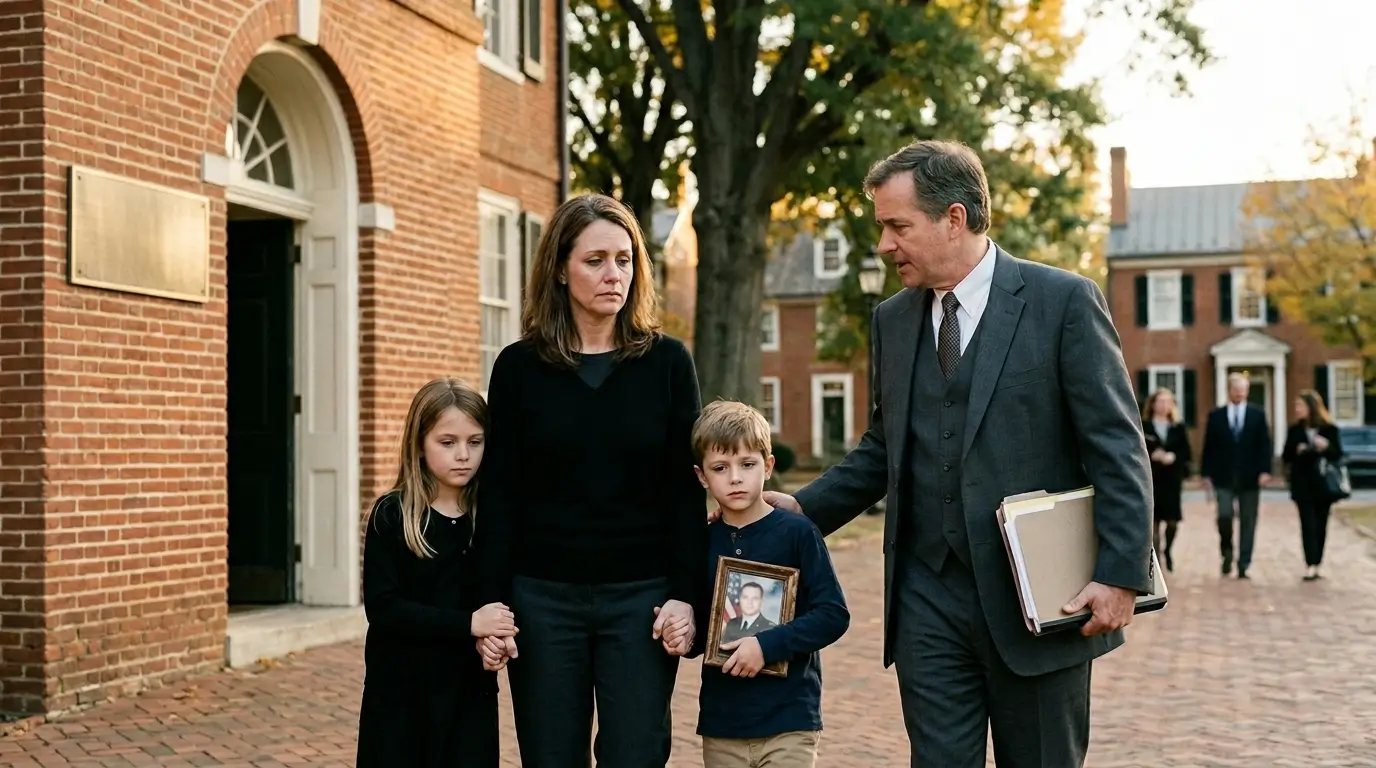
The Virginia Code § 8.01-52 allows a jury or judge sitting as the finder of fact in a criminal case based on wrongful death causes of action to award damages for “sorrow of mind, mental anguish, and solace, which can include the society and companionship of the decedent or the guidance, comfort, support, and advice that the decedent would have provided his loved ones if he were alive.” The provisions defined in the above-referenced law and those listed in the wrongful death cases outline how to recover Virginia wrongful death damages in excess of economic losses incurred due to the death of a person.
In Virginia, any benefit that would have been received from the decedent’s reasonably expected income, the necessary care and assistance to the decedent, and the necessary protection of the decedent before his passing, and funeral and hospitalization expenses can each be valued and recovered as part of the monetary damages award to the personal representative of the estate of the deceased. In cases involving willful or wanton misconduct by the decedent’s killer, punitive damages may also be awarded to the personal representative of the estate of the deceased by the jury or judge trying the case. Collectively, the statutory provisions address all damages that may be awarded to family members surviving the deceased.
Who May File for Damages as a Result of Loss of Companionship in Virginia?
Under Virginia law, a wrongful death lawsuit Virginia compensation can only be filed by the personal representative of the estate of the deceased. The representative of the estate may file a lawsuit on behalf of each of the beneficiaries of the estate. Generally, the beneficiaries of a deceased person’s estate who can file a claim for wrongful death damages include their spouse, children, and parents; however, if any surviving family members are closer than the beneficiary family member, then siblings and/or other relatives can recover from a wrongful death claim against the personal representative. A wrongful death lawsuit for loss of companionship must be filed two years from the date of the death of the decedent.
Loss of Consortium Virginia: What It Means for Injured (Not Deceased) Victims
It is crucial to ensure a distinction between Virginia’s loss of consortium and loss of companionship in wrongful death suits. While loss of companionship generally applies when a dear one has passed away, loss of consortium applies when a living person suffers grievous injury, with their spouse or family members suffering the effects of that injury relationally.
In many cases, for example, if a car accident results in permanent disability to a Virginian, the spouse may bring forth a separate loss of love case Virginia to get compensation for the loss of physical intimacy, emotional partnership, and social companionship they had before the injuries. These things are qualified as non-economic losses in the law of injury cases in Virginia, but are notoriously tough to quantify.
How Much Is Loss of Companionship Worth in Virginia?
The amount you may recover for your loss of companionship in Virginia is not a fixed amount. Jury members have broad discretion to determine the amount based on factors such as how long the two people were in a companionship relationship, the quality and depth of that companionship, how old the claimant was when losing the companionship, and how devastating the loss of companionship is. Verdict amounts and settlement amounts for loss of consortium and/or loss of companionship claims can range from hundreds or thousands of dollars to millions of dollars, depending on the unique facts associated with each individual case.
Based on actual trials in Virginia involving loss of companionship as part of an emotional damages Virginia accident claim for a wrongful death, the average award amount for loss of companionship would be between $100,000 and $1 million, when combined with other types of damage awards such as lost earnings and benefits, loss of household services, etc. Of course, other factors will greatly affect the final award amounts, including the age of the surviving spouse, the number and ages of dependent children, and the strength of the evidence supporting your claim.
What Is the Hardest Injury to Prove in a Virginia Personal Injury Case?
Among all types of personal injury damages, the loss of companionship in Virginia personal injury claims is by far the toughest to prove. Loss of companionship is much more difficult to prove in court when compared to medical bills or lost wages because it cannot be validated with receipts or pay stubs. The loss of companionship exists between two people (or in a relationship), and it is very difficult to convince a jury about the depth of that relationship without carefully and purposefully gathering evidence.
What Injuries Cannot Be Easily Proven?
In Virginia courts, the following examples of injuries are all commonly challenging to prove: psychological trauma, relational losses, emotional distress, and loss of enjoyment of life. Although these injuries can be very real at the time of the injury, they are internal and subjective, and, therefore, difficult for your attorney or insurance company to substantiate. Because there is often little or no objective documentation or proof of these types of injuries, it can make it very difficult for an insurance company or defense attorney to make a case against you. Therefore, it is important to have a skilled Virginia wrongful death attorney who can represent and assist you through the process.
What Evidence Is Needed to Prove Loss of Companionship in Virginia?
Establishing a viable loss of companionship claim in Virginia will require an intentional evidentiary strategy. Virginia’s courts anticipate that claimants can prove their losses with verifiable, substantiated evidence. Often, simply stating that a claimant misses their loved one will not result in maximized compensation through a Virginia courtroom.
Generally, effective evidence will include:
- The surviving spouse, children, and other family member(s) provide their own testimony regarding the nature and depth of the relationship.
- Friends, neighbors, co-workers, and others testifying as to the nature of the victim’s role in the family.
- The surviving spouse has released copies of any mental health treatment records and/or progress notes from his or her therapists or psychologists, such as to document the effect of the surviving spouse’s grief/emotional injury.
- Copies of the surviving spouse’s medical treatment records, if any, to include documents indicating physical symptoms of emotional trauma, such as insomnia, anxiety disorder, and/or depression.
- Copies of photographs, letters, journals, and/or other written or communicative documentation illustrating the depth of the relationship.
- Expert witness testimony from grief counselors, practitioners, or mental health professionals who may be able to quantify the emotional harm that has been sustained.
How to Prove Compensatory Damages in a Virginia Injury Case
The Virginia courts have set forth three main aims of awarding compensatory damages to: (i) restore the injured party to as nearly their pre-injured state as possible; (ii) provide full recognition for all harms; and (iii) find the negligent party liable. As such, in bringing a claim for wrongful death under Virginia law, the party proving bereavement damages Virginia law has the burden of presenting evidence demonstrating, by clear and convincing means, the emotional, relational, and practical value of what they have lost, thus providing a complete picture of what was lost.
Do Insurance Companies Like to Settle Virginia Companionship Claims Out of Court?

Insurance companies are motivated by money, so they usually try to minimize the amount they pay out on Virginia personal injury loss of companionship claims. This is because emotional and relational damage is difficult to quantify. Many times, they will try to settle quickly for a very low amount before you fully understand how much you have suffered.
What Is the Definition of a Reasonable Settlement Offer?
A reasonable settlement offer should include compensation for all of your economic damages (hospital bills and lost wages) and non-economic damages (loss of companionship, suffering, and emotional trauma). You should never settle for an initial offer without consulting with an experienced attorney who specializes in personal injury cases in Virginia. Insurance adjusters are trained to pay the least amount possible for claims, and their initial offers typically do not include what a claim is worth over the long term.
What Should I Avoid Saying When Negotiating a Settlement?
You should avoid making any admission of fault. You should not speculate on your injuries or emotional suffering. You should avoid making statements like “I’m fine” or “it doesn’t hurt that much.” These statements are likely to be used as a reason to deny your claim. You should also not provide a recorded statement to the insurance company’s representative until you have consulted with an experienced Virginia accident or wrongful death attorney.
Rejecting a settlement offer in Virginia means that the case will proceed to court. Cases that go to court take much longer but can result in larger awards with respect to loss of companionship, which juries often award more than what insurance companies are willing to pay out voluntarily.
Case Study: Virginia Wrongful Death Companionship Damages in Action
As evidenced by a jury verdict in a Case involving a surviving husband and his deceased wife, a jury in Virginia awarded $2,100,000 in a wrongful death claim against a commercial truck driver whose negligence caused the accident that killed the wife. The jury awarded damages for the loss of the wife’s companionship, mental suffering for the loss of her love, and for the complete disruption of the husband’s life as a result of her death. Additionally, the attorneys presented evidence from mental health professionals, the husband’s family of the husband, and the husband himself, regarding the impact that the wife’s death had on his life.
This case further demonstrates that Virginia juries will consider family relationship damages Virginia injury claim if the evidence is presented appropriately. The Virginia Courts Case Information System provides access to all court records, and this verdict serves as an example of the meaningful relief Virginia law provides to those surviving family compensation Virginia members who properly seek the assistance of experienced lawyers in the pursuit of justice.
Understanding Settlement Amounts for Loss of Companionship in Virginia
The amounts paid to settle wrongful death cases are extremely variable, and no two cases are alike. That said, some general patterns can help families assess what they might expect to receive if their loved ones die due to the negligence of another person.
The following are some common compensation ranges experienced throughout Virginia in cases against negligent defendants, including their average settlement amounts.
- A case with small amounts of emotional distress suffered by the surviving spouse may receive between $50,000 and $150,000 in compensation. This is typically less than the emotional distress caused by more severe types of injuries or by being married to someone for a long period of time.
- Cases involving a husband and wife, or parents and children, whose loss of consortium (relationship) was moderately substantiated due to moderate to severe injuries to the terminally injured plaintiff (the one who died due to the negligence) may settle for an amount between $75,000 and $200,000.
- Cases where there is substantial evidence supporting the amount of emotional loss experienced by living family members as a result of a wrongful death, including sufficient documentation that the marriage/parental relationship existed for many years, may settle for an amount greater than $500,000.
- Cases involving an unusually strong basis (e.g., clear negligence by the defendant) of evidence to support the losses suffered by living family members as a result of the wrongful death of a loved one can result in millions of dollars in compensation.
Ultimately, however, the key to families being compensated fairly is hiring an attorney who is experienced in obtaining fair compensation in cases similar to theirs.
Contact Tatum & Atkinson, Virginia’s Trusted Personal Injury Advocates
Have you lost a loved one or been injured extremely badly in Virginia? You don’t have to deal with the court system on your own. Tatum & Atkinson will handle your loss of companionship Virginia personal injury case or wrongful death case on a contingency fee basis, meaning you’ll pay nothing unless we recover damages for you. Our firm, which is owned by veterans and has over 65 years of combined experience, is dedicated to fighting for your family to get the full amount of compensation that they deserve.
Contact us today at (800) 529-0804 for a free consultation with no obligation. We’ll review your case and answer all your questions. Let us help you with the first step in getting justice. You’ve already had your share of problems. Let Tatum & Atkinson do the legal work from now on.
Frequently Asked Questions!
Why do insurance companies try to minimize personal injury payouts in Virginia?
As for-profit businesses, insurance companies will attempt to minimize their claims payments to maximize their profits. Insurance companies may attempt to settle a personal injury claim by offering a victim a quick, low settlement before the victim fully understands the true value of his or her emotional damages from the accident.
What happens if I reject a settlement offer in a Virginia injury case?
Your lawsuit could go to a jury trial. In Virginia, because of loss of companionship claims, the amounts that a jury may give you will probably far exceed the amounts being offered by your insurance company for the settlement of your case.
How long does it take to receive a personal injury settlement in Virginia?
Cases regarding personal injury in Virginia usually settle between one year and three years; however, complicated wrongful death lawsuits or complicated Virginia catastrophic injury family damages lawsuits may go longer than this time frame if it is required to take the claim all the way to court.
Can insurance companies use surveillance against injury victims in Virginia?
Insurers can and do challenge claims for loss of affection claim Virginia, utilizing video surveillance or social media. Therefore, you should refrain from posting on social media and be sure to follow the instructions of your attorney regarding how to manage your claim.
Can I reopen a personal injury case after settlement in Virginia?
In general, no, once a settlement has been reached and signed, it concludes the litigation process. In particular, you should not settle a marital relationship damages Virginia claim without a full understanding of the potential future losses.
