What Are Truck Driver Regulations in Virginia?
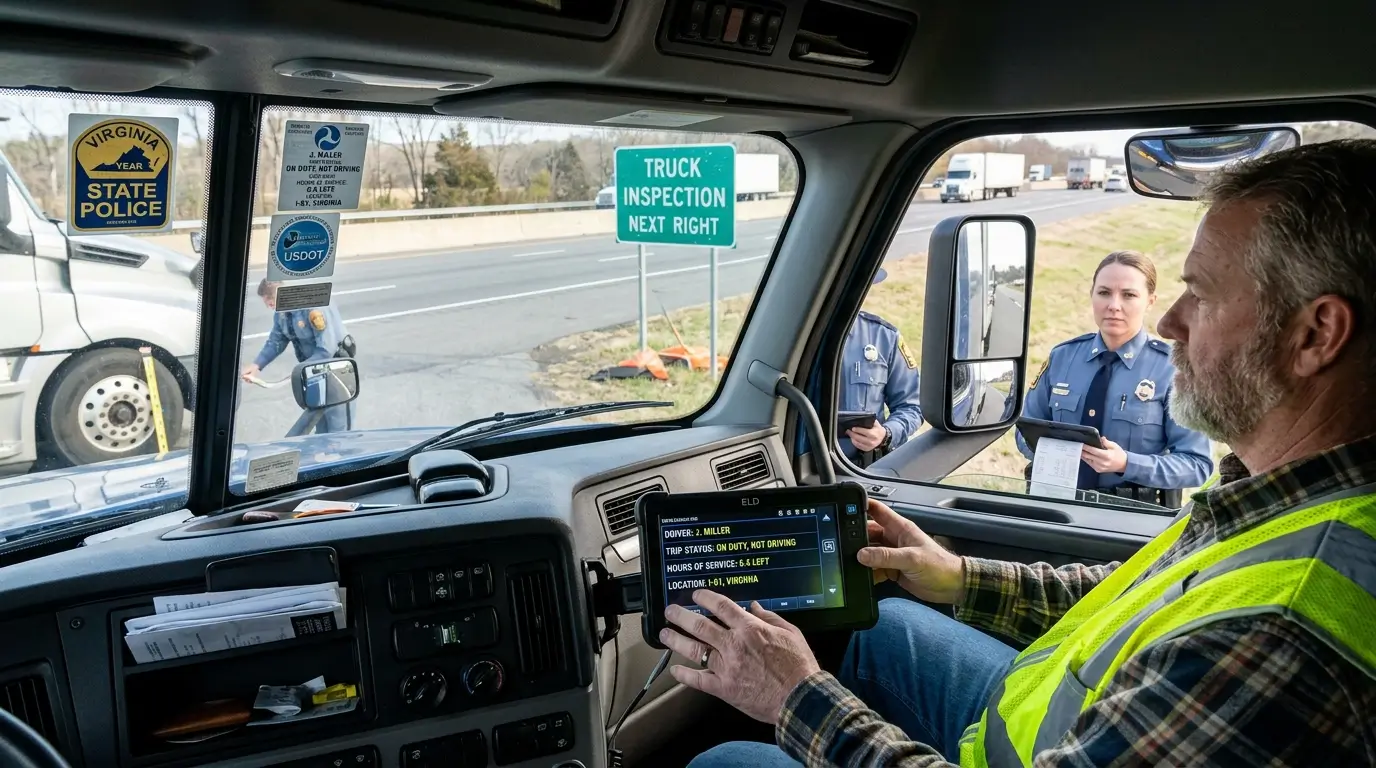
Key Highlights:
- What Are Truck Driver Regulations in Virginia? The national federal regulations and local Virginia state agencies control the safety laws that govern truckers. These tractor trailer laws Virginia determine who is allowed to operate a vehicle, the maximum allowable weight of the vehicles operated, and how safely a trucker must drive.
- There are strict Hours of Service (HOS) regulations that limit truck drivers to driving 11 hours, and a requirement to use Electronic Logging Devices (ELDs) to reduce driver fatigue.
- Truck drivers are subject to strict policies for medical exams related to the use of prescription medications, and maximum gross vehicle weight limits for trucks are capped at 80,000 lbs to ensure highway safety.
- If trucking companies or trucking drivers do not comply with any of the above regulations, the fact that they violated these regulations will be used as evidence of negligence in accident lawsuits against them.
The state of Virginia sees thousands of truck accidents on its highways each year; I-95, I-81, and I-64 rank among the busiest commercial truck routes in Virginia. As a result, many families are left with life-changing injuries and unanswered questions. Understanding what are truck driver regulations in Virginia is not only beneficial to drivers and carriers but also crucial information for those in pursuit of justice after being involved in an accident with a commercial truck.
At Tatum & Atkinson Law Firm, we have years of experience working closely with victims of Virginia crashes and examining FMCSA regulations Virginia trucking cases, and holding negligent carriers accountable.
If you or someone you know is involved in a trucking accident in Virginia, contact us today at (800) 529-0804 to receive a free case evaluation.
Who Is In Charge Of Truck Regulation In Virginia?
In Virginia, commercial truck drivers must comply with federal motor carrier (commercial vehicle) safety requirements established by the Federal Motor Carrier Safety Administration (FMCSA) and follow Virginia DOT trucking rules. Drivers violating either of these sets of Virginia commercial truck driver laws can expect to face serious consequences.
Virginia has adopted the Federal Motor Carrier Safety Regulations (FMCSRs) in full, so the same commercial vehicle regulations Virginia apply to all states. However, each state differs in its enforcement and penalties for violations. As part of its dedication to the safety of commercial vehicle operation in the state, the Virginia state police enforce the Commercial Vehicle Enforcement (CVE) program, which conducts roadside checks of trucks according to strict truck inspection laws Virginia.
What Are Truck Driver Regulations in Virginia?
To drive a semi-trailer truck or large commercial vehicle legally in Virginia, you must have a valid Commercial Driver’s License (CDL). The FMCSA governs and enforces these CDL requirements Virginia, along with the Virginia DMV. It is very important to keep current on truck driver regulations Virginia and truck driver licensing requirements Virginia, as having no license or an expired CDL is an automatic violation and may be considered negligent as evidence in an investigation.
Key CDL Endorsements
An endorsement on a Commercial Driver’s License indicates that a CDL holder can drive a vehicle that is classified as a specialty vehicle to haul either hazardous materials or commercial freight that requires special certification.
- Hazardous Materials (HazMat): The endorsement is considered one of the hardest to obtain because it requires the completion of an FBI background check performed by the TSA, as well as the successful completion of a specific written knowledge test.
- Tanker (N): This endorsement is typically combined with HazMat because both are used together when a driver is transporting liquids. Many people believe it is one of the best endorsements for overall career flexibility.
- Specialized Testing: Standard designations such as Doubles/Triples (T), Passenger (P), and School Bus (S) each require you to take separate written and skills tests.
CDL Salary Expectations & Career Realities
From a career standpoint, the combined HazMat and Tanker endorsements will typically provide the highest paying designation, meaning that these two combined can lead to very lucrative routes transporting fuel or chemicals.
| Earning Questions | The Reality |
| How do I make $75,000 a year? | Many tanker, flatbed, and other specialized freight hauling routes will reach this salary threshold regularly. |
| Does Walmart pay $110,000 to start? | This salary does not represent all new drivers; instead, it provides an example of what a driver would earn if they had a high amount of experience operating in those particular markets on a senior-tier level. |
Strict Medical Requirements & Restrictions
The state has stringent Virginia CDL medical requirements, and one of these requires every driver holding a commercial driver’s license to possess a current medical examiner’s Certificate. The use of certain prescription drugs can greatly affect a driver’s health status and, therefore, will impact their certification:
- Methadone: According to federal guidelines, any driver using Schedule II controlled substances is disqualified from commercial driving except for those very few who meet specific and rare conditions for exemption.
- Phentermine: As a Schedule IV stimulant, it will be reviewed rigorously by medical examiners before it can be determined if a driver can continue to hold a commercial driver’s license.
Why Do Most People Quit Trucking?
The condition of the trucking industry indicates that many drivers spend extended periods away from their families, and their health is adversely affected, while compliance pressure continues to grow. All of these things tie into becoming fatigued and make driver fatigue one of the primary contributors to serious truck accidents on Virginia’s highways.
Hours of Service: Virginia’s Rules on Truck Driver Fatigue
Truck driver fatigue laws Virginia mirrors the FMCSA’s Hours of Service (HOS) regulations. These detailed HOS regulations include:
- 11-Hour Driving Limit: An 11-hour driving limit where a driver can only drive for an 11-hour period after having been off duty for a full 10 hours.
- 14-Hour Window: A 14-hour limit where a driver must stop driving after 14 consecutive hours of being on duty.
- 30-Minute Break Requirement: Drivers can drive a maximum of 8 hours continuously on the road before being required to take a 30-minute rest period.
- 60/70-Hour Weekly Limit: A weekly driving limit where a driver may not exceed 70 total hours of driving within any 8-day period.
“For most carriers, Electronic Logging Devices (ELDs) are required and automatically log the truck driving hours of service Virginia. If a truck is involved in an accident, the first place our attorneys look for evidence of negligent driving is the ELD’s record. HOS violations, such as falsified paper logs, are clear indicators of negligence in legal claims.” – Robert Tatum, Founding Lawyer
Truck Safety Equipment and Inspection Laws
Commercial trucks must be routinely inspected to ensure that they meet safety standards established by semi truck safety laws Virginia. The most common components of a semi-truck that will be inspected are brakes, tires, lights, coupling systems, and load securement. The inspection intervals are mandated by the Federal Motor Carrier Safety Regulations, which require that all maintenance records be maintained in detail by the carrier.
Virginia has a variety of methods in place for inspecting trucks (primarily as needed), such as weigh stations on or near many interstate highways and through mobile enforcement units. If an inspection results in an out-of-service order, the truck is immediately taken out of service. If a carrier pressures a driver to overlook a defect or does not conduct scheduled maintenance, they can be joined as a party to the truck accident lawsuit and be liable for civil damages for any negligent actions the driver has taken or omitted to take.
Overweight truck regulations Virginia regulates maximum vehicle weights, typically an 80,000 lbs gross vehicle weight limit for most roads without a special permit. Overloaded trucks pose an increased danger due to longer stopping distances and a greater chance of rolling over after stopping too quickly. Violation of overweight permits (with supporting crash evidence) is a powerful illustration of negligent behavior that we use to support our truck accident claims.
Virginia Driver Rules and Driving Behavior Laws
Behavioral laws in Virginia affect both commercial drivers and non-commercial drivers. Knowing these laws is extremely important for establishing liability and compliance on the roadways of Virginia.
Rules for New and Underage Drivers (Graduated Licensing)
Graduated licensing has a specific tiered licensing system to manage risks for new and underage drivers (younger than eighteen years old) in Virginia:
- Learner’s Permit Requirement: Virginia has a graduated licensing system that requires an adult with a driver’s license to be in the car with the new driver for the first year after receiving a learner’s permit.
- Passenger Restrictions: * Wondering if you can drive one friend around at 16? The answer is no. For the first year after receiving a full license, new drivers with a full license cannot have any passengers under the age of eighteen (except for their immediate family) in the car when they are driving.
- Nighttime Curfew: If a driver under the age of eighteen has a junior or initial operator’s license, they cannot drive between the hours of 12:00 a.m. and 4:00 a.m. unless they are driving to or from employment, driving with their parent or guardian, or driving for the purpose of providing medical or safety assistance.
Driving Behavior, ID Laws, and Freight Standards
| Topic | Virginia Legal Mandate & Standards |
| Eating While Driving | Virginia does not currently have laws prohibiting eating while driving, but operates under distracted driving laws that apply to someone who is eating and recklessly driving. A commercial driver (CMV) who is found violating the federal FMCSA distracted driver standards will be subject to severe penalties for their actions. |
| Zero-Tolerance Alcohol Limits | Drivers Under 21: If you are a driver under the age of 21, you must have a blood alcohol level of no more than 0.02%.
CDL Holders: For a commercial driver’s license holder, the blood alcohol level is limited to no more than 0.04% while operating a commercial motor vehicle (CMV). |
| Refusing ID to Police | Virginia is considered a “stop-and-identify” state, but only in limited circumstances. A person who has been lawfully detained by police officers must identify themselves. As such, the demands placed on drivers exceed the demands placed on pedestrians. A commercial driver’s license holder must also have the appropriate documentation when inspected by the police at a roadside inspection. |
| “No Touch” Freight | In commercial transportation, the meaning of “no touch” for the truck driver is that they are not required to load or unload the cargo onto and from a truck. This setup is determined by the carrier agreement and is not defined by state statute; however, it is a very important factor in a driver’s fatigue levels and whether or not they’re operating safely in their workplace. |
| Missing the Real ID Update | A standard Virginia driver, with no Real ID compliance, cannot use their driver’s license to travel by commercial domestic airlines or access any secure federal facilities. A commercial driver’s license holder must be in compliance with DMV standards for state-issued identification. |
Talk to a Virginia Truck Accident Lawyer Today
Virginia trucking compliance rules require trucking companies to maintain appropriate levels of insurance (between $750,000 and $5 million), possess active operating authority and possess complete driver qualification files. Carriers that shortcut trucking company safety rules Virginia, such as ignoring maintenance schedules and not complying with other trucking regulations, will often be involved in a tragic collision.
If you or someone you love was involved in an accident with a commercial truck, the first step toward obtaining justice against the negligent trucking company is understanding what are truck driver regulations in Virginia and if there are any violations committed by that company, which will become the basis for your negligence claim. Our attorneys will audit ELD (Electronic Log Device) records, truck inspection histories, and carrier safety records to identify and prove which violations occurred and hold these negligent companies accountable.
We accept trucking accident cases on a contingent basis, meaning our fees are based on the successful outcome of your case. For a free consultation, call Tatum & Atkinson at (800) 529-0804.
Frequently Asked Questions!
Can a CDL driver in Virginia lose their license for prescription medication use?
Virginia follows federal regulations regarding the disqualification of drivers who use habit-forming drugs, including amphetamines or anti-seizure medications. Drivers can lose their license unless a doctor verifies through written certification that the medication they are taking does not affect their work.
How much do CDL truck drivers actually earn in Virginia compared to national averages?
CDL truck drivers in Virginia earn an estimated average salary of approximately $63,000 per year. This average salary rate is close to the median salary for all commercial drivers, and only by a few percentage points, based on geographic differences and experience.
Do trucking companies in Virginia pay for CDL training or require you to sign contracts?
Numerous trucking companies in Virginia pay the cost of your CDL training, but you must sign an employment agreement that requires you to work for mostly one year in order to reimburse the company for the cost of your education.
What medical conditions can disqualify you from getting a CDL in Virginia?
Medical conditions like uncontrolled epilepsy, blindness, deafness, uncontrolled high blood pressure, and advanced heart disease. Conditions such as diabetes and sleep apnea only disqualify you if the condition affects your ability to drive or if you don’t have proper medical exemptions.
What happens if a truck driver violates hours-of-service rules in Virginia?
In the event of violating Hours of Service (HOS) rules, the driver is immediately placed out-of-service, the truck company is subject to significant monetary penalties; in addition, violation of HOS regulations adversely impacts the company’s federal safety rating.
