What Happens After You Lose A Limb In A Trucking Accident In Virginia?

Key Highlights:
- What happens after you lose a limb in a trucking accident in Virginia? Victims will be given immediate emergency surgical care, ongoing physical rehabilitation, and extensive corporate litigation to attempt to recover enough money in the long term to provide for themselves.
- Virginia law prohibits the recovery of any amounts when an injured party is found to be even 1% at fault for the accident. This makes the assistance provided by an experienced truck accident attorney essential.
- Amputations generally require expensive and ongoing medical treatment as well as prosthetic replacements for $10,000-$100,000 every 3-5 years; furthermore, they reduce the amount of employment available to a victim over his/her working lifetime.
- Urgent Evidence Preservation: Urgent evidence preservation in truck-related accidents is important because trucking insurance companies investigate incidents immediately to limit their potential liability. Therefore, before evidence such as “black box” data and driver logs are destroyed, it must be legally embargoed and preserved.
When a routine drive turns into a traumatic amputation trucking crash, your life changes in seconds. This is not just about how you have been physically injured; it is also about where you must fight a series of legal battles as a result of your injury. If you or someone you know has suffered this type of injury in relation to a truck accident, understanding what happens after you lose a limb in a trucking accident in Virginia is essential to protecting the victim’s future.
Tatum & Atkinson Law Firm can help you and your family through this difficult period with our experienced truck accident attorneys providing you with the support and professional representation that you need to advocate against large corporations.
If you want to speak to an attorney about this situation, please call us immediately at (800) 529-0804 for a free consultation.
What Happens After You Lose a Limb in a Trucking Accident in Virginia?
When someone loses a limb due to an accident, it is considered a catastrophic injury that completely divides a person’s life into a clear “before” and “after.” Filing a Virginia truck accident limb loss claim involves calculating the amount of money to cover the costs of today, as well as the huge amounts of money needed for the rest of their life, both financially and physically.
Virginia adheres to the strict “pure contributory negligence” rule, allowing recovery of losses only if the defendant is found to be 100% at fault for causing the accident. So, if the defense team can pin even 1% of the fault on you, you may be barred from recovering any compensation from the loss of limb settlement Virginia.
Because of these difficulties in Virginia law, persons who have sustained injuries must hire an experienced attorney to represent them for their amputation injury lawsuit Virginia against the responsible parties in a Virginia truck accident.
Medical Timeline From Crash Site to Operating Room
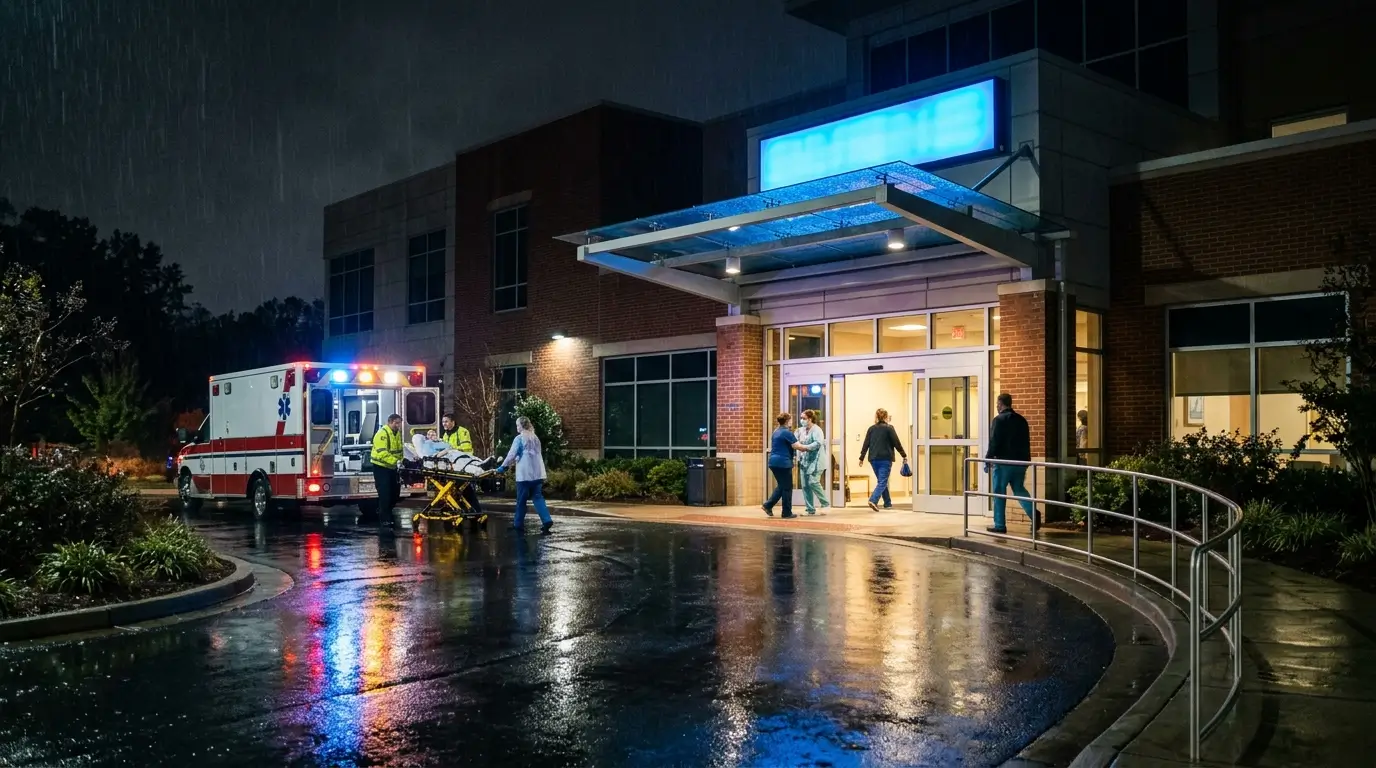
Immediate medical response to an accident with traumatic amputation involves a fast-paced race against time, as responders shift from emergency lifesaving techniques to complicated surgical triage.
The Emergency Response Phase: Immediately After Crash
During a traumatic amputation trucking crash, the emergency responders focus strictly on survival. The priority is to control severe hemorrhage using tourniquets and to stabilize vital signs, manage profound levels of shock, and preserve severed tissue where possible; however, in most cases, the level of severe physical damage prevents reattachment options.
Trauma Center Evaluation: Upon Arrival at the Trauma Center
Trauma surgeons evaluate blood flow in the extremities, tissue damage, and nerve disruption after a mangled limb arrives at a Virginia trauma center. If the blood supply cannot be restored or the severed tissue is too severely damaged to repair, a surgeon will perform an emergency amputation to save the patient.
The First Days in the Hospital: Stabilization and Infection Risks
After the initial surgical procedure, the first days in the hospital are very labor-intensive due to the number of additional surgeries used to clean and treat any remaining infection risks. Until a patient has reached stabilization with regard to a limb, rehabilitation activities or fitting an appropriate prosthetic limb can occur.
Why Truck Wrecks Cause Severe Crushing Injuries
Catastrophic outcomes can be expected when an 80,000-pound semi-truck collides with a 4,000-pound passenger vehicle. The astronomical force on the smaller vehicle explains how the majority of these collisions produce extensive traumatic injuries.
The Impact on the Body
- Severe Crushing Damage: Severe crushing injuries will occur due to the extreme difference in vehicle weight. The extreme force typically destroys the structural integrity of human bones and tissue, which limits surgeons’ ability to salvage limbs; in many cases, the only option will be to amputate.
- Neurological Shock: The central nervous system’s immediate reaction to sudden trauma complicates recovery in the early days.
- Phantom Limb Pain: Patient experiences severe pain, physiological shock and the development of ‘phantom limb pain.’ A phantom limb is a real physical sensation of pain from the missing limb.
Managing this complicated mixture of trauma and nerve pain requires ongoing, focused clinical attention starting as soon as the patient arrives in the trauma suite.
Relearning to Move: Physical Therapy & Rehabilitation
After losing a limb, it takes a great deal of physical commitment and emotional strength to learn how to use the remaining limb again. Following the healing of the stump, patients begin an intensive physical and occupational therapy program to help them adjust to their new physical condition.
- Rebuilding Mobility: Patients must retrain themselves to perform basic daily functions again, change their center of balance, and increase core strength. For patients with lower-limb prostheses, this means relearning simple tasks such as moving from bed to chair or using an aid for walking.
- Retraining Motor Skills: The therapy will consist of helping upper-limb amputees to relearn to use their weaker hand and learn to operate complex assistive devices to help them regain their ability to take care of themselves.
- Prosthetic Integration: The importance of prosthetics and the continuing need for rehabilitation cannot be overemphasized. High-quality prosthetically manufactured devices require custom fitting and continuous structural adjustments, as well as constant physical therapy to master the function of the device. There must be an overall plan that incorporates the need for these adaptations in order to achieve the maximum level of autonomy possible for the individual.
The Compounding Lifelong Financial Cost of Amputation
The financial impacts of a semi-truck accident permanent disability resulting from an 18-wheeler accident, continue to multiply throughout the life of the survivor. An attorney representing a trucking accident severe injury case will consider the long-term prognosis well beyond the date when that person leaves the hospital.
| Expense Category | Long-Term Care Impact | Economic Impact |
| Ongoing Care | Medical evaluations, joint degeneration treatment, and potential skin revision surgeries. | Why Recovery Costs Continue: Medical bills continue to accumulate for decades after the initial crash. |
| Prosthetic Upkeep | Modern devices cost $10,000 to over $100,000 and must be replaced every 3 to 5 years. | Prosthetic Costs Truck Accident Claim: Lifetime replacements easily total hundreds of thousands of dollars. |
| Lifestyle Changes | Home health aides and structural modifications (ramps, widened doorways, hand controls). | Long-Term Care Truck Accident Injury: Essential investments required just to maintain basic home mobility. |
| Career Disruption | Extended absence from work, forced career pivots, or total, permanent disability. | Employment Impact: Quantifiable loss of lifetime earning capacity that threatens family stability. |
The Hidden Scars: Psychological and Emotional Impact
Mental pain can be just as great as physical pain from catastrophic injury truck accident compensation events. Severe depression, anxiety, PTSD (Post Traumatic Stress Disorder) due to the accident, and deep sorrow over the loss of body image are common for amputees.
Professional psychological counseling and psychiatric care are important for recovery, and these costs should be pursued vigorously in your claim. The process of overcoming emotional trauma is required to regain good health in the long term, and the legal recovery of a family must consider all of these vital mental health services.
Evidence & Liability in Virginia Truck Wrecks
After a vehicle accident, you need to take quick action in order to preserve your rights under Virginia’s strict laws and regulations, as the legal process starts right away from when the crash occurred.
The Corporate Defense Strategy
Within hours of a commercial truck crash catastrophic damages, the trucking firm’s insurance company has a representative on scene. The primary focus of the representative is to find even a small detail that could be blamed on you to take advantage of Virginia’s harsh contributory negligence rule, thereby preventing you from recovering your losses.
Critical Evidence to Secure
To build a strong case concerning a truck accident amputation Virginia, it is important to freeze and capture critical evidence promptly:
- Black Box Data: Collect Black Box data, which logs the truck’s speed, braking, and steering inputs at or just before impact.
- Hours-of-Service (HOS) Logs: HOS logs, which are the carrier’s registered digital records showing whether the driver was operating illegally due to fatigue.
- Maintenance Records: These records will show whether the trucking company had previously neglected bad brakes or worn parts.
- Scene Footage: Secure scene footage from dash cam, surveillance, and eyewitnesses.
Mapping Total Liability
In Virginia, trucking accidents resulting in amputation involve more than just the truck driver; multiple parties may share responsibilities:
- Truck Driver: Fatigue, inattention, or speeding.
- Trucking Corporation: Negligent hiring practices, violations of safety standards.
- Cargo Loading Team: Improperly balanced or overloaded trailers.
- Third-Party Maintenance: Brake repairs that were not performed properly, defective equipment.
Early Legal Intervention
Recalculating your life requires great physical and emotional effort. By obtaining the advice of an attorney very shortly after an accident, you can ensure that electronic evidence is properly secured according to laws regarding preservation of evidence and that you have an opportunity to recover without interruptions from untrustworthy insurance companies.
Contact Tatum & Atkinson Law Firm Today

You do not have to suffer as a result of what happens after you lose a limb in a trucking accident in Virginia. The Tatum & Atkinson Law Firm is here to provide aggressive yet caring legal representation that prioritizes your future financial well-being.
We work on a contingency fee structure, meaning if there is no win, there will be no fee. Our experienced Virginia trucking accident lawyers will quickly implement the best plan for recovering your financial damages.
Call our office today for a free and confidential case analysis at (800) 529-0804.
Frequently Asked Questions!
Why do truck accidents often lead to amputations instead of less severe injuries?
The compounding forces and the immense weight of a semi-truck are so great that they will often crush small passenger automobiles and create catastrophic high-velocity trauma that results in irreparable destruction of bones, muscles, and blood vessels.
How soon is an amputation decided after a crash?
If there’s a complete loss of blood supply or tissue damage to an arm/leg, the surgeon will make that decision immediately. In other cases, it may take days of trying before determining whether it can be saved or amputation is the last option.
Can prosthetics fully replace the function of a lost limb?
Modern prosthetic devices offer amazing advancements in technology and provide individuals with a degree of independence; however, they will never be able to replicate the natural feel, fine motor skills, and intricate biological movements associated with a natural human limb.
Does losing a limb affect mental health as much as physical health?
Losing a limb suddenly can cause psychological trauma and severe depression, PTSD, body image anxiety, and intense grief. Psychological assistance will need to be provided for an extended period and in conjunction with physical rehabilitation following the loss of a limb.
Can future medical care and prosthetic replacements be included in a claim?
Yes, it is certainly possible as part of the total value of a complete legal claim for your future lifetime medical expenses, including routine physical therapy, home modifications, and expected prosthetic replacement every 3 – 5 years (or more frequently depending on device wear).
