What Is A Mild TBI Caused By A Truck Accident In Virginia?
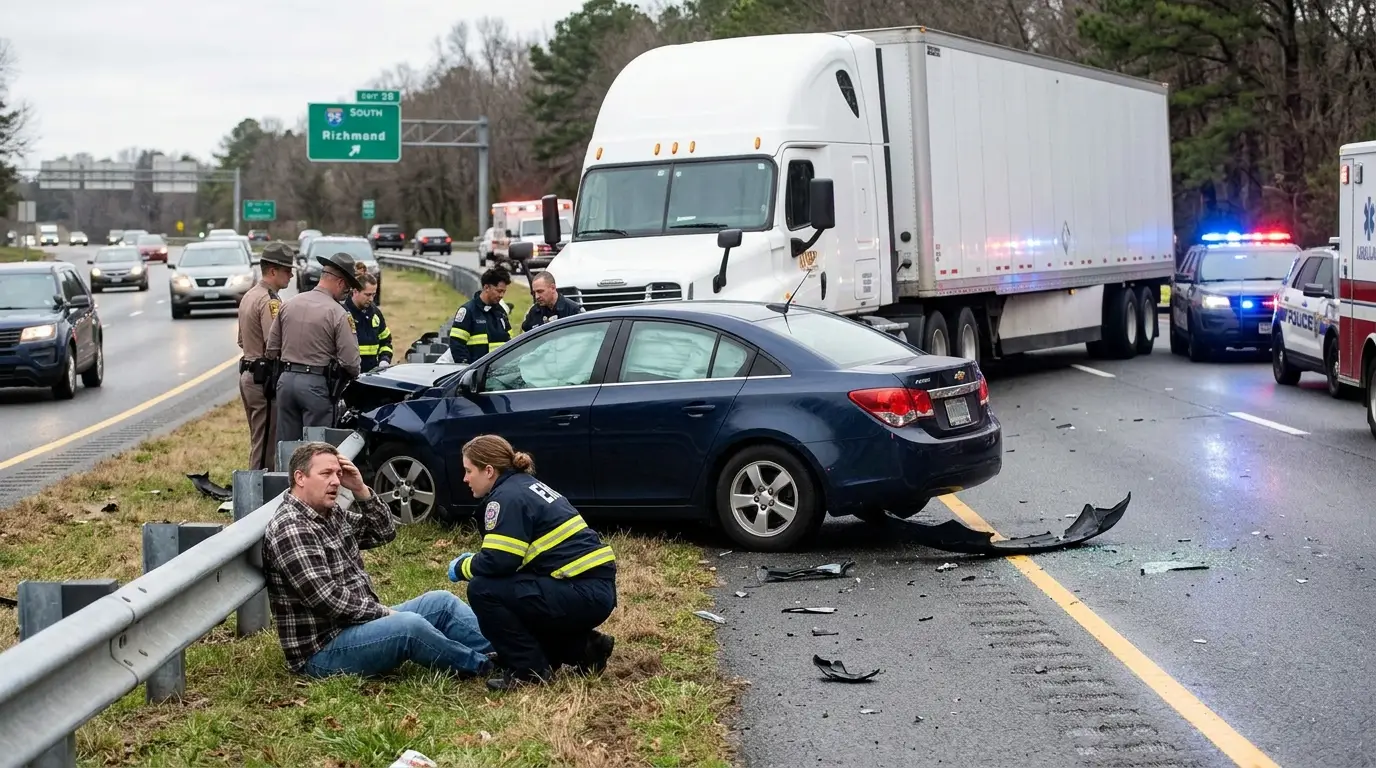
Key Highlights:
What Is A Mild TBI Caused By A Truck Accident In Virginia?
- According to the CDC, motor vehicle accidents are among the leading causes of TBI-related death in our nation, which averages about 190 TBI-related deaths every day throughout the United States due to unintentional injury or accident (motor vehicle).
- It is important to get early diagnosis and documentation for mild TBI, because it can be present at the time of a truck crash and show up as late as hours or days following the incident.
- In Virginia, truck accident cases have two types of legal issues to consider: federal trucking regulations and Virginia state negligence law. This makes the legal investigation more complicated than it would be for standard car accident cases.
- In addition, victims who suffer injuries in Virginia due to truck accidents must file their personal injury lawsuits within two years of the date of the accident under Virginia Code § 8.01-243; therefore, the potential for a later-emerging mild TBI will present problems for these victims when trying to pursue claims.
- Truck accident brain injury victims are entitled to medical expenses, lost wages, long-term care, and pain and suffering, and should consult an attorney immediately regarding their rights and obligations.
Every year, millions of commercial trucks travel on Virginia’s highways, and the crashes that happen between these large vehicles and passenger cars can produce devastating results. Out of all the injuries that occur from a truck collision, the injury most often assigned to a person after hitting their head in a truck wreck is the mild traumatic brain injury (MTBI). “Mild” does not imply that this type of injury has no consequences; in fact, an MTBI diagnosis will continue to affect those who suffered through it, sometimes severely, for many years. In addition to causing severe dysfunction, the process for recovering compensation for damages and injuries resulting from a truck accident in Virginia can be very challenging for victims.
I am Robert Tatum, an attorney with Tatum & Atkinson Law Firm, and we have been serving clients since 2005. We understand both the medical complexities involved in MTBI cases and the legal pieces required to bring an MTBI claim. Our team will aggressively advocate on your behalf.
What Is A Mild TBI Caused By A Truck Accident In Virginia?
Mild TBIs (mild traumatic brain injury) are classified as a functional disorder of the brain caused by an impact, sudden force, or shaking to the head. The National Institute of Neurological Disorders and Stroke states that any impact that does not penetrate the skull but is sufficient to cause movement of the brain within the skull will lead to bruises, blood vessel damage, and/or tears of the nerve fibers in the brain.
The amount of force created by a commercial truck collision has the potential to surpass the physical limits of the human brain.
What Happens to the Brain During a Mild TBI?
The sudden forward and backward motion of the head happens in a typical truck accident. During this type of accident, the brain lags or rebounds against the interior wall of the skull. This can cause bruising as well as microscopic tearing of nerve fibers and disruption of normal chemical signaling between billions of cells in the brain.
In general, this type of brain injury is called a mild TBI, or mild traumatic brain injury, i.e., a concussion from a truck accident in Virginia. Since most concussion injuries in a truck accident cannot be seen on CT scans, they are often misdiagnosed by doctors.
One of the most common injuries caused by truck accidents is diffuse axonal injury (also called DAIs). In many instances, damaged nerves stretch and tear throughout the brain during high-speed rear-end truck collisions.
Can a Mild TBI Occur Even Without Hitting Your Head?
Accident victims in Virginia should be aware that even though there was no direct impact on their heads, they could still have suffered a mild TBI after a truck accident. During a rear-end collision, an extreme extension or flexion of the head creates enough force to cause a TBI without force being applied to the head.
Insurance adjusters often dispute a claim, stating, “You did not hit your head,” or “There are no signs of an injury.” “I believe most insurance adjusters and risk managers are not keeping up with the latest research that supports the existence and recognition of mild TBIs following an accident due to the lack of a head strike.
What Symptoms Should You Watch for After a Truck Accident?
Symptoms from a truck collision can develop right away or increase over a period of time. Identifying any physical, cognitive, or emotional symptoms shortly after the vehicle collision is important to make a correct diagnosis of an injury, receive the appropriate treatment, and file a personal injury claim for damages resulting from the vehicle collision.
Ongoing or progressive headache(s)
Headaches that develop following an accident and remain or worsen.
Dizziness or nausea
Symptoms of mild TBI after an accident, including concussion, dizziness, or nausea, and the like, are presented.
Vision disturbances
Visual disturbances could also indicate potential neurological impairment.
Heightened sensitivities to light and sound
Increased sensitivity to light and sound following a traumatic event.
Inability to concentrate
Inability to focus on simple jobs or to complete a simple job is another symptom.
Memory loss
Remembering events before the incident, or having no recollection of an event after the incident occurs.
Delayed processing time
Time is required between input and output (e.g., responding to a question, doing a task), and is increased.
Mood changes
Increased irritability, anxiety, and sudden mood changes.
Difficulty sleeping
Difficulty falling asleep, difficulty staying asleep, or significant changes in the way a person sleeps.
Delayed Onset
Symptoms may occur several days or even weeks after the vehicle accident; therefore, you must seek treatment.
How Long Can Mild TBI Symptoms Last?
Some individuals with mild TBI may recover quickly; however, a significant number experience “post-concussion syndrome” as their symptoms continue for months or even years.
According to the CDC, a mild TBI victim may feel fine in a few weeks or months, but many will suffer long-term or life-long effects from their injury. The prolonged nature of symptoms that persist for Virginia truck accident victims directly correlates with ongoing medical costs, lost earning potential, and associated loss of quality of life.
How Do Doctors Confirm a Mild Traumatic Brain Injury?
The diagnosis of a mild traumatic brain injury from a truck accident in Virginia often starts with a clinical assessment by either an emergency room doctor or neurologist. In some instances, a patient’s CT scan may not reveal any irregularities when, in fact, a mild traumatic brain injury does exist. Standardized tests such as MRIs, neuropsychological evaluations, and cognitive assessments can help identify deficits that visual imaging cannot detect. Therefore, having a prompt examination after an accident will provide medical evidence to correlate the accident with the injury.
Neuropsychologists are particularly valuable in the cognitive impairment examination. By using standardized testing and measuring memory, processing speed, attention, and executive functioning, a neuropsychologist can quantify deficits in a patient who appears normal on the outside. This documentation will serve as critical evidence to support a brain injury claim after a truck crash, and acquiring this information early on will preserve the strength of the case.
Can Delayed Symptoms Affect a Brain Injury Claim?
The difficulty in obtaining compensation for loss of income/occupation disability due to a truck accident head injury in Virginia is that there is a two-year statute of limitations on such claims. This means the two-year period begins from the time of the truck accident and not the time of symptom development or diagnosis. The courts in Virginia have ruled that if you wait until your full extent of injury is known, then you lose your right to sue.
Unlike many other states, which have used the discovery rule, Virginia does not extend its statute of limitations for cases where the injury is not readily apparent. Therefore, it is critically important to contact a Virginia traumatic brain injury attorney as soon as possible following any truck accident, even if you do not feel the symptoms are severe. The early involvement of an attorney will help preserve evidence and protect your ability to file suit within the appropriate time frame.
What Compensation Is Available for a Mild TBI?
Individuals who have suffered from mild traumatic brain injuries (TBIs) as a result of Virginia truck accidents can potentially recover both economic and non-economic damages. These economic damages would provide financial reimbursement for actual losses resulting from the accident, as well as for the broader effects the injury has had on the individual’s life, health, and overall quality of life.
Economic Damages
Economic damages consist of all monetary losses from the accident, such as costs for emergency room visits and specialist visits (such as neurologists), prescriptions, rehabilitation for physical and cognitive disabilities, and lost wages. At the same time, the plaintiff is unable to work due to the accident, and, for long-term claims, future medical costs and a reduced income due to the accident.
Non-Economic Damages
Non-economic loss is a type of trauma caused by the injury itself, in addition to various aspects of your quality of life, such as physical and emotional pain and suffering, anxiety, disruption of sleep patterns/emotional distress, cognitive impairments (memory), loss of enjoyment of life, or loss of companionship from an individual you loved who died as a result of the accident.
Full Value of a TBI Claim
In Virginia, both economic and non-economic damages can be recovered for a TBI claim pursuant to the law. It allows victims to receive total (100%) truck accident head injury compensation in Virginia for all accident-related damages.
The legal team at Tatum & Atkinson will prepare and dedicate themselves to every truck accident brain injury case that we work on for our clients. The team builds their truck accident brain injury case in Virginia with the medical records, expert testimony, and neuropsychological documentation needed to accurately show how much the client has lost and how much they will continue to lose moving forward.
What Medical Records Help Prove a Brain Injury Case?
In any head trauma truck accident lawsuit, good documentation forms a base.
- Documents that carry the most weight are emergency department records for the day of the crash
- New or follow-up imaging test results and neuropsychological and neurologic follow-up evaluation results;
- Cognitive therapy and occupational therapy evaluation results and documentation of ongoing symptoms over time.
- An insurance company will often point out any delay in treatment as evidence that your injury was not serious or that it was not related to the accident.
- Journals kept by the victim and family members detailing daily symptom patterns also support a negligence claim.
- Employer documents that outline tardiness or reduced work performance or contain accommodation requests can also provide proof of actual cognitive impact.
By documenting each symptom’s relationship to the truck accident, you create a stronger position at the negotiation and/or trial stages.
How Do Truck Accident Claims Differ From Car Accident Cases?
In Virginia, a truck accident neurological injury claim has numerous layers of accountability compared to car accident cases simply due to the special regulatory requirements applied to all commercial trucking companies by the Federal Motor Carrier Safety Administration.
These regulations apply to various aspects of the trucking operation, such as:
- Driver hours of service
- Vehicle maintenance
- Driver qualifications
When a trucking company violates one of these regulations, it creates strong evidence of negligence in a brain injury accident claim.
Liability in a truck accident could be found against numerous different parties, including the:
- Truck driver
- Trucking company
- Freight broker
- Vehicle maintenance contractor
- Parts manufacturer.
To build a complete liability picture following a truck accident will require immediate action to preserve:
- Electronic logging device data
- Black box data, maintenance logs
- Driver logs prior to their being overwritten or destroyed.
Therefore, it is vital to hire a skilled Virginia truck accident brain injury attorney to handle truck accident brain injury cases in Virginia as soon as possible after the incident occurs.
When You Need to Hire a Virginia Brain Injury Attorney
If you’re involved in a mild TBI truck accident case in Virginia, either as the driver or the injured, contact Tatum & Atkinson to discuss your case regarding minor traumatic brain injuries. As veteran-owned and operated:
- Tatum & Atkinson has more than 65 years of combined legal experience
- We are equipped to handle these cases on a contingent basis, meaning that you will only pay us if you win!
Call us today to schedule a free consultation; there is absolutely no obligation or fees. We will review your accident and can help you obtain full compensation.
Book a Call with a Truck Accident Brain Injury Lawyer in Virginia for a Mild TBI Today!
TBIs can be serious (capable of permanent impairments or death) and are compensable under Virginia law. A TBI is first diagnosed medically before being treated. To win a case for a TBI, the injured party must provide documentation of the injury and be represented by legal counsel who understands the medical science behind the TBI, the appropriate court strategy for winning the case, and has experience in winning TBI cases.
At Tatum & Atkinson Law Firm, we can help you with both medical care and legal protection. Please feel free to call us today at (800) 529-0804 to schedule a free consultation with our staff of attorneys. We represent people who have suffered serious injuries as a result of truck accidents in Virginia, and we will do everything we can to help you obtain the compensation you deserve.
FAQs: What is a mild TBI caused by a truck accident in Virginia?
Can you drive with a mild TBI?
If you are experiencing mild TBI (traumatic brain injury) symptoms, it is NOT recommended to drive until symptoms have resolved (e.g., you are symptom-free). Driving is unsafe during the time that your reaction time/attention/concentration/vision will be affected by TBI symptoms.
Can the insurance refuse a claim for mild TBI when CT/MRI scans are negative?
Yes. The reason being that even in cases where a brain injury does not show up in either a CT scan or an MRI, insurance companies may still deny compensation for mild TBI.
What is the VA rating for mild TBI?
On average, the VA gives a percentage rating for TBI (0%-100%), which measures how severe and medically related your TBI symptoms are. All three types of TBI symptoms (cognitive, emotional, and physical) are taken into consideration by the VA when determining a TBI rating.
How do you test for TBI years later?
Neuropsychological testing, advanced MRI, and clinical symptom evaluation can identify lingering effects of TBI (e.g., which were not detected based on original imaging).
What is an example of a mild traumatic brain injury?
The BEST example of a mild TBI is a concussion; this occurs when someone has confusion, headache, memory loss, and dizziness without prolonged (extended) loss of consciousness.
