What Should You Know About Virginia Dump Truck Accidents?
Key Highlights:
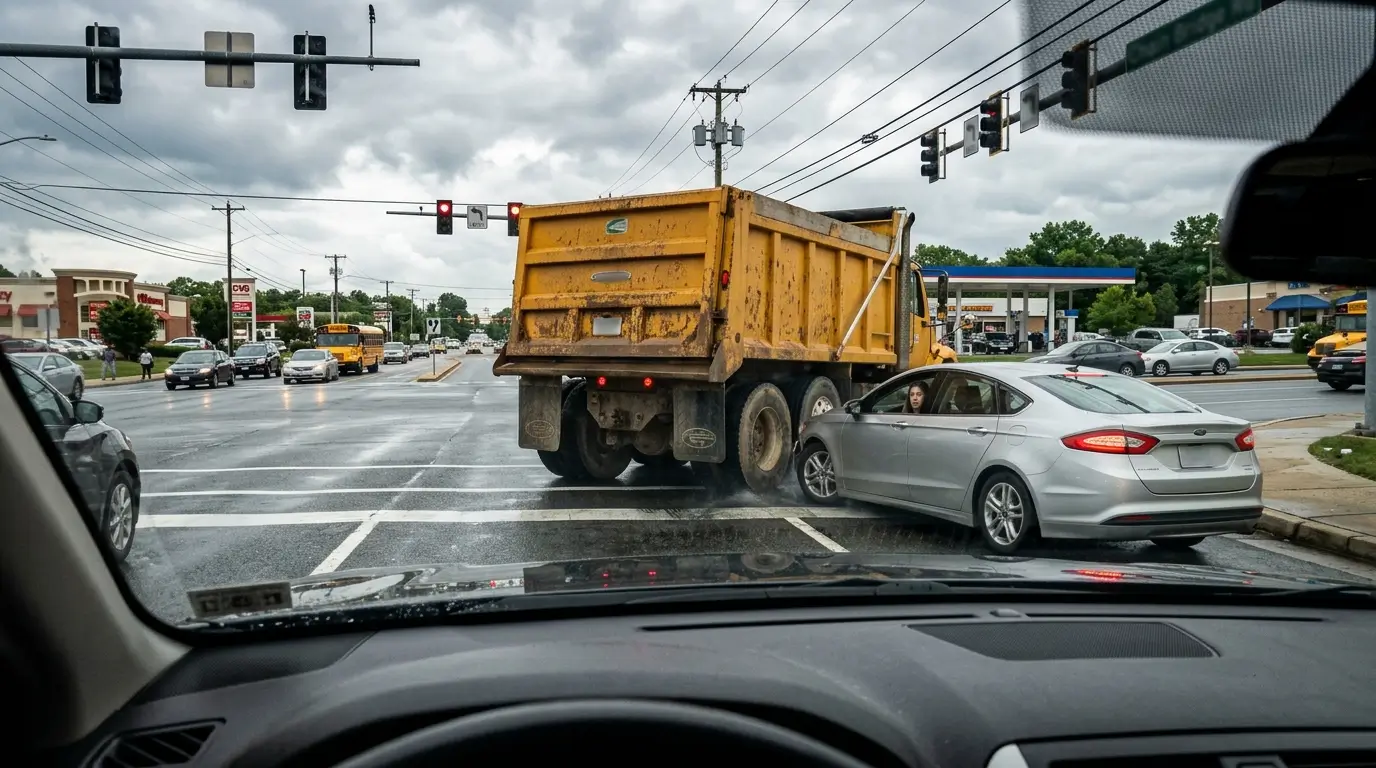
- Because the center of gravity in a dump truck is higher than that of other vehicles, Virginia dump truck accidents often involve unique dangers such as roll-overs and debris falling off.
- The loads in dump trucks are elevated and constantly changing while they tip and spill, unlike other trucks.
- In accidents with a dump truck, more parties can be found legally liable for the crash, not just the hauler, but the job site contractor and whoever loaded the truck.
- Virginia follows the 1% at fault rule (which is called pure contributory negligence), which means that even being 1% at fault of the accident can bar you from receiving compensation.
- With the 1% fault rule, early truck accident investigation with evidence preservation is absolutely critical to your case.
A dump truck is more than simply a larger truck. The high load shifting and frequent stops at a construction site create hazards not found on a standard tractor-trailer, and if one is involved in a Virginia dump truck accident, several parties may be liable for the mishap.
If you or someone close to you has been injured in such incidents, you need legal support to handle these complicated commercial claims properly. Tatum & Atkinson Law Firm has an experienced dump truck accident lawyer to pursue the claim you deserve.
You don’t have to deal with trucking companies alone. Reach out to Tatum & Atkinson Law Firm at (800) 529-0804 and get your free consultation today!
What Makes Dump Trucks More Dangerous
Because dump trucks have such a high center of gravity, they are at risk of rolling over, especially during turns or when the bed is elevated. Dump trucks often reverse in tight spots where workers could be hidden in the large blind spots created by the vehicle and could result in a severe risk of back-over accidents .
The cargo of these trucks is loose and can spill out while being driven if not secured properly. Many dump trucks are owned by small local companies that cannot necessarily assure a high level of maintenance or driver supervision.
Common Causes of Virginia Dump Truck Accidents
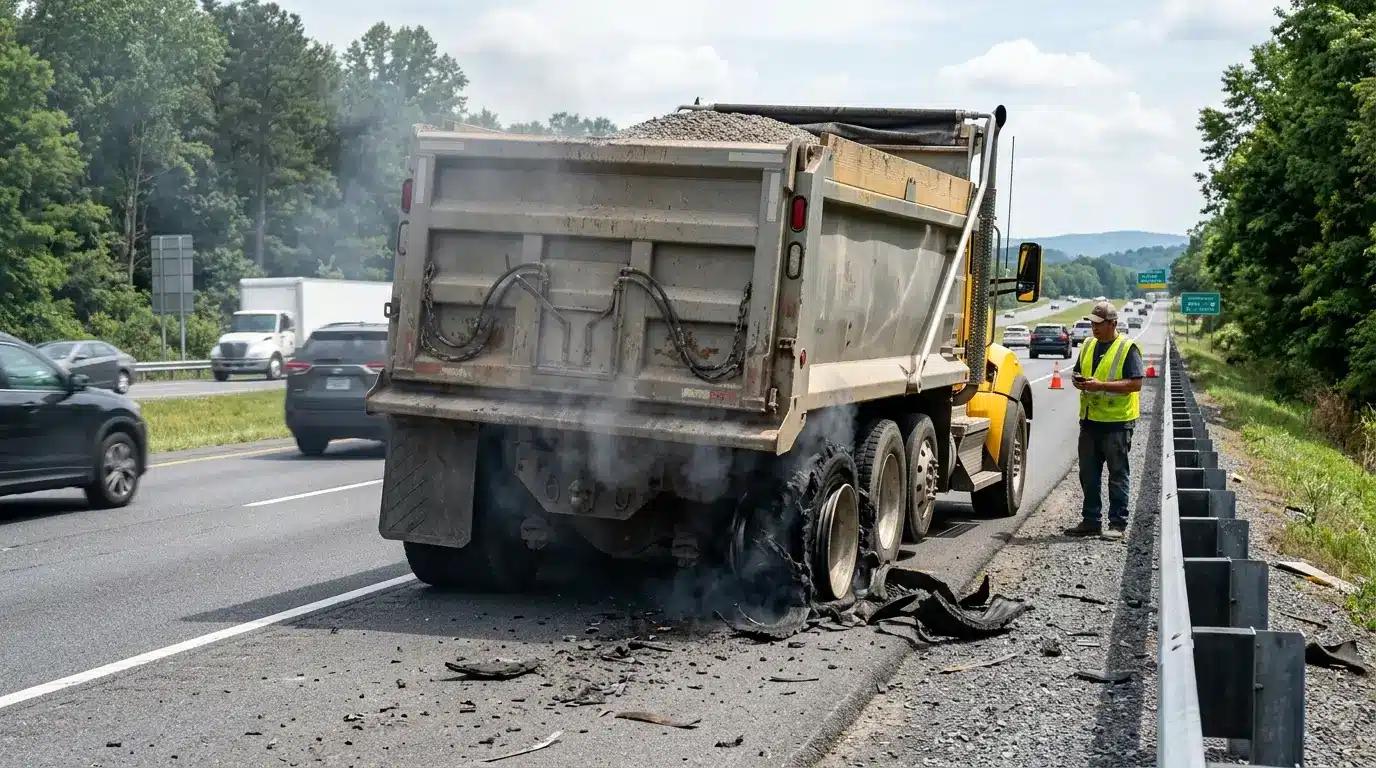
The majority of these accidents result from already known recurring failures:
- Using too much load (above legal weight limits) for the bed to carry.
- Losing and spilling cargo on the road due to the cargo being unsecured.
- Crashing into cars or running over people on job sites due to blind spots.
- The brakes are failing due to a lack of efficient maintenance.
- The driver is tired or distracted.
- Speeding and making mistakes while turning.
Why Work Zones Multiply the Risk
Dump trucks work in construction zones, and their substantial weight and poor maneuverability make things dangerous, leading to construction vehicle accidents.
As per the Federal Motor Carrier Safety Administration, big trucks contributed to 29% of work-zone fatalities in 2022.
Who Can Be Held Liable
This is where these claims become more complicated and where more serious damages may be attainable. Liability can be assigned to more than one party:
- The driver, because of dangerous driving, sleepiness, or excessive speed.
- The truck operator who employed and supervised the driver.
- The contractor was in charge of the site operations.
- The entity that loaded or overloaded the vehicle.
- A repair company that knew about the brake or tire issues but failed to repair or was negligent.
- A faulty component can make the manufacturer liable as well.
To identify each of the liable entities and determine all insurance policies applicable in this case, it is necessary to find a way out with an experienced truck accident attorney.
Injuries and What a Claim Can Cover
Because of the weight and force involved, these crashes often result in catastrophic injuries such as crushing injuries, brain and spine injuries, amputations, major fractures, and sometimes even death. An injury claim in Virginia seeks medical expenses (future and ongoing), wages lost, loss of earning capacity, and other damages caused by this accident. However, there are no limits placed on these damages when making a claim for an injury in Virginia.
Evidence and Virginia’s 1% Rule
In order to establish the claims, evidence must be collected as soon as possible: black box data, maintenance and inspection records, driver qualification files, load receipts, dashcam footage, witness statements, and accident reconstruction.
This is important because Virginia adheres to the principle of pure contributory negligence. If the insurance company can show that you had even the slightest amount of fault in the accident, you can receive no compensation. You ordinarily have two years to bring a claim (Va. Code § 8.01-243), but evidence disappears quickly.
Get Help After a Virginia Dump Truck Accident

If you or someone you know got hurt in a trucking accident, there is a chance you are fighting against several companies and their insurers simultaneously. It is advisable to determine your position as soon as possible with the help of a lawyer; otherwise, crucial evidence may be destroyed.
Our Heavy Hitters work hard to help individuals injured in commercial truck accidents statewide. In the Cedar Bluff office, Jon Ward is responsible for all associated Virginia dump truck accidents and will make sure that the guilty parties are located and held accountable for the consequences of their actions.
Contact us at (800) 529-0804 and take advantage of a free consultation. No win–no fee!
FAQs: What Should You Know About Virginia Dump Truck Accidents?
Why might more than one company be responsible for my crash?
The driver might be liable, but so could be the truck owner, site manager, or the team that loaded the truck beyond the limit. Each of the above possesses a separate insurance policy. The insurance policy of an individual driver may be inadequate to cover high costs, thus it’s important to identify all those parties whose negligence contributed to the accident.
Are dump trucks covered by federal trucking regulations?
Yes, they are. A dump truck that is a commercial motor vehicle that moves across state lines needs to abide by federal regulations that relate to cargo security, maintenance, and driving hours. Virginia has also adopted these rules regarding local vehicles and has its own state weight limits. Breaking any of them may point to negligence.
What if I was hurt by material that spilled from a dump truck?
Accidents on the street can lead to numerous people being responsible, such as the truck driver, the trucking company, and other parties involved. Since debris falling on a moving car can inflict severe damage, it is important to document the scene as quickly as possible, since the highway is normally cleaned within a few hours.
How is investigating a dump truck case different?
It’s more than a regular car accident. It looks into things such as logs on maintenance performed, cargo manifests, driver’s qualification file (DQF), and working conditions. This information is often in the possession of various companies and prone to change. Engaging lawyers from the outset allows for documentation to be kept safe and consulting an expert reconstructionist to be done while the evidence is still fresh.
What does it cost to pursue a dump truck accident claim?
There are no fees charged right at the start. Cases of this kind are met on a contingency basis – so no costs will be incurred until a settlement has been reached, and the first consultation is free of charge. Carrying out an investigation into an accident involving multiple parties is costly, but the firm fronts these costs.
