What Are Common Internal Injuries Caused By Accidents In Virginia?

Key Highlights:
What Are Common Internal Injuries Caused By Accidents In Virginia?
- Injuries resulting from internal bleeding could cause death if not treated soon after an accident occurs. An example of such a wound is the blunt force injury that takes place when a person is either thrown out of their vehicle during a crash or hit by a steering wheel, dashboard, or seatbelt.
- This type of injury can happen with very little notice, and the symptoms can sometimes take days before they appear; thus, there is a need for hours or even weeks of medical evaluation to determine if there are any serious internal injuries after a minor accident.
- Once a medical professional has established the existence of any internal injuries, the formation of your internal injury claim will be based upon those medical records indicating the extent of your injuries.
- If you have any shared culpability for an accident in Virginia, the law in Virginia concerning contributory negligence may totally bar or preclude your recovery for damages sustained as a result of that accident.
The most deadly form of injury following a vehicle accident in Virginia tends to be “hidden” or internal injuries. It is common for internal injuries after a car accident in Virginia to be caused by invisible mechanisms, meaning that no one will see the physical change(s) at the accident scene. When these mechanisms do exist, the symptoms can occur long after the accident. Finding out what common internal injuries are caused by accidents in Virginia will help you protect yourself both legally and physically.
My name is Robert Tatum, and I am a Virginia auto accident attorney at Tatum & Atkinson Law Firm. Since 2005, we have been representing clients impacted by internal injuries after car accidents in Virginia, and our firm has a combined total of over 65 years of experience! We have represented many clients who have suffered from internal injuries caused by auto accidents throughout Virginia. Because of the complex medical nature of these claims and the extent to which they can require legal assistance, as well as the variety of ways in which they can occur, we fight to ensure that our clients receive every dollar they are entitled to receive in compensation. We are committed to fighting for YOU!
What Are Internal Injuries?
Internal injuries are injuries to organs, blood vessels, or internal body parts that occur under the skin and do not result in an open wound. According to the National Library of Medicine, these types of injuries occur when a person’s body receives either blunt force trauma injuries or penetrating force trauma during a traumatic event.
Typically, in Virginia, internal injuries occur from the result of blunt force trauma caused by things like sudden deceleration, striking an object in a car, or being thrown from an automobile after being hit by another vehicle.
Unlike fractures or lacerations, there will be no visible mark on your body when you have an internal injury. For example, an individual can be in an auto accident in Virginia and appear to be uninjured, but in fact, they may have an internal injury due to the pooling of blood inside their abdominal cavity or the building of pressure inside their skull. This deceptive characteristic is what makes these types of injuries potentially serious.
Top Causes of Crashes That Produce Internal Injuries in Virginia
According to the Virginia Department of Motor Vehicles, the leading causes of car accidents that can result in serious internal organ injuries in Virginia are as follows:
- Distracted driving
- Speeding
- Failure to yield
- Driving under the influence of drugs or alcohol, and
- Following too closely.
These five reasons account for approximately 80% of all serious accident injuries in Virginia, and they are all instances where the initial impact causes a sudden high force that’s transmitted through the body to cause significant damage to internal organs.
The most common type of car accident where serious injuries occur is when one car rear-ends another car at high speed. This type of crash results in the rear-ended vehicle being shoved forward, while the front car stops; during that initial phase of the accident, the body continues to move forward with the rear-ended vehicle.
As a result, it can compress your abdomen (where many of your internal organs are located) against your seat belt or dashboard, causing severe internal organ damage. Also, because of the size of commercial trucks compared to passenger vehicles (i.e., 18-wheelers), many of the catastrophic internal organ injuries from accidents seen at Virginia emergency trauma centers involve commercial motor vehicles.
Common Internal Injuries From Virginia Accidents

Understanding what types of internal injuries occur as a result of being an accident victim in Virginia gives you the ability to understand what types of personal injury claims for internal organ damage you may have sustained and how extensive they may be. The most common internal injuries suffered by Virginia accident victims include, but are not limited to:
Traumatic Brain Injury (TBI)
Traumatic Brain Injury (TBI) is caused by sudden motion to your head, which results in an impact and can even happen when your head is not in direct contact with anything, but your brain is thrown against the inside surface of the skull.
According to the Centers for Disease Control and Prevention (CDC), motor vehicle accidents are among the most common reasons for people to be hospitalized with TBIs nationwide in the United States. In the state of Virginia, TBIs can vary in severity from mild concussion to severe diffuse axonal injury, which will require the injured person to be cared for long-term.
Internal Bleeding and Abdominal Injury
The spleen, liver, kidneys, and intestines make up the abdomen, all of which can suffer from blunt-force trauma injuries caused by a crash. Out of all abdominal injury diagnoses from car accidents, the most common immediately life-threatening injury is the result of a tear or rupture of the spleen because it is relatively fragile and has a high volume of blood supply.
Similar to the splenic rupture is the laceration of the liver, which also may be very dangerous. Without emergency surgical intervention, ruptured spleens and lacerated livers can also cause the victim to develop a severe internal bleeding injury and the potential to die because of it.
Pneumothorax and Chest Trauma
Rib fractures sustained from compression injuries from a seatbelt and/or steering wheel can cause puncture(s) to one of the lungs, resulting in pneumothorax (collapse of lung), which causes the loss of adequate oxygen from the blood.
An injury to the aorta (main artery) can also result from a vehicle accident when a victim experiences a rapid deceleration, and the main artery is torn. Injuries to the aorta are categorized as hidden injuries after accident victims arrive at Virginia trauma centers.
Kidney and Pelvic Organ Damage
Kidneys are located in the back of the abdomen and can be injured in rear-end collisions or side impact crashes. Injuries to pelvic organs (such as bladder rupture or urethral injury) can also happen frequently in these types of car accidents in Virginia and, if not diagnosed and surgically repaired soon after injury, could result in life-threatening problems.
Signs of Internal Bleeding and Internal Injury After a Virginia Accident
For those who have been involved in an auto accident, recognizing the signs of internal injuries after a crash can be critical to their survival and the welfare of others around them. The adrenaline rush associated with an auto accident will often mask a person’s ability to detect whether they have suffered any significant injury because it will suppress feelings of pain until the adrenaline subsides.
The signs of serious internal injuries requiring immediate medical evaluation are:
- abdominal pain, rigidity, and tenderness
- dizziness or lightheadedness
- blood in the urine
- a rapidly worsening headache
- nausea and vomiting without any reason
- pale, sweaty, or blue skin
- difficulty breathing
- confusion or an altered level of consciousness.
Any one of these signs represents sufficient cause to call an ambulance or have someone take the injured person to the ER. Never drive yourself; always call 911 and try to get an internal bleeding injury claim Virginia.
How Doctors Diagnose and Treat Internal Trauma in Virginia
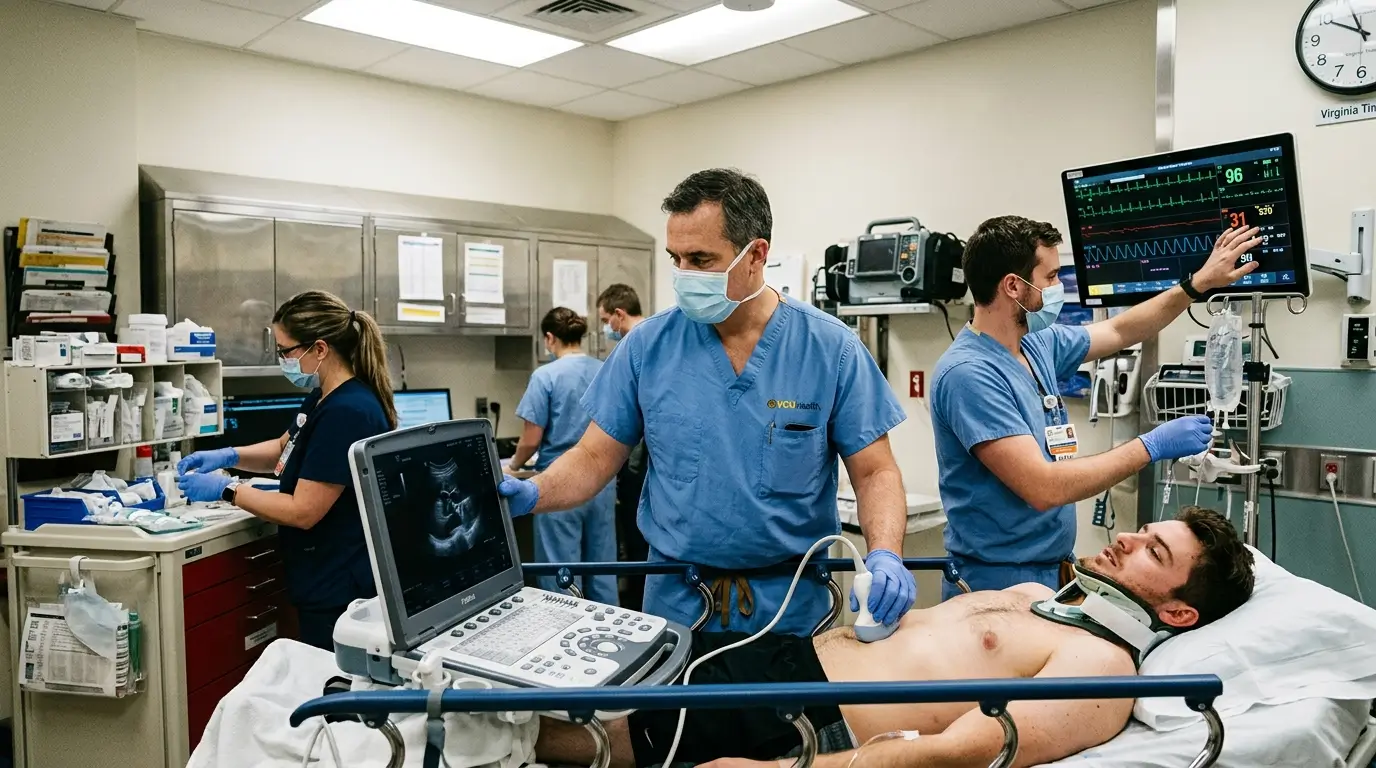
Using sophisticated imaging technology (like CT scans and bedside ultrasound) enables trauma centers in Virginia to rapidly identify and assess the extent of an individual’s internal injuries sustained as a result of motor vehicle crashes. The treatment received for these injuries will depend on their severity, and it can vary from observation to emergency surgery. Similarly, recovery periods associated with these types of injuries can also differ considerably according to the type of injury sustained.
Trauma Centers
Facilities such as the VCU Medical Center in Richmond and its counterpart in Norfolk, Virginia, manage severe accident injuries.
CT Scans
Contrast-enhanced CT imaging can identify internal bleeding, organ damage, and vascular injuries in minutes.
FAST Ultrasound
Rapid bedside examination for detecting free fluid in the abdominal area during emergencies.
Non-Surgical Management
Some injuries may be treated non-operatively if they are relatively minor injuries to organs. These include rest, monitoring, and observation.
Emergency Surgery
Emergency surgical intervention is typically required for high-grade injuries such as ruptures of the spleen, lacerations of the liver, or aortic injury.
Timeline of Recovery
Healing may range from weeks to months; injuries to the traumatic brain could well prove disabling for an entire lifetime.
Legal Significance
Detailed medical documentation of injuries and the outcome of diagnosis and recovery is critical for internal injury claims in Virginia.
Case Result: Tatum & Atkinson Recover $2,000,000 in Rear-End Commercial Truck Case
The “serious accident” injury claims exemplified in Tatum and Atkinson’s own case results represent some of the most serious claims. For example, in Tatum and Atkinson’s rear-end commercial truck accident, we successfully negotiated a $2,000,000 settlement for one of our clients who suffered serious injuries in a rear-end crash with a large commercial truck. The Tatum & Atkinson case record page is an example of the type of serious internal organ injuries from accidents with a large truck that we have dealt with.
Because most commercial truck accidents involve high levels of blunt-force trauma to the spleen, liver, and brain, it is important to note that cases of this severity require the use of professional experts to reconstruct the accident, to provide expert medical opinions and documentation, and they require an experienced attorney who can successfully litigate against the insurance company’s attorneys who are representing their commercial clients. Our law firm has proven its ability to obtain substantial compensation for victims of Virginia automobile accidents.
Compensation for Internal Injury Victims in Virginia
An injured party can recover their full damages from internal injuries through a successful internal injury claim in Virginia. The damages that can be awarded to injured parties include all medical costs incurred for emergency room and surgical treatment, all future medical expenses and rehabilitation costs, lost wages and decreased ability to earn future wages, pain and suffering, and permanent impairment.
Since the injuries suffered in most internal injury claims are so serious, the cost of treating such injuries is exceedingly high, and the long-term consequences are very serious, these types of claims tend to rank among the highest of all types of personal injury claims in Virginia.
Virginia adopts the rule of pure contributory negligence under Virginia Code § 8.01-34. This means that if a jury finds that you were even one percent at fault in causing your accident, you will not be entitled to recover any amount whatsoever for your injuries. Because this rule is so harsh, it is crucial that you work with a qualified and experienced Virginia accident injury attorney before you file your claim for damages resulting from your accident.
When to Contact a Virginia Internal Injury Lawyer
If you are involved in a Virginia accident and either you or a loved one is showing signs of an internal injury:
- You should call 911 immediately for medical attention.
- When you are safe, the next call should be to Tatum & Atkinson Law Firm’s internal injury lawyer in Virginia.
Internal injuries incurred in car accidents are medically time-sensitive, as medical treatment must begin as soon as possible. Likewise, the legal evidence can degrade or be lost; witnesses move out of the area; Virginia’s two-year statute of limitations period for filing a claim for internal injuries after car accident in Virginia under Virginia Code Section 8.01-243 begins on the day of the accident.
All drivers, passengers, and family members need to be aware of the common internal injuries caused by accidents in Virginia. The attorneys at Tatum and Atkinson represent clients with internal injuries from auto accidents, and they offer their services on a contingency fee basis. You do not pay us until we successfully resolve your case. Contact us today for a free consultation at (800) 529-0804.
FAQs: What Are Common Internal Injuries Caused By Accidents In Virginia?
Can I sue for internal organ damage in Virginia?
In Virginia, if an accident occurred and you suffered an injury due to someone else’s negligence (called “internal organ injury”), you may pursue an internal organ injury lawsuit for the full compensation of your injury.
Should I go to the hospital after a minor accident?
Yes, because in some cases, hidden injuries after accidents will not show any signs of it right away. But if you go to the emergency room or urgent care on the same day of an accident, you will not only protect your health but also protect your right to file an abdominal injury from car accident lawsuit.
What is blunt force trauma?
A blunt-force injury is a type of injury that happens when a body is struck or compressed by an object during a non-penetrating impact, thereby damaging the organs and tissues inside the body.
Do internal injuries show up immediately?
Not necessarily; some signs of internal injuries after a crash may be hidden for hours or days after the accident has occurred due to adrenaline. So it is essential to get to the emergency room immediately when you are involved in an accident in Virginia.
What are the signs your body is healing?
If you experience pain relief, increased blood pressure stabilization, return of appetite, and a decrease in pain from bruising are considered to be general indicators of recovery. There is no specific timeline to determine for people to recover from their injuries, depending on the specifics of the type of injury sustained.
