Do I Need to Go to Court to Recover Damages After a Drunk Driving Accident?
Key Highlights:
- Most likely not. Generally, individuals harmed by a drunk driver do not go to court, as most injury claims are settled through the insurance process rather than through trial.
- The court is the exception rather than the rule.
- The majority of civil lawsuit after DUI personal injury claims are not resolved in courts.
- A DUI accident claim differs from claims made with the insurance company or a criminal case against an intoxicated driver.
- A drunk driving accident lawsuit does not necessarily mean that the matter will go to trial. Most cases are settled without going to court.
My name is Robert Tatum, and I work at the law firm Tatum & Atkinson Law Firm. Since 2006, Tatum & Atkinson has been involved in handling lawsuits related to drunk driving accidents and civil lawsuits associated with injuries resulting from drunk driving claims in Virginia and North Carolina.
Three Different Types of Processes That Are Sometimes Mistaken for Each Other
Three types of legal processes follow drunk-driving accidents.
Proceeding |
Who drives it |
What it decides |
Do you attend? |
| Insurance claim | You and the insurers | What the insurer will pay for your injuries and losses | No—handled on paper and by phone |
| Civil lawsuit | You, as the injured person | Whether the driver owes you money, and how much | Only if it reaches certain stages |
| Criminal DUI case | The state prosecutor | Whether the driver is guilty and punished | Sometimes, as a witness, you are not a party |
Why Most Drunk Driving Tort Cases Never Go to Trial
Going to trial after drunk driving accident is uncommon. Evidence shows that trials only resolve about one percent of civil cases; in addition, limited information from the Bureau of Justice Statistics provides evidence that few tort cases ever go to a jury selection/verdict/appeal. Trials are costly, slow, and unpredictable; they can go either way. In cases where drunk driving is involved, often the insurer is faced with difficult issues: the level of impairment, arrest, and charges, and the insurer does not want that in front of the court.
Reasons Cases Go to Court
There are some drunk driving accident lawsuit cases that have to go to court, though the reasons are rather prosaic than thrilling:
- The insurer refuses to take responsibility for the accident or tries to put part of the blame on you.
- The two sides cannot agree on the amount of the injury compensation.
- The parties fight over the evidence connected to the medical treatment, which the insurer considers unreasonable and unnecessary, and the injuries are not new ones.
- There is not enough coverage for the policy limits/multiple claimants accident, or the driver was uninsured.
What Actually Happens After a Lawsuit Is Filed
The process after you file your personal injury lawsuit follows a definite pattern, as listed in the publication of the United States courts on civil procedure:
Complaint and Answer
A party making a claim presents its case, and the other party refutes the allegations made against them. This is a pretty normal process.
Discovery/Interrogatories/Document Requests Stage
It takes place over a long time when parties are exchanging information. This is referred to as asking the other party to file some written requests or interrogatories from appropriate authorities.
Independent Medical Exam
Some states require the plaintiff to obtain a verbatim medical examination from a party of their choice.
Expert Witness
This refers to different specialists who can help to find out what caused the accident and whether the subject needs further treatment.
Mediation/Settlement Talks
This is a procedure whereby the parties need a neutral person who can help them settle.
Consumer Tip: It is important to understand the difference between a drunk driving accident lawsuit and a trial. Most accident lawsuit cases get settled even before further proceedings.
How a Trial Proceeds?
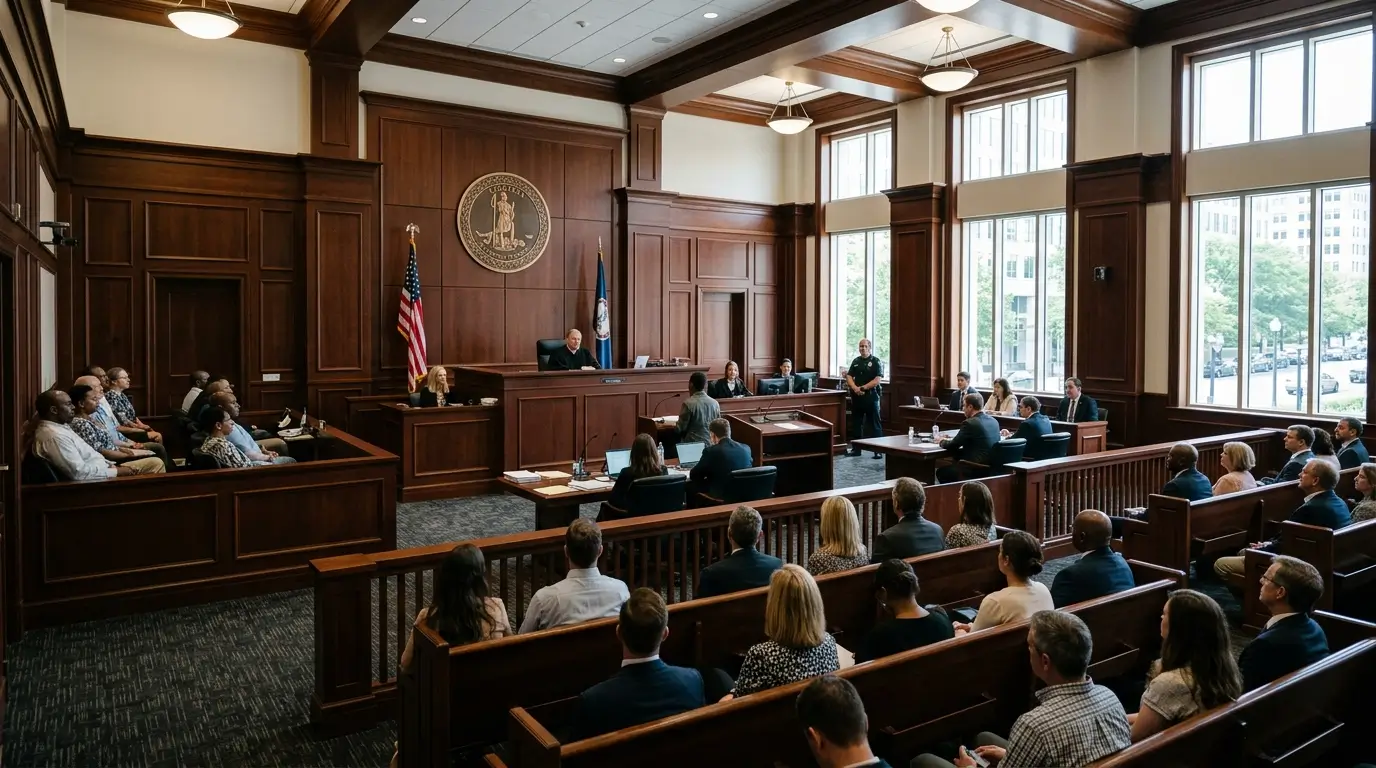
The portrayal of a trial after drunk driving accident in the media is far from accurate since a trial usually proceeds more methodically than entertainingly.
A trial starts with a judge helping resolve pretrial issues and is then followed by the jury selection/verdict/appeal selection of a juror.
Next, both the prosecution and defense deliver an opening statement, and evidence is presented, including:
- the testimony of the plaintiff (you)
- police reports
- opinions of expert witness, etc.
While some evidence is being presented, cross-examination takes place. When the evidence collection part of the trial is completed, the closing arguments are delivered.
What You Will Actually Be Asked To Do
If either side has any legal bases for appeals, the trial takes a couple of days at most. As for your own participation in the trial process, it is very limited:
- You have to show up for appointments and go through treatment.
- You have to keep track of all documents related to the case.
- You may have to testify during the interrogation.
- You have to go through a mediation/settlement conference process if it is applicable.
Myth versus Reality
Myth |
Reality |
| Pursuing legal action means that the case is likely to go to court. | Most of the cases filed in the courts end up being settled without going to trial. |
| The conviction of the other party in the criminal court ensures that I will get the money. | The conviction in the criminal court is not the same as receiving compensation for injuries. |
| If I sue someone, I will have to give evidence to the jury. | Most lawsuits do not go to trial; depositions are much more common. |
The Way To Go and Where To Go for Help

For many victims of drunk driving accidents, the reality is that you are most likely not going to court anyway. Your DUI accident claim will get filed, negotiated, and resolved, and if it does go to court, it will probably settle before such a step has to be taken. Once you know how the process is supposed to proceed, you will not be as intimidated.
Drunk driving is still an issue of concern: according to the National Highway Traffic Safety Administration, almost 12,000 people were killed in traffic crashes involving alcohol in 2024, accounting for about 30% of all traffic deaths, and the CDC keeps records of the injury compensation for injuries that occur.
If your drunk driving injury settlement claim has been denied or you’ve been offered a low insurance settlement amount, you may need to file a personal injury lawsuit, and if so, Tatum & Atkinson is a drunk driver accident lawyer personal injury law firm serving Virginia and North Carolina, ready to discuss your options with you. Call (800) 529-0804 if you wish to set up a free consultation.
FAQs: Do I Need to Go to Court to Recover Damages After a Drunk Driving Accident?
Will I automatically have to testify?
Actually, testifying at trial after drunk driving accident is very rare since most cases are resolved out of court. It is more common to give testimony instead of court proceedings with a deposition. Many people will not even do this because their DUI accident claim is finished at the insurance phase. So if you do testify, give an account of what happened and what your injuries did to you.
How long does a lawsuit usually take?
A filed drunk driving accident lawsuit can take anywhere from a year to more. A great deal of the time is handled by the discovery / interrogatories / document requests process; a lot of time is also spent waiting for the court to schedule dates. Insurance settlement claims have a smaller tenure than lawsuits. Some waiting is necessary to secure the proper claim value; one usually cannot determine the value of the case before one obtains the perspective of the medical professionals who have treated the injured party at maximum medical improvement.
Can a case settle after a lawsuit has already been filed?
It mostly happens in many situations, and that is right. Filing is not a way of deciding to go to trial but a way of keeping the matter in motion. A personal injury lawsuit case can be settled after the complaint and answer, during discovery/interrogatories/document requests, at mediation/settlement conference, or sometimes even during the trial. In many cases, the only thing that makes one make a decent offer is filing the accident lawsuit.
What if the drunk driver pleads guilty in criminal court?
It might be helpful, but not beneficial. A guilty plea may be a strong piece of evidence that will incline the insurer toward making a drunk driving injury settlement case because there will be no need to argue that the driver is not to blame. However, these are civil vs. criminal proceedings, with different procedures, parties, and aims. Any fine received by the state is limited to compensation in criminal cases.
What happens if the insurance company denies liability?
Rejection does not obviate the DUI accident claim. Insurance companies may deny for a variety of motives, such as contesting how the accident took place, doubting the injuries, or testing the waters by seeing if you demand payment on the claim. The evidence consists of the accident investigation, the testimony, the medical information, and sometimes an expert witness assessment. If the insurance company still refuses to budge, filing the accident lawsuit will take the decision out of their hands.
What if several people were injured in the same crash?
The situation is also one of the normal cases of court proceedings. This is especially true when there are other persons who have encountered the same accident. Then, the policy limits/multiple claimants insurance available may be limited when several claimants are relying on the same insurer. The sharing of limited insurance between the victims will require discussions between them; thus, it is good to know about all types of insurance available, including your own underinsured motor insurance.
Does every case involve a jury?
No. The majority of cases do not make it before a jury because they are settled with insurance companies or through arbitration. The resolution of a case is either by means of a judge or jury trial, depending on where the case is being tried, or by settlement.
