What Happens If My Child Is Sexually Hurt by a Teacher in North Carolina?
Key Highlights:
- If you are wondering “what happens if my child is sexually hurt by a teacher in North Carolina,” the answer is that the abuser will be prosecuted criminally, and the school district is liable for emotional damages as well as tort damages from negligent supervision.
- Survivors of child sexual abuse under North Carolina law (N.C.G.S. § 1-17) have an extended civil statute of limitations that allows them until their 28th birthday to file a school sexual abuse lawsuit North Carolina.
- To protect your claim, you must report the incident to the appropriate authorities in writing as soon as possible, protect all electronic communications, and speak with an attorney prior to signing any documents or talking to school personnel.
- At Tatum & Atkinson Law Firm, our legal team works exclusively on a 100% contingency fee basis, so there are no up-front fees or costs associated with hiring us, and you pay us only if we win your case.
The revelation of teacher sexual abuse in North Carolina of one’s child can be devastating to a family. Parents often experience an overwhelming mix of emotions, including shock, anger, and confusion, along with the underlying concern about “what happens if my child is sexually hurt by a teacher in North Carolina?”
It is likely that most parents in North Carolina do not know whether they have any legal recourse against the school and how long they have to file a lawsuit. This guide, provided by our experienced attorneys at Tatum & Atkinson Law Firm, serves to answer each of the above questions in order of importance.
If your family is currently facing this crisis, please contact Tatum & Atkinson Law Firm at (800) 529-0804 to set up a free and completely confidential consultation. Also, our attorneys work on a contingency basis.
What Happens If My Child is Sexually Hurt by a Teacher in North Carolina: Criminal and Civil Accountability
Child sexual abuse by a teacher in North Carolina is a criminal activity and a civil violation. The law makes educators and institutions employing them liable for all such conduct on two different but concurrent levels: criminal and civil.
Criminal Accountability Under North Carolina Law
North Carolina’s General Statute N.C.G.S. § 14-27 states that an adult teacher abusing a minor student is an aggravating circumstance and is, therefore, a factor that increases the severity of the crime. N.C.G.S. § 7B-301 requires everyone, including any person whose work is in an educational setting within the school, to report suspicion of child sexual abuse by a teacher in North Carolina to the Department of Social Services (DSS) or to law enforcement as soon as possible after having such suspicion.
When Schools Become Civilly Liable
In North Carolina, suing a school for teacher abuse in NC is based on the duty that a school owes to its students. If a school fails to appropriately investigate or provide appropriate supervision of a teacher, the school may be liable to pay substantial amounts of money to compensate for the harm caused to the student.
Do Private Schools Face the Same Liability?
Yes. North Carolina private schools have the same duty of care toward their students as public school districts. Therefore, when an allegation of institutional failure occurs, the potential for civil liability is the same as in a school sexual abuse lawsuit in North Carolina involving a public school setting.
Warning Signs of Teacher Grooming Behavior
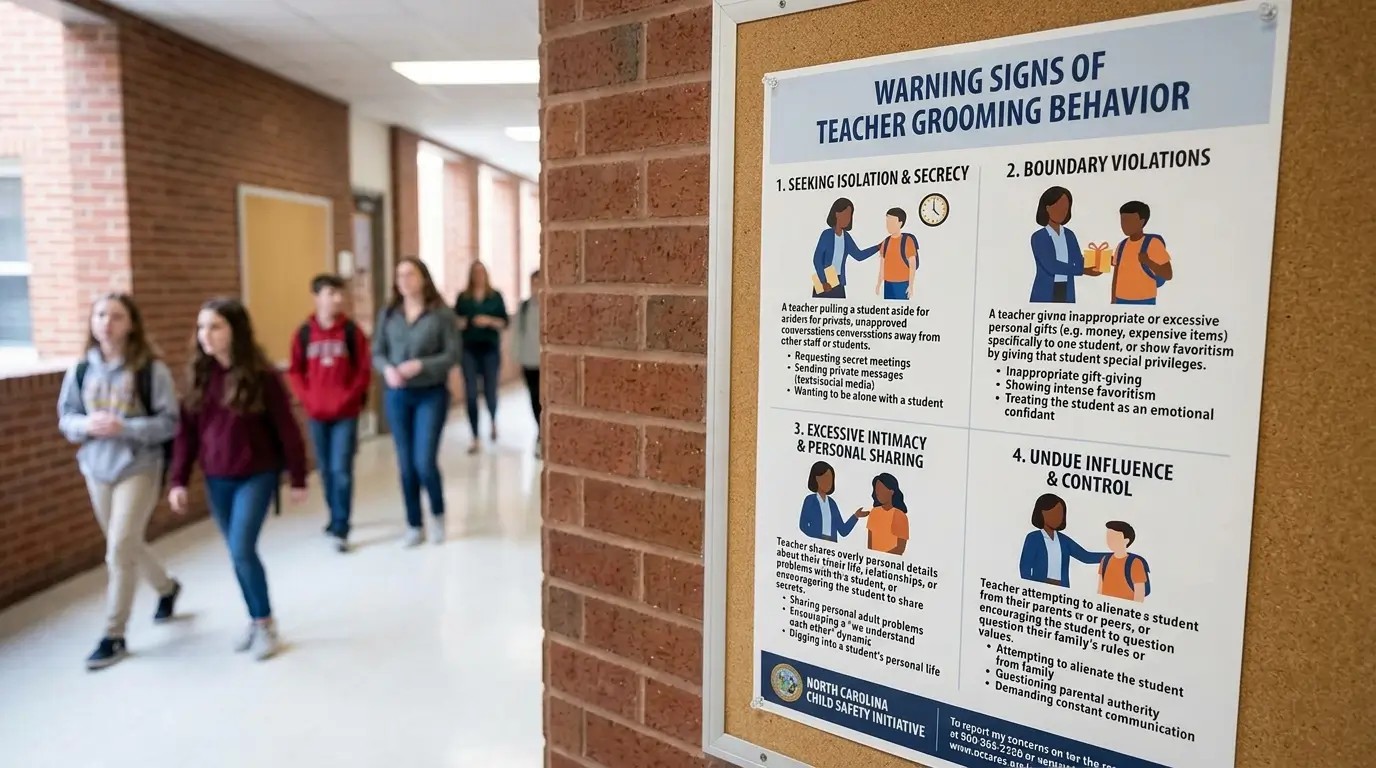
An initial attack is generally not how abuse starts. Child sexual abuse by teacher North Carolina will usually go through a process known as “grooming.” Grooming is a slow, deliberate process of establishing trust and breaking down a child’s boundaries. This fact is addressed in the teacher grooming laws North Carolina. Being aware of the indicators can allow parents to be proactive and help prevent increased harm to a victim:
- Giving special treatment to an individual student (e.g., one-on-one instruction, gifts, or privileges that are not given to other students)
- Using unofficial means (e.g., using a private cell phone or social media) to communicate with any student
- Asking (encouraging) the student to keep his or her relationship with you secret from his or her parents or guardians
- Providing opportunities for private meetings (e.g., tutoring or mentoring after hours or in locked classrooms or storage facilities)
- Initiating discussions about sexual issues; providing independent materials related to sexual issues; or introducing students to physical touch gradually
If your child has experienced any of these types of behaviors from a teacher or other school personnel, you should contact Tatum & Atkinson Law Firm at (800) 529-0804 as soon as possible. Early legal intervention can protect evidence and enable your family to obtain the maximum amount of financial damages.
What Legal Steps Should I Take If My Child Was Abused by a Teacher in NC?
If you feel that your child has been sexually abused by the teacher at school, then there should be some measures that you should immediately take into consideration. The steps that follow will give an idea about what you should do when your child has been sexually assaulted.
Step 1 — Ensure Safety and Get a Medical Evaluation
You need to remove your child from any contact with the person you believe has abused them. If the abuse happened recently, you should take your child to a pediatric emergency department or visit your local Child Advocacy Center (CAC) so that records of the abuse can be documented and you can be referred to specialists who do forensic interviews of children who have experienced trauma.
Step 2 — Report to the Appropriate Authorities
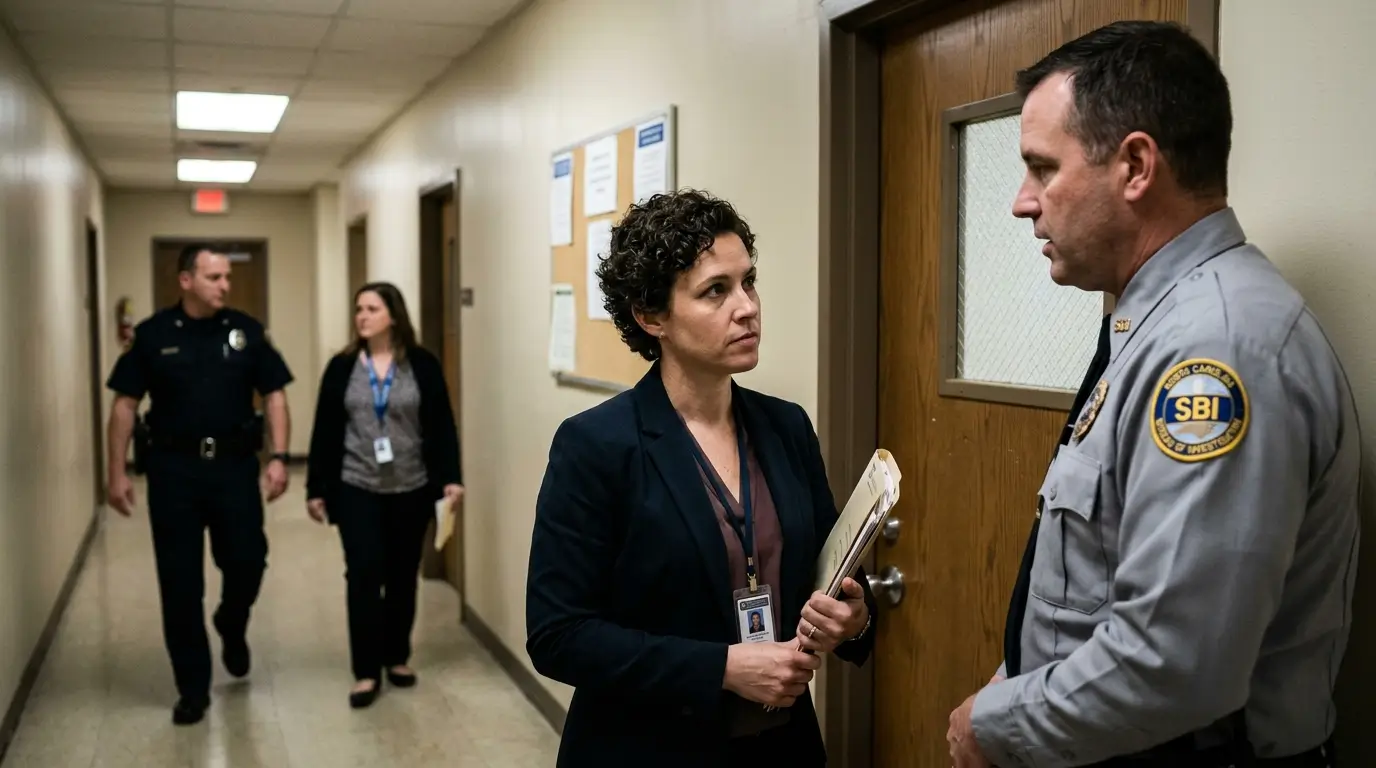
How to report teacher sexual abuse in North Carolina? Report these incidents in writing to your local law enforcement agency (911 or sheriffs’ non-emergency line), your county Department of Social Services, the North Carolina Department of Public Instruction (in order to initiate the process of having the teacher’s license revoked), and your school district’s administration. When you write each of your reports, be sure to document each instance by writing down the name of the agency you are reporting to, the date you reported, who you reported to, and any case number or reference number that you received.
Step 3 — Preserve All Evidence
Never let your child delete text messages, emails, pictures, or social media communication from their teachers. Take screenshots of everything as soon as possible. Write down what your child says, the date of the incident, and where it happened while it is still fresh in your mind. Documentation about previous incidents involving that teacher, incident reports regarding the school, and personnel records are important for a school sexual abuse lawsuit in North Carolina.
Step 4 — Consult a Child Sexual Abuse Attorney in NC Before Speaking to the School
Immediately following an allegation of abuse, school districts usually hire a risk management attorney to protect themselves. Don’t talk with administrators, sign any paperwork from the district, or give statements to any insurance companies without the help of a personal injury lawyer. The child sexual abuse attorney NC at Tatum & Atkinson Law Firm can provide guidance on what to say and what not to sign and can help protect your claim.
Step 5 — Begin Trauma-Focused Therapy for Your Child
Therapy is a vital part of your child’s recovery, and thorough, consistent documentation of therapy sessions can be valuable evidence of psychological injury in a civil damages lawsuit.
Compensation for School Abuse Victims in North Carolina
Though no amount of money can ever take away the pain and suffering endured by child victims of sexual assault or abuse within an educational institution, compensation for school abuse victims North Carolina obtained in a successful lawsuit may help parents find the means to heal emotionally and physically and to provide for the future of their families:
- Medical and therapy costs: All medical and therapy fee expenses, including past, present, and future trauma-related counseling, psychiatric counseling, or other continuing treatments received as a direct result of the abuse.
- Pain and suffering: Compensation for psychological suffering caused by the abuse or for emotional distress or loss of innocence.
- Lost educational opportunity: If the abuse caused academic failure, required them to change schools, or delayed educational milestones.
- Lost future earning capacity: Childhood sexual abuse can severely affect an individual’s ability to obtain employment as an adult.
- Punitive damages: Punitive damages are available when an institution creates an egregious failure to act in order to ensure that the same mistake will not happen again.
What your claim will be worth depends on how much abuse occurred, how long it went on, how much evidence can be produced to show that damage was caused, and the strength of the proof asserting that the school is liable. Tatum & Atkinson Law Firm will assess your situation objectively and in good faith.
How Long Do I Have to File a School Abuse Lawsuit in North Carolina?
In North Carolina, the civil claim statute of limitations is typically three years. However, for plaintiffs seeking to sue for past sexual abuse, the ‘discovery rule’ may delay the running of that clock until the plaintiff makes a causal connection between their injuries and abuse, allowing survivors who have suppressed any memories of their abuse additional time to file suit. In addition to the above, N.C.G.S. §1-17 extends the time within which child survivors of sexual abuse may bring a civil suit until their 28th birthday.
Waiting carries numerous risks, including witness relocation/death, degradation of evidence over time, and disappearance of school records. If the school failed to protect my child NC, you should contact a teacher sexual abuse lawyer in North Carolina immediately or as soon as possible.
Child Trauma Therapy and Counseling Services in North Carolina
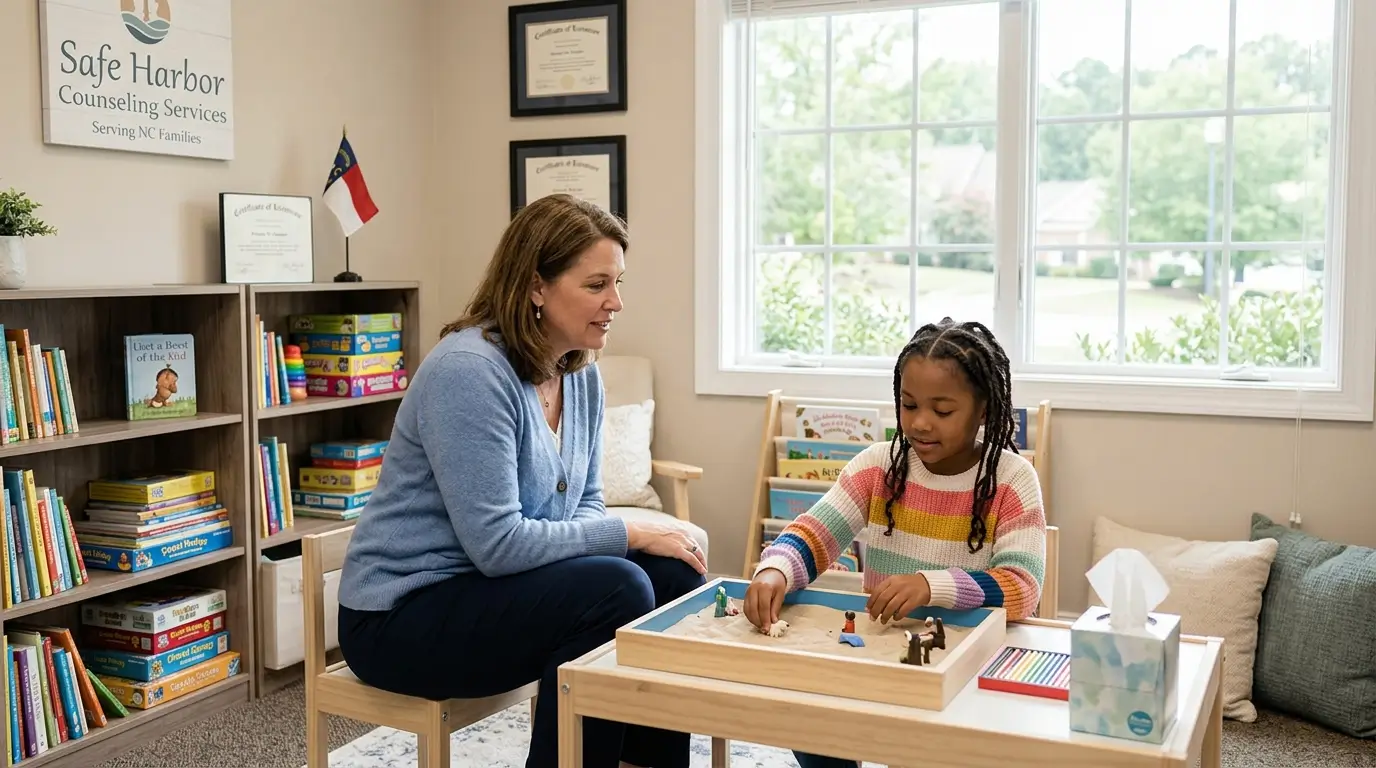
Legal recovery and emotional healing need to be interwoven. In North Carolina, there exists an extensive network of child trauma therapy services in NC designed specifically to serve abuse survivors.
- Child Advocacy Centers (CACs): Regions throughout NC are home to Child Advocacy Centers. These CACs provide forensic interviews, medical assessments, and direct therapy referrals in a collaborative and child-friendly manner, allowing children to be treated holistically without being re-traumatized.
- Trauma-Focused Cognitive Behavioral Therapy (TF-CBT): The standard of excellence for treating children with trauma from sexual abuse. The UNC Chapel Hill, NC Child Treatment Program has trained TF-CBT therapists throughout the state.
- Monarch NC and Cardinal Innovations Healthcare: Two regional behavioral health providers, both of which serve an extensive area, offer psychotherapy and medication management for survivors of abuse.
When you collaborate with Tatum & Atkinson Law Firm, we will partner with you and your child’s counselor to harmonize the legal aspect and the emotional healing so that they reinforce each other rather than interfere with each other.
How to Choose a Child Abuse Lawyer in North Carolina
Choosing legal representation is arguably one of the most important choices you will make for your family, especially when a failure by an institution has caused your child to be unsafe. As a veteran-owned law firm that has been practicing law since 2005, we offer your family the proven tenacity of our attorneys for child sexual abuse cases in North Carolina.
- Proven Civil Litigation Experience: Our attorneys at Tatum & Atkinson Law Firm have recovered over $100 million for injured families. As members of the Million Dollar Advocates Forum, our attorneys aggressively fight against school boards in order to maximize the compensation you deserve.
- Expertise in North Carolina Education Law: Our teacher sexual abuse lawyer North Carolina has an in-depth knowledge of the NC statutes and Title IX protocols governing education in NC. Since 2005, we have consistently prepared school negligence claims for trial to hold these major institutions accountable.
- Direct, Compassionate, and Personalized Advocacy: There is no assembly line representation at Tatum & Atkinson Law Firm. You work directly with your attorney so that you have clear guidance throughout your school negligence child abuse NC case, and you will receive the respect, compassion, and personal attention that your family deserves.
- Risk-Free Contingency Fee Structure: Justice shouldn’t cost your family financially. Tatum & Atkinson Law Firm strongly believes in this principle and offers free consultations, and our attorneys work on a contingency fee basis (meaning we do not charge any fees without recovering for you first).
“School districts work to protect their own assets first. Although the SAFE Child Act changed the civil deadline to age 28, districts continue to utilize aggressive insurance teams to deny claims. If you want to help protect a child’s future, you need to hit them with ‘The Heavy Hitters’ team. We treat your family as a priority, and not just your case file.”
— Robert Tatum, Founding Attorney
Contact Tatum & Atkinson Law Firm — North Carolina School Abuse Attorneys

Your child has a right to be safe while at school. If an employee of the school system breaks that trust and the school system doesn’t protect them from harm, you may find yourself asking yourself, “What happens if my child is sexually hurt by a teacher in North Carolina?” You have legal rights for abused students in NC to hold these people accountable to the full extent of the law. Our legal team understands all aspects of North Carolina law, the legal definition of institutional negligence, and how to help families who are suffering the mistreatment of a loved one.
Our firm will represent you on a 100% contingency fee basis. That means no retainers or up-front costs. It also means that you will not pay any legal fees unless we are able to recover compensation on your behalf.
Please feel free to contact us at (800) 529-0804 to discuss your case today. You will receive free, confidential advice and will have no obligation to proceed with your case.
Frequently Asked Questions!
Are there any hotlines to report teacher sexual abuse in North Carolina?
The Childhelp National Child Abuse Hotline (1-800-422-4453) is available. Other contact options include contacting your county DSS or dialing 911 if you are in danger. All reports create an official record of evidence for either criminal or civil action against a suspected abuser.
Which organizations provide support for children abused by teachers in North Carolina?
All of these organizations will provide trauma-informed support services to survivors of child abuse throughout North Carolina. Organizations include North Carolina Child Advocacy Centers, the NC Child Treatment Program at UNC Chapel Hill, Monarch NC, and Vaya Health.
Can private schools in North Carolina be sued for teacher misconduct?
Private schools do not have immunity from lawsuits, and they owe students a similar duty of care to public schools. Additionally, private schools will be fully liable for negligence due to a teacher’s abuse if they were negligent when hiring, supervising, or retaining.
How do I report teacher sexual abuse in North Carolina?
Make reports in writing to your local law enforcement agency, your county Department of Social Services, the NC Department of Public Instruction, and your school district. Always document who you spoke with, when you spoke, their case numbers, and the name of the agency that you contacted.
How does the criminal case against the teacher differ from the civil case against the school?
A state prosecution brings criminal action against the teacher to seek punishment (e.g., imprisonment). A lawsuit brought by the family is intended to hold the negligent school liable for all of the child’s damages.
