What Are The Most Common Reasons For A Trucking Accident In North Carolina?
Key Highlights:
- A loaded truck can weigh 20 to 30 times as much as a passenger car.
- In fatal cases, the deceased passengers are those in another vehicle.
- Most North Carolina trucking accident causes are associated with either the driver, the trucking company, or the repairs.
- The cause is what determines trucking company liability, and there are often several parties involved.
- It is vital to prove the guilt of the truck driver under North Carolina’s 1% rule.
What Are the Most Common Reasons for a Trucking Accident in North Carolina?
There is rarely such a thing as an accident that happens to a truck out of the blue; they all happen because of a choice somebody made regarding either schedule, repairs, or cargo. Given the fact that a loaded truck can weigh 20 to 30 times as much as your personal car does, it doesn’t take too long for that choice to cost lives. Here is the list of the most common North Carolina trucking accident causes, organized according to who is to blame in each case.
I am Robert Tatum, and I am an attorney at the Tatum & Atkinson Law Firm. As a veteran-owned law firm, we have been around for more than 65 years combined and have extensive experience in finding the cause of accidents and making the guilty party accountable. If you are ever involved in any commercial truck accidents in NC, we will know everything there is to know about the liability of the trucking company, FMCSA violations in truck accident cases, and how to investigate a truck accident properly.
Why Truck Accidents Are So Deadly
The laws of physics settle the matter before anyone slams on the brakes. As noted by the Insurance Institute for Highway Safety, heavy trucks are 20 to 30 times heavier than passenger cars and require 20 to 40 percent more stopping distance.
At the point of impact, almost everyone who dies is in the lighter vehicle; hence, the importance of determining the cause in any commercial truck crash NC.
Causes Related to the Driver
Here are the major causes of trucking accidents that relate to the driver of the vehicle.
Driver Fatigue and Hours of Service Violations
There are restrictions on the time a driver can operate without taking rest breaks, yet sometimes a driver’s schedule will force him to exceed those limits. Truck driver negligence through driver fatigue causes a driver to slow in his responses and drift, and the logbook records how many hours the driver has been operating.
Distraction while Operating
A few seconds off from looking at one’s cell phone covers an entire football field at highway speed. In such a huge and heavy vehicle, that is usually the full story of truck driver negligence.
Exceeding Speed Limit and Driving at Too Great a Rate Given the Road Conditions
Excess speed increases the already considerable stopping distance and the risk of a rollover when navigating ramps and curves. The posted speed may be too great for a loaded truck in adverse conditions.
Impairment by Alcohol and Drugs
Commercial drivers must abide by a lower blood-alcohol limit of 0.04 compared to 0.08 for all other motorists, and the federal regulations prohibit operating a commercial vehicle with any trace of alcohol in one’s system. Impairment by drugs, even prescribed ones, is equally hazardous.
Factors that Stem from the Trucking Company
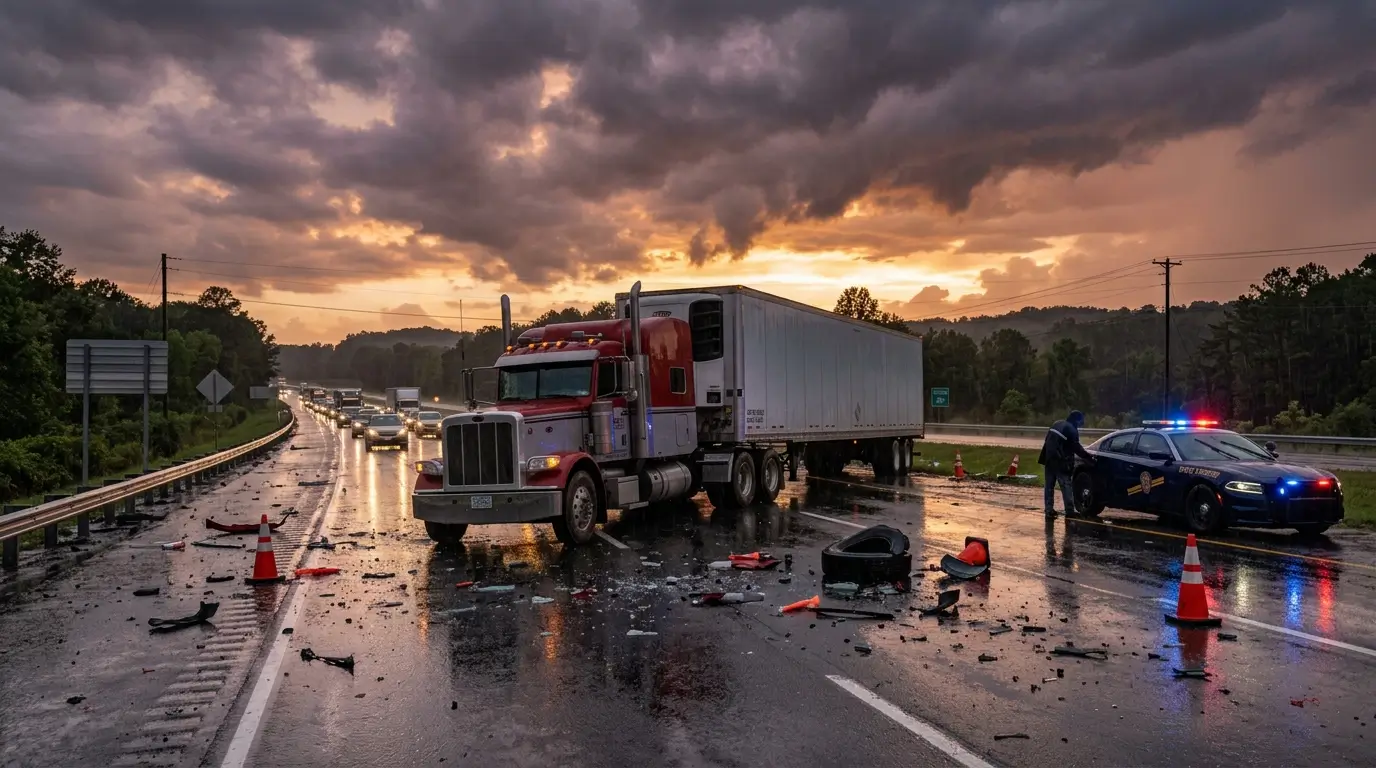
Here are the major causes of trucking accidents that relate to the company of the vehicle.
Pressure and Unreasonable Schedules
When a company establishes an unreasonable schedule that cannot be achieved legally, it is essentially forcing the drivers to speed and take no rest breaks; this can result in making the company itself liable under trucking company liability, not just the driver.
Hiring, Training, and Management Negligence
Using an unqualified or inadequately trained driver behind the wheel of an 80,000-pound vehicle amounts to truck driver negligence in itself, and the driver qualification file shows a record that should have been spotted.
Missed or Poor Maintenance
Brakes, tires, and steering get rough use and require frequent maintenance. If a carrier chooses to postpone the repairs to maximize the earnings of their vehicle, the failure becomes the trucking company liability.
Causes Originating from the Vehicle or the Load Carried
Here are the major causes of trucking accidents that relate to the vehicle or the load.
Vehicle Mechanical Issues
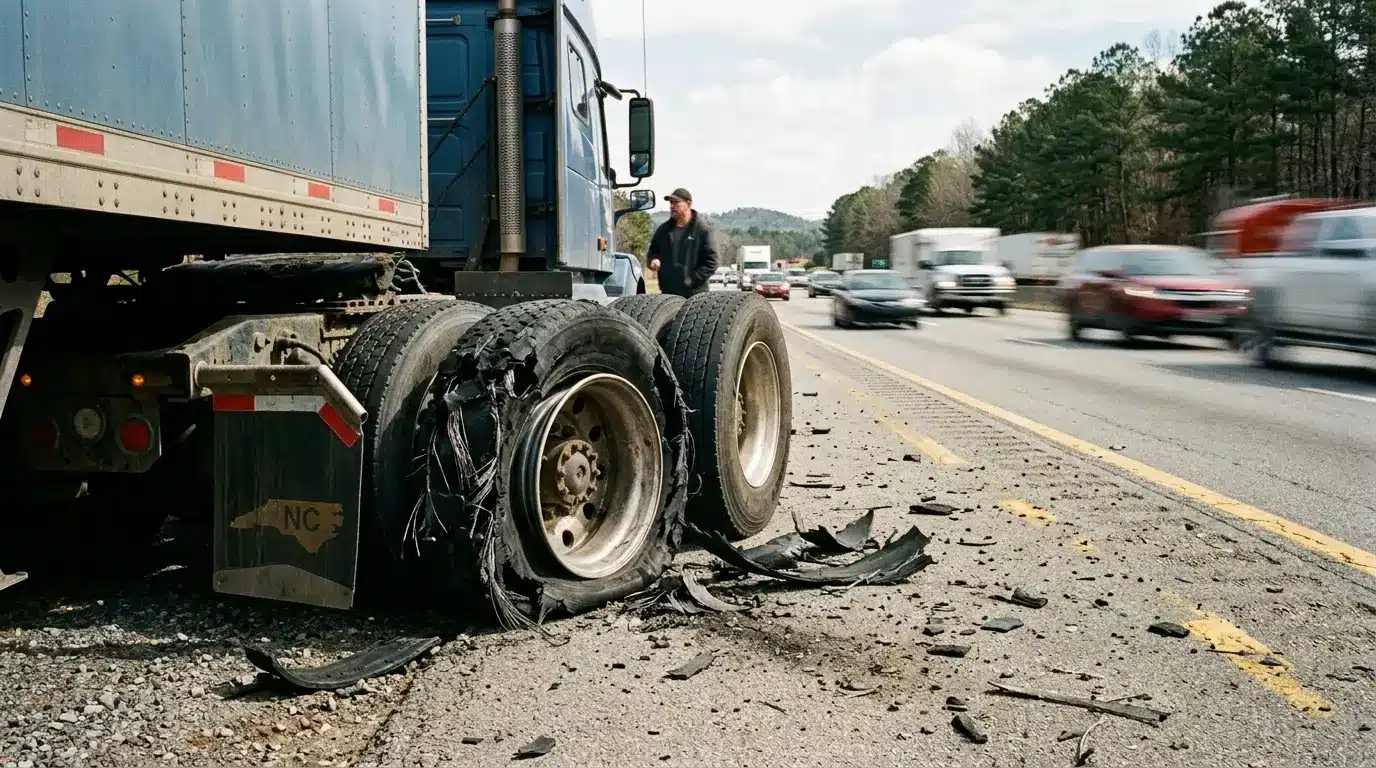
A malfunctioning brake system or a tire blowout is the most frequent mechanical issues in a commercial truck crash NC. It is more than just a problem itself, but also an issue of who was responsible for checking and fixing it.
Overload or Improperly Secured Cargo
An overload or poor distribution of weight makes it harder for the truck to stop and increases the risk of tipping over. Loose or moving cargo can be a direct cause of an accident. The loading party can be partially responsible in such situations.
Road Hazards and Weather Factors
In North Carolina, drivers have to deal with rainfall, foggy mountain roads, and construction zones on the interstate highways. While the mentioned factors cause many accidents, they never justify the negligence of a driver who should have slowed down. “Bad weather” is the go-to excuse for any carrier.
How to Make Your Case, and Who PAYS!
The best practices to make the most out of your case are plentiful.
The Story-Telling Evidence
A truck accident investigation is pieced together from the engine control module (black box), electronic logs, maintenance history, and driver qualification file. This evidence vanishes quickly; according to federal law, a carrier maintains driver logs for only six months; therefore, a preservation letter needs to go out immediately.
Liability: Who May Be at Fault?
Due to the multiple causes, there will be multiple parties that may be liable: the driver, the trucking company, a cargo loader, a maintenance provider, or a parts manufacturer, just to name a few.
North Carolina has also made the federal motor-carrier safety regulations part of its own law, meaning that FMCSA violations truck accident can be used to prove negligence. The Heavy Hitters pursue all of them!
North Carolina’s 1% Rule and What You May Be Entitled to Collect
North Carolina is one of the states that uses pure contributory negligence: the moment the trucking company proves you are 1 percent negligent, you will receive nothing at all.
This is why determining the North Carolina trucking accident causes is so important; it prevents the trucking company from trying to place the blame on the victim of the accident. A claim may be filed for medical expenses, future treatment, loss of income, pain and suffering, and damages to your property, as well as death claims.
Semi-Truck Accident Injuries? Call the Big Guns of Tatum & Atkinson Law Firm
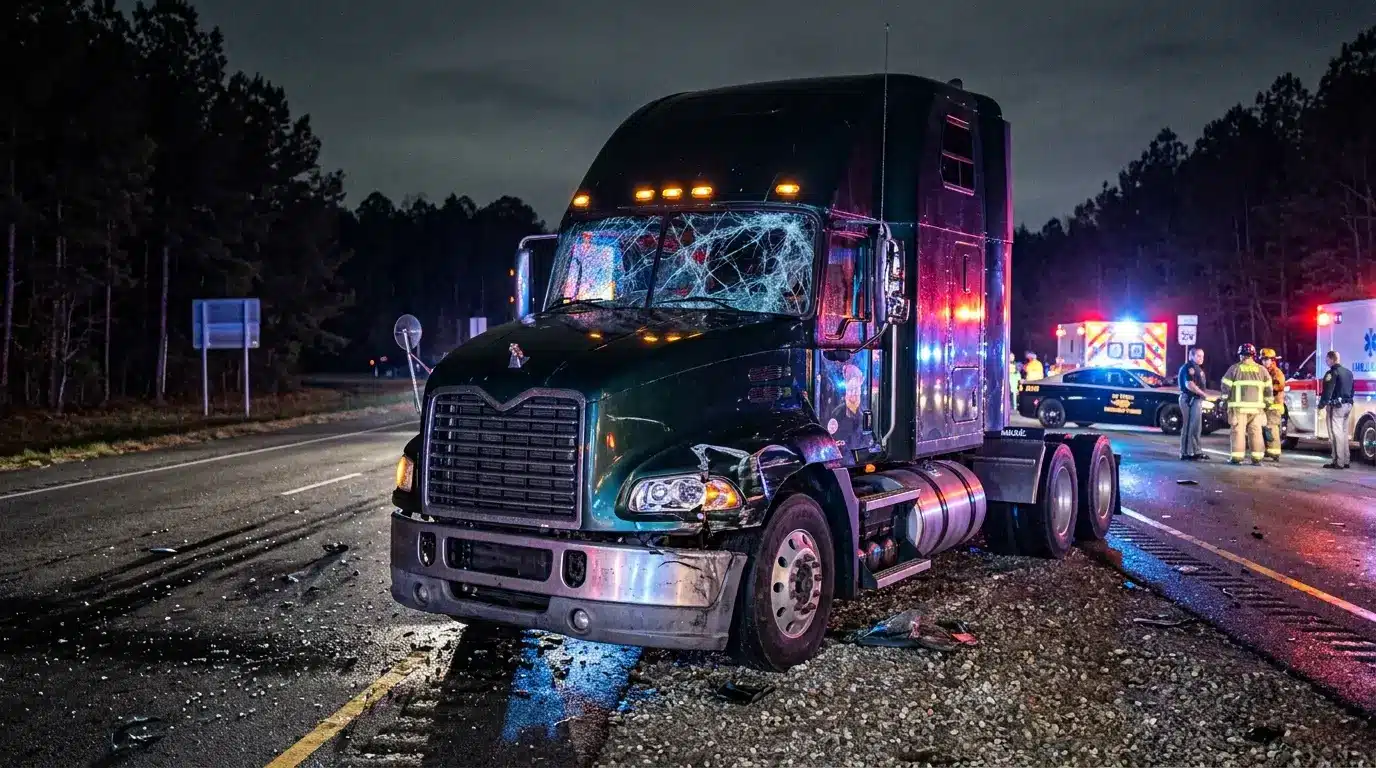
While you are represented in court by lawyers, an insurance company is representing its interests, and you might very well be attempting to recover from the injuries sustained in the truck accident while lying in a hospital bed. There does not have to be any need for worry, because it is important to determine the value of your claim, and doing so is free.
Since 2006, Tatum & Atkinson has been dealing with commercial truck crash NC claims all over North Carolina, from our office based in Raleigh, and covering the truck routes from I-40, I-85, and I-95. We know all about the FMCSA violations truck accident reports, the black box, and how the carrier will try to blame that 1 percent on the one they injured. Robert Tatum is part of the Academy of Truck Accident Lawyers.
Call (800) 529-0804 to get your free consultation. Tatum & Atkinson operate on a contingency fee basis, which means that you do not pay unless we win; and since evidence gets destroyed rapidly in a truck accident, contacting us becomes vital now.
Frequently Asked Questions!
Who can be held responsible for a North Carolina truck accident?
There are more parties involved in a truck accident than just those involved in a car accident. Other parties that may have contributed to an accident include the truck driver, trucking company, cargo loader, maintenance shop, and parts manufacturer. Understanding trucking company liability is vital because each of them could provide you with extra insurance coverage.
How is a truck accident claim different from a car accident claim?
The truck accidents are subject to federal safety laws, contain more pieces of evidence, and require a bigger insurance policy. Another important aspect is that some crucial evidence in such accidents can disappear within several months; therefore, an early truck accident investigation becomes more significant.
Can I still recover if I was partly at fault?
Even the slightest fault in North Carolina can completely deprive you of any compensation. This means that proving truck driver negligence was responsible for an accident is the first step that should be taken by your attorney.
What does hiring a truck accident lawyer cost?
No up-front fee. All such cases are handled on a contingency basis; it means that there are no fees unless compensation is received.
What is the primary reason for truck crashes in North Carolina?
While there are many North Carolina trucking accident causes, the usual ones include exhaustion of the truck driver, distraction of the truck driver, speeding, malfunction of the truck, overload of cargo in the truck, and FMCSA violations truck accident safety standards.
